Why The Wellness Industry Is Wrong | 6 Simple Rules for a Long, Healthy Life
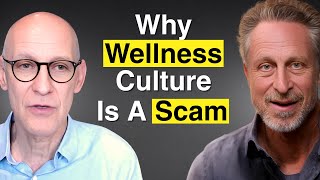
Ezekiel Emanuel argues the wellness industry gets it wrong. His six rules: strong relationships, real food (skip ultra-processed), exercise covering aerobic and strength, sleep, avoid risky behavior, and purpose. He calls out sugary drinks and snacking as particular culprits.
Questions this video answers
Eat Your Ice Cream: Six Simple Rules for a Long and Healthy Life.
Over 350 publications and 15 books.
An average of seven years longer life.
He states about 1 in 100 (all comers) and about 1 in 25 for people over 59.
Approximately 150.
Chapters
Loneliness is an epidemic. Our former Surgeon General wrote a whole treatise on it. It's like smoking two packs of cigarettes a day.
I read one of the books on wellness, and it made me pissed off beyond belief. Part of what bothered me about a lot of these wellness books is the sort of narcissism of them. You know, it's about me living a long time. If you want to both be healthy and live a long and happy life, it's about purpose, engaging with other people and engaging your mind. The people who are talking about wellness today and longevity and pursuing obsessively, it consumes their life. It's the total focus, and that's not good for the body.
Ezekiel Emanuel, MD, PhD, is the Vice Provost for Global Incentives and the Diane S. Levy and Robert M. Levy University professor at the University of Pennsylvania, as well as a leading oncologist, bioethicist, and health policy expert. He's a key architect of the Affordable Care act, and he authored over 350 publications and 15 books, and he advises the World Health Organization, and he frequently contributes to major media outlets on health and policy issues.
The first thing is social life is critically important. One of the reasons we have a loneliness epidemic is because we're not interacting. Social media is not helping, and we have a lot of forces pushing us to be isolated. The number one thing for a long and happy life is social relationship and robust social relations. And the last thing is you gotta stay mentally engaged. You gotta be mentally on it, be curious about the world. You gotta have purpose.
If you have meaning and purpose, you live an average of seven years longer. Hey, it's Dr. Hyman. I'm so excited to share this episode with you today. But before we dive in, I want to get your help. Please take a minute to hit that subscribe button. Whether you're watching here on YouTube or listening on your favorite podcast platform, it truly means the world to me and it helps my team. And I bring you this podcast every single week. Plus, I don't want you to miss a thing. So thanks so much for being part of this community, and I'm glad you're here. Well, Zeke, it's so good to see you again, and I'm so happy to have you on the podcast. I've wanted this moment for a long time, and here we are.
That's my great honor. I don't know how long we've known each other, Mark, on and off for pushing 40 years.
Long time. Yeah. You were my sister's close friend at Amherst, and then we hung out when you were working in the Obama administration, and we went down to Washington, had dinner. I was like, wow. We're like, you're actually changing the face of healthcare. This is the coolest thing ever. And I could literally read your bio, which would probably take the full hour and it would probably take another hour to read all the awards you've ever received. But leave it to say you are a supreme underachiever who's accomplished nothing in your life and are an example, really, for someone who's actually living with purpose. I'm joking, but who's living with purpose. Who's dead, dedicated their life to making the world a better place, and is involved in health policy and thinking about how we change our healthcare system. Your next book is all about this, but today we're gonna talk about your book, which I love the title of Eat your ice cream. Six simple rules for a long and healthy life. Because if someone were to say to me, mark, if you were only need one food for the rest of your life, what would it be? It would be ice cream. I love ice cream that much. So I'm really happy about your title. And the message is in. And I want to sort of first ask you, like, what inspired you to write this book? Because, you know, you're a health policy guy. This is a nutrition book. It's not exactly area you're a medical oncologist. You know, you're a bioethicist. I mean, you know, it's sort of tangential, but, like, something inspired you to do this?
Well, I would say that there are three confluent streams. So it is true that primarily in the Obama administration, I worked on health care reform and the Affordable Care Act. But it wasn't the only thing I did. I also worked on global health and trying to improve the health of women and children. And one of the other things I did is I collaborated with Sam Kass and others to try to do better on our nutrition policy. So one of the things Sam and I did was to open the White House farmers market about a block and a half from the White House. And we worked to get fresh fruits and vegetables right in the center and heart of Washington D.C. and the first lady opened it, and it was very successful. I also worked on revising the food pyramid, which had become, I think, fair to say, incoherent and substituting the food plate. That, I think is much clearer advice. We worked and tried to get food companies to put labels on the front about how much sugar, how much salt, and other things. We didn't succeed. In that. But I was very interested in food policy and I have, I have a long interest in cooking and food. I was a pop up kitchen, a breakfast chef for a few times. So that's one strand, sort of this.
And you also, and you also raise bees and you make chocolate.
So long strand of interest in food policy. The second thing is I was at a meeting, I want to say, four years ago, three years ago, something like that, and Arianna Huffington asked me a question, why don't we have more focus on wellness? And I said, well, first of all, wellness is pretty simple, six rules. And second of all, no one's making a ton of money from wellness. There's no big corporation like Pfizer going to make a lot of money from wellness. Med schools aren't going to make a lot of money from wellness. Hospitals are going to lose money from wellness. So you don't have the, you know, push on the wellness thing. And honestly, the answer that there are six simple things stuck with me. But I wasn't satisfied that we couldn't have a movement in that direction. And it's sort of gnawed at the back of my brain, you might put it. And then honestly, I read one of the books on wellness that are in the back behind me on my bookshelf and it made me pissed off beyond belief.
You don't want to say what that book is.
I'm happy to say the book, but basically heavy focus on exercise, less on food, less on sleep, and that was it. And I'm like, this is just wrong. This is just the, of course, exercise, important foods really important, sleep's important, but it's not the whole universe and it's missing key elements and the consequence of being angry and pissed off if you're in a manual. And the time was the end of the semester. And so I literally, in the next two and a half, three weeks, sat down and scribbled out the sort of first draft of this book. And I was like so mad. And everything that I had understood just came down. You know, for one thing, yes, as I said, as, you know, exercise and food and sleep, who could object to that? But it leaves out the most, in my view, the most important things. The first most important thing is social relationships. You know, you look around the world and almost all the long lived places and by the way, places that are happy, social relationships and sociability around meals turn out to be absolutely integral to their culture and their way of life. And that is often left out of these books. And in fact they suggest you should be, you know, individually, work hard and, you know, pump weights and whatever else. The second thing is, you know, as my father so kindly says in one of the chapters is entitled, who was a pediatrician?
He was a doctor, too.
A pediatrician. And probably his biggest public health effort. He was a practicing pediatrician taking care of. But he had a big public health effort around banning lead paint and getting rid of lead paints from apartments. In the early 1960s, he led that campaign in Chicago. And so, you know, there are plenty of things we do that are schmucky, as it were. You know, the number one I had. I had a student. It's like, I'm gonna climb Mount Everest. Well, that's a schmuck move. Okay, Lots of your audience may or may not know this, but, you know, your chance of dying going up Mount Everest are one in a hundred for all age, all comers, including the experts. Your chance of dying if you're over 59, and I'll confess I'm over 59, is 1 in 25. What an idiot. Who would do that? Take a chance of dying 1 in 25 for a few weeks or months of bragging rights after you climbed Everest just doesn't like a smart move. I mean, climbing Everest is more dangerous than BASE jumping. And I thought BASE jumping was the schmucky move of all time.
Well, maybe. Maybe free soloing is probably the dumbest move.
But there are lots of other things we do that are schmucky. You know, smoking, obviously, and vaping alcohol, certainly over one drink a day is. Is a schmuck move. And there are other things, you know, and I could be very.
So basically, the title of your book could be Don't Do Schmucky Things.
Yeah, that's right. And the last thing is and is you gotta stay mentally engaged. You gotta be mentally on it, be curious about the world. And as I think you pointed out, and you gotta have purpose. It's not just. I mean, part of what bothered me about a lot of these wellness books is the sort of narcissism of them. You know, it's about me living a long time. If you want to both be healthy and live a long and happy life, you know, it's about purpose and engaging with other people and engaging your mind. And so you got to balance the physical stuff with these more social, mental things. So that's what drove me to write the book. It's a long answer.
It's great. I think you come at it from an interesting perspective because you have a Deep understanding of the health of America and population and even the global population. You work to try to improve that health through doing policies that help people get access to care. And what really struck me about this book was that it's simple because the, the, you talk about the sort of the wellness industrial complex, and it's people who are, you know, engaged in all kinds of extreme behaviors that, you know, may or may not turn out to be good, whether it's, you know, stem cells or peptides. And I'm, I'm not saying they're, they're necessarily bad. I'm just saying there are a lot of things on the edges or margins and people forget about the core fundamentals. And, you know, when I went to Ikaria, I went to Sardinia. They didn't have hyperbaric chambers, they didn't do plasmapheresis, they weren't doing peptides. They, you know, weren't doing, you know, like tons of vitamins. They were just living in a default environment that required them to do automatically the things that are good for them. Like this one guy, Pietro, is 95 years old. He was a shepherd his whole life. Would hike probably 5, 10 miles a day with his sheep, up and down rocky terrain, eat only the local food. He had a little wine. I mean, I don't think he was drinking a ton of wine. And I met this guy and he was clear eyed, his back was straight as an arrow. He had a booming voice. He sat and serenaded me with his Italian songs. And I was like, holy crowd, this is what 95 looks like. And he wasn't doing any of those things, but had deep social connections, deep relationships, deep sense of meaning, deep sense of belonging, deep sense of purpose. He used his body naturally. He ate naturally good foods. I'm sure they had very little stress. In fact, this one guy, Zeke, who I went to, who had this like beautiful mountaintop where he lived with his family, it was like a sort of ranch or farm, had all these sheep, like 200 sheep. I said, so, Silvio, tell me, do you have any stress in your life? And he looked at me like I was a Martian. And I'm like, you know, stress when things don't go well or things are hard or difficult. He's like, thought for a minute, he's like, well, you know, occasionally a goat gets out at night and I have to go get it. And I'm like, okay, so what you're talking about, I want to sort of break this down for people.
I think you're pointing to, as usual, Mark, you summarize it. Well, they have all these activities that are good for wellness built into the fabric of their daily life. They don't think about I gotta do wellness, I gotta do exercise. It's built into the lifestyle that they have. And that I think is the key. And I think it's the key for two reasons. The first is, you know, if you are forcing yourself all the time, you have to use willpower, right? You know, I got to do cold plunges and I hate the cold plungers. You'll burn out because our willpower, you can easily exhaust it. It's not something that goes on and on and on. And on the other hand, if it's built into your life and you're kind of doing these things unconsciously, you know, you take joy in them. They're actually, you know, not only good for your body, good for your mind, they're you know, fun and happy making in the process. And you know, so for me it's one of the key elements is, look, why is social relations so important? Well, they're just, they're good in the moment and they're good long term. And those are the kinds of things you want. That's the first thing, the second thing you point out and again, so, so important what's happened. The people who are talking about wellness today and longevity and pursuing it and obsessively, it consumes their life. It's the total focus. And that's not. The body is carefully balanced. And when we sort of go extreme one way, like we're going to, you know, I don't know, hundreds of push ups or weight rooms for hours a day, that is not good for the body. The body is a very carefully calibrated push pull. And we know this from immunology, something I've actually done a, you know, study and research on and was in the lab for. Right. You don't have enough of it. You got immune deficiency, you're subject to infection, you got too much of it, you've got autoimmune disease and it's a chemical balance. You can't over hype it and you can't under play it or you know, neuter it. And I think part of what gets me about all this obsessive focus is no, you don't overdo it. You have to balance things. And the body, nature is built like that. Not too much at one side and not too much at the other. And part of the problem of the, well it's a part of the problem of the food system and ultra processed foods and all the people pushing you to consume, consume more of that. But it's also part and parcel of the problem of the wellness longevity influencers who are telling you more meat, more unlimited amount. No, you don't keep eating this stuff. A well balanced diet is the key. And by the way, as you know better than I, why isn't people able to do it in Sardinia and all sorts of other places?
They don't have a Choice. There's no McDonald's anywhere.
It's not new. One of the, Sean, you know, you go back, I'm a philosopher, so I spend a lot of time reading, you know, Aristotle, but also, you know, Hippocrates. And you know, it's not like they didn't know about these things. You know, they know about sociability, they know about food, they know about exercise, they know about sleep, they write about this. It's not new. We've known about this for 2,500 years. What they didn't recommend is doing it obsessively as if there's nothing else beyond wellness in your life.
And all those traditions, whether it's Avicenna or Maimonides or Hippocrates, all these ancient physicians all basically said the same thing or the Yellow Emperor of China, you know, and it's, it's really, it's really so essential to kind of dive into, you know, those elements that we can make defaults. And I think what I love about your book is that you're not asking people to be heroic, you're asking them to just use common sense and basically not be schmucky. And also giving them really simple practical things that they can kind of tune in on to start to build these basic six pillars of longevity and health and health span, particularly into their lives. And you mentioned the social thing. I want to come back to the nutrition, but you mentioned the social thing. And I think it's something that's so underestimated. And I worked with Paul Farmer after the earthquake in Haiti and I really started to get to know him and see his work. And what he did was to work on curing TB and AIDS in one of the worst places on the planet where everybody, public health health official had given up on because it was just too difficult to give him the schedule of drugs and multi drug resistant TB and aids. And he's like, no, no, this is not a medical problem, this is a social problem. So we're going to put community health workers in, we're going to help neighbors help neighbors. And basically community is medicine. And I came out of that and I was like, wait a minute. We had this whole thing called non communicable diseases. But that's wrong. They're very communicable. They're not infectious, but they're contagious. Whether it's heart disease, chronic disease, diabetes, Alzheimer's, and many of these things that we're suffering from in America now are all basically communicable through our social influences. And then I work with Rick Warren in his church in Saddleback Church, and we got people to do this together. They had 5,000 small groups that worked together. We put a healthy curriculum in there for healthy lifestyle. Very simple stuff. And they did. And they lost a quarter million pounds in the year digging together. And his saying was, everybody needs a buddy. And I came up with this concept of sociogenomics. What are the social media influences on our gene expression even? And that's a whole now field of academic research. And I just had kind of conceived of it because of this whole thing. So what you're saying about this is important and it's hard to do. And I wonder if you could start by talking about how you would think about guiding people to build and support and encourage these social relationships and networks. Because loneliness is an epidemic. Our former surgeon general wrote a whole treatise on it. It's like smoking two packs of cigarettes a day. It's one of the deadliest things out there. And yet we talk about exercise. Nutrit. We don't talk about this that much. So can you talk about what. What the data is on this and also what. What people can do to start to build this? Because maybe people are sitting home lonely and isolated and, you know, just disconnected. And how do they start?
I think you raise an incredibly big set of issues. The first thing is social life is critically important again, you know, Aristotle said man's a social animal. And one of the reasons we have a loneliness epidemic is cause we're not interacting. Covid made it a lot worse. Social media is not helping. And we have a lot of forces pushing us to be more isolated. I was noticing that on reports about schools that are no longer allowing cell phones in school from bell to bell, they report that school is noisier. Why is it noisier? Kids are talking.
Kids are talking?
Yeah. It's like, oh, this is a noise. We want this noise.
But you did that in your college classes.
But I think it's emblematic. So there are things we can do at the social level that aren't the individual. And I want to talk about that because I think institutions, organizations, corporations have a role here and they need to take responsibility. Just like I keep pounding away at my university, let's just have a default that no phones in the classroom, no computers in the classroom, and if a professor wants them, they can have them. But the default is no. Because we know it's better for learning, we know it's better for sociability. What's the reason to permit it. And so that's the thing a school could do. Here's another thing that corporations can do. A lot of corporations have tried to boost wellness, boost the mental health of their workers, decrease the anxiety. And it turns out they did a big study in England that's in the book. And you know all of that stuff, mindfulness training, yoga training, breathing, zero impact, because it was individual focused. The thing which had the big and enduring impact was group activities, volunteer group activities to go do something for the community. Why? See, because it wasn't psychological, it wasn't focused on the individual, their anxiety, whatever was going on. It was focused on bringing them together with other people and doing something that was outside of themselves in their own world. And again, corporations can do this voluntary. I mean we do it, we tend to do it once a year around Thanksgiving or Christmas time, going down to a food. But we could do more of it and organize these activities more. And I think again, these are things that organizations and institutions can do to help people. By the way, I think the government also could have a big role if we emphasize national service. That's a whole different conversation. But I think it's all the same piece. Bring people together and create an environment where you have to be social. So let's talk about the individual.
There are two questions before you do, as you guys want to jump in quick. There was a study we did at Cleveland Clinic when I was there because I took the faith based wellness insights and I said, let's do this in a secular environment in the healthcare system. So we created shared medical appointments and we got groups of people together around different conditions and we basically had a coach, nutritionist, doctor come for 10 minutes. It wasn't very intensive, but it was two hours a week for 10 weeks. We saw three times better outcomes in those patients compared to the one on one visits for the same disease with the same doctor in the same clinic when they did it in a group at far less cost. So I think really the community is the medicine. Yeah, and you wrote about the social cure, right? It's actually that I think you point.
Out, you know, the churches do it you know, buddies for bodies. I think that's a beautiful encapsulation of the issue. The other thing we. So we know probably the most important thing are your strong social relations. The five to 15 people who you really are close to, family, close friends who you can confide in. You go maybe on trips. You know, we have a dear friend who every year goes on a hiking trip with one of her high school buddies still, or, you know, whatever your. Your. However you do that, those social engagements, you know, I talk to my friends. That tends to be while I'm driving because I can't stand driving. So it's a way of connecting. Or, you know, we. We host once or twice a week, you know, dinner, whether it's a Friday night dinner or some other dinner, just to get together with people. Now, you may or may not have that. And we know that the eating alone phenomena, unfortunately, is going in the wrong direction. We're having too much of it and not enough social life. The other thing you can do are what. Cause what are called weak relationships, which are sort of casual interactions where there might be some overlap. Either by chance you happen to be sitting next to someone on an airplane or train or what have you, or, you know, you keep going to the. To the same coffee shop. You can talk to the barista and begin engaging them, not artificially, you know, just talking to them. One of the great researchers of these things called weak social interactions is a woman. And she describes how she got into the field. And she got into the field one day. She was sitting on a train. There was this, you know, the early cupcake craze. Lady sitting kitty corner from her had a cup. A box of cupcakes from one of the popular stores. She asked her about the cupcakes. We got talking about the cupcakes. And she felt, you know, by the end of it, she was like, wow, I feel like really good, just cupcakes. And she went in and began doing a lot of systematic research. She switched her whole research focus to these relationships and their importance. And I think we underestimate. We often, you know, trying to buzz through life and be efficient and not talk to people. And it turns out that if you just talk while you're doing these things, you know, it's not like you're a barista, can't both talk to you and make your latte or whatever you're having. And those relationships actually give you a little boost. They also teach you how to interact with someone and that. But the thing my father taught me the most, he is probably the most social guy I ever knew is, you know, just ask an open ended question to someone. You know, we used to go take car trips and drive into town and go to a diner and he would ask, you know, the waitress and invariably in those days it was a waitress. It's like, you know what's interesting to do around here, are you from here? You know, did your family move here? And just simple open ended questions and you end up sparking a conversation and learning about people. You're happier, they're happy, you maybe gotten some information. And we, I think in our society tend to poo poo those kind of weak interactions way too much and we don't think about how to use them.
They matter. I mean, I've lived in the Berkshires for 30 years. I just moved to Texas. But you know, you go to the same restaurants, you go to the same dry cleaners, you go to the same grocery store. I mean I've known the guys who owned the grocery store for 30 years and they help me out with my groceries and it's like I don't have like deep relationship with them but. But they know me, I know them, I know their names, I know a little bit about them and their families. It's like, it's actually, it is. I never really thought about this concept of weak relationships, but it's like cultivating like some kind of intimacy or connection with people who you are in your orbit on a regular basis that you can actually start to feel that sense of belonging or connection or being in a. In a larger extended community.
So I used to, I still take the train from Washington to Philly and Philly to Washington and the 7 o' clock Casella up from Washington to Philly. There was this guy who was a conductor and I had a book out. It's actually on my bookshelf. King A Life by Jonathan Icke. And I was in the midst of reading it, I just happened to put it out on the table, got my computer out, I'm just organizing everything. And he comes by to take the tickets and he says, is that a good book? And we start a conversation and you know, every week.
Is that about Martin Luther King?
Yeah, about Martin, Yeah, yeah. Every week. Every week we would have a conversation about all sorts of things. He would tell me about the civil rights activists and his family. He would ask him how things were going at Penn, what about the demonstrations and all sorts of things. And you know, unfortunately just. He just retired. I say unfortunately for me because we had a great relationship over A couple of years. Which just sparked because he asked about the book and I told him why I liked the book, what I learned about the book. Eventually the next week I saw him, I brought him a signed copy of the book and he was thrilled.
And you actually marched with Martin Luther King, with your mother, who was an activist in Chicago back in the day, right?
That is correct. Absolutely. We got eggs and tomatoes thrown at us. Absolutely. You know, very good memory there, Mark.
I pay attention. You know, you've obviously been trying to make the world a better place for a long time. And I think, you know, this, you know, we do obsess about what we eat and what substance we take and how much we exercise and what biohacking things we do. But this, this social fabric issue is so important and particularly I've noticed it in myself. Like I, I've really developed over the last, let's say 15 years, very intentionally, a really deep global community of friends where I literally can go to almost any city in the world and stay with a friend. And I almost have too many friends because it's like I want to keep up with them all and it' but when we see each other, it's like you're just part of this extended tribe. And that's, you know, I think E.O. wilson talked about this in one of his books, I think, Social Conquest of the Earth, where, you know, from ants to humans, we're all these social beings. And Tina Rosenberg wrote about this in Join the Club, where, you know, people change by being in community. And whether it's AA or Weight Watchers or whether the shared medical appointments I did or the faith based wellness thing or all the things you're talking about, it's really simple. So find friends who have healthy habits into. Because that's that matters, right?
Yes, it's a hundred percent. Look, I mean, you know, we have what's called the neocortex, neo, which is new cortex, that's the part in the front of the head. It's executive function, but it's also, it's there mainly for complex social relationships. That's what distinguishes humans. You know, we talk about language and this and that, but it's really our ability to have complex social relationships. And that's part of our brain structure and it's critical. And like other things, you got to use it to keep it in shape and keep it working. Use it or lose it, as they say. And that really applies to the brain as much as to muscle. I would say the other thing that is very important and You've hinted at it with E.O. wilson and your own challenges of so many people is there is something called the Dunbar number, which is the number of people you can have as acquaintances that you can break bread with. You would have over. And he points out he's a anthropologist, I guess emeritus now at Oxford. And there's a Dunmar number which is roughly 150. 50, exactly. That's the number of people you can have as acquaintances, close friends, 5 to 15. 150 is really the number of people you can keep track of, of that's the capacity of our brain, basically. There are some people and I'm a sort of quasi expert on Ben Franklin because I'm obsessed by him. You know, he corresponded with well over a thousand people across his lifetime writing letters before email made it easy handwriting letters to people, some about science, some about printing, some about politics and negotiations and diplomacy. But he created all sorts of societies to bring people together. The American Philosophical Society, all the, you know, the, the firemen, insurance companies, subscription lending, libraries. And he was a guy who believed in, in sociability and creating social relationships and mutual support. Lots of things we can do in that regard. And you know, you point out, you know, changing. Changing physician role visits so that they're more communal, often works community healthcare workers creating a community of people who push each other to be healthy and to do the right thing. All of these are critical and the best proof. And with that I'm going to set up. There is one of the most important.
I doubt that, I doubt that, but keep going.
One of the most important studies.
I've never known an Emanuel to shut up before. I know, I know both your brothers.
And I'm like, no Harvard Adult Development study. Now there's no more boring title than that for a research study. But it started in the late 30s, early 40s, following Harvard sophomores and to see how they developed and what made them develop for success. It included John Kennedy, the editor of the Washington Watergate, Brent Bradley. And then they merged with one that wasn't just Harvard students, but also local kids, immigrant kids in Boston. And so they following them. It's the longest study I know of 85 years. And the number one issue, the number one thing for a long, both long and happy life is social relations and robust social relations. And I think it just is the fact that if you had to point to the number one thing, it's probably that and of course eating and exercise and sleep all important.
Yeah, I want to get to those things. I don't know if you know about the Rosetta study, do you know about this Rosetta, Pennsylvania study?
No, go ahead.
It was an amazing study.
It.
It was, I read in a Deepak book, like 20, 30 years ago. And basically there was a community from Italy, from a village in Italy that moved en masse and immigrated to the United States. And they set up residence in this little town called Rosetta, Pennsylvania. And there was a wide disparity in income and, you know, education, and they adopted the American way of life in terms of food. But they had these. These deep social connections. So they all went to each other's, you know, celebrations and birthdays and funerals and weddings. And it was like this really rich, dynamic, engaged community. And despite the fact that they ate the same shit as the rest of Americans, they didn't die. They had much longer health span and more longer lifespan. And I'm like, it was amazing. So think about that like the power of the social connections outweighs the other shit that you might think is more important, like your diet or even exercise.
Let me give you another piece of data on that that I've sort of stumbled on. And so if you look around the world, Latin American countries are the second, broadly speaking, the second most happy countries in the world. And they're happy beyond what their socioeconomic indicators, whether it's income per person and other variables would suggest. And what most people who look at this think is critical is they are much more likely to eat meals together. They have more meals with other people than any other region of the world in Latin America. And if you look at Hispanics in the United States, as you point out, eating the same crap we do, turns out their life expectancy is higher than whites. Most. They have fewer problems in most categories of chronic illness than whites in the United States. And it goes exactly to what you're saying, which is, look, sociability can compensate and overcomes lots of these other factors that might be, you know, anti wellness. And I think that's, again, that's something we tend to ignore, especially in the wellness community, that's focused on the three.
Physical things we can do instead of individual narcissistic pursuits.
Yeah.
Yeah. Amazing. This is really good. That's like rule four of your six rules. I want to jump back to the first one because I think, you know, we covered this social thing really well, and I think it's important. And I think if you're lonely or isolated or disconnected, it's hard to think about where to get started. But there's always something like, you know, Join a club, join a church, join a synagogue, join a mosque, you know, get a walking group, a jogging group, a biking group, whatever turns you on. Bowling group. I mean, if you're in a knitting group, you're going to live longer than someone who's not in a knitting group. I mean, it's actually, there's data out there about this talk about your perspective on food because, you know, you, you actually have these hobbies that are interesting. You make chocolate and you make honey, which are sweet and delicious and a little bit on the kind of psychological forbidden fruit side, but actually are both quite healthy for you in the right amount. So can you talk about your. And this is kind of your eat ice cream, I think title, which is, I think, you know, eat your ice cream, which I love. But I want to know what, before we go on, what's your favorite ice.
Cream at the moment? There's a place in Washington, D.C. that makes a Lebna Yuzu ice cream. And that's my favorite. Wow.
Like yogurt with yuzu?
Yes. It costs us.
Wow.
Wow. You can't have a lot of it. You just can't afford it. And my wife says, which I haven't tasted, that there's a place in Paris she took her mother for her mother's 75th birthday and a special trip to Paris. And there's a place called Plat P L A Q that has, she says, the best chocolate ice cream she's ever had. I haven't been there, so I can't.
Well, my favorites are pistachio and hazelnut gelato. And then of course, in Italy and then Ch Hunky monkey if I'm really bad. Ben and Jerry.
So let me talk about food for a second. Yeah. Food is incredibly important for all sorts of reasons. Cooking keeps your mind sharp. Following recipes, making up recipes. It's good for sociabilities, as we've mentioned many, many times. It's obviously also critical for nutrition. And part of the problem, I would say a large part of the problem of American decrease in problems in life expectancy not reaching those of other countries like Japan or France or Switzerland. The obesity epidemic, which is worse in the United States than anywhere else. All of that is traceable to the food and our food system. What I try to say in this book is the most important things you can do are no, stop doing a few things and start doing a few things. Don't try to change everything all at once. The two stops are stop on the sodas and sugary drinks. Those, excuse me, are 140 calories per shot per 12 ounce can. With no nutritional value. It's like 10 teaspoons of sugar. It's ridiculous. Okay, you got to, you know, wind it down however you can do. If you can stop cold turkey.
I had a patient who lost £75 just by stopping soda.
And I would say one of the pieces of good news over the last five or six years is soda consumption has gone down in America. We're now at I think one, on average, one can per person per day. It's gotta go down and we should celebrate progress. It the second is snacks. The pretzels, the Twinkies, the, you know, cakes and cookies and crackers. Those are not good for you. And those. We've actually had a dramatic increase, 500 calories per day increase in the consumption of those starchy snacks.
Yes. Snacks are just an invention of the food industry. Like humans never had snacks. We just ate meals.
If you still need, think you need snacks, switch to healthy snacks. And there are healthy snacks. They're called nuts or dried fruit or, you know, real apples and other things. But the starchy snacks are, they have zoomed up, you know, 500 added calories. It's like, you know, one of those big items a day. We often eat them instead of breakfast. Those are the two big things to stop that'll bring down your ultra processed food amounts and things like that. On the pro side, the big number one pro, in my mind, I'd actually, you're the real expert. I'm just the pretender. Here is fermented foods and things like kimchi yogurt, raw alpine cheeses. Those are the, those are good for your microbiome, they're good for your health in all sorts of ways. And if you added them once or twice a day to your diet, you would go a long way. On the positive side, the other thing, I am sort of a big. I am, I'm probably out of step with a lot of people, but I'm actually a big believer in dairy. And you know, the fat globules and the saturated fat in dairy, we know that it is anti type 2 diabetes. People who eat a lot of dairy gum develop type 2 diabetes as much they lose weight. The number one weight loss diet item is yogurt. Again, another dairy product.
Although that could be correlation, not causation. Right. In the epidemiology.
We could spend the whole hour talking about challenges for doing food studies. I totally agree with you. I think if you do those two things, you go along this. Now, are there many Others. Yes. My book goes on and on about all sorts of other, obviously fruits and vegetables. We now know it's not just the, all the good nutrients in them, but it's also the fiber and the variety of fibers that are in them that help our body and help our microbiome. We're going to learn a lot more. But part of it is, you know, again it's, it's a lot of common sense. If it's not processed, if you just buy it and cook it, you know, whether it's by roasting it or sauteing it or what have you, you, it's going to be a lot better for you than whatever package. And that's not a complicated, you know, we got a lot of complicated rules. I think the brain can only handle so much. And the other thing I would say, Mark, that I've sort of come to and I'll tell this little story. You got to learn how to cook. One of the worst things ever.
Yes. Amen.
The American diet was getting rid of home EC outta school. I probably was the last generation who had home EC in their school. And I have every year I'd hire two or three research assistants. I had a research assistant who literally had no idea how to cook. So I create, I had a, you know, my roast chicken, my favorite, you know, it's so simple, you know, it's just a little mustard, olive oil and lemon. Not complicated with some vegetables around it. I gave him detailed recipe with detailed how to do everything. And you know, it turned out the first thing he did is he didn't know the difference between a cut up chicken and a whole chicken. Okay. He didn't have a roasting pan, right. He didn't have any of the basics. I said, listen, we have to accumulate this stuff, stuff.
And you need the tools to cook, right?
Yes, exactly. You can't, you're not going to go out and spend thousands of dollars getting the tools. You do it over time. What I'd like to say, a couple.
Of pans, a couple of knives and a cutting board, you're doing it. Okay.
What I like to say to people is every week try one new recipe, right? You've got 21 meals in a week. One, one, you know, on the Sunday night or a Saturday night and then have some friends over and share the meal. By the end of the year you have 50 recipes. You've got a lot of variety in your day and you know you're going to, it's good for your nutrition, it's good for your social ability. It's also good for your brain because you're being challenged. You're being challenged not just in terms of reading, problem solving, but you're moving your arms around, you're connecting what you're reading with your physical motions. It's one of these triple winners.
My mother used to say, if you can read, you can cook. And I think that's actually how I learned to cook, aside from my mother teaching me. When I was young, I did recipes. I would follow the recipes, and you do that enough, and then you understand the fundamental principles and the layering effect and what to do when, I mean, what to put in first, second, third, and how long things take to cook. And I think it's not that hard. I mean, you need to learn two or three breakfasts, two or three lunches, two or three dinners, and then you can experiment after that. And it doesn't have to take a long time. It doesn't have to be difficult. It doesn't be complicated. Like, you know, Carrie, my sister, who is your friend, she taught me how to make the best roast chicken in the world. Essentially, you take a chicken, you wash it, you take a lemons, and you stick it with a fork, you throw it inside. You throw some rosemary, garlic inside, salt, pepper, olive oil on the outside, throw it in the oven, 450, 20 minutes a pound. Boom, you're done. And it's like a perfect chicken. It's not dry, it's moist because it seems from the inside. And, like, it takes. It literally takes, like. Like five minutes to make. And other than the cooking time in the oven, it's really easy. And I think, you know, we. This is not an accident, Zeke, that we can't cook. This is a deliberate, intentional decision made by the food industry to disenfranchise people and disintermediate people from their kitchen. You know, you deserve a break. Today, Betty Crocker, like, starting to put in processed food into the recipes. I mean, I thought Betty Crocker was real, but she was a mention of the food industry because there was a home EC teacher named Betty who was trying to get all these federal extension workers to teach you young mothers and families how to cook and grow a garden and make food. And they were freaking out because they couldn't get their processed food into the kitchen. And so they started to do that. And that's really led to generations who don't know how to cook, which is really critical. It's like, imagine if you don't know how to type now in America or in the world because you have to use your computer or you don't know how to drive or you don't know how to make your bed. I mean, these are basic fundamental life skills. Brush your teeth. It's a fundamental life skill. I mean, I wanted to make duck breasts and I had no idea. So I went on YouTube and I'm like, Gordon Ramsay, how do you make a duck breast? Oh, that's so easy. Okay, fine. Mega Digest.
Especially today where you can go on YouTube and get the step by step, it's not that complicated. But I do think that getting rid of home economics, you know, there's two failures in the system. One failure is home parents not teaching their kids and not encouraging their kids to learn how to cook for themselves. And the other is we have a school system to make up for deficiencies in that regard and for teaching kids kids. And we got rid of home economics somewhere in the 60s and 70s that weren't appropriate to school. But it's part of health as we've learned over the last 50 years. Nutrition is a key element. You have bad nutrition, you have obesity, you have type 2 diabetes, you have a whole range of chronic illnesses, osteoarthritis, renal failure, hypertension. If we don't fix this food food system problem, right, we are going to be saddled with high costs from chronic illness and less longevity and we're going to have more disabilities. It's all tied together. And so food, and as you point out, Mark, food and learning how to do it yourself. The other thing that sort of gets me is I was raised in a house house that didn't have a salt shaker. My mother, my father was a pediatrician with an expertise in kidney disease and salt was forbidden. My mom had no salt in the house. So I grew up with no salt. My taste is buds are just whatever is natural. That's what we got. And so I've always found restaurants too salty. A little too. And you know, if you don't cook yourself, you don't know what oils they're using. You don't know how much salt they're adding. There are all sorts of things you can't, you know, yes, you like McDonald's, but they're controlling what you're eating and they're controlling, you know, how much of the bad stuff you're getting. That's not a place you want to be to let some corporation decide what you're going to ingest. So learning how to cook. And again, as you point out a couple of recipes at breakfast, lunch, and dinner, and then, you know, develop one a week. It's not a big challenge. It's not that complicated. Everyone can do it. And this isn't classist or sexist. You know, given the cost of eating at McDonald's these days, buying food at a supermarket and spending a half hour or whatever to cook it is gonna be cheaper.
It is gonna be cheaper. People think, you know, Mark Bittman wrote a piece in the New York Times about this. You'd go to McDonald's for a family of four. You make a roast chicken, a salad, and a baked potato. And it's way cheaper to feed your family of four. Real food. And. And the food industry been so deliberate about trying to convince us that eating well is elitist, that it's difficult, that it's expensive, that it takes too much time, you can't do it. And it's all propaganda. Once you learn the basics, you're busy. 45 jobs. I probably have 10, 15 jobs. We do it. I cooked dinner last night. I threw a sweet potato roast, a Japanese sweet potato in the oven. I made lamb chops in the pan. Took like 10 minutes. I stir fried some bok choy with ginger, which took five minutes. And I had an amazing dinner, and it was delicious. And I had a piece of your chocolate that you sent me. Afterwards, I saw a little bit left. I mean, it doesn't have to be complicated. And I think your other point I just want to double down on is eat stuff that is not different than the ingredients you have in your kitchen. If it's not in your kitchen, you probably don't want to be eating it. If you're not going to cook with it, don't eat it. Like butylated hydroxytoluene you probably don't have in your herb cabinet.
Right.
It's a preservative. But, like, that is not something or you want, you know, be eating carrageenan, which is a, you know, from a plant, but it still causes damage to your gut lining and leaky gut. So you don't add those things to your food.
It's.
And it's really not what you're adding to your food. It's what the corporations are adding. So if you want French fries, make it at home. If you want a cookie, make it at home. Like from real ingredients. Butter and salt and sugar and flour and whatever. Eggs. It's not that hard.
No, I totally, totally agree with that. And again, at this moment, where processed foods and going out to fast food restaurants is getting so expensive, doing it at home is going to be both healthier, both immediately and in the long term, and cheaper. And the other thing, Mark, is, you know, the evidence growing by just staying off ultra processed foods for a month. And the chain breeds in people, people and compelling, compelling, feeling better, you're less depressed, you're able to sleep, all of those things. Now we need to study them better and we need to understand them. But, but, you know, people report this a lot. There was a recent article in the Wall Street Journal about a woman and her daughter who did this, you know, were off ultra processed foods, first of all. She then realized how much ultra processed foods there is everywhere. And everyone's trying to offer a daughter or something. But her daughter began to like vegetables, which she never liked. She stopped being a picky eater, which drives every parent crazy. And I think this is so, it's so fundamental. And you know, it, it is. We, we have a whole system that is pushing us in the wrong direction. If there is one good thing about the current moment, I think, I think the message of get off ultra processed foods, stop drinking soda. Those messages are beginning to seep through, thank God. And I think we are seeing again, it's early days. We still have a very big obesity epidemic, but we're seeing some positive changes. And I think we need to celebrate what is happening that's good and not just be doom and gloom about things.
You're right. I mean, the power, Zeke is so powerful around food. What you're saying, your message is very simple. Don't eat the crap and eat real food and enjoy what you're doing and learn some simple skills like cooking and also eat with your family and community. These are really simple messages. When I did that shared medical appointment, one of those groups was for diabetes and obesity. And there was a woman in that group who was 65 or 66. She was type 2 diabetic on insulin. She had heart failure. Her A1C was 11 and a half, which for those listening is extremely high. Like you're almost in the hospital at that level. Her heart, she had a heart failure with. After multiple stents and hypertension. She had an ejection fraction of 35%, which her heart means. Her heart was pumping probably like, you know, 40% less than it should. She had fatty liver. Her kidneys were starting to go with protein and urine, and she was a body mass index of 46. So she was huge. Like normal is 25 or less, 30 is obese. She had lived her whole life eating ultra processed food. She didn't know Better. Her family didn't know better. That's just what they grew up with. They didn't know. And she got to this group and she changed her diet and she went from eating that to eating whole foods that were anti inflammatory, all things we talked about. In three days she got off her insulin. In three months, her A1C went from 11 to 5. Her ejection fraction went from 35% to 50%, which is normal. Her fatty liver resolved, her liver function normalized, her kidney normalized, her blood pressure normalized and she got off all her medications in three months. Now that seems like a crazy ass story, but that just shows the power of the food that you're eating, both the bad and the good. And I think, you know, as a doctor practicing this for 30 years, I can tell you over and over again, food is, if I had one drug to use to help people would be food. I mean it's, it's so powerful. So don't underestimate that. For everybody listening and, and, and, and just. Zeke, I love, I love your simple, no nonsense, direct, no bullshit kind of advice because it's, it's just like get back to Mark.
Once people knew I was doing the book, that would often come to me with, you know, I'm doing the following. I, I, I, I'm drinking diet soda, is that okay? And, and they would whisper it because they didn't, they were kind of embarrassed. They knew it was the wrong thing and then they were embarrassed. And I said to them, you know, the great thing about the body is you don't have to be perfect around all of this. You have to just your general tendency, the central part, 80, 20.
80, 20.
Yeah. Has to be good. And every so often you're going to indulge something, you're going to indulge. Ice cream. For me, the indulgence. And I said this to the lady, for me, the indulgence is cheesecake. My mom made the best cheesecake in the world, right? I like making the cheesecake. And as I told her, not on any wellness diet that I've ever seen. Cheesecake, three full fat packages of cream cheese, you know, a cup of sugar and all. I said, not there. Do I have it every day? Absolutely not. Do I have it maybe once every two months? That would be probably a lot. But occasionally you can indulge. When it's occasional and you're celebrating something and you're making a big deal out of it. The problem, we've made that routine and that's where we have to break Ourselves.
I mean, that's the key. What you said is resilience. So if you're doing most of the things, most of the time supporting your health, you're resilient. But if you're a diabetic and you have that cheesecake, you're screwed. But if you're you or me who rides your bike a hundred miles a day, so what? Like, you know, like that's, that's, that's the key message here, is your. Your health is about resilience. Before we kind of wrap up, I want to cover a couple other. Your key rules, which is exercise, sleep, avoid stupid stuff, and pursue purpose. So let's just kind of quickly go through those. Tell us about your view on exercise.
You've got to do all three parts of exercise, which is the aerobic, getting your heart rate up, your lung capacity up. I do it by biking, and I like to go fast. And I like. The added value of biking is you can go in nature and go on bike paths and, you know, you get that added benefit of being out in nature. And you can also ride with people and talk and it's a social activity. You got to do strength training, and that is especially true for people over 50 and 60, where the muscle mass goes down. You've got to preserve that muscle mass in a variety of ways. Lifting weights is one way. You know, strengthening your core is also very important. And the third thing which is often left out is balance and flexibility. Now, some people have heard, well, I don't have to stretch before I exercise. That is true. Heating up your muscles is probably more important than stretching. Stretching is not bad for you. That's what we know. But it may or may not be protective. But the flexibility reduces problems. And especially as you're getting older and you might be losing your balance, having the balance and flexibility created mainly by yoga. So every morning I wake up and do 20 minutes of yoga, five minutes of core and strength training. My brother gave me these new bands that really seem to work.
And, and let me guess which brother. Ari.
So that's. That's the package. And the other thing is you should. Everyone needs to be aware, being obsessive about it, doing it, you know, five hours, six hours a week is not going to make you live longer. There is a plateau. It is not. The more I do, the better it is, you know, unlimited. There is a plateau. And actually, the more you do, you risk injury. And whether it's repetitive motion injury, arteries, or like me, you know, you can have accidents, you can twist your ankle so that's the three. Aerobic strength training and flexibility and balance by yoga.
It is. And exercise. You know, if you actually look at the science of exercise and all the different systems in your body that it affects. If it were a prescription pill, it would be the most powerful drug on the planet, selling trillions of dollars a year. It's that powerful. So what you're saying is important and.
The important thing is to move from horizontal to vertical, right? That's the biggest gain, is just build it in, you know, after dinner, go out for a walk with your loved ones, you know, or build in some sociability, take a walk, go running with a colleague. I used to, for more than 10 years when I was at the NIH. Twice a week, three times a week I would go out with one of my dear friends, we would go for five or six miles running and we'd have a conversation and you know, bit more about the job, you know, what was going well. What, what. You can make each of these activities more than just the exercise and a sort of single minded, it's all about me. You can make it, it's fun.
Other elements, I would say I, I always say I like to play, I don't like to exercise. So yeah, absolutely, absolutely. And you know, we at the church, the Saddleback Church, we do, they had jogging for Jesus. So they did it like in community. So I think it's actually a double, a double benefit. How about sleep?
The important thing about sleep to recognize is this is the one of the six wellness activities you cannot will yourself to do. You can't lie in bed and say I am going to fall asleep. It has to come. And so what you can do, I like to say, is make the bed. But you know, in the end it's got to come to you. You've got to get the room right. You've got to make it done dark, make it cool. Don't look at your screen before bed. I have this routine where I get in bed and I read a regular book with real pages so I'm not looking at a screen and then I know my eyes are beginning to get heavy. I can't remember the last sentence I read. And it, that's right. But the other thing is all those sleep medications, not good for you. Almost all the societies, professional medical societies related to sleep sleep say, you know, it's, it's cognitive behavior therapy for insomnia that you need. And so you gotta forget the Ambien or Halcyon or whatever you're using. And I also you know, I've been perplexed by the popularity of aura rings and how much sleep you're getting, etc. Etc. You know, sleep is one of those things, you know immediately in the morning, whether you had a good night's sleep or not. It's like, that's right. I don't care how many hours I was in bed. If I feel refreshed when I get up, you know, I'm refreshed when I get up. And you know, so I never understand what information they give you that is very useful.
Well, actually the, the most useful thing I ever learned was when I drink anything, which I don't often that my sleep is so impacted by my alcohol, even a couple of glasses or one glass, it's like striking. It was striking. I was like, wow.
Well, there's a whole series of things like you should not probably take caffeine after a noon or two if you're gonna nap. You don't nap after two. Alcohol allows you to fall asleep faster, but it gives you disrupted sleep. Often you wake up after it and it doesn't make you restful. This is your. What you report is very common, Mark. And so I have a bunch of rules in the book of how to maximize your chance that you'll get to sleep. The problem is, you know, I'm like, I often have bad nights. My brain is, just keeps going, is you can prep all you want. In the end, you can't will it the way you can will. I'm going out for a 20 mile bike ride, right?
Yeah. But you can, you can set up the conditions and there's ways to do that. And, and, and what you mentioned just because you jumped over quickly was something called CBT or cognitive behavioral therapy. It's actually a specific type of therapy that, you know, there are online programs and online courses. You can find a therapist, but it's specific, really, really effective and well studied for sleep. So something to think about if you're having sleep issues. Okay. Avoid stupid stuff. This is obvious, but you know, this is like, don't be schmucky.
Yeah, exactly. Don't be schmuck. Lucky. You know, we mentioned some at the top of the hour, which is, you know, climbing Kilimanjaro, BASE jumping. Those are high risk activities.
Climb Mount Everest. Climbing Kilimanjaro as you walk up.
No, no, no, not Kilimanjaro. I mean BASE jumping. Yes, climbing Mount Everest is the Everest. Yeah, yeah, I've done Kilimanjaro too. I wouldn't recommend it for A whole variety of reasons, but it's, it's not a schmucky move. It's not that, not that challenging at that. Although people do die doing it and they're, you know, not taking your vaccines. Schmucky move. You know, we have long history of how good and beneficial they are. I have a long section there talking about cancer screening tests. It's important to start on time. It's also important to end so that you don't do over testing. I do a detailed analysis for the men about prostate cancer, PSA screening. I'm not for it. The bottom line is in all the studies, the cancer screening test, PSA may save one out of a thousand lives, but it also means you're a patient, you're constantly looking at the number and testing. You may get procedure done which have all have relatively high side effects and complications, as you know, impotence, incontinence. So overall, yes, you might not die of prostate cancer, but your longevity is about the same. And it may or may not save one person out of a thousand. That just doesn't seem like a really. It's up to you to decide. But it doesn't.
Yeah, it's complicated because on a population level, you're right, it doesn't make sense. Sense on an individual level, if you're that 43 year old with prostate cancer, it makes a lot of sense and it's interesting. And the company I co founded, Function Health, has blown up and we have 300,000 members now and we have a whole range of demographics. And literally I got two emails recently of men in their 40s who had young families who found prostate cancer and were able to get it addressed and saved their lives. And I'm like, wow. Yeah. I mean, maybe a lot of people it's normal and, or maybe some it's abnormal and they need to go get unnecessary procedures. But like, it's a tough calculus. You're a bioethicist, so you're better at this than I am, but it's like, it's complicated.
As I say in the book, this is my view. Here's what the recommendations are from the various professional societies. And you're right, most professional societies, United States Preventive Services Task Force, the American Society of Clinical Oncology, et cetera, etc, they, they do recommend it and they certainly recommend talking about it with your doctor. So you have the, the bottom line. But what you say, Mark, is 100% true. We're seeing this. You might even say mini, mini explosion of cancer among younger people, which yeah. No one has the definitive answer as to why it's happening, but you're seeing colon cancer in people in their 30s and 40s. And I had a very dear friend. Friend who died of colon cancer in her early 40s. Just tragic, wonderful civil servant, real dedicated to America. And you know, these, these, every single one of those is tragedy. People in the prime of life. And we don't fully understand how much of this is related to our bad diets and our bad obesity epidemic. How much of is related to carcinogens that are all around us. We just.
Toxins. Yeah, no, it's the combo. It's a combo package.
Being clear about when to start your cancer screenings. Very important. Don't be a schmuck and avoid them or be fearful. You have to start and have that conversation, frankly, with your doctor. Yeah.
So you also have don't smoke, don't drink too much, don't drive recklessly and make sure you do preventive care and.
Screening, which driving is like the thing that just. It's like we're all addicted to that little phone and we have to stop because there are increasing number of accidents from that and, you know, there's mortality. Exactly how much is very hard to turn.
Yeah, well, I don't know. I think with all the advent of technology and AI, soon the phones will not be separate from us. And then we'll just be able to say, hey, tech seek, I love you. I'm going to come over for dinner. Please make the cheesecake. The last point, I think is really important, and the data on this is really striking. If you have meaning and purpose, you live an average of seven years longer, which is incredible because if you eradicated cancer and heart disease from the face of the planet, life extension would only be five to seven years. You know, you are a doctor, you are a bioethicist, you are a health policy geek, and you're also a philosopher and you did your PhD in political philosophy at Harvard. Talk to us about this idea of purpose and how people can get their purpose, find their purpose and get connected to purpose. Because when you look at the data, when people stop working at 65, and that's just an arbitrary number, I'm 65, you're 67 or whatever you are 69. I think there's a drop off in people's lives. There's an increase in mortality in death, literally starting when people are 65 and they quit their job because they're losing meaning and purpose. Take us through why it's important, how it works, what you think the biology of it is and how do people start to find it? Like, I don't know my purpose, you.
Know, exactly how you find it is, is a very interesting phenomena. But I would say one of the important elements of purpose is it tends to be, not tends to be. It is something outside yourself. It's not about yourself. It's about doing something in the world with and for others, other people. And I think that's very critical to having meaning and a fulfilling life. Knowing that you're leaving the planet better off. Could be by focusing on raising your children, could be by focusing on educating people. Could be by focus on, you know, creating beautiful spaces for other people to enjoy or creating beautiful art or, you know, just being nice to people. Not there's a seeing. Someone pointed me to a video of a guy who was a school bus driver, but all the kids felt that he saw them, he interacted, he asked about, you know, that gives him purpose to bring joy to these kids every day, to make going to school a wonderful activity instead of something that they might dread or were fearful of. And I think the doing of something outside of yourself, yourself is really, really important. And so you're 100% right. One of the things I write about extensively in the book is retirement and the dangers around retirement. We don't do retirement well in this country. When you're planning for retirement, first of all, you have to plan for it. You don't just say, oh, 65, and that's good. And we're doing some research around the activities people engage in around retirement that are important for, for longevity and wellness. And it's really important to plan for it and to make sure you just don't stop things cold turkey. Because work has a schedule, it has social interaction, it has things that are mentally challenging for you no matter what you're doing. And once you lose all those things and you sort of relax and you know, as I show sort of tongue in cheek joke, you know, drinking pina coladas on the beach, doing that, long term is not good for you. It might be restful for, you know, a few weeks of recuperation. But as a long term plan, and if you got to 65, you're going to live a good 17, 18 more years, you really have to think about, well, what else am I going to do? Volunteer at the library, volunteer at the zoo or an animal shelter shelter or what have you, being the dose at the museum, you know, or grow vegetables and enter, you know, contests. It's really important to do that stuff and to not just lose that purpose now, how we find it, what we find our purpose to be, it's a big challenge. I mean, when I went to college with your sister my first year, I was really, really sort of felt at sea. And I was like, well, what am I going to do? What. What is the point of this whole exercise? And I took a walk out into the forest around my college, and, you know, it was snowy, and. And it began to come to me to think through, all right, what talents do I have? How can I contribute to the world the best? And. And it was a debt, you know, did it answer all my questions? Of course not. But did it put me on a course about thinking, how can I contribute? I think that's the key question we have to ask. And it comes in a lot of different shapes and sizes, and it may not be one thing that's the same your whole life. I do think having a sort of empty life where you're. There's no real doing something for other people outside of yourself does tend to be very debilitating. The people.
This is so important, Zeke. And I think it's really underappreciated. We're wired this way. Whether SEO Wilson spoke about the social conquest of the Earth, the areas in your brain that are activated by altruism, by service, by giving to others, is the same part of your brain that's activated in the pleasure centers by cocaine or heroin or nicotine. Literally, sugar. You can literally get the same hit. And, you know, as we're both doctors, you know, as doctors, that's part of the kind of, like, stuff we get. We get the juice of it. And Yiddish is called nachos. It's like the good stuff of life. And it's like you basically feel different. And in the moments that I've been most alive and most happy were the moments that I was completely outside myself, not thinking about myself and actually in service of others. And when I went to Haiti after the earthquake, that's what I did. Working 20 hours a day, barely eating, barely drinking, you know, doing amputations, like in a crazy, horrible situation. It was a weird thing to say, but I felt. I felt good. I felt happy. I was. You know, it was a tragedy that I was in, but it was still, like, this moment where I wasn't in myself. And this whole narcissistic, individualist pursuit of longevity is kind of what you're railing against and saying, hey, guys, it's more complicated than that. It's about, yeah, what you eat and exercise and Sleep for sure. But it's also about your relationships and your connections and your purpose. And those are things that come from being in service. So I really love this message. Last kind of thing I want to ask you about is this idea, and it's kind of the name of your next book, which is this idea of creative rejuvenation. Can you just speak to what that is? I love the sound of it. I'm not sure I understand it.
Well, it's really about, it's about social systems. It's really about the healthcare system. One of our, you know, we have a broken healthcare system, broken in every way you can imagine. We don't cover all Americans bad thing. We have way too high cost bad thing. Our quality is uneven and we don't. Can't guarantee everyone good quality. We have disparities whether it's urban, rural or racial or based on sex. And we're all dissatisfied with the system. I don't know anyone these days who isn't bitching and moaning about the American healthcare system. So the question is, you know, in business, if you have something that's failing so bad, right, you have, you have creative destruction. They say, you know, you just. Kodak doesn't exist anymore. You know, eventually the internal combustion engine will, will not exist. It's harder in hospitals. You can't just get rid of hospitals. You can't just not have a. You know, and not having a particular school or a particular facility isn't going to solve the bigger structural problem. So part of I been trying to do in this book is how can we creatively rejuvenate not just people, but the social institutions like the healthcare system, system that we have and redesign them so that the sort of the creakiness that has encumbered them over the last 75 years, we can overcome the problems that that creates. And that's really what the book is thinking about. I have some ideas and I have some ideas of, you know, if we had a better, if we could design a better system, how could we get it implemented? In the current political environment where there seems to be a lot of polarization, I do think healthcare, I can't wait for that book. I think healthcare may be one of those places where it's bipartisan. Everyone thinks the system's broken. Everyone says, well, I would like to have guaranteed healthcare. I would like to have it affordable so I don't risk being bankrupt. I don't want to pay those super high deductible. So we have a lot of the elements and then we have to make it work, work. And so that's where I'm going with the book.
That's beautiful. I wrote a book called Food Fix about how to fix the food system. This is like healthcare fix. This is what you're writing. It's health policy fix. And I love it. And I'm excited because my wife is actually going to Columbia to get her MPH and PhD in health policy. So she's all about this stuff. It's great. So I'm going to just end with a quote from Common that you remind me of was where are you going to put your one grain of spiritual sand on the universal scales of humanity? And I think your life, Zeke, has been putting a whole beach of sand. And I really appreciate you and I so glad you're in my life. And I'll see you in a couple of weeks. And thank you for writing the book. Everybody go get a copy right now. Eat your ice cream. Six Simple Rules for a Long and Healthy Life. It's out and you're going to love it and it's going to take all the nonsense out of all the wellness stuff and give you just simple, practical, hard won advice from, from someone who's in a family. And he's written another book about the Emanuel brothers, which you should read from a family whose whole purpose in life has been to contribute to the world and make it a better place. And thank you for doing that.
Thank you, Mark. Great. I really appreciate that. And it's been a wonderful interview. Really wonderful.
Thanks. Eek. And enjoy. I'll see you soon. If you love that last video, you're going to love the next one. Check it out here.
More from AI




This Is Why 99% of Skin Conditions Don't Heal — And What Dermatologists Won't Tell You






Why you need to start strength training today #strengthtraining #healthyaging #fitness
