Your Baby's Metabolism is Being Decided Right Now | Jessie Inchauspé
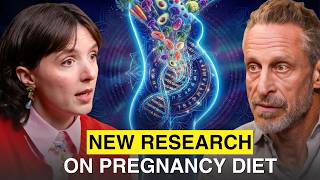
Biochemist Jessie Inchauspé explains how a mother's diet during pregnancy shapes her baby's metabolism and disease risk through epigenetics. The placenta doesn't filter perfectly, so maternal glucose and nutrients directly influence fetal gene expression and brain development. She recommends protein-rich breakfasts, eating fiber first, and hitting 900 mg choline and 300 mg DHA daily.
Chapters
Your womb is not just an oven.
It's more like your baby is a seed and you're the soil. And if you plant this seed in your driveway full of gravel, it's not going to grow as strong and healthy as if you plant it in a nice piece of soil. You're co-creating your baby's genetic plan with your diet. The placenta is not a filter. The placenta does not keep out all the bad and give only the good to your baby. 90% of pregnant moms are below the minimum recommended amount of choline during pregnancy. Even though this nutrient builds their baby's brains. We're lying to moms. What happens during pregnancy is very important for the health of their baby. At conception, your baby's DNA is set, but the epigenetics, which genes are switched on, which genes are silenced, that has to do with your diet during pregnancy. The food you eat sends a sort of like postcard to your baby telling him what world he's going to be born into.
Jessie Inzersepi is a French biochemist. She's a founder and international bestselling author behind the Global Glucose Guidance Movement, helping millions stabilize blood sugar for better energy, mood and metabolic health.
If a mom has low protein intake during pregnancy, her baby is epigenetically programmed to have lower muscle mass. Muscle is the organ of longevity.
You're literally writing the genetic expression software. Hey, it's Dr. Hyman. I'm so excited to share this episode with you today, but before we dive in, I want to get your help. Please take a minute to hit that subscribe button, whether you're watching here on YouTube or listening on your favorite podcast platform. It truly means the world to me and it helps my team and I bring you this podcast every single week. Plus, I don't want you to miss a thing. So thanks so much for being part of this community and I'm glad you're here. Jesse, it's so good to see you again and have you on the podcast. I can't believe the journey you've been on for the last, I guess, 4 years since we first talked.
Yeah.
I think I was in Maui. It was COVID. You just come out with your new book and my friend's like, hey, would you talk to my friend Jesse? I'm like, sure, it's a good topic. The Glucose Goddess sounds good. I'm all about blood sugar and you've blown up. It's amazing. Amazing. It's amazing. Congratulations.
Wow.
Because I've been, you know, beating that blood sugar horn for quite a while.
And, well, you're the OG of blood sugar.
Yeah.
Let's be real. I wouldn't exist if it weren't for you, Mark.
I don't know about that.
Yeah.
But I think, you know, people are finally coming to terms with this and now the new dietary guidelines have basically said, hey, eat more protein, eat less sugar.
Mm-hmm.
Don't eat ultra-processed food, highly processed food. I mean, it's pretty amazing the turnaround we've seen in just a few years.
Absolutely.
So you got a new book.
Uh-huh. And a new baby. Absolutely. Yes.
And I imagine that your new baby inspired your new book, which is called 9 Months That Count Forever. It drives me absolutely crazy when obstetricians say to their patients, eat whatever you want. It's important to gain weight when you're pregnant. And I'm like, have a pint of ice cream, eat cookies. I'm like, are you out of your mind? So we're going to get into all all the nutrition and pregnancy details and why it matters so much and some of the research, particularly around epigenetics and help people understand that. Before we dive in, I want you to share a bit about your story. You know, your book is 9 Months to Count Forever, and it's very personal for you. Mm-hmm. Uh, you had a baby. So take me back to when you were 31 and when you had your first pregnancy and kind of walk me through the journey to how you got to this moment where you wanna tell the world that pregnant women should pay attention to what they eat.
Well, I was very naive. I thought, you know, hey, I'm the glucose goddess. I'm gonna have a perfect pregnancy. I'm gonna have no nausea. Everything's gonna go perfectly. Great, you know, cuckoo. And I was proven very wrong. So my first pregnancy, first of all, I was very nauseous in the first trimester. It's brutal. And then unfortunately, I had what's called a silent miscarriage at 3 months, meaning the embryo had stopped developing. But I had no idea. I didn't experience a miscarriage. I learned at the 3-month ultrasound that the embryo had stopped developing 3 weeks earlier. That I was carrying a dead embryo in my uterus for this long. So it was awful. I would say probably the hardest emotional challenge of my life. I remember telling my husband that if feelings could kill, I feel like I would be dead. That was the amount of angst and depression that I felt for months afterwards. It was very tough. And I realized many women experience miscarriages, but it's not talked about at all. I learned after I went through the journey, I learned that my mom had had miscarriages. And she had never told me, that my stepmom had, that my grandmother had. All of a sudden, people started talking. So I wanted to share my story about this because it can happen to everybody. Even if you're doing all the quote unquote right stuff, these things happen. Chromosomal abnormalities, things we don't yet understand. And I share my story in the book because it's very important for me that anybody going through this feels less alone. I felt so alone. You know what I did?
And you blame yourself.
You blame yourself. And I was like, maybe it's because I had too much coffee, because there are studies showing high levels of caffeine can impact early pregnancy. And I was Googling like celebrities who I've had miscarriages. I just wanted to hear stories. I wanted to know that it happens to a lot of people and it's not our fault. So after that, I got pregnant again.
And by the way, as a doctor, I've delivered 500 babies. Miscarriages are the body's natural way of taking care of something that's not right.
Like you said, I know, but it's still super hard.
But yeah, but usually you don't know that. Like, you don't know that it's kind of nature's way of taking care of things that aren't right.
It is. Yet, you know, as a mom-to-be, you're projecting. You're like, oh, my baby's going to be born in December. And you create this whole story in your head. So when you have the miscarriage, marriage, you have to disconnect and detach and grieve that story that you had. So I get the scientific reason, but the emotional journey was just very, very hard. And I just want to hold space for people who go through that to say, even though it's nature doing its job, it's still really, really freaking hard.
Yeah, it's hard. It's emotionally really hard.
In any case, I got pregnant again. I was very lucky. And my boy was born in May 2025. So he's about 7, 8 months now. And as I was pregnant, because my job is scientific research, I was like, hmm, let me see what I can do during pregnancy. Because my doctor was just saying, take folate and don't stress. And a bit like you said, eat enough so that your baby has enough calories, essentially. But the research showed otherwise. I found incredible studies, incredible data showing that what I ate during pregnancy was influencing my baby. DNA is one thing, but your diet during pregnancy impacts the baby that you give birth to. You're co-creating your baby's genetic plan with your diet.
You say your baby's, your womb is not just an oven. It's like—
Exactly. You're not, it's not just a bun in the oven. It's more like your baby is a seed and you're the soil. And if you plant this seed in your driveway full of gravel, it's not going to grow as strong and healthy as if you plant it in a nice piece of soil, fertilized and dense and rich. So you're co-creating your baby's genetic plan. You're not just an oven. Your baby will not just take what he needs from you. That's another big myth of pregnancy. If you don't eat enough of the right stuff, your baby's not going to get enough of it. You are co-creating your baby's plan.
Although it does deplete you.
It depletes you. And for example, if you don't eat enough, let's say choline, which comes from eggs or animal foods, your baby will pull from your reserves up to a point. Your baby will never get all the choline that he needs if you're not eating enough of it. And the placenta, as you know, is this temporary organ that we grow in our uterus that brings our bloodstream and our baby's bloodstream in very close connection. The placenta is not a filter, Mark. The placenta does not keep out all the bad and give only the good to your baby. The placenta kind of trusts that whatever is in your bloodstream belongs in your baby's bloodstream.
Like mercury.
Like mercury, but also like glucose. Like glucose. So the higher a mom's glucose levels during pregnancy, the higher the baby's glucose level in the womb. And a baby has to deal with high glucose levels in the womb as well in case they're too high. So your baby will feel inflammation. Your baby will put on fat to protect himself. So blood sugar was the first place I dove in and it was just so incredibly interesting.
Yeah. I mean, one of the biggest things, you know, that doctors check for is gestational diabetes. At 28 weeks you get a blood sugar test where they give you this 2 Cokes equivalent of sugar basically, and you drink it and you measure your blood sugar, you know, an hour and 2 hours after. And it's amazing how, how many women have blood sugar dysregulation and it's a sign that they're already kind of on their way to insulin resistance. And the problem in America is that 93% of us have some degree of that, right? 75% overweight, but 93%, even if you're thin, you can have sugar issues. And yet we have now, you know, 1 in 2 people in America with prediabetes or type 2 diabetes. But I think it's, it's actually more than that cuz I think the criteria are too strict actually.
Yeah. And, and the gestational diabetes is not just about the mom. So if you have gestational diabetes, the studies show that your baby's DNA will be epigenetically programmed to be more likely to get diabetes himself during his lifetime. So at conception, when the egg meets the sperm, your baby's DNA is set, but the epigenetics, meaning the sort of programming of your baby's DNA, which genes are switched on, which genes are silenced, that has to do with your diet during pregnancy.
I just want to stop you there because what you're talking about is epigenetics, and most people may not know what that means. I'm going to just take 2 seconds to summarize it. You've got 20,000 genes. More or less. How do, how do genes work? They have to be expressed. So the gene has to be turned on or off. And there's a mechanism for that, which is epi, the epigenome, which is a regulator, which genes get turned on or off depending on what you do. And they have massive influence on our health and what has come out in the research, which is quite stunning. It's not just about diabetes, everything. So cancer, heart disease, diabetes, everything that is happening inside the womb that the baby's exposed to. We call it the exposome, is influencing the epigenetic programming that's laid on top of your genome that determines the health outcomes of the baby when they're 20, 30, 40, 50. It's real. So it's really important.
And that's the thing we don't tell moms. We say, just eat for two, you know, eat enough and you're going to gain weight anyway, so you might as well eat more pancakes. We're lying to moms. What happens during pregnancy is very important for the health of their baby. And the epigenetic data is interesting. So we see in gestational diabetes that genes that encode for type 2 diabetes risk are higher in the babies of moms who had gestational diabetes. And in animal studies, Mark, which is really interesting, they see that when a mom eats a high-sugar diet during pregnancy in rats, even if she doesn't have diabetes, her baby has fat storage genes epigenetically activated. So high-sugar diet during pregnancy could also, in humans, be leading to this epigenetic switch, which means that your baby, from the moment he's born, is more vulnerable to fat gain, to weight gain. And it makes sense biologically because if you have a lot of sugar in the womb, your baby needs to convert that sugar into fat to protect himself from high sugar levels. And that's one of the consequences of, you know, high glucose diet is that you transform some of that glucose. That's one of the reasons that high glucose levels lead to more fat gain because you're transforming that glucose into fat to protect yourself. And so in these rat studies, we see that the children, the moment they're born, they have this fat storage gene activated, and they end up having more fat mass on their body than their peers, even if they eat the exact same diet from birth onwards.
Because of the epigenetic changes.
Exactly. And we need to tell moms about this. We need to explain that epigenetics is something that you control. Now, I don't think we should guilt-trip moms and say, never eat any sugar. It's really hard. I had cravings. I was nauseous. I could only eat like croissant and pain au chocolat the first 3 months. So I know firsthand how hard it is.
You know, in Paris, the wheat's different. The croissants are smaller.
Yes, for sure. But there's actually data, Mark, saying—
Well, now you're making me crazy. I want to go to Paris and have a croissant. Yeah, come hang out.
But there's data actually on animals also showing that during pregnancy, you get more dopamine from the same amount of sugar that you eat. So you may be getting more pleasure from that croissant when you're pregnant. So you have cravings, you have nausea, you don't feel so good. And so eating sugar becomes something that is more common. And in fact, today, most moms eat more sugar during pregnancy than when they're not pregnant. This is from a survey in the US. So what do we do about all this? Well, we learn about the glucose hacks, which I've been talking about for years, but these can also help in pregnancy. So no sugar first thing in the morning. You have a protein-rich breakfast because sugar first thing in the morning is just going to exacerbate those cravings and you really don't want to go there. And I think we should look at the WHO guidelines of 25 grams of added sugar per day being the maximum. Today, most moms eat 80 grams of added sugar per day during pregnancy. So if we could just get below that 25 grams, it would be super, super helpful.
That's actually twice what they wanted to do. But Donald Rumsfeld, when he was working for President Bush, went to the WHO when they were trying to lower the sugar because he was in the food industry before. He said, "We're going to pull $400 million of funding from the WHO if you do this." Are you serious? Yeah, I'm serious.
I did not know that.
Yeah, I wrote about it in my book, "Food Fix." It's so corrupt. So basically the WHO wanted 5% of diet added sugar and then Rumsfeld wanted 10%. And the food industry won. So basically you're really talking about this in a way that I'd really never seen before. I mean, there's books on pregnancy nutrition, but like to really go into the depth of understanding what should be a way to create a healthy baby through food. I mean, there's many other things you can do when you're pregnant, exercise and sleep and rest and, you know, so forth. But how do you help people think about the big topics, the building blocks of building a healthy diet when you are pregnant? Because people, You started with, you know, don't eat sugar for breakfast, which is basically what everybody has. Muffins, bagels, croissants, you know, sugary yogurts, pancakes, French toast, waffles, fruit smoothies, smoothies. I mean, what makes me crazy, especially is this new protein trend. Dunkin' Donuts.
Protein muffins.
Yeah. Dunkin' Donuts now has protein smoothies, but they're just full of sugar. Yeah. So you gotta eat real food. So tell us more about how you think about this.
So the first one has to do with blood sugar and glucose management. It's very important. And the second— so I have 4 basically pregnancy pillars I talk about in the book. The second one is choline. Yeah, choline is a nutrient that builds your baby's brain cells and builds the neurotransmitters, meaning the way that your— that his brain cells communicate with each other. Okay, choline is super important. It's in foods like eggs.
Highest source is eggs.
Highest source is eggs. Well, actually, highest source is animal liver, so it depends if you eat it during pregnancy or not. Egg yolk, exactly.
Liver, if you can eat it, is one of the most nutritionally dense foods. I love it. I mean, I grew up on it. I'm Jewish, so chicken liver, chopped liver was a big thing. But it's really incredibly nutritionally dense. I mean, if you Google it compared to any of the most nutritious vegetables on the planet, it's orders of magnitude more nutritionally dense.
And today we don't eat organ meat anymore. We just muscle meat, which has very important nutrition in it. But so egg yolks are very high source of choline. Any animal food actually. So we're talking a chicken, salmon, Salmon, beef, those are really good sources of choline. There's a little bit of choline in plant foods, but really not that much. To get as much choline as in one egg yolk, you would have to eat 2 kilos of soybeans, so 4 pounds of soybeans. So if you're vegan, you have to supplement in choline. And actually today, Mark, 90% of pregnant moms are below the minimum recommended amount of choline during pregnancy. Wow. Even though this nutrient builds their baby's brains. And in animal studies, when you deplete a mom's choline levels, you give her no choline during pregnancy. The development of her baby's brain is deeply affected.
That's such an important thing.
Fewer neurons, brain development stopping earlier than it should in animals. In humans, we can't do that. We can't say, let's take a group of moms and another group and deplete one group and see the outcomes in the babies. What we can do is supplement moms and see what happens because most moms need to eat more choline. And in fact, the American Association of Pediatrics says that failure to provide choline during this critical time can lead to irreparable brain damage, even if there's more choline during the child's life afterwards.
That's crazy.
I mean, and we don't talk about it even though these big guidelines exist.
The top source is egg yolks, which often were seen to be a bad food because it has cholesterol in it. But actually the dietary guidelines in 2015 said cholesterol is no longer a nutrient of concern in like the fine print. They didn't wanna advertise that they've been wrong for so many decades. But when you're talking about neurodevelopmental issues, people don't realize that 1 in 6 babies is born with a neurodevelopmental issue and it ends up as learning disabilities, ADD, autism, the whole spectrum. And that's a lot, 1 in 6 kids. And so when you say that 90% of women are deficient in this, it seems easy to fix.
So 4 eggs a day and you fix it.
4 eggs a day.
And in the, so there's 2 really interesting clinical trials I want to mention where they've supplemented moms with enough choline. So the first one is from Cornell University and they took 2 groups. One group of moms got 430 milligrams per day, which is basically the bare minimum recommendation. And the other group of moms got 900 milligrams a day, which is even more than the recommendation. And then the scientists wanted to see if they could measure differences in the kids. And they saw that in that first year of age, the kids who had had more choline in the womb were reacting faster to this very important test, which is just an image reaction test, like how quickly does the baby react to images, but it's connected to IQ as an adult. That's why this test is used. Was used. And they saw that in the choline babies, there was 10% faster reaction time during that first year of age. So the amount of choline available in the womb seems to be shaping the development of the brain in a way that we can measure. And there's many things we can't measure. We can't measure how it feels to be in someone's brain. It's possible that if you have enough choline, you'll just feel better in your brain. And when I learned about the studies, I called my mom because I've had a lot of mental health issues in my life. So I was like, mom, how many eggs did you eat when you were pregnant with me? And she was like, oh honey, I ate barely any eggs. She ate Special K, sugar, and orange juice. So for sure, I didn't have enough choline. So for sure, my mom is to blame for everything. No, I'm kidding, but it matters. There's another study also showing placebo group that's receiving zero choline and another group that's receiving 930 milligrams of choline during pregnancy. And the scientists then looked at the kids at 3 years old, and they sent the parents a questionnaire asking about their kids. So is he patient? Is he cruel to animals? How well-tempered is he? This is a questionnaire that it's linked to adult mental health issues, and the choline group did better on the results of this questionnaire. So we could detect differences in the baby's behavior at 3 years old depending on how much choline was given to the moms.
So should women take choline supplements?
You don't need to. You don't need to because it's much better absorbed from eggs, for example. So if you have 4 eggs a day, you're getting the bare minimum. Plus, if you have 2 other sources of animal food during the day, you're going to get to 700 milligrams, which is really high. You can supplement, especially if you're vegan and you don't eat eat any animal foods, you must supplement with choline. It's very important.
I mean, 4 eggs is 600 milligrams, but you were saying 900 milligrams and people don't really want to eat 4 eggs.
So I know, but it's important. I didn't really want to eat 4 eggs. I did it anyway. Cause I was like, I need to get enough choline.
You know, and you're saying it's better utilized than taking oral choline.
Yeah. It's, it's better absorbed. Yes. You can also take supplements of choline if you want. In a lot of like sort of forward cutting edge prenatal supplements, you'll find choline, but moms are not told about this, Mark. And actually in formula, formula, which is, you know, milk for babies, they put choline in there cuz they know it's important. Yeah. But somehow nobody's telling pregnant moms to also do that during pregnancy. Like what's going on? Yeah. Why is this information not being communicated? It's very confusing.
Yeah. It's, it's one of those things you bring up that was, you know, I, I was aware of. Yeah. But it, it's something that, you know, most people don't know and, and doesn't get talked about. And most obstetricians don't recommend for their patients.
And, you know, it needs to change.
If you can tolerate liver, I highly recommend it. And beef liver has, you know, a lot more. It's a very good Source of choline. Chicken liver is great. So I think that's a, that's an important aha that I think most people will not know about. We kind of jumped over the glucose. There's 4 pillars. You said, I wanna, I wanna come back to the glucose thing 'cause it's such a big thing and we have such an epidemic of diabetes and obesity and it's literally programmed in your genes if you eat a lot of sugar when you're pregnant. And it's not just sugar, it's anything that turns to sugar. So white flour, refined starches, ultra-processed food. It's, it's everywhere. It's, it's, it's almost impossible not to eat that if you're, you know, a free-ranging human, you know, and, and you have to be—
you don't grow your own food. Yeah.
If you have to be very diligent, you know, most people shop and buy stuff and they don't even aware of what's in it. And you go out to eat or you go to a, you know, try to food graze when you're in the airport or, I mean, it's everywhere. Like it's just amazing. You go to Starbucks and it's like, Just sugar, you know, like it's just sugar. And I went, I went to buy like a green juice. I'm like, oh, green juice. Let me look. I'm like 37 grams of sugar. That's how much almost is in a can of Coke.
And that's way past the 25 grams recommended maximum amount.
Yeah.
By the WHO. There's a really cool thing that I wanna share. So in the UK in 1940, the government started a sugar ration. I don't know if you knew this, but for 13 years, the entire population of the UK was given only, only 40 grams of sugar per day versus before the ration, they were at about 80 grams per day, which is very high, but it was the war and they had to ration the import of sugar. And this meant that everybody in the country, including pregnant moms, all of a sudden dropped their sugar intake by half. And so recently scientists looked back and called 60,000 of these babies who were born just at the end of the sugar ration or just after, and they wanted to see, did this small, very precise change, have any impact on their health. What do you think happened?
Obviously it did.
So the babies who were developing in the womb during the sugar ration had 15% less lifetime risk of diabetes compared to their peers who were born just after the ration ended. So who had moms who ate more sugar. So just by reducing your sugar intake by 40 grams, you can be protecting your child from diabetes.
It's huge.
Because what happens in the womb really sets you up for life. It's the moment where your organs are being created. Your metabolism is finding its set point. And something really interesting from the research, Marc, is I started to understand that the food you eat when you're pregnant sort of sends this sort of like postcard to your baby telling him what world he's going to be born into. So if you're eating a lot of sugar, your baby is thinking, oh man, I'm going to be born into a world with so much sugar. I have to prepare my body for this. So insulin goes up, fat storage goes up, and your You're priming your baby from birth to be more likely to get the sugar-driven diseases. It's wild.
But you also say in your book that it's not just diabetes or obesity that you're gonna get, or heart disease, that the high amounts of sugar lead to neurodevelopmental issues.
Okay, so that's a big one.
And affect brain development and cause more inflammation in the brain.
Let's talk about that.
And can lead to autism and ADD.
Well, is associated with it. In your womb, your baby's developing all of his neurons and his brain cells. And there are these tiny little cells called microglia glia, which are in the baby's brain, and they're sort of like the rangers. They're patrolling. Oh, is this neuron developing properly? Is this one not okay? I need to go and kill that neuron because it's not doing okay. These are immune system cells that are patrolling, surveying, and pruning your baby's brain as it develops. Now, when you have high glucose levels as a mom, your baby also has high glucose levels. That leads to inflammation. And scientists believe that high inflammation in the womb makes these microglia a little bit overactive because they respond to inflammation.
So they— Yeah, the glia are your brain's immune system.
Exactly. So they start essentially pruning neurons they shouldn't be pruning. And this is why scientists believe, this is the leading sort of theory behind why we see that moms with gestational diabetes are slightly more likely to have a baby who has autism. So if we look at millions of mom-baby pairs, we see that on average, if you've had gestational diabetes, your baby has a 25% higher likelihood of developing autism. Now, I want to be very cautious here. I'm not saying that the diabetes is causing the autism.
It's an association.
It's an association. And the overall risk—
It's a strong one. What was the hazard ratio?
The overall risk is so low. So what was that hazard ratio? 3 in 100 to 4 in 100. That's the overall prevalence, right? So it's 25% increase. And so if you have diabetes, In moms with diabetes, 4 in 100 kids have autism versus in moms without diabetes, 3 in 100 kids have autism. There's signal there.
Yeah.
It's not necessarily causing it, but we know that high inflammation in the womb is not good news for your baby's brain.
I mean, you're, and just to put it in plain English, like if you eat a lot of sugar when you're pregnant, your baby's gonna have high risk of obesity, diabetes, and heart attacks.
Yeah.
And maybe even neurodevelopmental issues. Issues and many other things. So really important. And you're, you're the glucose goddess.
So you, you teach women how to eat sugar the right way in a way that, in a way that doesn't create more cravings and in a way that creates fewer glucose spikes. So it's protective for your baby also.
I mean, this is something called the glycemic load of a meal, which is essentially the way in which a meal in total affects your blood sugar. So for example, I always make the joke, if you put like, you know, 3 tablespoons of Metamucil in a can of Coke, it's gonna not affect your blood sugar as much 'cause you got all the fiber. It's gonna swell up, but the sugar won't be absorbed as fast. So the matrix of your meal matters. Protein, fats, sugar. If you eat protein and fat, you're gonna slow the absorption. You're gonna mitigate the rise in blood sugar. You're gonna mitigate the rise in insulin and the inflammation. Yeah, the inflammation. So not that you can eat huge amounts, but it, it's not like don't eat anything, right? So talk about how, what are the simple steps? And you've, you've written about this in your other books, but I think it's important. Yeah. 'Cause if, if people just for everybody and also especially for pregnant women. What are the, what are the like simple steps and hacks that you can use so that you keep your blood sugar more even and balanced? And now we have these amazing glucose monitors, which really almost didn't really exist even on a widespread level when you sort of, we started talking years ago and now people can see.
Woo. Yes.
I mean, I, I just as an anecdote, I got a glucose monitor. I wanna try it out. It was kind of like, I don't know, 3 years ago or something. And, and I was at my friend's house with the summer and he, or he's like a food fanatic. He just only is perfectly clean, regenerative or organic, no sugar or nothing And he ordered this incredible meal from this farm in Martha's Vineyard. It was like lamb and veggies and we just gorged ourselves. Like we both had the blood sugar monitor on. We didn't eat bad things. We just ate a lot of things. We were stuffed. And I do that occasionally, but not too often. And we both called each other like at, you know, 9 o'clock at night and said, what's going on? Our blood sugar is like 160, which is crazy because both of us are thin. We're fit. And so it's not just the what you're eating, it's also the volume can be, can be a thing too with blood sugar and so on.
So, well, if you eat like, you know, 10 pounds of sweet potatoes, sweet potatoes are fine for you, but that's gonna be a big glucose load anyway.
Exactly. Right.
Yeah. Okay. So first thing we already mentioned, protein-rich breakfast, super important because it sets your glucose levels for the day.
Second thing, wait, what is protein-rich breakfast?
Okay. So a breakfast built around protein. So good protein sources are, well, eggs, we talked about it. It can be some full-fat dairy. It can be some leftover meat or fish from the night the night before, crack it in the pan. You can use protein powder, unsweetened, if you want to make a smoothie, for example. You just want to make sure there's always a protein source. And honestly, for me, it's eggs or dairy. That's my favorite go-to in the morning. I also like leftovers from dinner. It's an easy way to get some animal protein.
And you can have full-fat Greek yogurt, which has more protein, and you can add nuts.
Yes.
Walnuts, almonds, pumpkin seeds, whatever.
And some berries.
And some berries. So the more nuts to eat. And you know, the more thick the yogurt is, the Greek yogurt is higher protein. So that's, that's important to know.
And a key thing for breakfast also is to avoid anything sweet except whole fruit if you want for taste, right? But the base should be really the protein and the healthy fat.
I don't want French toast, huh?
For dessert, Mark, you can have that for dessert. That's another hack. So if you want to eat something sweet, if you want to eat something sweet, have it for dessert.
It's French toast French?
No.
Okay. Because you're from France. I'm like, maybe.
Well, it's like pain perdu. I mean, yes, we have a French version of it. I don't know if it was invented in France. Did Americans just call it French toast?
Maybe.
Because we don't call it French toast.
And you probably don't call French fries French fries either.
No. You know what we call French toast?
American fries.
American fries. We call it pain perdu, which means lost bread. And I think maybe it is French. I think we use sort of old bread. Yeah. So lost bread. So French toast or anything sweet, have it for dessert after a meal. At any point, even if you're pregnant and you want a donut, have it after your lunch or after your dinner, not on an empty stomach. That's going to reduce the glucose spike for you and your baby. So that's helpful. Move after eating. After that big feast, if you had gone for a 1-hour walk, you would have seen a much smaller spike.
Even 20 minutes.
Even 20 minutes. Even doing 50 squats in the living room for fun would have helped because as you move, your muscles absorb some of the glucose you just ate. So you should have thought about that, Mark. Not very glucose goddess of you.
No, I was just so stuffed. I was like a stuffed pig and just needed Drag.
Well, if you're very stuffed, I have a trick. So you can do calf raises. So if you were really stuffed after the meal on your couch, just do little calf push-ups. You know what I mean? Go up and down on the balls of your feet like this, and your calf muscle will soak up glucose that you just ate. Think about me next time.
Finger push-ups.
Yes. So this is something that Mark Hyman just invented, everybody. Finger push-ups, very effective for glucose spikes. You heard it here first. Another one. Okay, put clothing on your car Carbs. So that means never eat your carbs naked. So if you want bread or pasta or rice or cookie, don't have them naked. Add some protein.
Cheese on a bread.
Yeah, like cheese on bread, like almonds with your cookie, like a Greek yogurt with the donut, like chicken with your pasta. Always add clothing.
We're not recommending donuts here, folks.
No, but you know what I mean.
I get the message.
Listen, if you're going to eat the donut, have some almonds on it. So those are some core hacks that you can use anytime.
I think that's important. Put clothing on your carbs, meaning don't eat them alone.
It's the Metamucil and the Coca-Cola. That's what you're doing. You're putting clothing on the Coke. And one more thing I would say is try to start your meals with vegetables, because studies show that if you eat the vegetables first at the beginning of your meal, you're creating this sort of protective mesh in your intestine that slows down how quickly the glucose from carbs arrives in your bloodstream. Fiber. Fiber. Exactly. Yeah.
There's some interesting studies on wine and, you know, and eating when you eat what in a meal and what that does to your weight and metabolism. And, you know, and everybody knows that if you are hungry and you have a glass of alcohol or wine or whatever, you'll feel a buzz. But if you wait till halfway through the meal and then you have the same amount of wine, you don't get the rapidity of this buzz and you don't get the same spike spike. So that's the idea. You're just trying to lower the glucose spike.
Yes, exactly. You're just trying to lower the spike. And so if you fill your stomach with fiber at the beginning of your meal, you can eat the same pizza or pasta afterwards, but it's going to arrive more slowly into your bloodstream, therefore smaller spike, therefore you get a smaller crash. So not more cravings. So you don't have to get rid of all the carbs you eat, but if you eat them in the right order, time combination, you're not going to kick off a cravings roller coaster because that's what I used to be on. I would have sugar in the morning and then at 10:00 AM, at noon, At 2, at 4, at 6, at 8:00 PM, I wanted more sugar. I was on a big roller coaster.
I think that's such an important thing that you just mentioned is the cravings, because a lot of people believe that this is just who they are. I'm just like a sugar addict and I can't stop these cravings and there's nothing I can do about it. I remember once teaching a workshop and it, it was on Ultra Metabolism, one of my first books, and it was really about like balancing your blood sugar. And we had a very specific specific diet we had for them and we had protein shakes and we had green juices that were not sugary and broth and all that stuff. And, and this woman, she's like, look, I'm gonna try to do the program, but there's no way. I'm like 50 years old. This has been my whole life. I've never been able to not have cravings. I'm gonna try my best, but like, I'm just telling you, it's not gonna work. Literally like the next day she's like, this is amazing. I don't have any cravings. And I'm like, it's, it's not that hard. It's like a day or two and you sometimes will go through withdrawal depending on how much you're eating, but you, you literally can break the cycle if you eat the way you're talking.
And it wasn't, she was not somebody with cravings. The cravings were a symptom. I like to think of symptoms as messages. I like to think of symptoms as your body being like, hey, please, Jessie, stop with the sugary breakfast. You know, those cravings were her body saying to her, you need to balance your blood sugar.
Okay. So we did blood sugar. We did choline.
Let's talk about, uh, you choose. We can do protein or omega-3s. Let's do protein.
So, because protein's like, you know, The new dietary guidelines just came out and one of the big recommendations was eat protein, increased protein recommendations. And there's a lot of fast food companies that are just putting protein in foods like we put fiber or whatever. And tell us about protein.
So when you're building a baby, you're building a human body from scratch and the human body is very high in protein. So protein is not just muscles. People think protein is just muscles and bodybuilding. So many things in your body are protein. The collagen in your skin is a protein. Insulin, the hormone that keeps your blood sugar steady, is a protein. Your immune system is made of proteins. So proteins are key. And by the time your baby's born, if you exclude water, he's 50% protein. 50% protein. So you need to eat protein to build that protein in your uterus. So naturally, the amount of protein in your diet should increase. But this is not something that pregnant moms are told. And there's new studies studies, um, the fancy word for them is the indicator amino acid oxidation method. This is a fancy word to say we now have better tools to understand how much protein you need to eat when you're pregnant, and it's more than we previously thought.
What's the amount?
So first trimester, 1.2 minimum grams per kilo per day. Second and third trimester, 1.5 grams per kilo. And breastfeeding, 1.9.
Yeah, and that, and that, by the way, mirrors the new dietary guidelines, which is 1.2 to 1.6.
And during pregnancy, you have to be cautious and really consciously think, okay, I need to be getting more protein. And also what's tough is that as pregnancy goes on, you have less space in your stomach. Your stomach gets smaller, so it's harder to eat bigger quantities. So you kind of have to focus almost entirely on protein. That should be the main thing around which you're building your diet, because that's the most important thing for your baby and for you. So increase the amount of protein that you eat. In animal studies, again, we can do many studies in animals around pregnancy, not so many in moms, as you can imagine, because we can't manipulate pregnant moms and see what what happens. But in animals, what they find is that, again, having to do with epigenetics, if a mom has low protein intake during pregnancy, her baby is epigenetically programmed to have lower muscle mass.
Wow.
Yeah, it makes sense. The baby's receiving not that much protein, so his body setting is like, we're not going to be born into a world with a lot of protein. I should keep my muscles small, prioritize essential organs. And we have dozens of decades of years of research on animals. When you reduce protein in the mom, the baby is born smaller with less muscle mass and a higher likelihood of disease later in life. Protein is key. And especially in these studies, if you keep calories adequate and you just reduce protein, this still happens. It's not about not eating enough. It's about not eating enough protein. And today, 70% on average of moms are not hitting the minimum protein requirements during pregnancy.
That's incredible. 70%. I mean, there's such a protein debate in this country right now because the new dietary guidelines came out and there's a whole group that are saying we don't need eating that much protein. The previous recommendations were 0.8 grams per kilo. This is too much. There's no way we can feed the world with this. I mean, there's a lot of criticisms and, you know, 0.8 grams per kilo was the amount to prevent protein deficiency.
Exactly.
So it's how much vitamin C do you need to not get scurvy?
Exactly.
It's like 60 milligrams, you know, how much vitamin D do you need to not get rickets? Maybe 30 units. Or how much vitamin D do you need to not get osteoporosis? Maybe 5,000 units. And for water it could be the same, right?
Like, maybe one glass of water is enough to not die, but everybody knows you should be eating more than— drinking more than one glass of water a day. It's kind of the same concept. So we need protein during pregnancy because we're building another body.
So what does that look like?
So listen, for me, that worked out to about 100 grams of protein a day minimum. So I would have 4 eggs in the morning, which is 30 grams, and then I would just have protein at every snack and every meal. I built it all around protein. I have recipes in my book of all the stuff I ate. I was making this, like, supercharged snack almost every day. It was a skyr yogurt, which is higher in protein, plus 2 scoops of grass-fed whey. So that snack was about 80 grams of protein. And I was putting passion fruit and berries and sea salt and tahini and peanut butter. I had that every single day. The recipe is in my book. But 80 grams of protein right there.
I'm not pregnant, but I'm going to eat that.
Yeah, exactly. I'll send you the recipe. You could be pregnant. Who knows? I'm kidding. So, yeah, that was a great snack. So just make sure you're eating enough protein and you kind of have to spend time to to measure how much you're eating. So in the book I have a big table where you can note what you're eating and kind of see where you fall.
Yeah. Like 4 ounces of chicken is 30 grams.
Exactly.
4 ounces of meat is 30 grams. Yeah. 6 ounces of fish is 30 grams. And protein powder, like whey protein is great if you're, it's, it's an incredibly good thing. I use goat whey or regeneratively raised whey. I mean, it's, you know, you wanna get clean stuff that's not full of crap.
And just remember the amount of protein you eat is sending a message to your baby.
Yeah.
So it's important to give him enough cuz otherwise things shift, you know, your DNA, the, your baby's DNA might have a plan, but then Depending on the amount of protein available, that plan changes and adapts, and it can have lifelong repercussions.
So why is it important then for people to have higher muscle mass?
Ooh, because muscle is the organ of longevity. Because having a lower muscle mass is linked to a higher risk of all-cause mortality. Muscle mass is not only a sink for excess glucose levels, it's also a beautiful metabolic organ that keeps you healthy, that keeps you vibrant and alive. Very, very key. And it also prevents, you know, long-term frailty, breaking bones, which are a big risk factor when you get older.
I agree. In my book, Young Forever, I call it the currency of longevity.
I like that.
I personally was a yoga teacher. I ran 5 miles a day. You know, I rode my bike. I, you know, I always exercised for the last 50+ years, but I hated the idea of gym. I, when I was 50, I couldn't do 10 pushups. I didn't, I was intimidated because I was kind of skinny and tall and I didn't like to wear with all these guys with giant muscles and, and I smelled and it was like, I don't know. I didn't like it.
Sounds great.
And I thought it was just for meatheads and I had so much judgment about it. And then I decided I better get my act together cuz I was telling all my patients to do this. So at 59 I started working with a trainer and started, and I can, I can show you pictures after, but like I, I had a picture of me when I was 26 and now when I'm 66, it's like a different body. And, and I, and I didn't think I could do it at this age, but at any age you can start to do this. There's a book I gave my mom. She got very mad at me for her 60th birthday. It's called Growing Old Is Not for Sissies. And it was all about these elder athletes. 'Cause she, her thing was basically she would say, every time I have the urge to exercise, I lie down till it goes away. So, and she suffered from it. She lost so much muscle. She was so frail. She got severe osteoporosis when she was older. I mean, she, it was her, it was her frailty and lack of fitness that killed her. It's so important. And what you're saying, and this was really, I didn't even know this data that you're saying is that the protein that the mother eats during pregnancy determines the limit of the muscle that the child can build when they get older.
And you see this, right? You might have two friends and they have the exact same workout routine. They both lift the same amount of weights, but one builds muscle easily and the other one doesn't.
Yeah.
So there's many reasons for this, but what was taking place in the mother's womb during pregnancy fluency could be a factor in determining your epigenetic ability to put on muscle. This blew my mind when I saw it, because imagine the ripple effect. Imagine how much better life is if you can build a lot of muscle that protects you. So that's protein. It's really important. It's really key. And I don't think people talk about this enough. So as a pregnant mom, really, protein should be one of your main focuses. And then the fourth pillar is omega-3s. I know you love omega-3s. So DHA is an omega-3 fat that builds your baby's brain as well with choline. And in particular, what DHA does is that it helps guide the long arms of the brain cells that go and connect with each other. So it's really, really cool. And in, in lab experiments, you see that if you're trying to grow neurons in a, in a Petri dish, you have to add DHA, otherwise they don't connect with each other. And DHA is a fat that is made by microalgae in the ocean.
That's right.
And then it's eaten by fish and it goes up the food chain. And us as humans, the way that we have it is by eating fatty oily fish. So salmon, anchovies, mackerel, sardines, et cetera.
Herring.
Yeah, herring. The recommendation is 300 milligrams per day, which kind of works out to fish twice a week. Now again, kind of like choline, you have the bare minimum recommendation, but studies show that having more than that could be even more beneficial for babies. Yeah.
I mean, it's kind of crazy if you look at the data.
Mm-hmm.
60, 68% of US adults have like deficiencies in vitamin D and 95% have suboptimal levels. 95%. That's a huge number of Americans. So think of the amount of women who are pregnant who have low levels of omega-3 fats and it determines neurologic development, cognitive function, risk for neurodevelopmental disorders, for metabolic health, it's so important.
It's so important for the brain.
And the part of the problem is, you know, historically omega-3s were everywhere. That's why humans had them. They were in all the wild plants. They were in all the wild animals we ate, all the wild fish. You know, if you eat a, you know, a deer or elk or bison that's wild, it's gonna have a higher concentration of omega-3s. Obviously fish, it used to be the, it was such a valued currency. I don't know if you know this, but in the Northwest, the Pacific Pacific Northwest, the Native Americans used these extremely oily fish. I forget what they were called, but they were like, they were like money.
Huh?
They were so valuable. I don't think they knew about omega-3s back then, but they just knew that it was such an important source of fat and food.
And it builds the brain. And in studies, when you supplement moms with about a gram and a half of DHA per day, scientists can measure a 4-point increase in the IQ of the baby at 4 years old.
If you wanna eat healthier but don't want complicated recipes, every week I send out Mark's Kitchen, one simple, delicious, science-backed recipe you can actually make. When you sign up, I'll also send you my Eating 101 guide where I break down the daily eating habits that reduce cravings and improve your health. Click below and let's get cooking. It's huge.
Can you imagine?
And in, in Europe, um, you probably know this, but the formulas have DHA.
In America, it's not mandatory.
It's not mandatory. And, and then very few companies have it and there's a few who do. And I just interviewed a woman who started a formula company. Part of the podcast, Bobbi is the name of the company, and it has DHA in it.
So why is it in formula but nobody's telling pregnant moms to also take it?
Well, it's not mostly here. It hasn't been for years.
Okay. Well, it's getting into formula in Europe, even in Europe. You know, I, my whole pregnancy was in France where DHA is in baby formula, right? But nobody told me to take it during pregnancy.
Right.
Which is even more important than during breastfeeding and formula. So it's wild. And also there's another piece of information that's worth mentioning is that since the '80s, the rates of preterm birth, so baby being born too early, has gone up 30% in the US, 30% higher than in 1980, babies being born preterm. And one of the main links is the increase in omega-6 inflammatory fats and the decrease in omega-3 fat consumption. And in fact, and this is well established, when you supplement with omega-3s, you reduce the risk of preterm birth. Birth. So all moms should be eating enough fish and also probably supplementing to make sure that they're getting enough for their baby because the recommendation of fish twice a week doesn't significantly increase the amount of omega-3s in your cells. Like really, you should be having more than that, like at least a gram.
I mean, part of the problem is that, you know, fish is really healthy until humans came along and poisoned the oceans through coal and burning of coal, which releases lead and mercury and other toxins, and then you get that in the oceans. Instead of acid rain, it's metal rain. It goes in the oceans and the algae absorb it. Then the little fish eat the algae and the bigger fish eat the little fish and the bigger, bigger fish eat the bigger fish and go all the way up to the sharks and the swordfish and the tunas, which are laden with mercury.
Yes.
However, and they're also extremely high in omega-3s. So this is a problem.
Well, it's actually not. I don't think it's that big of a problem because in the studies you you see that during pregnancy, but also anytime, the benefits of eating fish that are high in omega-3s outweigh the downsides of the heavy metals. Like, it's better to eat fish to get omega-3s than to not eat them, even though today they're not as healthy as these.
I would agree. Just don't eat fish that eat other fish. Like, eat the little fish, anchovies, sardines, sardines, herring, mackerel. Those are the best. Even wild salmon, if you're eating small salmon, it can be okay. But even grass-fed, like, we see everything. Carrie makes me crazy. Everything we see It was organic. Everything was grass-fed. Like there wasn't anything else, right? Everything was a pasture-raised chicken. It, they didn't, we just, it was just normal, right?
Yeah.
When my grandparents, you know, were alive, that's what they ate. And, and if you have grass-fed butter, you get pretty good levels of omega-3s. Yeah.
But not as much as you get in fish. Like fish is, for sure.
For sure.
Even farmed fish today, Mark, like they even supplement the fish with, do you say algae or algae in English? Both. Okay.
Tomato, tomato. Okay, cool.
So they even supplement the farmed with fish with algae oil to make sure they have high omega-3 levels. So even if the only thing you can get is farmed fish, it's still going to be beneficial. Absolutely. So I did fish 3 times a week, plus I supplemented with omega-3s. And the omega-3 supplementation world is a whole other can of worms because you have to make sure it's low in toxicity, et cetera.
So in my book, I explain how to find one, how to find a good one. But I do think most women should take an omega-3 supplement. I do think they should take a vitamin D supplement. They definitely need, obviously, a prenatal with the right types of folate.
Exactly.
And they also— so I probably need, you know, I tend to die high in choline, like you said, but I don't know if— is it bad to supplement choline?
No, it's not bad. I did actually. My prenatal contained choline, but nonetheless, you can't get everything you need from supplements. Like, you need to also make sure that you're getting it from food because just the format of the molecules is better absorbed by you and your baby. But the supplements are an insurance policy. You need to make sure that your diet's also containing all this important stuff. You can't supplement yourself out of a bad diet. You can't just eat, you know, McDonald's every day and be like, it's okay, I'm taking supplements.
No, you can't. You know, people do that. Or it's like the same thing with the statins. Oh, I can tell you, you know, whatever I want and I'm taking a statin. You know, it doesn't work like that. So your, your book really lays out these principles. It gives people practical suggestions of how to do this, recipes that are delicious, and it, it doesn't guilt trip women, but it just educates them about what to do to actually help take care of their own bodies. And by the way, the diet you're eating is not just good for your baby. It's good for you too.
I felt great during pregnancy because I ate better during pregnancy than any other time, to be honest.
And how much weight did you gain?
11 kilos.
22 pounds-ish. That's normal.
Yeah.
25 pounds. The baby's like 6, 7 pounds. Like, you don't need— you got a placenta, you got fluid, you got other stuff. But, you know, sometimes women gain 40, 50, 60, 70, 80, 100 pounds, and they don't— like, there's a cultural framework that that's okay because you're pregnant. Yeah. And I think it's really a mistake.
Some of my friends were like, oh, when I was pregnant, I was going to be fat anyway, so I just ate everything I could never eat otherwise. And I was like, this is actually really not a good idea for your baby. But we have so many myths, and moms are not told about this stuff. And I think on the topic of guilt, it's important because as I was sharing this information on Instagram, I got a few DMs from moms like, oh, I feel guilty now. I'm like, listen, my opinion on this is that when you're pregnant, you're going to feel a sense of responsibility. There's pressure. You're building another human. It's complicated. You might feel stressed. You might feel overwhelmed. I don't think we can take that away. But what 9 Months That Count Forever, the book, is trying to do is help you navigate the pressure in a healthier way. So, you know, if you do these 4 things, you're really setting up your baby with a good, a good base.
And it's simple. It's really simple. It's really simple. Balance your blood sugar, eat more protein, choline, get choline and DHA.
Yeah, exactly.
Pretty simple.
Pretty simple. And I hope that this book becomes completely irrelevant very fast. Like I hope everybody gets this, all doctors start talking about it and this book is not useful anymore.
Yeah. No, I, I'm so glad you wrote it because, you know, I, as I said, I delivered 500 babies.
Can you talk about that a little bit? Like, I wanna know more about that.
About what?
How did that— about delivering 500 babies? Yeah. It was amazing.
I mean, I was a family doctor. I got trained in a community hospital in Northern California where there was only family doctors. I learned to do C-sections. And then after my— and I actually was really interested in OB even in internship. I went to this small town in Sault Ste. Marie, Canada. No, somewhere. I don't even know where it was. I didn't remember the town. It was a little town and it was 24/7. I lived in the hospital and just, I basically barely slept and just delivered babies nonstop for a month. And then I went to work in a small town in Idaho called Orofino, which nobody never heard of as a logging town with 3,500 people, no stoplights, and not even a McDonald's or any kind of, any kind of a chain of any sort. And, uh, there was 5, uh, family doctors and 1 drunk surgeon. I was probably the most highly trained in obstetrics and also in C-sections. So I was a C-section guy. So I had to cover all my own patients and then I cover their patients. And so I was exhausted after 4 years, but it was an amazing experience. I mean, delivering babies is just one of the highlights of my whole career. I mean, it's such a joy. And, um, and I was very deliberate with my pregnant women about how to stay healthy.
And so you really talked to them about it?
100%. I didn't even know what I know now, but I, I studied nutrition in college. I was always a healthy eater. I, I really, um, you know, studied a lot about, about this just out of my own interest, uh, before medical school. And I actually, uh, took nutrition at Cornell. So I was really, uh, very aware of it. You know, it was one of the highlights of my career. And, and, uh, and I was, and I was so frustrated that people just didn't understand this and then didn't understand how important it was to regulate their biology in a way that you're, you're in a safe, you have a sacred duty here to create a little human. And how do you create a healthy little human? And that's what we're talking about here. How do you, how do you give your baby the best chance at a good and healthy life? How do you not program it by eating the wrong things or by not eating enough of the right things? Yeah.
It's about vulnerability.
Yeah. And this whole field of epigenetic research is so important. Um, so I think, I think people are starting to become aware of it, but you're literally writing in the genetic expression software.
You're the great programmer of your baby's DNA.
That's right.
Yeah.
Yeah. So you can program it.
It's quite a responsibility.
Yeah. It kind of is. And I'm like, my daughter just like, I'm like, she just, you know, just recently became pregnant. So I'm like, oh God, what is she doing? She's exhausted. She's an orthopedic surgery resident. She's working 14 hours a day.
You do what you have to do.
The hospital food is shit. You know? I'm like, I can't get you to be healthy.
Well, any small step that you can take is going to be beneficial. And also, if you already had kids before, or you're learning about this late in pregnancy, it's okay. Your baby will be okay. I was on the cusp of prediabetes at 25 years old, even though I was eating pretty healthily, probably linked in some way to my mom's diet, but I was able to fend it off. You're able to work with your epigenetic programming and your vulnerabilities. But for my son, I was like, if I can set him up to not be on the cusp of prediabetes at 25, I want to do what I can. To do that. So when you know more, you know, you change what you do, but, um, just one part.
This is so great. So Jessie, people can get your book anywhere, 9 Months to Count Forever: How Pregnancy Diet Shapes Your Baby's Future. It's out now. And you also have written other books, The Glucose Goddess Method and The Glucose Revolution. Where can people find you and learn more about what you're doing?
The best place is Instagram @glucossgoddess. That's me.
And Glucose Goddess, check it out.
Thank you, Mark.
Yeah. Thanks for being here. Thanks for coming all the way from France.
Mm-hmm.
Your baby, I hope, is somewhere close by. Yeah. Yeah.
Oh, he's back in France. He's fine. No, I'm kidding.
I'm kidding.
I'm kidding, man.
And, uh, and I wish you the best of luck and thank you for raising the awareness around sugar. You know, I was beating that drum for a long time, but I wasn't as smart or as good as you at it.
Oh, stop it.
So I thank you for doing the work and, and getting this out there. Really, thank you, Mark.
Thank you for having me. It's a pleasure.
My pleasure. If you love that last video, you're going to love the next one. Check it out here.
More from AI




This Is Why 99% of Skin Conditions Don't Heal — And What Dermatologists Won't Tell You






Why you need to start strength training today #strengthtraining #healthyaging #fitness
