Are you experiencing burnout?
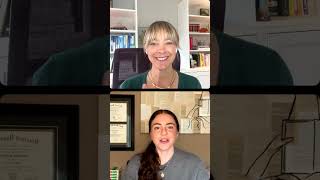
Dr. Nicole Cain and Emily discuss anxiety, panic, and burnout through a trauma-informed lens. Cain offers concrete tools: a panic pack of sensory items, a 4-4-4 breath technique, and a five-minute daily reset practiced for 90 to 120 days to rewire your nervous system.
Chapters
Friends. Oh, my goodness. I'm really excited to be getting on this live today. I'm going to be talking and hanging out. We're going to talk about books and we're going to talk about healing anxiety. We're going to have practical solutions, really good conversations. It's going to be really fun. So hopefully you can catch this live, but if not, we'll definitely save it. And I'm going to do my very best to put notes in the captions and answer your questions and it's going to appreciate very much respect. And I'm so pumped to be talking about all things anxiety and burnout with today.
Hello. Hello. Hey. Okay. I'm glad I connected. Great to see you.
It's so good to see you. I just have to say, my friend, I am so in love with your book. Oh, good.
So glad.
Where were you when I desperately needed you in 2014? Probably 2013, 14, 15, etc, like, where.
Were you keeping it together? You know, get to the book portion. So.
Yeah, yeah, yeah.
Oh, go ahead, continue.
I was just gonna say I've been so eager to have this conversation with you and I read your book. It felt like I was like, this is so much like my story. I so connected and resonated with you and you were in Chicago and I used to live in Chicago and so all the things, all the love.
Chicago is a great setting to have that. The breakdown. Breakthrough. For sure.
Chicago is a great setting for a breakdown. Breakthrough.
The winter really accentuates everything. Yeah. I call it my book, but there's nothing like standing on a platform in negative 20 degree weather when you're doing really bad to kind of drive it home.
Yeah, yeah, yeah, absolutely. Yeah. That was. I had. So I had like flashbacks as I was reading about that. I was like, oh, God, I remember that Belmont Stop. And the tears that froze to the face with the cold wind.
Yes, absolutely. I felt the same when I was reading. That's my favorite part of everyone's book is the very beginning when they talk about why they needed the book too. And just kind of how it's. Every solution starts with a problem, so love reading about it.
Problem. Yeah. What stuck out to me, I have to say I'm like having a love fest over here in. In your story that I really resonated with and I know a lot of people that I'm connected with on. On Instagram and all over the world. Is this, like, desire to achieve, to be the best version of yourself to say yes. And I. You said that. And I'm Trying to find the page where you talked about that is that you wanted to take all the opportunities, you wanted to check every box. You wanted to do all the things you liked.
It.
And it was draining you. It was draining you. And I really resonated with that. I had a professor one day, he was like, Dr. Kane, you know why I love you? And I was like, oh, why? And he's like, because you always say yes. And then I was like, ooh, I don't think that's actually a good thing. I think that's problem. And it turned out to be the. The birth of panic proof. It turned out to be a giant problem for me. So I think that there's a lot of. A lot of beautiful overlap with her books. And I can't wait to chat. So.
So much overlap. Absolutely. I love the reframing of a compliment because I feel like there are so many compliments around. You're so reliable. Don't know what we would do without you. You're so easy to manage that when you look a little bit deeper means maybe I'm too available. Maybe I need to say no. I need to be a little bit more difficult. People don't perceive me as maybe having boundaries where I could have boundaries. So, yeah, so much overlap.
I identify. I'm curious where you're coming from. So one of the things I teach about is I call them the six Fs of autonomic arousal. And so those are. Most of us have heard of fight, flight, freeze. But then there's also the flop, fawn and fracture. And one of my big trauma ways of adapting to that was a fawn response.
Yeah.
And so I was a people pleaser. I always said, yes. I wanted to be liked. I wanted to be respected. I wanted my name to be in bylines. I wanted opportunities. But it was really what looked and was appealing to the people around me was actually an indication of deeper stress, deeper suffering. Tell me about your experience, if you don't mind. Like, where do you feel like you come from with that? Yeah.
I was recently reading and writing something around how you. If your coping ends up benefiting you, you are just very lucky like that. I, similarly, I am very regimented. I refer to myself as being very well trained. Like, left to. To my own devices. I. If I have a week off, I'm coming up with a schedule. I've got a walk routine. I've got, like, all my meals planned. I've got who I'm socializing with when, like, I'm very well trained. When without any other input. And so my stress response is to just double down on that and to a lot of times that looks like fun, or if I feel like I can't handle it, honestly, I kind of flee, which can look like trying to leave a role when things get really tricky, or trying to step out of relationships when they feel tricky, or just trying to distance yourself from them, that stress. And so I. That. That's kind of where I fell. But when you talk about your. That your response to these. How. And this is always interesting to me as somebody who looks at burnout, how does that benefit you? And did that because it benefited you, does that make it harder for you to stop?
This is so trauma informed. What a good question is, is you're asking with my fawn response is how is that beneficial? Because when we look at our behaviors and our symptoms as adaptations or coping mechanisms to something that did or did not happen to us, then we get a lot more information as opposed to, well, fawning is just dumb. Why do you do that? Don't do it. But. But you're looking at it. You're asking this question from a very beautiful trauma informed place. And for me, it came from growing up in a really stressful household where I felt like I had to regulate everybody around me. And my dad had. He was military, his Marine Corps, like, very Midwestern. I know you wrote about that in your book. There's this, like, very Dutch, kind of tough love, Midwestern style of parenting. And I tried to please them, I tried to earn their favor. I tried to calm their moods, I tried to make them happy. And that was really protective. That helped when they would get really angry. And we had a lot of economic instability at that time. And so they were really stressed and all the reasons. And so that adaptation, which was so helpful for me and helped me survive and feel safe and have a semblance of personal power, then later in life when I'm saying yes and trying to get everybody to think I'm valuable and to feel approved of it was a real. A real fertile soil for later panic and anxiety and burnout. I think my panic came out of a place of burnout.
Mm. It's incredible how that bleeds from, like a personal kind of upbringing into professionally how we show up and how that impacts the rest of our life. Um, do you tend to consider. I'm sure it's a blend of both, but nature or nurture, when you're talking to clients, um, it sounds like this is kind of, you know, a blend of upbringing but how much of just kind of personality do you see at play as?
Well, I think about it as we come into this world inheriting tendencies, inheriting trauma. And we know from the genetic research that we can have traumas six generations ago that continue to affect us today. For example, the Dutch famine, that descendants of people who. Women who were starving during the Dutch famine have different biomarkers than women who were pregnant, that didn't starve and that had enough food. And so we know that with research like that and other research, that we can inherit trauma. So I think that if I look through my family history, there's a lot of trauma that was passed down, especially maternally. And so I came into this world inheriting all of this stuff, for better or for worse, some beautiful, some not so beautiful. And then our brains, when, when we enter this world, from the minute of our brain is present, it's paying attention to everything that's happening outside of us, everything that's happening inside of us. And it's trying to adapt. And so it's like a metaphor I like to teach with is, it's like putting on a warm coat, and you're in Chicago in the winter. Putting on a warm coat is an adaptation. And your body and your brain gets cues from the environment, from your genetic, from your nutrition, and it will adapt, it will put on that warm Chicago coat, and those adaptations will happen from head to toe. And soon people who are studying the nervous system have really nailed down like, okay, polyvagal theory. This is what the vagus nerve is doing. And we have. The gastroenterologist are like, ooh, this is the gut microbiome, and this is what the gut is doing. And we have immunologists that are like, okay, this is what inflammation is doing in the brain, causing a fight flight, freeze response. But a long answer to your question is if we look at that adaptive model and then we look at all the ways that we adapt as a whole person and put on that winter coat, then the next question is, is then when I moved to Arizona, actually, and wherever you are, where are you now? Are you still in the Midwest?
I'm at Seoul. Created one cold for another, but I love it. You did.
You moved too.
Arizona, it's too hot. I don't know how you guys do it.
I snowbird. That's how I do it. I don't do it. But it's like you, you move to a different climate. And so you had your Chicago climate, and you adapted by putting on a coat in the Chicago climate. And then you continue to adapt when your circumstances change. So you get a different coat in Seattle, or you take off your coat in Seattle, I go to Arizona, I take off my coat. And so what happens for some of us, though, is that those adaptations get stuck. And if we don't continue to adapt to our present circumstances, we continue to reenact what was useful in the past, but that reenactment can cause problems in the present. So circling back to the question you asked of how is this serving you now? Or what is the benefit of this now? And then we're able to use that as an inroad as to, okay, so this is an adaptation. What is this an adaptation to? And then we can go in and we can reprogram that. And that's like everything, all of that is in here. And it's like my, my beautiful baby. You can change and reprogram your brain, your nervous system, your gut, your immune system, your neurotransmitters, all of it. Your body can totally change and continue to adapt.
I love reading about that. I haven't seen it broken down into it's nine anxieties, correct the different. And I feel like we so often kind of have this kind of blanket idea of the experience of anxiety. And I won't make you detail all nine because hard to even know where you are and once you get to like 4 or 5. But do you see certain types of anxiety more often than others?
I see a ton of gut anxiety where people feel like butterflies in their stomach or knowing, but it can get so extreme. And I see this a lot in kids, school age kids that get gas, bloating, diarrhea, tummy aches when they're worried or stressed about something. So I see a lot of gut anxiety. And we have a lot of opportunities to work with anxiety by actually starting with the gut. And the second thing, the second type of anxiety I see really commonly, especially right now, is immune system anxiety, where. So have you ever experienced allergies? This is like itchy, watery eyes, runny nose, a skin rash, anything like that. Does that resonate once in a while? Yeah. I used to have horrible allergies. And so my doctor was constantly giving me antihistamine, like Benadryl and Zyrtec. And that's part of my story, is I started out with just terrible allergies, rhinitis, which is nasal congestion. And I was just getting on all these antihistamines and inhalers and medication after medication. But what's really interesting, that a lot of us don't know is that histamine, that same chemical behind allergies, could actually be behind anxiety. Histamine is as stimulating to the nervous system as adrenaline. And so if your anxiety is immune system anxiety, but your doctor gives you an antidepressant, you're going to now have antidepressant, all the antidepressant side effects, you're still going to have allergies and so you're still probably going to be anxious because we haven't treated the cause.
Yes. That's so interesting for the different types of anxieties. I know you kind of talked about it in your book, but where did you feel like you fell and then how did you address it in your journey?
Yeah, I love this question because it's provides the opportunity for nuance is where do we fall on the nine types of anxiety? Because people often ask, well, I have all of them. When I'm panicking, you're like, I don't, I couldn't possibly pick just one. And so what we want to do is we want to look at anxiety on a spectrum, which you do in this book. You actually, you have a beautiful diagram in here. It's so good. But yeah, and like, look at this. This is amazing. See, so this is like a spectrum, right? So this is from your book, the Cure for Burnout. I know you know that, but for those who are watching, I'm hanging out with Emily, the Cure for Burnout. We're just talking about our books and we're having so much fun, but I think about anxiety on a spectrum. And so starting on the green side, this is when you feel really calm and really good things are happening in our lives, but we can handle it all and we feel good, we feel relaxed. And then as our stress mounts and our de stressing coping skills aren't compensating as much for that, we start to get a little bit of arousal or a little activation. And so this is the perfect time to figure out what your main 9 type of anxiety is, the first symptom. And so maybe that first symptom for you is like a little bit of tightness in your chest or maybe it's a little bit of worried thoughts, or maybe it's a little bit of butterflies in your stomach. Because if you can catch that and be attuned to the whispers from your body, then you don't have to wait for it to continue to intensify into the yellow and then all the way up into the red, which is that crisis. That's. This is your cover. This is extreme burnout. This is panic. This is rage. This is collapse. This is hopelessness. It's all of those crisis symptoms where all of the bodily systems are just screaming like, pay attention. We're not okay. And so for me, it started out with racing thoughts. And you talked about this in your book too. It's like you woke up in the morning and the first thing you felt was dread and your thoughts started going. That's how it started for me too, is racing thoughts. But as it got worse and worse and I went from green to the pay attention into yellow into red in the red zone. It was just all like, no bars held. It was horrible. It was awful.
Yeah. A lot of people, I. Or at least that. And the work that I've done wait till red until action is. And like we talked about earlier, you're. There are so many benefits to disregarding your experience until you get to a point where like the, the machine, the performance machine is just not going to keep. And that's the only thing that will stop people. It's not the loss of relationships. It's not the health scares. It's not the fact that you have no personality or interests, even though those are all kind of there in the background. There's really no punishment for those types of things. That feels as egregious as messing up at work. Like finally getting to the point where you're double booked, you're dropping the ball, you, like aren't showing up as the professional with the same motivation that you did in the beginning. That is what finally gets people to stop. And so what do you feel like you see as far as when people finally take action, if they are kind of waiting until this red because we're kind of trained to ignore the yellow and just be tough and be grateful.
Exactly. And, and that was my experience, is that I pushed through the yellow zone and I got to the red zone and I was pushing through the red zone. And then it got to the point where my relationships were struggling. My. I owned a business with a business partner. It was an integrated mental health clinic that we built together. And she was like, dude, this isn't working for me. And she was totally right to feel that way because I was so stressed and so anxious. And I would send her text and be like, I'm not, I'm not okay. Do you have, can I have some theanine or do you have a remedy that I could take any advice? And so my professional life was being affected and thank goodness my, I was showing up really well for My patients. And thank God I made the changes I needed to before it would have started negatively impacting my practice. But it was affecting my business relationship. She was really aware of what I was going through and it was affecting my marriage. It was affecting my relationship. I lost so much weight because my gut anxiety that I wasn't able to eat very much. I lost so much weight. I stopped having my period. And so it's like red, red, red. And I think it's exactly what you said. It was that. That professional. It's like, oh my God, like this is starting to bleed into my professional life. Like, this is. We gotta make a change. And so I really appreciate that. I'm also. I. I identify as an enneagram type 3 when I'm out of balance. Yeah. And you do. Okay, so.
Yeah, not just when I'm out of balance.
You're like three wing. Three wing free. Yeah. So we're achievers. And so it's like. For those who are like, what are you talking about? It's the enneagram. And that's a companion test to the Myers Briggs type indicator, which you may have heard of, like introvert, extrovert. So the enneagram. There's nine types my friend here, Emily and I, we both identify with three, which is that achieving motivation. And so when the. The lifestyle that I had created was then impairing or impacting my ability to do what I love most and achieve and do all the things then I was like, okay, we gotta change it now instead of after my job fails.
Definitely. And I feel like it's the trickle down of the. The what is it? Hierarchy of needs, where it's like self actualization. Forget it. Forget my interests, forget I don't need it. Social. Like the social tier. Yes. Priority. But, you know, can kind of come secondary to base needs, which is, okay, now my job is at risk. My ability to support myself is at risk. So I actually snap into it. And so we're willing to compromise on so much until it finally comes down to that base tier of I'm gonna lose security and safety if I keep.
Yeah. And you got that tough love from your parents too, because you wrote about in your book how you were like, I wish they would just tell me it's okay, I don't need to work, they'll just take care of me. And they were like, nope.
And that.
That was my experience too, is. Is that I didn't have that enablement. It was about security and it was about having safety. And I think that's A problem more than ever now with the economic system that we find ourselves in. Was it. Did I read it in your book where there's some statistics about the cost of things like groceries and things are up? Did you write about that? I read it somewhere.
I think I mentioned it, but I don't know that I included the numbers, which is good because I wouldn't be able to call them right now anyways. Yeah, I feel like just general levels of stress have risen. Like, I know a question that I'm asked quite a bit is, have you seen this rise, you know, since the pandemic? But just generally, if everybody was sitting at, you know, a two or three out of 10 before and that was the level of anxiety they were accustomed to, it feels like everybody jumped up. And it's almost, at least in those that I've talked to, seems like those who've struggled with anxiety their whole life, they're like, okay, well I know what I do to cope in these situations. I know how to handle it. It's like the kid who like was really smart all through high school, so then they get to college and they have no study habits versus the kid who always had to study. And so they go to college and they do have study habits established. The people who've always had anxiety kind of just ramp up what they were doing to manage it. And the people who did not have anxiety previous to all this increase in stressors and then that increased in sense of anxiety are like, what the hell is this? And how am I supposed to. What do you mean? You expect me to work through this feeling of anxiety and that we're just supposed to keep having to function through it because it is going from 0 to 60, whereas other people were kind of dancing around 30, 40, so it was easier for them to bump up. I don't know if you've felt or seen that in your practice as well.
Absolutely. And the research is backing up exactly. What you're saying is that more people than ever are experiencing anxiety. And so if you haven't been dancing this dance and you're like, oh, I'm an old hand at this. I know about my panic packs and I know about breath work and I know my skills and strategies. And suddenly there's an overwhelm of stressors on top of everything else that's going on in your life, plus you don't have the tools or resources and you're like, what the heck is this? It's a lot.
It is. And it gets very personal, which is what I liked about just the context of your book and being able to talk to people about, like, what are you eating? Like, could there be something like. And as far as mold or like, something that is impacting your body? Because that's a layer deeper that I just don't talk to clients about because I'm typically staying in the professional realm. And for a lot of that, it's just not my area of expertise. I can talk to them about stress in the workplace, but going deeper, far deeper into, you know, generations past trauma or stress that could be impacting them or, like, their. What they're eating or their environment. And those elements are so personal. And so I don't always get to go there. But I love that you were able to talk about it because it does impact the stress experience. But that's again, something where, you know, when employers are told, you need to talk to your employees about stress management, they can only say so much too. They also can't be like, you need to be exercising. That's a lawsuit waiting to happen. Even though exercise is kind of that first, that first defense, that kind of inborn stress management tools. So was it always that easy to talk about these elements that are very personal to stress management, or did you feel like you had to ease in there with them?
I think in terms of being really transparent and vulnerable, I have made a mindful commitment to be transparent and vulnerable. And that then includes the risk that people could misunderstand that or that they could label that. And we know mental health is still marginalized in some regions. And also I bring to the conversation a new way of looking at it, and what an honor it is that people are vulnerable with me. I want to reciprocate that gift. And so when I decided and made that commitment to write this book and to go around and talk about it, it's like, the more that I do it, the more beautiful it feels and the more I get to connect with people in a really real way. Like, how could I possibly say, I'm going to help you end anxiety, but I'm not going to tell you about mine at all? And so it feels really good. And I have really good. These solutions work. I have people all around the world that are sending messages and they're getting better, and I'm like, oh, this is so rewarding.
This is.
If this is the outcome of going through something horrific, then I'm so grateful to have alchemized that, because I wouldn't wish that on anybody. But it's been. It's been a journey My friend.
Yeah, absolutely. The people that you help does make the people who do not like the material worth it. Yeah. And I like that in talking about it, like, I know when I'm talking to professionals, there are people who are on board with whatever element I bring to them. And then there are people who kind of don't want. They want very cut and dry, very clinical solutions. And to, through no fault of their own, they're not consuming the same content I am. Where somebody's like, like, sprinkle cinnamon over your pillow and you'll feel better. I'm like, okay, yeah, I'll try everything once. Be so angry just hearing like any type of suggestion that doesn't feel very cut and dry and have a lot of data to support it, which all these. But the more. I know people use the words woo woo nowadays, but there's information that is very cut and dry that people tend to accept more easily. And then there's solutions that are just as helpful for a lot of people, but that do feel kind of softer. And so people are more resistant to them. And I like that you included both because I feel like even like everything in here. You guys should see the appendix for this thing. There's so, like data to support for all of this. But there are also solutions where even though I feel like I know a lot about stress, anxiety, managing different things, there were so many things that I was like, I have not tried that I have not considered that or I should, you know, do this thing that. Thank you for doing all the research for us so we don't have to go out and find it. But even if you think you know a lot about stress and anxiety, you, there's more to learn and it's. It is in here. So that was really fun for me to read because I feel like when you read enough about stress and anxiety in the professional development books, you kind of start to see a lot of the same information.
Yeah. Do you have at the top of mind, like one thing that stuck out to you that you hadn't read before? Because I have the curse of knowledge.
Right.
So I'm like in it all the time and it's like fun to be like, oh, yeah, that was odd to remember to keep talking about.
Yes. So I, I have a list of my notes, actually, but I listed things that I need to be like, doing more of or eating more of. I was looking at the dosha. Is that what it is?
Yeah.
I'm really hot. And so for. I'll have you explain what the dosha is then figuring out what mine was and that I need to be eating more like peppermint and cucumbers and like different things that could complement, like, any potential inflammation, if that is kind of how I run. That was really interesting to me. There was a lot. I have a lot of notes from this, but.
That is so fun. That's. So that's from Ayurveda. And so for those who are listening that are like, what is Ayurveda? A lot of us are familiar with traditional Chinese medicine. We've heard of acupuncture, maybe we've even gotten dry needling or we've received herbs from your traditional Chinese medicine doctor. And so that's a traditional form of medicine out of China. And Ayurveda comes from India and it's way older than any sort of modern medicine that we have today. And in Ayurveda, they talk about how when we're in balance, when we're in a state of optimal health, that we can function our best, we don't have symptoms, we feel really good, we can thrive. And then anything that knocks us out of balance, the body will tell us that by showing us symptoms. So it's very much philosophically validating the way that I look at things from a trauma informed perspective. And in Ayurveda, you were describing that you may go out of balance and experience pitta symptoms. And so that's fire. So people who are more pitta tend to be really driven. They are very prone to burnout. They may get more hot and agitated. Or contrastingly, being exposed to heat like in Arizona may make them feel worse, as opposed to someone who's more on the vata side. So I'm more vata, which is more cold, a little bit floaty. Lots of ideas, but maybe not the follow through, anxious. Many perimenopausal postmenopausal women become more vata. But adding heat to a pitta will make you worse. Mind and body, but adding heat will help avata. So now and then the third is kapha, which is wet, cold, heavy, sluggish, lethargic. And so now we have a little bit of nuance instead of saying, I have anxiety in my chest. And Ayurveda practitioner may say, well, what does it feel like if you have pitta chest anxiety, you may feel heat and violent pounding and your heart is just really intense and really fast and you're like agitated. But if you feel vata chest anxiety, you may feel like your heart is skipping beats and it's light and it's it's palpitating and you feel worried and your brain is distracted versus Kapha chest anxiety is you may feel like an elephant is sitting on your chest and you're so heavy and you can't get a breath and you just feel so weak. And so suddenly we're not just anxious, but now we know we have anxiety in our chest. But we don't have just anxiety in our chest. Now we know that we have anxiety in our chest that looks like Pitta. And so instead of just giving you an antidepressant, we can be really strategic in meeting the body's unique presentation of symptoms, of solutions that are going to put you back in balance and make you healthier so that the body can naturally resolve those symptoms on its own. Which is the coolest thing.
Yeah. Was very interesting to learn about. And it's another one of I know on your page you have a couple of different quizzes. It's another thing where it's like how do I get closer to just more information? I love information. I feel like some people love inspiration. Some people are afraid of information. And those two people I have. I know I tried to force information on people who like really don't want to hear it. But it's so helpful to know get closer and closer to being able to manage whatever it is that comes up and less afraid of it. I think that that fear of the any bad that could arise just keeps you trapped there in that bad. Which I know is something that you talked about too. The not acknowledging something. Just a lot of those issues worse.
Yeah. What you deny, I will amplify. What you resist will persist.
It sure will. Yeah, absolutely. I thought it was interesting the talking about overlap of just the experience of stress and anxiety and burnout is. There's so much in burnout management that just has to do with stress management and day to day being able to manage normal like day to day stressors on top of personal stress. And there's just your personal experience with anxiety and what that looks like for you and your body. And then there's also managing day to day stressors. Do you tend to recommend anything when it comes to it's not just me that stress but like these are the circumstances that tend to lead to it. Do you see certain circumstances more often or anything?
I think that the most important variable with circumstances that are stressful is does it feel within your personal sense of agency?
Yeah.
And I think that you really actually wrote about that beautifully in your book. And so for those who jumped on or who Weren't here at the beginning. I'm hanging out with my friend Emily, and she wrote the Cure for Burnout. I highly recommend it. It's so good. And so we're talking about the kind of marriage between our two books. I wrote Panic Proof, and we're just hanging out. We're talking about healing. And I think that you wrote about this beautifully in here, where you were looking at. You said, I want to do the things, but that it's not just about doing all the things. Right. You were excited about the things, but it's not just about what you're saying yes to. It's not just about. Yeah, you say this in the introduction, actually. You're like, they recommend that I cut something out, quit the job, pause the degree, be ruthless about saying no to new opportunities. But the problem was I wanted to keep doing everything I was doing. I liked my colleagues and my job. I wanted this degree, and I was interested in the material. You just wish it wasn't so hard. And so you explore topics of mindset, personal care, time management, boundaries, and stress management. And I really appreciate that. And I feel like it fills in a lot of the gaps that I see in Panic Proof for really enhancing that messaging where I feel like panic proof. What I'm emphasizing in there is, is going back into a sense of groundedness in the body because we have control. We used to think we didn't have control. We call those involuntary things like our heart rate and our breath, but we can actually control that. And if we focus on what we can control, which is going back in and working with the body, then that's going to free up space in your logical brain. So that the strategies that you write about in here, mindset, personal care, boundaries, all these things, once your body is calmed and your emotional brain is no longer running the show, and amygdala hijack, we call it, which is then bypassing your logical, strategic brain. And then we're just on this fight, flight, freeze, flop, fawn fracture. Now we're gonna have access. Once we've calmed the body, we're gonna have access to use all those other tools. And I actually saw that you posted some stuff about the panic pack on your Instagram, and I was so excited because that's my favorite practical go to for people, for the body.
Yeah, absolutely. I think that is so. I think it's a great kind of introduction to. If you're feeling anxiety and this is kind of. You're just starting to experience it, you don't have all of these kind of go to coping mechanisms yet just put something together and like have something to reach for so you're not just spiraling. Thought it was very helpful. And I have, I am an ice girl. Like I've owned more ice helmets than any person should and like have always known just, okay, I need to go take a cold shower. I need to buy something. I need to do whatever it is that helps me. But I loved seeing that you could just package these like kind of improvements of the senses and it can help pull you out of your head. And thought that was really just. I've never seen it packaged like that. So I was like, this is perfect. And I think I do this already. So I'm going to blend these two in time for our talk.
It's so good. I built my first panic pack because I used to have horrible phobia flying. And I was like, what do I need to bring on the plane? Because I can't just eat Xanax. Like there's got to be a better way. And so I like got this sequiny purple fanny pack and I put legs of things in it that I've learned about. And I was like, oh wait, this is something that would benefit other people. So I actually have some goodies here. Do you mind if I show you guys?
Go for it.
Because you inspired me. I've been like following all your stuff. So I have this little pink pouch. This is like, I don't know, you could probably like the size of a book a little bit smaller. But you get a cool pouch and then you can put in it whatever you want. And so I have things. So just like the cold pack or a heat pack. If you're vata, get a heat pack. If you're pitta, get a cold pack.
Right?
And so that fits right in here. And so cold especially has been studied like in dialectical behavioral therapy. They teach about putting a cold bucket of ice where it stimulates around your eyes and that stimulates your vagus nerve to send you into calm. It's called an mammalian dive response. But girl, I don't want to stick my face in a bucket of ice when I'm at work or driving down the interstate. So these packs are amazing. You can get them online. They're like a first aid cold pack. And then we have things that can stimulate brain stem. So this is like touch, taste, textures, smells. So there you could put these stickers with rough texture on your water bottle. And so if you're feeling stressed and activated, you can just rub it and get that Stuff sensory stimulation. It's super fun. I have fidgets galore here. So, like, you have all this energy. You can just hold it subtly. I like unicorns. And so there's other fidgets. This one is weird, and I feel like it looks kind of like a spider. But each person can pick their own fidget, right? And then this. I have no affiliation with this company. This is Herb Farm. And of course, before you take anything, talk to your doctors. But I like this. This is something I've used. It's called Anxiety Soother, and it's got herbs in it that I teach about in the book that I like to use. And then the other thing is breath. And I found these little necklaces online I want to show you. And so I teach about using a straw, but they have these cute little necklaces which you can breathe through so you can wear it. It's kind of subtle. You just kind of breathe through it, and it slows down the breath. And there's a 4, 4, 4 breath that you can do. So you inhale slowly for four counts. You hold your breath at the top for four counts. You exhale as hard as you can for four or more counts. You hold at the bottom for four counts. So all these things and more are things that will help when we're in an activated state to get out of that emotional hijack. We got to bring you back into the body. And using tangible things that you can taste or smell or touch or use temperature will give you back the access to your logical brain so that you can start to be more aware of, like, okay, what's happening in my life? What's not happening in my life that I need? What is this an adaptation to? Is there something in the past, like putting a coat on that I'm reenacting? And you could start to take control, which is so fun.
Yeah, absolutely. I. I love the packaging of it. And I now I need to get a little here for all of my things that I just carry around loosely. I was gonna say, when it comes to agency and how this is something that we can do just to kind of maintain ourselves, like, feeling like there is. There is a solution gives you talk about panic freedom, but is such a good step towards that freedom of, okay, even though I'm scared to go on the flight, like, I have something I can do, if that panic starts to flare up, like, I still have to live my life, I'm going to go on the flight. Or, like, I have kind of like health anxiety. Certain foods make me nervous. Even though I have no allergies. Anxiety is such a joy. But those cases, it's like, okay, I'm still, you know, I'm abroad, I'm going to eat what I want to eat. And if I start to, you know, feel rise and anxiety, I have ways that I know will help me manage it. So it really helps on that journey to kind of not letting the anxiety or panic run the show and just living your life and then knowing if that happens, I have a solution for it. And I feel like a lot of anxiety is just fear that you won't have the resources to handle something should it happen. So it gives you one of those resources to handle something should it happen.
Exactly. It's taking your agency and your power. And something that you said, I think is really important I want to emphasize is that I can't conquer a fear of flying if I don't get on a plane. And you can't conquer worry about certain foods if you don't mindfully, of course, you know, you're smart, you have doctors and all that stuff. So I'm not telling someone with celiac to go eat wheat to heal that. Right. But is do the thing that makes you nervous. And I write about this and it's called the panic reset. And the panic reset is something that you would do every day, five minutes a day, for 90 to 120 days. And what it will do is it will retrain the brain, the emotions, your body and your nervous system so that it is no longer reacting in the same way to whatever it is you're anxious about, like driving on the interstate or flying in a plane or public safety speaking is that I walk you through everything that you should do, five minutes a day so that when stress does strike that you have that agency that you know exactly how to deal with it.
Yeah, absolutely. I love it. I love that it's a very personal approach. And I feel like a lot of the work that I do around stress management is often kind of proactive stress management when it comes to day to day stress. Stressors and just, you know, if dinner is stressful for you every night, it's not causing necessarily this. In some ways it is causing that stress response. But it is kind of that busy form of stress where it's like how could you make everyday meals easier? How could you make getting the kids out the door easier? How could you make all these different things easier where underneath the planning is your actual experience. But in cases I don't get to talk about that actual experience, it I'm just talking about the kind of active piece. And so for anybody who feels like they have a really strong handle on the active piece but wants to learn more about themselves and how they can manage their experience, that I feel like that's really helpful.
Absolutely. I love that it's. That's so intentional. And instead of waiting to get into that yellow zone and that red zone is being really intentional and it doesn't have to be incredibly time consuming and you don't have to change your entire life in order to see improvements and see changes.
Yeah, absolutely. Sorry if I'm tearing up. I'm. I just got back from international travels and I'm sick and I'm trying not off on camera.
So everybody who's hanging out with us, thank you for being here. I'm hanging out with my friend Emily and she wrote the book the Cure for Burnout. And this is a really good book. I highly recommend it. Please go buy it. Support Emily. It's just awesome. It's practical, it's really personal and it's easy to read. It's accessible. There's beautiful images and there's a lot of like step by step strategies in here. Oh, here's the. Here's your. I was looking for this picture. We were talking about the stoplight. Yeah. And so you have a lot of really good step by step. You have journaling exercises. It's just awesome. So highly recommended it. Please everyone support Emily's book. We want her to write more books. So the publisher has to keep buying her books. So that means you gotta buy it. And we're also talking about the marriage between burnout and panic and anxiety. Yes, the two books. So you know how on Amazon it's like other people have bought this. So if you guys feel like getting some awesome books, they can hang out together on the shelf and you can take your power back. You can feel like yourself.
Yes. And something that I feel like was common in both of our. The way that our books were written is that we. It comes from kind of one on one practice of working with individuals as opposed to just it being a lot of information. I. It's nice to get those client stories and to really hear about how these things look in real life when applied.
Oh, I love that. Yeah.
Yeah.
That makes it really relatable and it takes it out as a theory and makes it applicable. I talk about in panic.
Poof.
For those who haven't read it yet, I have six people, their composites of real clients that I've worked with and we go through the journey with them. We have Aria, who had a panic attack during sex and ended up running in a panic attack naked through a hotel lobby. We meet David, who had a medical cause of his panic and anxiety that he wished would have been diagnosed 40 years sooner. And we have Charlotte, who had endocrine anxiety, but it was blamed on postpartum kind of post baby. And so how to advocate and get good testing. We have Jenny. We did inner child work with Jenny. We have Esme, who had polycystic ovarian syndrome, which is imbalance in her hormones that caused horrible uterine issues that we linked back to early childhood experiences. So it's just really fun. And so you get to see the different things that we're teaching about be applied in these accessible people, these real life experiences.
Yeah, absolutely. I think you told a story of. I think it was different from the ones you just listed of a friend who's drinking a lot of kava. Kava tea.
Yeah, yeah. She's slamming kava. Yeah. Which is in here.
Things that people do in order to just kind of feel like they're doing something. It's so helpful to read those kinds of examples and to see. I know that I've recently thought I need something for flights that is going to be like Xanax, but that is not Xanax. Like, I want. How many of these stress gummies do I need to take in order for it to feel like I'm taking a Xanax? And the limits 4. And it does not feel that way. So it's asking those questions. Or when you read it back to you in a book, like, when somebody's drinking that tea, it's like, am I this person right now that is coping hard enough to the point where something else needs to be explored and it's helpful and it's approachable. And so if you are doing any number of things that I know that we kind of hear about, but if you are, like, taking on vaping because you are looking for stress management, you are drinking more than you might normally drink, you are leaning into different discomforts. You know that you're not getting enough sleep because you're so anxious that you wake up with racing thoughts, or it just feels like, this is the only time I have to myself, I'm not going to sleep. I'm going to go on my phone instead, or do a hobby instead or watch a show instead. If you are, there's just like an endless list of ways that you might be coping online. Shopping too often, ordering food too often. Just any number of things where you know you're doing it to make yourself feel better. We are so often taught to lean into that as opposed to figure out what it is that we are trying to cope with. It feels like, well, I'm coping with my job and I can't quit my job. So, like, it's just a matter of coping. And so I feel like both books invite you to explore what is it you're coping with and can we get any closer to resolving that as opposed to ordering $10,000 worth of Uber eats a year?
What do you feel like for you as we're, as we're coming towards the end of our time? I'm eager to hear what made the biggest difference for you. Like, what was your turning point in.
My overall burnout experience? Honestly, it was. It was doing. Figuring out how much I could do before I was overwhelmed. And I still to this day know when I'm teetering at the point of, I could take on this opportunity, but it would cause me to compromise somewhere else. Like in my book, I say, people say, oh, I'll find the time. Like, time is just hanging out under a rock somewhere. You only have so much time. And the clearer you get with, like I said, I'm just like, ruthless about scheduling and planning. Like, the clearer you are about when somebody's asking me for something. It's logistical. It's not personal. It's, do you have five hours to do this project? Do I have five hours to do this project? Yes, I can take it on, or I can do three hours this week, two hours next week, or no, I don't have capacity to do this. Getting really clear about that took out all the interpersonal back and forth that I used to do where it's like, this is a really good opportunity. What if this was the opportunity that catapulted me into the rest of these other opportunities? What is this person going to think of me if I say no? They'll probably not ask to work with me again. What are they going to tell these other people? Or, like, when you're in an office, to dynamic, you know, the storytelling you do about the implications of you agreeing to something or not agreeing to something and how that could impact your bonus or your promotion or whatever that is. We can tell so many stories. And so I know for myself, when it came to time management and boundary setting, I had to get so clear on what, where my limits were, and especially when it came to timing. So that if I'm saying no to something, it's Just because it's a matter of capacity. And I know if I try to go above that capacity and it starts to show everywhere else, like I'm not finding time. I'm taking time from my evening, I'm taking time from this other project. I'm taking time from spending time with people that I want to spend time with. And so for me it was getting really clear on that. And it only gets harder. Like I hate to tell people that, but the more success you accumulate, the better the opportunities are that find you. And the harder it is to say no to them. It's like you, it only gets harder. So you have to establish that where you are so that when it gets harder because you're going to become more successful, you are still able to recognize those limits. A lot of people get more successful and then burn themselves out so hard because the fish get bigger and bigger.
I think it's such an act of self love to say no to good opportunities. Yeah.
So hard. Especially if you're like. I talk about how the two types of people who experience burnout most often are high achievers and people pleasers. And then there's a third type, but those are the two big ones that you see. And if you're a high achiever like we talked about being enneagram threes, achievement comes above so many other things and it's largely benefits you and gets you a lot of praise up to the point that it starts costing you more than it affords you. And I had to reach that point and have really bad experiences at that point of exhaustion and desperation in order to learn to respect it. But you do forget, you will forget every couple, like every year or so. And you have to remind yourself how bad it is so that you don't keep overstepping.
So being really, I think like you're so deliberate the way that you keep your calendar and so maybe writing down and creating your stoplight strategies and writing down for those who are listening is like, what are signs that I'm moving towards an imbalance in resources and what I have available versus what's being asked of me or the opportunities and what are my pay attention signs before I get into yellow and red? So that. Because we will forget. But if, if we write it down, we can improve our chances of catching it before it catches us. It's sort of like the serpent eating its tail, right?
Absolutely. And if you don't know what your signs are that you're starting to slip into stress and burnout, ask the people you spend a lot of time with. Because probably happy to tell you, like, hey, we're getting deliveries every single day. What's going on? Or like, you know, I see that you've been going to bed later and later. I see that you've been online way more. I see that you are, you know, getting snappy with your direct reports when you're normally very patient. What is going on? People can tell. And a lot of times we're kind of the last one to show up to the party. So, yes, absolutely. Create kind of those markers for yourself and if you don't know them, ask people around you.
Oh my gosh. That's the best piece of advice because I always know when my husband's stressed before he does. I'm like, ooh, you're stressed?
Nobody wants to hear it.
He's like, no, I'm not.
Yes. Yeah, it's the little things. I mean, I talk about like, stress tells where I'm shaking my leg and have bitten a hole through my lip before I even register that I'm stressed. So you know the small ways that you're clenching your jaw or that you are clicking your pen or you're sighing a lot more than usual. These ways that our bodies kind of trying to tap us on the shoulder that we completely disregard until we are like rocking in the corner trying to figure out what to do to handle the red.
Oh my God. Gosh, you are so brilliant. That is so good. Yes, your stress tells. I like that wording. So everyone listening. What are your stress tells? Write it down. Ask the people around you. Take the nine types of anxiety quiz because your stress tells maybe tells that you didn't know were stress tells. And so it can help you zero in. And then read these books for amazing solutions. And be sure to be sure to follow Emily. She posts a lot of really great content and how else can people find you? Do you have like something that you're offering or like ways people can get involved with the work you do?
I have linked on my profile. I just have my website and then from there I have under the topic of professional development, burnout. I have a newsletter and and I speak companies. I've spoken to PepsiCo and Macy's and Nickelodeon and a number of other companies about burnout management and what you or your group or your team or your company can do and then individually highly recommend either reading or listening to. If you know that this book is just going to collect dust on your shelf, listen to it. Listen to it at 1.5 speed while you get or do make dinner or whatever to drive around and just kind of absorb it that way. So those are. Yeah, those are all listed on my. On my website. What about you?
Did you do your audiobook, by the way? Did you read it?
Did you?
Yeah.
Yeah.
Oh, we need to talk more about that offline. That was so fun.
It was an experience in itself for people who do audio. I don't know how their vocal cords handle it. It was. I really feel for Taylor Swift on her tour, three hour nightly.
No kidding. Yeah. Yeah. You can find me at Dr. Nicole Kane on Instagram on my website. My book, Panic Proof is anywhere books are sold. Please.
More from Dr.

Did you known that there are 3 stages of iron deficiency? Which stage are you in?








141. How to Tap into your Inner Self for Ultimate Wellbeing with Dr. Christian Gonzalez

140. Hacking the Vagus Nerve to Calm the Nervous System with Nicholas Hool, Ph.D.

How to Tap into your Inner Self for Ultimate Wellbeing with Dr. Christian Gonzalez | Ep. 141