Intuitive Eating for Mental Health with Wellness Coach, Josie Santi
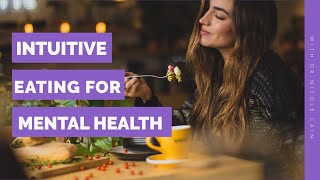
A recorded conversation between Dr. Nicole Cain and holistic wellness coach Josie Santi about intuitive eating and its role in improving mental health and well-being. They discuss personal journeys away from restrictive diets toward a mind–body approach (drawing on Ayurveda and mindfulness), the importance of reconnecting with bodily signals, practical steps (mindful eating, weekly practice) and the emotional/comfort role of food.
Chapters
Foreign.
This is Dr. Nicole. I'm so glad to be with you tonight. And I wanted to start by telling you a little bit about what we're going to be talking about today. And then pretty soon we're going to have a really cool guest on and it's going to be about a 15 minute conversation and we're going to be talking about a really important hack to helping you get the most out of your nutrition. Because if you're anything like me, you've tried all sorts of different diets, you've tried changing what you're eating and you haven't really seen that it makes a huge difference. In fact, it can be pretty inconvenient. And my story started similarly when I was really young. My symptoms started with apple asthma and rhinitis, which is congestion. And that quickly spiraled into anxiety and just mood fluctuations. And my parents would tell me, you're just so moody, you're so emotional, you're so sensitive. And I also dealt with a lot of digestive upset, a lot of digestive symptoms. And growing up in Iowa, you eat everything that is beige colored. And so we would eat milk and corn on the cob and mashed potatoes and all of the things that were very Midwestern and typically really high in specific ingredients and really low in others. The standard American diet. Right. And so I'm dealing with congestion, I have asthma and I have anxiety, difficulty sleeping. And then I go away to college and I'm on six prescriptions, like 20, 20 years old, six prescriptions. And my symptoms are getting better. So I start to play around with nutrition and so I start focusing on adding more greens and I don't really feel any better. In fact, now I'm feeling more tired and my gut is feeling worse. And so then I started explore researching on paleo and Mediterranean and no matter what I did, it wasn't working. And so there's a hack that we're going to talk about today and I'm really excited and you are here with us. I'm so happy.
Yes, yes. Sorry for the technical difficulties. I always struggle joining these. Always, always.
I honestly, honestly was just having a great time, just kind of babbling about my experience with nutrition and how there's all these diets out there and oftentimes my clients and my story is that we may make these changes and do the perfect diet, but we don't see the results. And I love, I've been following you online and I so resonate with your stories. Let's introduce you.
Yes.
Everybody, this is Josie and hi, everyone. You are a coach. You are a guru. You're an amazing writer, by the way.
Thank you. Thank you so much. I've always been a writer, so I love going back to my roots and.
Hearing that I've been reading. And so everybody who's watching this, make sure that you follow her account. And so it's J O S I E S a N T I. So follow her account. And she has a website and that's all in her bio. And you can read all of her resources, learn about working with her. But oh, my gosh, girl, you're like the whole package. You're amazing.
Well, thank you. Right back at you. I mean, you really are. You express everything so well. So right back at you. It's the same thing. It's fun to have this, you know, way to kind of offer all this insight to people. Like, I. I'm such a huge social media fan just for that reason of, like, it's. It kind of gives people like us that are like, here's information you need, just take it. It gives us kind of the realm to do it. So. But thank you so much for all your. Your kind words. It's so great to connect with you because I'm such a. A fan of your work, too, and all of your content.
Thank you. That's really sweet. And so I'd love for everyone to get to know you a little bit. And then we're going to talk, we're going to dive in. We're going to talk a little bit about this hack that you and I have been planning together. And just for everyone who's watching, we have a hard stop. And so we'll make sure that we don't drag this on forever. And so we'll save the video, make sure that you save it and love it. And so, girl, tell me, tell us all a little bit about you and what brought you to this journey. It's a career shift.
Absolutely, absolutely. So I'll give you my whole spiel and excuse me in advance. I've had this cold I can't shake for the past couple of weeks. So sorry for everyone. You have to listen to my nasal voice right now. But so basically, I have always kind of wanted to be in fashion. I always say, like, I never really saw myself getting into health and wellness growing up. I was kind of the kid, you know, I was aware of health and nutrition because my mom's always been very passionate about, you know, she shopped at Whole Foods when all the other moms, you know, didn't even know what that was yet. Like, she was very into nutrition, so I was aware of it. But I kind of. I felt pride in being the girl in high school who would, like, get French toast and pizza for lunch instead of salads. And, like, I kind of felt this, like, rebellion against health and wellness because I saw it as, like, I don't care about calories. I don't care about, you know, fats, proteins, carbohydrates. I want to enjoy my life and eat and be happy. I do not want to be these girls that are just so conscious of their weight that they're, you know, limiting their calories and everything. So I almost was, like, anti health and wellness, because that's in my mind what I thought that it was. So I wanted to go into fashion and become a fashion writer, become an editor for Vogue, do that whole thing in New York. That's kind of what I wanted to be when I grew up. And then going to college, I studied English, and then I just got really interested in religious studies, specifically Eastern religion, so, like Buddhism and Hinduism and Taoism. And I was so passionate about it. So I started taking classes just for fun. And I, you know, told everybody, like, I just want all the classes I can take. I'm going to do nothing with this degree. But through those religious studies classes, I learned about ancient medical practices like Ayurveda. And to me, that was kind of like the connecting point for anyone who doesn't know, like, Ayurveda is the most ancient medicine practice still practice today. It basically is. It kind of stems from Hinduism, but it really relates, like, kind of the mind, body, spirit together. And for me, that was the clicking point of, like, oh, yeah, health is not to lose weight. Health is to be your very happiest, most like, soulful self. And that, to me, is where everything clicked. So from then on, I just got more and more interested in how to treat my body for the happiest life or the most fulfilling life. And that kind of became a calling to me in a lot of ways was like adjusting what we see as health and wellness and turning it more into what it is really meant to be, which is to just live our happiest lives possible using, you know, nutrition and our physical health and energy as tools to get us there. So it was really kind of a turning point for me, learning about all these other religions of the world that have used kind of different forms of medicine practices for years and years and years and realizing that's what I should be doing. That's what I got to spend my life doing. So I kind of stopped caring about fashion after that and went all in on this one and then obviously became a certified holistic health coach. And interestingly enough, I honestly did not start joining the program. I went to Institute of Integrative Nutrition, and I did not start it thinking, I'm going to become a health coach. I actually was just so passionate about wellness, and I wanted to know what's next. I wanted to continue learning. I missed the classes in college, so I really just kept up with my learning. And then kind of partway through, they were talking about, you know, becoming a health coach and what that means, and I was like, oh, wait, like, I can do this. Like, all of my talents kind of point to this. Like, I want to be doing more than that, more this. So that is kind of how I started my health coaching business and started Wellness by Josie, which is a holistic health coaching service. So that's my long answer to your question.
I love. I feel like we're kindred spirits in several ways here. I love that your story kind of starts out in rebellion against an unsustainable model, which is this kind of shame based, like, don't eat that. It's bad for you, this deprivation model, in a sense of you can't enjoy pizza and carbs and things. And I really resonate with that because I was just talking about my story about how we ate everything beige, and then I was trying these different diets, but they weren't really working for me. And I think part of that experience is this feeling of deprivation. And of course, the dopamine crash that can go with that. And so you kind of started in that space, and then by connecting it with spirituality, with religious studies, ayurvedic medicine, and seeing how it doesn't have to be this restrictive deprivation model, but rather how can I be more joyful and more alive and more happy? And that's what got you really excited.
Yes. Yes, exactly. Yeah. You explained that so beautifully. Of it's. It is very similar to your story and your kind of passions and what brought you to where you are is that kind of, like, realization of this isn't a sustainable model, but more specifically, like, this isn't how I want to help people dedicate their lives. There's something that kind of the people all around me were missing. And it sounds like that was exactly your kind of journey is realizing the same exact thing of like, oh, my gosh, everyone else I know, including myself for so long was missing such a key piece of the puzzle and helping people find that peace.
You're reminding me of this story once. And actually part of my story is that for a long time I didn't really talk about diet with my patients because I was like, eh, people get really upset about it. I don't want to take away things that make them happy. They're already anxious and depressed. Why would I want to make that worse? And it kind of climaxed in this scenario. I had a male patient and he was 60 years old, 200 pounds, 6ft tall. He's a really big man. And I'm like a little teeny little first year medical physician. And I'm talking with him about nutrition. He has really high lipids, high triglycerides, which are on cholesterol tests. His cholesterol was really high and he was depressed. And so I was like, there's probably a component here because we know that there's a link between the gut and the brain. And so I was talking with him about nutrition and Josie, this moment happened where he just leaped to his feet and he bore down on me and he said, I would rather die than eat Grey Rule. And I was like, oh my gosh. And it was an outrageous moment. But I think that what he was expressing is that, you know, life can be really hard and sometimes nutrition can make it more difficult and sometimes it doesn't work. And sometimes it's like the highlight of our day. And for him it was going to Chick Fil A and eating that delicious chicken sandwich. And I was threatening that and I was taking that away from him. And that can be really deeply personal.
Yes. Oh my gosh, yes. Food is so deeply personal. And that's such a great example of it. Of like, you know, there are so many examples I think of. We can find these people that are dealing with medical issues that they're suffering or, you know, kind of on the path to suffering. And we can tell them, change your diet and you guaranteed will get different results, but they're still not willing to because there's something about that food that is so deeply comforting. And I work with so many clients on exactly, exactly what you're talking about of that, like, almost like, inability to make decisions because food is controlling you. And it really is like one of my most kind of, like, fascinating, like, aha. Moments I get all the time with clients is, okay, so you can't give up the Chick Fil A. Why is that? You know, like, we're going to that because we need comfort. What are you needing comfort from? What Are you not getting in your life that you have to go to food for? And food should be a source of comfort. You know, we should be able to eat food and like feel the pleasure of it. Like, that's kind of what food is meant to do, is be pleasurable and comforting. But if it's to that point where you're not willing to give something up knowing that it will save your life or, or knowing that you don't have control over it and you're kind of having these uncontrollable cravings that you feel like you're not even really enjoying, you're just kind of like, you know, that sugar addiction or out of habit or you're just eating just to eat it. Then it's like, well, that's an amazing sign to let us know what's going on in your life, what's going on in your mental health, you know, what's going on deeper and solving that, like our relationship with food gives us so much insight into our lives and how we need to be fixing our lives to have our best possible happiness we can. So that is an amazing story and something I work on so, so often. One of my biggest passions is learning about our own relationships with food and identifying where our cravings and our dependencies and all of these other things are kind of manifesting in our lives and how we can change those and adjust those to give us insight into like, how do we again, going back to like, living just our best, happiest life possible.
And you have, we talked about. And this is kind of the hack that I've been telling everybody about is you teach a lot about something called intuitive eating. Yes. Which I am so excited about. And so can you tell us a little bit about what intuitive eating is and how it can be really transformational for people who are wanting to pursue happier lives by healing their minds and their body and not slipping into that shame based deprivation model.
Yes, absolutely. Thank you for bringing this up, Nicole, because it really is one of like my biggest passions. I could talk forever about it, so I'll try to be brief, but it really is. You know, I think that the, that phrase intuitive eating has been thrown around a lot. There's a lot of like trending articles about it lately. But really it is not a diet. It's not like a new trendy thing. It's really how our bodies are meant to eat. You know, we're born as intuitive eaters when we're hungry, as babies, we cry when we're, you know, when we are no longer hungry, then we stop eating. Like it's a very basic principle. It's literally just to eat based on what your body needs. Animals eat intuitively, but because of all these different diet rules, because of kind of the way we associate good foods versus bad foods, because of all these other things that we grow up thinking, we stop having the ability to intuitively eat. And that is kind of like um, the, the biggest piece of intuitive eating is that it's not learning something new, it's actually unlearning so many things. So really what I teach intuitive eating is to just like knowing what your body is trying to tell you. So is your body telling you that a certain food doesn't work for you? Is your body telling you that a certain food does work for you? Is your body telling you that it no longer wants food? Is your body telling you that it's hungry needs food? You know, it's kind of getting rid of all of the thousands and thousands of rules that we subconsciously have in our brains. In order to get back to the fact that our body knows what it needs and knows how to be healthy, we just have to listen to it. So that's kind of the basic principles of it. And there's a lot of different ways that I do this. So I'll just give an example. Basically obviously a big one is people will say like, you know, I'm not eating gluten, I'm not eating dairy, I'm not eating sugar. Like cutting out these big food groups, that's not really being intuitive to our bodies. You know. And same thing too with like, you know, trying a keto diet, trying a low carb diet, it's not like anything is like specifically wrong with those things. But when we're listening to what a nutritionist or a doctor is telling us the way to eat, we are losing our ability to actually listen to what our body's telling us to eat. So instead kind of going with any one diet and having any one restrictions it, instead of really just having those frequent check ins of like, am I craving this food out of comfort again? Going back to that part, am I craving this food because I need a break from work or because I've had a really hard day? Or is it because I like genuinely will actually eat the food? You know, like it's kind of identifying where that cravings coming from and then checking in with your body throughout meals. So identifying am I still continuing to eat because I'm not emotionally satisfied or am I continuing to eat because I'm not, you know, totally satisfied physically yet. And I still need more nutrients, so that's a big part of it too. And then one last little piece I'll just add to it. There's so much to it. We can talk forever about it, but I'll just add kind of one little piece to get people thinking is, you know, we have all these rules around when to eat and how much. So what I hear all the time is I went back for seconds and I feel so guilty about it. Or I was hungry at night and had a late, like, late night snack and I feel bad about that. Or, you know, you know, there's all these different rules about, like, how much and how often and when to eat. And kind of what I always say is, if you're hungry, eat, because that is your body's way of communicating to you that it needs nutrients. Whether that's late at night, whether that's first thing in the morning, whether you just ate an hour ago, you know, that's your body's way of saying, I need nutrients. Sometimes that craving is for nutrients that are not food, but rather like a break or some stress relief or a lot of other ways in. That is a complicated side piece of it. But it really is kind of like identifying where all these food rules are coming. Did you grow up believing you had to clean your plate? Did you grow up believing that your serving size could only be what it says on the box? Do you grow up believing that you could only have three meals a day and that was it, you know, and identifying where all these external rules are coming from so that you can get rid of them and instead just every single minute of every single day check in with your body and see what it needs.
I so resonate with what you're talking about, where we're having to unlearn these habits. In my family culture growing up, you have to finish the food on your plate before you can leave the table?
Yes, that's a big one.
It's created this waste not mentality for me. Where. And somebody said, actually it's my ayurvedic friend Hadley. And she said, you know, Nicole, it's either going to rot on the plate or it's going to rot in your body.
Yes, that's a great.
It blew my mind because I'm like, I don't want to waste it. I don't want to throw it in the trash. I don't want to create more waste. But what I was doing, and I still fall prey to this sometimes, is forcing myself to overeat because I don't want to waste and then it's rotting in your body. And so what I love that you're talking about is if you're hungry, eat. If you're full, stop eating. If you want to go get seconds and you're still hungry, then do it instead of assigning all these rules and contingencies upon your nourishment. And what you're speaking about has this prerequisite which is kind of like the big pink elephant in the room, is that we have to be in relationship with our bodies. And that's hard. That's really tricky.
Yes, that is spot on. I think most people, myself included for a really long time, totally lost that kind of like mind body connection, but also this like feeling at home in your body. You know, it's a, it's a kind of like weird almost like woohoo concept, but for the people, I'm sure you can attest to this. But, but when you do feel that connection to your body, you know exactly what I'm talking about. You know that you feel like your body is like your, just like the home of your soul. And I know that sounds so kind of like silly and out there, but that's the way I see it. Rather than a lot of times in a lot of my life I thought of like my body was the enemy and was trying to destroy my health goals because I would have cravings for sugar or because I had bad periods, or for all these other reasons, I would see my body as the enemy. And it took so many years to feel that connection to my body where now I eat based on what my body's actually asking for. Most people have really lost the ability to feel connected to their body. And it takes a lot of practice in that space. You know, whether or not my clients even realize I'm doing it. That's so much of the work that I do with clients is reconnecting their mind to their body so that they actually feel at home in their body and they can communicate with their body and know what it needs.
Do you have. I love leaving people with something you could do right now. We end this video and they're like, wow, that was so cool. And I'm going to try this today. Do you have a suggestion that you could share with us that people could use right now to get in relationship with their body for this?
Yes. That is an amazing, amazing. I love that idea of like starting now because so much of health and wellness, the whole world, kind of the whole industry can feel so overwhelming. So that idea of doing something right now and really when it comes to intuitive eating, the main thing is really just awareness. So I would say like for anyone who's listening, even just tonight, for the next meal you have, if you're having dinner soon, sit down during that and say, you know, what rules am I saying coming up? Am I telling myself, you know, oh, there's too many grams of fats on this plate, or I'm, you know, tempted to go track on my fitness pal, or, you know, I shouldn't go back for seconds, or I shouldn't have a bigger, you know, serving size and a fistful of pasta. Or like all these rules that we don't even realize are rules because we think of them as truth, you know, that they're in our brains so, so specifically and so kind of ingrained that we forget that, that some external thing put them there. So really the most important thing, the most life changing thing you can start doing right now is just to start getting aware. So start asking yourself, where did that mentality come from? Do I really, like, not need any more fats? Am I really trying to minimize the fats? Do I really need an extra serving of protein? Because, you know, where did that mindset come from? So really just the awareness is the biggest piece. And I, I like to do this through mindful eating, which is such a hard thing to do. I struggle with it still to this day I just want to shove food in my face and watch tv. So I totally get how it's difficult, but like even just using it as an exercise to, you know, whether that's dinner tonight, whether that's, you know, you're going to have a bowl of ice cream later for dessert, whether that's breakfast tomorrow, just taking it the next time that you're eating to really check in and say, I'm going to use this as a mindfulness practice and engage all of my senses and to really listen to my body. You know, what is my body responding? Is it responding with energy? Am I feeling bloated? Do I have a stomach pain? You know, do I feel a little nauseous? Like, all those feelings that we don't realize, getting really, really specific and really, really mindful and just using it as a practice and starting, you know, even if that's just like once a week, being like, this is going to be a mindful meal for me and building up to it being a very subconscious kind of second nature thing, because it should be like I go sit in front of the TV and eat But I'm still like subconsciously connecting to my body. And that's the goal, is not to have to think every single second of every day, but for it to be such an unconscious connection with your body that you naturally are able to do it. So starting small with like maybe one meal a week, being very conscious about it and then working up so that it becomes a habit just like anything else.
This is so good. This is so good. So my homework tonight and anyone who's listening and watching this video is when you eat your meal tonight or your next meal tomorrow is really sit down and just notice your body, take a bite of food, notice what you feel, notice the thoughts that are coming up, notice if there's any stressors or labels or anxiety or anything maybe surprising that you're noticing. Then being mindful about the eating itself is notice the textures and the taste, maybe even close your eyes and as you chew, notice how the flavors congeal and change and transform. And then as you swallow it, feel it in your body, notice what your body does. Like you said, Josie, if you get more energy or if you feel a little gassy is start to build that awareness and that relationship with your body. Because our symptoms loves our, our body's way of communicating to us. It's our body's way of expressing what truly needs healed and what needs balanced. And I love your suggestion of once a week so it doesn't get overwhelming and then starting to create that habit so that you can watch whatever on television and still be in touch with your body, I think that's so brilliant and so helpful. I'm so grateful.
Exactly. Good. You say so eloquently. You kind of just gave us a little meditation right here. So that was beautiful, taking what I said and making it sound so much better because oh my goodness, right? If it really is like every stage of just like reconnecting to your pleasure senses too, you know, like really tapping into like how delicious the food is, because that's how we really enjoy it. You know, sometimes when we do get to the second, third serving and we're not hungry yet and we're not like physically hungry, it's because we didn't have enough of that enjoyment and we kind of ate mindlessly. So exactly what you're saying of going through it like it is a meditation from the very beginning. Taking the deep breath, putting your body into rest and digest mode and then everything else, every bite, using it for the sense of enjoyment and that connection to your body. So you said it so, so beautifully and it's such a size. So I'm, I'm so excited for everybody to go home tonight or tomorrow and to, to try it because it really is like a powerful thing. When you feel that connection to your body, there's nothing more special.
There's nothing more amazing. Nothing more special. You are such a brilliant, incredible person. Thank you for your time, everybody. If you haven't, make sure that you follow Josie and I have her page pulled up here. It's like bookmarked. I adore her, I love her. She's such a good resource, Josie Santi. So check her out on Instagram, look at the link in her bio. If you're looking for support, if you're like, oh, my gosh, I love this and eating it up, pun intended. If you're eating up this content, you want someone who's got your back that is mental health informed, then she's your girl. And so thank you. I'm so grateful for you, sister.
Thank you so much. This was so wonderful. And I love people like you just spreading the amazing word and helping everyone. So thank you so much for having me on because I love, love, love, love connecting with people like you who know their stuff and are doing kind of the exact same, have the same goals in mind. So it's been such a pleasure.
It's been such a joy. We'll see each other again soon. We'll be back.
Yes, again.
More from Dr.

Did you known that there are 3 stages of iron deficiency? Which stage are you in?








141. How to Tap into your Inner Self for Ultimate Wellbeing with Dr. Christian Gonzalez

140. Hacking the Vagus Nerve to Calm the Nervous System with Nicholas Hool, Ph.D.

How to Tap into your Inner Self for Ultimate Wellbeing with Dr. Christian Gonzalez | Ep. 141