Thank you my loves for having coffee with me this morning.
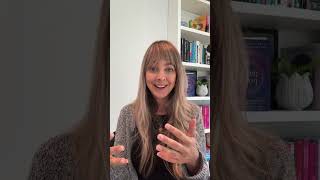
Dr. Nicole Cain talks through her own anxiety and how caffeine affects cortisol, then walks through a three-minute exercise to trace where your symptoms come from and release them. She frames healing as reconnecting your mind, body, and nervous system through practical steps.
Questions this video answers
Three minutes (three 60-second steps).
She waits until about 10:30 AM to have coffee.
October 2024.
Master's in Clinical Psychology trained in Chicago, Illinois; medical degree obtained in Arizona.
Chapters
Good morning, my loves. Thought that we could have coffee together. I used to start my day with coffee. And when you wake up in the morning and you've been fasting from food and from water, it's like a desert where your body, the all of your cells are like ready to slurp in everything that you eat or drink. And. And I used to wake up and just chug coffee. And then I would wonder why I was so anxious and panicky in the morning and restless and then crash. I was like, oh, what's going on with that? And in the morning, your cortisol naturally rises. Cortisol is stress hormone and it's supposed to spike in the morning, give you a burst of energy to help you get up, go throughout your day. So if you're experiencing this natural spike in cortisol hormone and then you add just pure caffeine on top of that, you can feel like you're on Club 9. And I would be so productive. I would get all of the things done, be really gregarious, really social. But then like 11 o' clock would arrive and I would start to feel myself slumping a little bit. And so then I would have more coffee and then lunch would come and then of course, you know, you have a little bit of sugar at lunch. And then like 3 o' clock would hit and I was like, what is the matter with me? I'm exhausted. I feel terrible. And it's this wired and tired feeling. Do you ever get that? Do you ever feel like this mix of being wired and jittery and buzzing at the same time is feeling exhausted? And for me it would happen where my body was buzzing and my brain was exhausted and I could feel the exhaustion in my eyelids and in my, in my face. And I'm so tired and yet I'm like caffeinated. And so anyway, long story is I started my day with rye's mushrooms and then I waited. I was like, I'm gonna wait till 10:30 to have my coffee. And so we're having coffee today and I'm feeling a little philosophical. And so if you're feeling philosophical, let's hang out and let's have some tea or some coffee together and I'll share with you what I was thinking about. And I'm so curious if you resonate if this vibes with you. And before I started recording this video, I was looking out my window. We're in Michigan right now. I was looking out the window and there were like five chirping little birds on the. So we Have a bird feeder we put out here. Let me see if I can show you. I don't know if you could see it very well. There's just like a bevy of birds. And then also, oh, there's the biggest bird nest. We call it the bird hotel. Totally in a side. And so I'm like sitting here, I'm in the moment, I'm beginning my day, and I'm thinking about fear of the fear. Because who doesn't start every day thinking of fear of the fear, right? And it harkens back to a conversation that I was having with a friend about how when her symptoms stop started, it was many years ago, and it felt like an absolute betrayal by her body. And she felt so scared that she had no control. She felt like she had no power. She felt like she was just a victim to her body going haywire on her. And I really resonated with that. And it's been a long time since I've talked to you about why I'm here and what my story is and why I wrote this book, Panic Proof. Look at that. It's so pretty. But it's been a minute since I was vulnerable with you. And part of the work that I do invites you to be vulnerable. And so I thought we could talk about that. And then I'll also. I love that you're here and you're. You're having your tea or your coffee with me. And I see there's a couple questions coming in and I'll do my best to answer those too. And so we could circle back to fasting and what to start your day with. To break your hydration fast, your food fast, Talk about cortisol. But I want to talk about the way that we live in our bodies. And when we have had an experience, experience of a health crisis or an emotional crisis that we can feel like our power is being taken away from us. We feel this sense of divide between yourself, the I and the body. And I've had a lot of people use language of that feeling of being out of control. And so if you resonate with that, know you're not alone. And we'll talk a lot about how to get your power back, how to reintegrate and realign with the body so that you can pursue life from your greatest potential as opposed to feeling like you're constantly at ends. And so we'll talk about that because that's. That's the goal, right? Is not just symptom palliation, but rather what are my symptoms telling me needs healing. What are my symptoms telling me is out of balance so that I can restore balance. And by restoring balance, you don't get back to baseline of just net neutrality. You get to thrive. You get to be above baseline, where you can use your healthy living vessel for your greatest and highest potential to create meaning in your life. And so, anyway, I woke up this morning, and I was thinking about fear, of the fear, and thinking about feeling like our minds and our bodies are at war against us. And so when I started my journey, I had learned how to be the authority. I have my master's in clinical psychology as a counselor. I was trained in Chicago, Illinois, and then I obtained my medical degree in Arizona and learned all of the holistic and naturopathic approaches and kind of melded that all together of holistic and complementary integrative medicine. And so I learned how to become the authority. But then I hit a health crisis. I stopped sleeping. My body was in autonomic arousal. My brain was scared and thought anxiety and what if anxiety? And suddenly all of the things that I knew how to do didn't work anymore. It was awful. And so I'm feeling like a complete imposter. Here I am, as the expert in my area, in my community, with panic and anxiety, and none of my tips and tricks and hacks were working. I was like, I don't have any power. I don't have any more answers. And tell me if you resonate with this, where you feel like you've tried everything. Yeah, like herbs, supplements, chiropractic medicine, Ayurveda, pouring oil on your third eye, meditation, exercise, medications, all of the things, like, we could fill pages of all of the things that we try. And that's one thing I honor my audience, I honor you so much for, is because you are all way ahead of the average person. You don't just stop with the first answer you're given. You dig and you ask questions and you search. And I really respect and admire that about you. And I know that suffering often necessitates the digging process, but also, you could just give up, and you don't. You're here, and I honor that. And I was in this place where I tried everything, and I felt like giving up. And it became, in and of itself, traumatic. And so now we have this process. There was lots of seeds that have been planted throughout my life that set the stage for where I was having this emotional crisis, this lack of sleeping, this constant anxiety that was severely debilitating. Tried all these things that didn't work. So we had the fertile soil for an emotional crisis. And then we had this lack of power because none of the tools that I had become an expert in using were working. And that is traumatic. And so then what that tells our brain, our nervous system, is that we don't have power over our own selves. And then when we don't have a personal sense of power, our brain, our body, our nervous system, our other organ systems, our immune system, our hormones, our gut, everything will shift and adapt to that crisis to help you be better suited in a crisis. And we can get locked in those sticky patterns unless we learn how to re pattern it, right? So not only did we have all of those root causes, then we had trauma on top of that. And so it could be like, oh my goodness, what do we do? This is so overwhelming. And the good news is that you can totally heal from this, that you can get better, that your body is naturally designed to heal. Just like if you fall and you scratch, scrape your knee without you paying any attention to it, your body will heal that scrape. And those same mechanisms, that same drive to self healing can occur in the mind, the body, your nervous system, your hormones, your entire self can heal. And so what we need to do first, what I learned and what helped me get out of that crisis place place, is to stop fighting the symptoms. Ooh, that's really hard. So does that mean we just flop? Does it mean we just collapse? Does it mean we just give up? We, we don't fight the good fight anymore? No, it doesn't mean that. It means stopping and listening to the symptoms with a voice of radical compassion, acceptance and empathy and saying, okay, I hear you symptoms. I hear the burning in my chest. I hear the flushes of involuntary muscle twitches and spasms. I hear the racing thoughts. I hear the heart palpitations. I hear the stomach turning. I hear you. I see you. I acknowledge you. So the first step is acknowledgement. So if you want to put this into something actionable, you could do today is set a stopwatch for 60 seconds or an alarm for 60 seconds. Spend your first 60 seconds just straight up acknowledging it. Because the opposite of acknowledging or the opposite of receiving information from your system is to resist it, right? So instead of resisting it and trying to suppress it and treat it and make it better and make it go away. Instead of resisting, we're going to receive, we're going to acknowledge. You're going to set a 60 second alarm. All right, just give it to me. Let me have it. Let me hear it. Let's Notice it. Let the waves of the water flush up over you, let them fill you and submerge you. And then when the alarm goes off, you're going to breathe. You're going to notice that being in that pattern in and of itself is transformational, because what you deny will amplify, what you resist will persist. So just that first step of just taking a bite out of that data chunk is really a good start. So then you're gonna reset your 60 second alarm, you're gonna notice it, and then we're gonna try to get data about. What is this conglomeration of symptoms trying to tell you? How do you decode that? Because a lot of times we get these symptoms and we're like, I don't know why it's happening. I can't make sense of it. It's neither here nor there. And it's changeable. And I just want it to stop. Please, just make it stop. This is how you heal, is the symptoms aren't the problems. The symptoms are your body's wise attempts to give you solutions. So you spent 60 seconds listening. And the next 60 seconds, what I want you to do is in that place of receiving acknowledgment, is I want you to imagine there's a timeline. Imagine there's a thread. Imagine that you have a VCR tape and that you can rewind it in time. And I want you to go back in time to the earliest moment or moments that you remember feeling this way. Because remember, our symptoms are adaptations to what did happen to you or what didn't happen to you. They're adaptations because oftentimes your symptoms don't come out of the blue. There are whispers, and then when they yell and when they shout, they're more extreme, they're more crisis. Like that moment where my crisis began and my friend was talking about this moment when the crisis began. Right? So we want to go down the timeline. You want to allow yourself 60 seconds to follow that timeline, go into the past. When was the first time that I remember feeling this way? I want you to think of it as a Jenga tower, right? And so you go through life, every stressor you adapt to. Think of it as stressor. You add a brick, and then you have another stressor and you add a brick and you're building this beautiful tower. But these bricks are put into place to try to keep you in balance and hold you up. And maybe you've built a tower that. That's cattywampus, like the Leaning Tower of Pisa, right? Or Maybe this tower is being built on rocky soil. And I talk about that in the metaphor of the weathered house in panic proof. We get into all of those variables. But I'm going to stay focused right now today. We could talk about the weathered house later. So you've, you set Your second alarm, 60 seconds, you go back in time and you identify that if you can find, find it. And sometimes we need a counselor to help us with this or somebody who can do meditation or hypnosis. Sometimes it's about journaling, or maybe you journaled in the past and looking back at your journals and you're going to rewind to the very first memory that you can identify where you felt similarly in your mind, in your emotions, in your body, you're going to notice that very first time and then you're going to set your alarm for the last 60 second increments. So the first one was acknowledgement. The second one is following the timeline all the way back to the origins. And then the third one is you're going to set your last 60 seconds and you're going to timestamp that, because this is a very important step, because the nervous system doesn't always store overwhelm, stress, adversity, trauma in parts that are temporal and logical. And so what this means is you could go through something difficult and you may adapt to it in ways that you don't recognize. So we have parts of the brain and they know time. We have the timekeeper part of the brain, we have the memory keeper. We have all these different parts of the brain. But also remember that your whole body is adapting. Let me, let me give you a metaphor for this before we go further is let's say that you are living in the north, where it's very, very cold. Your body will adapt to the cold. And one of these adaptations may be the trigger, the desire to put on a warm coat. So you adapt, you have this warm coat. You may have other biological adaptations, right? So people who live in Michigan here all year are much better suited for the cold than I am because I live happier in Arizona. And so you live in the north, you wear a coat, it's an adaptation. But if that adaptation stops there and you go to the south, that coat, which was useful and helpful for you when you needed it, is now cumbersome, you no longer need it, and you're going to overheat if you keep that coat on, right? And so this is a metaphor of adaptations. And adaptations, as we've talked about, can happen in the brain in the Nervous system adaptations can happen in your gut, can happen in your immune system. And so when we talk about treating trauma, when we talk about healing from anxiety, as you can see, it doesn't make any sense to just stay in that mental state. Fear. Because adaptations are happening everywhere. And if those parts of the body don't get the message, you are going to find yourself back where you began. Right? Is this making sense? You have to re equilibrate the entire mind, the body and the nervous system. And they teach about that. I have whole chapters dedicated to that in Panic Proof. So we're back at our last 30 seconds, right? So one of the things that we're going to do is we're going to timestamp it because there's adaptations that have taken place that are stored that tells your body and your other systems that we are still, we still need that coat, we are still in danger, we are still in stress, we still need to produce these responses. We are still not safe. So we are going to cause a domino of reactions that you can then observe to tell you, okay, we got you, we're keeping you safe. You're having all these symptoms. You're in fight flight, you're an autonomic arousal. Maybe you're in a pro inflammatory state. Maybe your gut isn't digesting because it's getting ready to run from the tiger. So you're in, your stomach is churning, maybe your heart is racing because your body's like, we gotta gear up. We're still stuck in the past. And that's when the tiger came. And so you're experiencing heart palpitations. You're stuck in the past. And so this third step, I call it time stamping the timeline. So we're gonna go in and time and we're going to try to get to the bottom of that Jenga tower and pull out that brick of that thing that happened to you in the past that necessitated that coat and all of the subsequent adaptations and tell it, hey, we're not there anymore. You don't need this coat anymore. You have different resources, we're in a different place. You're safe. These feelings that you're telling me, I appreciate that data so that I can go back to the origins and start the process of cleaning it. So you did your first two timestamps. Now we're on our last one, right? So this last one, okay, you notice that earliest time you set your alarm, 60 seconds, you're going to notice that earliest time when you felt this way. This feelings, however they show up for you, you're going to remember the earliest time when you felt this way. And then when you find that time, I want you to imagine it in your mind. And the more vividly that you can try to pull that earliest time up, the more the areas of the brain and the nervous system you're recruiting to be a part of this timestamp process, right? And what I want you to do is you're gonna. You're gonna say the following and feel free to record this. So if you need to do like a audio recording or a screen record of this part, this is a really important part. I want you to remember this and listen to my voice. And this is what I want you to say. Okay, I hear you. Thank you part so much for sharing your story. Thank you so much for telling me about what needs healing. Thank you so much for providing me the signs and symptoms so that I have the power to help us. And what I need you to know is that I'm all grown up now that I've got you, that our circumstances have changed, that we are no longer in the past, that it is the present year, and you'll say the year. And right now it's 2024. So it is 2024. And I have resources and skills that you didn't have. And I am here to support you and to take care of you and to help you heal and release. And so what I would like to ask you to do is to trust that I can take care of you and set down the heavy burden of needing to be in the past, because we did that together. It's 2024. I've got you. And so then allow that part to notice when it is you can bring it into the present. You're going to honor it and thank it and hear it and acknowledge it, and then you're going to tell it about the resources that you have so that that past part of you can feel safe letting go of its heavy burden. And then oftentimes if I feel like it's hard to get into that, I have people butterfly tap. And this is helpful because you're crossing the midline of the brain and you can tap back and forth. And we do this in different tapping practices. So maybe you've seen this in emdr, Emotional Freedom Technique. Lots of different therapies use tapping. So if you feel like you're getting a little stuck or maybe you're dissociating and you feel like you're getting a little brain foggy, tapping can help. The tapping creates what we call dual awareness processing. So it helps the brain be like, oh, yeah, we're here. Oh yeah, we're here. Oh yeah, we're here. So then every time that you find that symptom coming up, you can do this exercise that was 30 seconds. And so then you're going to imagine that part, setting it down. I like to use the image of a backpack, set it down, dispose of it, and then you hear it. So if you can do this in the moment when you start feeling activated, you are mindfully reprogramming your mind, your body and your nervous system. And when you start the process of reprogramming your mind, your body and your nervous system, the other adaptive systems are going to change too. And so I've had clients who've done this exercise, they feel more power. This is circling back to when our bodies betray, right? You feel more power, you feel more control, you feel more hope, you feel more agency. And then your body starts to change and you start getting a little healthier because you're changing those adaptive mechanisms. The gut microbiota will change, and that regulates your gut brain access, which regulates inflammation and your nervous system and your hormones. And then suddenly you're starting to notice you're living and your hormones is a little better, your perimenopause starts to get better, your postpartum starts to get better, your periods start to get better, your libido starts to get better. Because all of that is a part of one big adaptive system. And so instead of looking at your experiences from the head up, we're going to look at you as a whole person. And so to circle back, this whole conversation began with how we begin our day. And beginning your day from a place of personal power is to receive the information from your body, to simply acknowledge it. Three minutes. This exercise, I talked quite a lot longer, but three minutes is all you need is three minutes. And so doing this preventatively, proactively, can be really empowering. It can be really game changing. But all it takes is three minutes. And that will create profound change and you can start to take back your power, to take back your control. And it's three minutes. And that didn't cost you anything. It didn't require that you buy a bunch of supplements. It didn't require that you do a bunch of functional testing. It didn't require that you go and see a clinician, even though I really recommend having a clinician on your side that can guide you and support you and troubleshoot with you. But it's three minutes of your life. Three minutes of your day, and it really works. And that was, my friends, one of the hugest things that was a part of my story of transformation, and I hope that can be a part of your story, too. So everything that we talked about today is in my book, which is on pre order. It comes out in October. So if you catch this video right now while I'm doing it live, please pre order it. Pre orders mean everything. The publisher will assess how they want to support the book based on pre orders. And I want to get the word out there. I want to empower you. I want to change your life and your friends. So send a comment that helps. Instagram algorithm say, oh, this is important. So leave a little comment. Leave a little love. Ask a question. Even if it's unrelated to this. I got you, boo. Right? And I also have some really amazing pre order gifts. And so definitely look at what's happening in the bio, because there's some gifts and some freebies. I'm so excited. So you can get that, the link in the bio. And if you can share this, that would be amazing. So I'm so grateful you're here. Thanks for having coffee with me. I love you. I'm gonna go do some copywriting. You inspired me. All right, my friends, bye.
More from Dr.

Did you known that there are 3 stages of iron deficiency? Which stage are you in?








141. How to Tap into your Inner Self for Ultimate Wellbeing with Dr. Christian Gonzalez

140. Hacking the Vagus Nerve to Calm the Nervous System with Nicholas Hool, Ph.D.

How to Tap into your Inner Self for Ultimate Wellbeing with Dr. Christian Gonzalez | Ep. 141