Goal Setting / Dr. Yvonne
Dr. Yvonne Oswald leads a workshop on goal setting using hypnosis and imagination to clear limiting beliefs. Participants like Yoshie, Yasha, and Nick work through exercises on deleting power potential inhibitors and future-pacing to shift how they see their goals.
Chapters
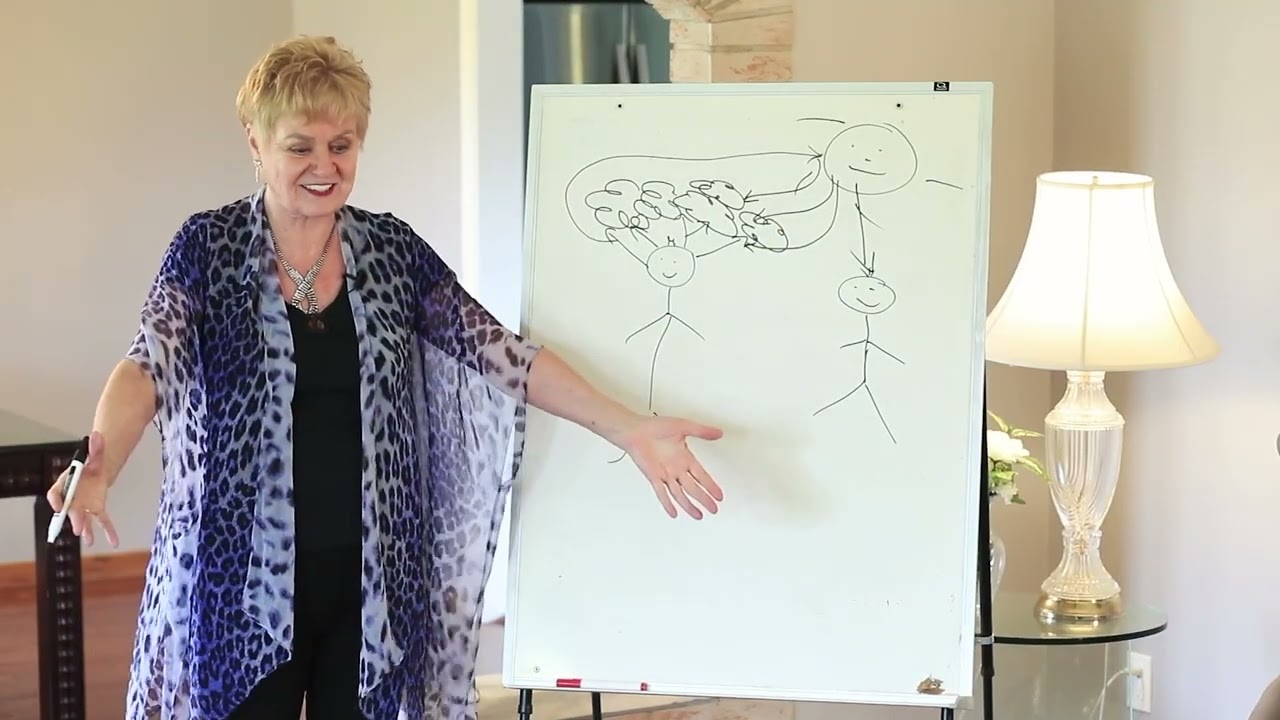
What happens when we form limiting beliefs and negative emotions, you can form those before you're actually born and before you're conceived. And we're going to go back this weekend and actually retrieve some of those memories so you'll find out where you started to make those limiting beliefs. Good? So let me say, for instance, we're doing goal setting. If I can get really excited, I can really bring those goals to me immediately, like Stephanie did when we were talking about, you know, the man, and she's like, "Yeah, I can't wait to get home for him," and she's all ready, is it really good? Look at her, she's still like, "Ah, so excited about that." It's like not just a casual, "Hi darling," it's like, "Yes." So say I want to just get $10,000, okay, for a trip to Hawaii, big trip to Hawaii. So here I am, and who's done affirmations before? I am rich. No, you're not. "I am really rich." "I'm not." "Yeah, I am. I'm healthy." "You're not. Remember last week when you had..." It's like you've always got this backtalk here going on. What we want to do is make sure that that conscious mind doesn't keep popping in and giving us, sending us off in the incorrect GPS setting. So here we are, here's God. Aww. Ready to give you everything you want. I'm abundant, I'm here, let me shine my light on you, okay? So this guy sends up a thought, he's got a very long body. He sends up a thought and he says, "I would like my nice $10,000 to go to Hawaii." And what happens immediately, he hears his mother's voice in his head. "You can't have everything you want, you know." And then he hears the people at school going, "That's a new bike? You can't have a new bike, you can have a secondhand one." And what happens is all those little comments that he heard before he was 7, all 150,000 of them, are actually forming little clouds above his head, blocking the sunshine, okay? He himself is still the same. These little clouds are just stopping the unconscious mind from, and God, from giving him what he wants. So this is the filter that we've set up from 5 years old. So what happens before 7 is that we just take in everything. So if I say to my child, oh my gosh, a 5-year-old, I saw a spaceship yesterday, the 5-year-old's going to go, where is it? Where is it? Can I see it? Where is it? I want to see. If I say to a 7-year-old, I saw a spaceship yesterday, the 7-year-old's going to go, "Yvonne Oswald, you've been watching a little bit of television, Mom. Just go sit down, have a cup of tea," right? So what happens is that filter comes in around 7 years old when we start doing analytical thinking. And this is also when all these little clouds have already formed, right? They're starting to form from that 6, 7, 8-year-old boy or girl. What happens is I think, "Oh, I'd love that," and it literally, the thought doesn't get through the clouds.— it may eventually find its way around the clouds. Woo-hoo! And God says, "Oh, you want $10,000 for Hawaii? Why don't you take $20,000? Here's a tax return." Right? And it depends on whether this guy's cleared up his negative thinking before that goal reaches him. So what happens is this man over here, or this lady over here, who hasn't got the clouds, who hasn't got those beliefs, that this person's worked on themselves like we're doing right now, those clouds aren't in the way, and the money attempts to get to this one over here, and eventually it can't get through, so it just goes straight to him, and he says, "Hey, look at that, I got $20,000 tax return, amazing, Hawaii, here I come." Get it? So I don't believe that you're actually holding them, inside. You are perfect. You're an actually perfect, beautiful, warm, light human being. It's part of my 4-Hour Breakthrough Blueprint is I take you back to that beautiful original you. All right, all these little things, what we're doing right now is actually just clearing those clouds away so that we can be in the light, in the whole energy of life and light, and just be able to attract in things beautifully. Cool? Any questions about that whole idea? Good. We don't necessarily need to replace things. What we actually need to do is clear the old and delete the old files so that the— and basically, if you think of it as a virus file on a computer, and you don't open a virus file on the computer to see what's in it, because what's going to happen? The whole computer is going to do that. Unfortunately, talk therapy does a lot of that. "Let's talk about the anger, let's talk about the whatever it is," and they're opening the virus files, and who knows where the other ideas are going. What we want to do is identify the PPIs, the power potential inhibitors, identify them, delete them with various exercises, change the neurological link in your mind so that you change the neurological passageways so that we have big superhighways going straight up to God and the universe. Cool? All right, excellent. Yoshie, you had an amazing experience. Go ahead and tell us about it. Oh, I just became very emotional. You became very emotional? Uh-huh. I was just so happy. She was happy. Finally, I was able to be there. You were able to be there, excellent. Yasha was crying tears of joy, and Nick said, "I didn't know what to say to her, you know, I didn't know whether she was sad." Here's the thing that's most important: you don't know what the other person is feeling when you're actually working with them. They could be tears of joy, they could be tears of sadness, so it's not— you don't say something like, "What's wrong?" What you'll say is, "What's happening?" Okay? When you are taking note of their their goals, instead of asking a question, it's about what else. Just say, "What else? What else? What else?" We're leaving it as open as possible. No yes, nos anywhere, please, because that just closes down the imagination. So we want, "What else? What else? What else have you found?" And when you're actually taking notes for the interview, we're going to do a lot more work on interviews, so that was just like a preliminary work. I want you to realize that we, you, it's focused on feelings. So we could have a very nice interview saying, "How did you go on? What's your house like?" "Oh, it's nice, it's blue." "Is it? Very good. What's your new car colour?" "Yellow." "Oh, super. And it's what kind of car?" That doesn't induce anything in anybody. It doesn't get that excitement going, it doesn't get that hotline to God going. So it's like, "Wow, what colour is your car?" "Oh, I love those cars, they're amazing." Your enthusiasm is what's going to make them enthusiastic. Your excitement is going to make their excitement. This keeping a straight face and thinking you're a therapist is all very nice. It doesn't get you very far because we want those emotions so we can future-pace them and set those goals in the future so they feel more real. The biggest thing when you're setting a goal is you either set it too high and with a shorter time period, which means, you know, it's like someone wants to release 100 pounds and they're like, "I want to do it in a month." And I'll say, "So what are you going to do?" "I'm going to do 2 hours," and they'll do this. "I'm going to do 2 hours exercise a day, and then I'm going to take the dog I'm just going to eat salads and vegetables. And they'll do it maybe for half a day, and then they'll just abandon it. That's why it doesn't work. So we're setting small, easy steps that we can get there very simply. We're doing a lot of work on goal setting. So this is your first taste of goal setting. Did you find it easy actually writing down when people were talking about it? Who found that their partner got actually involved in it, saw it as real? Felt it real? You did? And who actually felt it real yourself when you had the partner? Exactly. If you felt it real yourself, your partner did a great job. It wasn't you doing a great job, it's your therapist, your hypnosis practitioner who's doing the great job. So, as I said, it's not them that believe that they need to, they can get healed or they can get enthusiastic, it's up to you. It's up to you as a person and Even if you don't feel very enthusiastic, make yourself pretend to be enthusiastic. My word in hypnosis is pretend. Pretend is your best friend. I would write that down: pretend is my best friend. OK? What happens is, we're going to do a lot of this when we do the REP systems, which I'm introducing the representation systems in with the hypnosis training, so the people who see, feel, hear, and think about. Because it's so important, if you ask someone auditory-digital, what do they see? They don't see anything. If you ask someone who's an auditory person, what are you thinking about? They may or may not get it. Or what do you feel? You can get around everything by saying, could you imagine it, or could you pretend it? Teenagers, if you're working with teenagers, what do you want to do today, John? I don't know. "Where would you like to go?" "I don't know, anywhere." Right, you get this monosyllabic kind of conversation. If you were to say, "If you were to pretend to know, or you were imagining where you want to go, where would it be?" "I would like to go to the park." You'll instantly get there. It's very interesting how the word pretend and imagination, you have to go into your unconscious mind to find where those words began. So you're automatically getting past that conscious mind's filter. Cool?