Reflections Dr Yvonne Oswald talks about hypnosis and NLP

Dr. Yvonne Oswald, a British NLP master trainer, explains the difference between hypnosis and NLP, and describes her Breakthrough Blueprint for clearing limiting beliefs. She discusses her work with phobias, PTSD, and trauma in veterans and First Nation clients.
Chapters
Welcome to Reflections: The Wisdom of Edgar Cayce. I'm back after a short hiatus. I hope you enjoyed Kevin's interview last month. Today I'll be speaking with Dr. Yvonne Oswald. She's a fascinating person. She's a global leader in human empowerment. She's the best-selling author of the book Every Word Has Power, which I think is translated into 11 languages. It's in its 11th publication. She's at the cutting edge of human behavioral technology, master NLP trainer. She's British-born, teacher of over 20 years of experience. Dr. Yvonne helps clients and students make quantum leaps in their personal spiritual development. So join me with this fascinating interview with Dr. Yvonne Oswald. So hi, Dr. Yvonne, how are you today?
I'm awesome. Really nice to meet you, Peter.
Very nice to meet you too. I'm really excited for our conversation. As you may know, I teach hypnosis and regression here at the ARE, and I know that you do as well. I do. Yeah, you also integrate NLP, which I'm excited to, to talk with you about, learn more about, and share with our viewers.
Yes, you should come to the class. It will make all your results so much faster. It's amazing.
Yes, a lot of people talk to me about NLP, and of course I refer folks for that. But so what stands out for you? How would you compare hypnosis and NLP? What are the differences, and how do they weave well together?
Well, I love hypnosis. Hypnosis is my very first love because really, I loved it so much. I'd done all kinds of work on myself. I'd done like Gestalt therapy, talk therapy, regression, rebirthing, scream therapy, you name it, I did it because I had quite an abusive childhood. And it kind of kept things under wraps. And the one thing that worked for me quite well was meditation. And, you know, I just did it every day from when I was 18 when I learned it. And then someone said to me, why don't you do hypnosis? And I've been grinding my teeth at the time, so I was like, okay. So I went along to see this guy, um, and he was— he said, you know, how can I help you? And I said, well, I've been grinding my teeth apparently at night because my teeth— I've been getting headaches. And he said, oh, okay, close your eyes. And I was like, "That's it? Close your eyes?" And he said, "We're going on a journey, you and me." And I was like, "Ooh, do I have to take you with me?" 'Cause it wasn't like that.
You didn't know Matt well.
And then he said, "We're going up a mountainside and we come across a rock." 'Cause he was South African. And so I got my Zoomer out and I zapped this rock away. And he said, "We're going to remove the rock." And I said, it's already gone. And he's like, oh, this has never happened to me before. He said, let's put the rock back. And I was like, wow, if this is hypnosis, like, hello, I've been doing better meditation, you know, my whole life. Yes. The interesting thing was, Peter, I didn't like him. He did everything not right. He did— he didn't build any rapport with me at all.
Yes.
And it still worked.
Yes.
Which really blew me away. And I thought, you know what, I'm gonna learn more about this. Went and took a weekend course, 4-day course, funnily enough in Virginia Beach with Dr. Chips there.
Oh, okay.
Yeah, he's a lovely guy. Yeah. He was my very first introduction. And in 3 or 4 days, I released more stuff than I'd released in like the whole lifetime. And I said, I have to know everything about this modality, I love it. Went on to take my PhD in clinical hypnosis and won lots of awards for the new techniques I was inventing. And then I loved it because it was so slow. You just went really deep. It's your mind sorts itself out without you having to really direct it that much. Then someone said to me, you, if you like hypnosis, you'll love NLP. I was like, what's NLP? I need the guy said, come along and, you know, take a weekend workshop. Well, I was blown away. Where it had taken me like maybe a week or two to clear something, it took 2 minutes. And I was like, this is amazing. And I went on to take my master's, trainers, etc. And I started putting the hypnosis and the NLP together. And suddenly I was producing new techniques that move quicker and better and faster. So the NLP is very structured. It's really structured. It's very much, you know, you go from 1 to 10 and then get your, get your results. The beautiful thing about NLP is if I teach it to my groups, they can repeat what I've just done and produce the same results exactly the same time. There's no learning curve needed. Whereas with hypnosis, you have to kind of get into the language rhythms, you know, you're doing Ericksonian, or taking them to a safe place in nature, or building rapport. Really, with NLP, it's just real— as long as you know the communication style of the person you're working with, you can get results like that.
Oh wow.
It's exciting stuff. I've been really— I love it.
Now, when you talk about the synthesis of NLP with hypnosis, is that your 4-hour breakthrough experience? Is that that?
Yes. I was actually— I was invited to Switzerland, and this lady had set up a load of breakthroughs for me. I got off the plane, absolutely jet-lagged. She said, you start 8 o'clock tomorrow morning, you've got 3 sessions. I'm like, what? I can't do 3 sessions. And she said, well, first one's 8 o'clock, last one's 6 o'clock at night. And I'm like, okay. So what I had to do is condense everything I knew. And I was throwing this out, throwing that out, throwing the other out. And I produced spectacular results. And of course I had 2 weeks of doing these fast sessions and everyone was like, it worked amazingly well. I was like, wow, you mean we can really get it from this to this?. And then when I came back, I started working out what was it exactly that produced those fast results, put it together in a 4-hour Breakthrough Blueprint session. And that's what I teach, usually after Masters, but I'm teaching, I'm actually keynoting at the HypnoBiz in Canada in October. And I'll be teaching that, that 2-hour Breakthrough, that 4-hour Breakthrough session in 2 days there.
And can you, can you walk us through some of the what it's like, like what the, what the parts of it are and how NLP and hypnosis weave together?
Right. So what I do right up front, the biggest thing that hold people back are limiting beliefs and negative emotions.
Well, let me just add that for folks that NLP is neuro-linguistic programming, just so they just— we put that out there.
Yeah, neuro-linguistic programming. It's a way to change your brain so that the old neurological links are broken and it goes in a different direction. So Richard Bandler and John Grinder in the 1980s said, how is it that some people produce amazing results really quickly, like Milton Erickson, for instance, or Virginia Satir, and who was a, who was a relationship counselor? And they said, you know, can we model that? Can we copy what they're doing, take their personality out, model what they're doing? And they would say to Erickson, you know, where they watched hours of footage of videos. And said, what is it that you're doing? Why are you looking at that lady's ankle? And he would say, I'm looking to see if the heartbeat's going down and, you know, just to see how fast the heartbeat, if it's slowing down. And they said, why are you looking at her chest? I'm looking at her shoulder. I'm looking at her breathing and I'm matching my breathing with hers. And they were like, that's interesting. And they produced a whole sequence of NLP, Neuro Linguistic Programming, based on his storytelling, his ways of doing things. And then of course, Virginia Satir was working with relationships and she realized that body language was huge in relationships. And she, they, they actually categorized the Virginia Satir categories. So, you know, if you're doing this, it's about telling a joke. If you're doing this, it's about shame and blame. If you're doing, you know, this, it's like, oh, please believe me because I don't. And they realized that, you know, they had something really special. And of course, Tony Robbins then went to, went to learn from them, took it to a whole other level, and then they went to model Tony Robbins. So it's about the study of excellence and how to repeat it consistently and repeatedly, the same, the same way every time. And that's what I love about NLP. You can direct it and get the same results whatever you do.
So with NLP, what you're taking is the way that the person thinks and the language that they use, and then you're trying to take that as your, your, your material, and then you're trying to use that language, and then you're trying to help them move into more constructive ways of speaking and thinking.
You actually don't even need to do— it's actually much simpler than that. So when we have memories, our memories are filed according to the way our eyes are moving. So if I've got a memory over here that's not very nice you know, when I was a child and I was being abused.
Yes.
If I then get a memory that is a beautiful memory of being, you know, in a beautiful park or a lake, and I'm looking up here, if I get to look up here while thinking about this other memory, it collapses completely and the neurological link is broken. So when I think back to that old memory, the big emotional stuff, the post-traumatic stress, the suicidal thoughts, etc., it suddenly becomes neutral.
I see. So that's what you're saying. In NLP, you're taking, you're taking that toxic belief or thought, and then you're shifting it in the brain, and it's using the eye positioning to do that.
The eyes are the biggest thing. Your eyes are what's called— where your eyes are pointing is what's called the driver of the memory. And if you change the driver, then you can change the whole— you can alter the memory, you can collapse it completely and get rid of the the weight of it, you know.
So is it a little bit— is there some elements of like eye movement desensitization reprogram, EMDR?
EMDR, I did learn. It's very slow. Yes, I found anything slow, I wasn't interested in learning. I mean, I took the course, I qualified in it, right? You know, it's super slow, but it's still—
I guess the parallel is that it's, it's working with eye movement, which is kind of the one element maybe that's similar.
Yes, it is. And it's also, you know, when you're driving Your eyes, you actually process emotions peripherally. So when you've gone a long drive, a 2-hour drive, the very first thing you set off, you know, you've got the traffic moving here. So you're automatically got this movement happening emotionally. And you'll be there like, get out the way, pedal on the right, hello. All your stuff comes up.
So it's triggering something.
It's triggering the stuff. By the time you've driven 2 hours, you're driving like, I'm walking on sunshine, you know, and it really clears everything. It's an amazing— once you know how the brain works, it's phenomenal.
So there's gonna eventually— there'll be a model of therapy where you have people drive and you're behind them saying, you're safe.
Yeah, that's true. Yeah, really. So yeah, getting back to the NLP session, the NLP hypnosis session, I start out with the NLP, with the Neuro Linguistic Program, with language patterns. And basically, I asked people to send me 3 pages of everything that's not working in their life. And what I realized very early on is that if I was doing a long session, the first 3 hours I was taking notes. Yeah, we're dictating stuff to me, right? Like, gosh, this is really not very interesting.
Yeah.
So what I do is I say to them, I want everything that's not working in your life ahead of time on an attachment. I can go through it, find all the limiting beliefs, you know, I hate myself, I'm fat, I'm ugly, whatever it is, it's everybody's stuff. And what I do is I, we, like Milton Erickson said, I unwind the model of the world, we unwind their model of the world. Okay. And we do that with a language pattern called a Cartesian coordinate. It's quantum linguistics. And what happens is that that people, you know, your brain takes in 2 million pieces of information every second. And you actually are aware of only 100, 120. It puts it into groups of 126, and then you're only aware of 7 bits of information, plus or minus 2. So if you're looking at the big jigsaw puzzle of your life and you have a negative memory, you're basically looking at the shadow of a tree. And the Quantum Linguistics are designed to let the brain be aware there isn't just a shadow there. There's a whole glorious scene of mountains and sea and sky. And it puts it totally in perspective so that when they go back, it's like, it's like—
I see. So you kind of deconstruct something and then you use the hypnosis to reconstruct, to kind of reform?
I use the hypnosis at the end to actually lock in the changes. So anything they say which is positive during the whole session, the whole 4 hours, will be— I write down verbatim every single thing they say. And then I put it in at the end with the hypnosis, get them deep. And then of course, you future pace them because anxiety is the big 21st century thing. Yeah. We have the main 4 emotions: anger, sadness, fear, guilt, and all the subsets like frustration, disappointment, etc. Anxiety is the one which is future based. So the very— by its very nature, you, you can't get rid of anxiety because it hasn't happened yet. You don't have a happy ending. Right. So what we do is we go into the future. I call it my personal freedom matrix. We go into the future, design a happy ending, imagine a happy ending, block it into the memory continuum, look back to now and arrange the— ask the unconscious mind to arrange it to happen. You come back in the body and the anxiety is gone.
Oh yes. You know, it's like, um, as you're talking and I'm connecting it to the work that I do, You know, Edgar Cayce was a devout Christian, so his readings focused a lot on Jesus. And so if you read the readings, it's in biblical language, and Jesus is prominent because he asked so many questions about Jesus. But what I found is, you know, that Jesus has that teaching where he says, you know, to reach God or to reach enlightenment or whatever you want to call it, everyone has to be born again. And, you know, there's— that's Some people make that as a fundamentalist belief of being born again, but what I feel happens is that in the hypnotic state, you move from all your self-limiting beliefs. It's like ice, and then you move into a fluid state, and then you can pour yourself into a different mold.
Oh, that's a nice way of putting it.
Yeah, great. Yeah, you can be born again. And then I think the key, like you're saying, is that people are dragging around their old stories. And I oftentimes say it's like, let's say you get a PhD, you know, you keep the diploma. You don't frame all the struggle, how hard it was, and the time you failed an exam. So it's like, but people do that. They forget to say, well, this relationship taught me compassion or humility. But they drag around the self-limiting, I'm no good, or I'm doomed. And that's, I think, if people can let go, that the born-again process is letting go of that garbage, or how you learned the story and keep the— keep the happy ending of the story, which is the, the learning. So that's how I'm processing what you're saying in my way of thinking.
And of course, all those limiting beliefs are formed the first 7 years of your life. You don't even remember you did them.
Yes.
So negative emotions, simple as a dimple. I can clear the least good negative emotion in a couple of minutes. So I've won 3 or 4 awards for it. And I'm 22nd in the world, by the way, on the Global Guru ranking. I'm really happy about that. I got my award a month ago. It was lovely.
Oh, that's nice.
It's really cool.
I'd hate to see where I'm ranked. I might be in the millions.
No, you'll be up there for sure. So what I believe happens is that before you're 7 years old, you are totally like, you're in the imprinting period, you're accepting what everybody says is the truth, and we form limiting beliefs. So like a 4-year-old boy is playing with his toys, his truck or something, and his 2-year-old sister comes up and snatches it off him. Well, the first reaction is he's going to whack, right? And then mom comes in and she's like, "Oh my God, Johnny, you should be kind to your sister. You need to share your toys. You've got, you're a big boy. You need to look after her. Look, you've made her cry." And you know, it's like, hang on a minute. She was the one who did something, not me, right? So just in one little incident, I'm not good enough, I can't have my own stuff. I'm supposed to be responsible for someone else even though I'm only 4. Just, and if you repeat that hundreds of, 150,000 times, like Tony Robbins said, you hear 150,000 nos before you're 7 years old. You know, you've got a lot of limiting beliefs going on there. So how do you know you've got limiting beliefs is that if something isn't working in your life now. So if you want to be rich and you're not rich, there's a limiting belief in play. If you want to be healthy and there's, you know, you're not healthy, then it's a limiting belief. And of course then you've got the secondary gain, because if I get better, then I'll have to go back to work and I don't want to go back to work. So it serves me to keep the disease rather than get better. So you've got all kinds of interesting things in play. It's a lot of fun. To me, it's like a detective story.
Now in that process, is there a place for emotional release? Like in that 4 hours, do people oftentimes cry and just let it go? Let it come forward.
Actually, thank you for asking that. And I did all the emotional stuff before I was, oh, in my 30s. I mean, I was crying, screaming, throwing up, the whole thing. With NLP, you don't need to do that. You briefly get the emotions. Yeah. And you do submodalities. You change whether it's big or small. You change the direction of the eyes, whether you're looking through your own eyes or someone else's, or at yourself in the picture. And you don't need to go through all the heavy-duty emotional stuff. It's magic.
Ah.
I think that's why I loved it most, because it was sweet, it was simple, and it works in 2 minutes.
Oh wow. And then, um, so you teach this, I know you teach it here at ARE, so you have a regular cycle of students. What's the feedback that you get from students? Are they, are they able to take what they learned from your technique and apply it going forward?
They don't need to apply it because it's not there anymore. Whatever was holding them back is gone, so they're in a whole different headspace.
I mean, I mean, the folks that learn the technique to apply to other So they're able to learn it. And then how long does it take to train and like for a student to learn this technique?
Uh, there's a lot of techniques. Some of them take 2 minutes, some of them take 20 minutes.
So when people take a course, for example, the ones that you lead or teach at ARE, people can in that weekend then can go and add it to their toolbox and then they can apply it in their practice.
100%. And What I find is you can use it on yourself as well.
Yes.
So I've— there's a fast phobia model, which is a double dissociation model where you're in a cinema watching yourself watching the screen. I was actually on the radio doing phobias, funnily enough.
Yeah.
This lady said, oh, she said, I can't go in my garden. She said, there's those things there. And I said, snakes? She's like, oh my God, yes. And she lives in Florida. There's millions of snakes, right? I said, would you like to clear that? She's like, yes. So I took her back to before when she remembers being afraid. She said, I've always been afraid. I said, do you think you were always afraid in the womb? She said, well, maybe, because you know, the umbilical cord's like a snake. I said, would you have been afraid before you were conceived, like when you were with the angel? And she's like, no. She said, I've never met a snake then. So I literally took her back to there. Fast-forwarded the film backwards and forwards. And I said, how do you feel about snakes? She said, ridiculous. She said, I can't believe I was ever afraid. She said, I can go in my garden now. Oh my gosh, I'm looking forward to gardening. She said, those snakes always run away anyway. And literally, because I was like, on the radio, is this going to work? And it worked great.
Oh, that's great.
So from then, what happens with any phobia, any sexual abuse, any PTSD, I always take it back toward before conception. And work from there.
Now what's the— I know that you have a spiritual focus to your work. How do you bring the spiritual part into this? Or is that already, you know, talking with the angels, is that the way that you spiritualize your practice?
I always— the idea is people come to you chunk— what's called chunk down. They're really stuck in their stuff. And the idea is if you can get them up to God, up to Jesus, up to you know, the oneness, then everything gets dissolved into the oneness. The Hawaiians call it the io. Once it's dissolved in the oneness, it's moot. It doesn't, it doesn't exist anymore. So what I always do is take people up to looking at the earth below, finding their soul group, holding hands around the earth, listening to the angels singing in heaven. You know, I really do make it a spiritual practice is, you know, bring in a lot of imagination, lots of visualization, as well as the actual NLP itself.
Oh, that's, uh, yeah, that sounds really powerful. Now, um, your book Every Word Has Power, is that— did you write that before this process? Is that— is it more the theory that you've developed?
I actually wrote that before I even took the— I think I'd taken hypnosis, but I hadn't taken the NLP, and it was I actually was studying everything while I was doing the book. Um, and I went through the book 800 times to make sure there were no low energy words in there.
Wow.
Because, and if there's a low energy word there, it's because I mean it to be there. There's no, it's, you know, accidental. No, you have to use the word anger to talk about anger. You can't talk about, you know, not happy. It's a different connotation entirely. And during all my trainings, what I do is I get people to catch each other when— with the language so that they switch, because the keywords are the only thing your unconscious mind picks up. So if you put keywords into the internet, you'll get results based on that, you know. And you can, you can almost fool your unconscious mind, I guess, by making, making it go into a different memory, like imagining a fabulous memory. So if you key in the word fairies to the internet, you'll get lots of sites on fairies, whether they exist or not.
Right.
So if you say, well, that's really not bad, the unconscious mind's only, only searching for the word bad. It's not searching for the negatives.
Yes. All right, that makes a lot of sense. Like if you, if you Google stop, stop being tense, tense is going to be what will pop up for the— in the search.
Correct. Yeah, it's like adults say to the kids, you know, moms say to the kids, don't touch that. So the kid touches it. I'm doing what you told me to do, I'm touching, right?
That's why the subject is touch, right?
Yeah, it's very fascinating. So it's been proven that if you use low-energy words like bad, hard, difficult, your immune system actually gets pushed down as well. Use words like good, happiness, excitement, and excitement is the hotline to God, of course, that just zooms through everything. Then you're using a different part of your brain, your prefrontal cortex, which has direct connection with the nucleus accumbens, which is the center.
Okay, and so— oh, go ahead.
Well, I was just gonna say most people live in the limbic brain, which is the old family brain, 200,000 years old, and that has direct connection with the amygdala, which is anger, fear, fight or flight.
Yeah, the primitive old brain. Yeah. Now if someone, um, if someone wanted to pick up a book, like a starter book for your work, would it be Every Word Has Power. Is that a good place for folks to start? Because that was published how many, 11 or 12 years ago?
2008, and it's in 11 languages now.
Oh, okay.
Yeah, and it was actually published by the secret publishers.
Ah, oh, really?
Yeah, what was funny was I'd written the book and I said to my assistant, call the publishers of this book, Dr. Emoto's book, you know, Messages from Water. I said, his kind of work is very similar to mine.
Yes.
And I didn't even know about The Secret at the time. I've not heard.
Yeah.
And she phoned and, you know, said, you, you'll have to talk to her assistant. So I talked to the assistant and said, you know, your publisher needs to see this book. And she said, oh no, we're too big now. You need, you need an agent. She said, what's the book about? And I said, it's about how the power of words can change the way you think. And she said, you know what, send it to me. And I did overnight, of course, 40 bucks, like UPS.
Yes.
And apparently the publisher, Cindy Black, actually said to her assistant the day before, "I wish someone would write a book about the power of words." Wow. So my phone called.
So it's right synchronistically.
Yeah, exactly. And the following Monday she phoned me and she said, "You've got a deal.
It's a great book." And are you working on a book currently? Or do you—
Oh, I've got about 3 or 4 books on the go right now. I just co-authored a book with Jim Britt and Kevin Harrington. So that's called Cracking the Rich Code. That's out. And I've also got a kit to go with the book, which is 3 21-day plans on wealth, health, and relationships. So 3 21-day plans plus goal setting, motivation strategies. Ah, so yeah, I'm always writing. It's a lot of fun.
So to move people out of that lack kind of consciousness.
Exactly.
Is that what do you— when you think of the times that we're living in? What do you think people are most hungry for? Is there something you feel that, that is— it's ripe to bring into consciousness, or something that's, that's essential? You know, it's when people turn on the news, it just seems that the world can be quite divided.
Yes, and to me, the, the idea is connections. I've never really spent money on advertising. I always make sure that I meet people. And when I'm training people, I said the best thing you can do is go to conventions, make sure your face is on your, your business cards so they remember who you are. And then just get out there and meet people. And really, it really, the isolation factor of these days is what's really not very good. You know, you feel like you're connected because you've got friends on Facebook, etc. And, and I think we're actually living in a really good time of history. I'm really happy with the way we're going.
What do you see as the potentials? Like, you know, let's say you're working with the world the way you work with a client and you want to accentuate the possibilities. What do you see for us as a humanity?
I see clear the negative emotions and start talking positively and actually start talking about what you want rather than what you don't want.
Ah, so people being more actualized and more happy as a result. And then the world, the consciousness improving as a result. Exactly.
And the thing is, Peter, we are programmed to think negatively. You know, people think, oh, it must be me because I'm negative. You're not. You're programmed to think negatively. You're deep wired. If you're going through a jungle and it's a nice day and everything's fine, if the leaves rustle, you better be looking at the leaves in case it's a snake or a bear. So you'll walk in a room and someone will say, do you like the way I've decorated? And they'll go, yes, but. And they'll go straight to the negative. And what we need to do is train ourselves to say, yes, it's fabulous, you did a great job, zip it. You know, because people always remember what's not right rather than what is right.
That's so true. That is so true. Well, you know, it's— this is right in line with, you know, with Cayce's readings. I guess it's connected to, to other spiritual teachings like Buddha, but like, mind is the builder and thoughts are things. You know, those are, those are very popular fundamental Cayce principles, which I think we're all working with, with just the world that we're creating with our thoughts, which a lot of people are unconscious of, and they don't realize how, how they're the projectors on their screen of their life.
Yes, exactly. I mean, I'll get a mom who says, I'm really worried about my son because he's learning to drive, and I'm really scared he's gonna skid and get killed. I'm like, whoa! And I say, could you please, when he leaves the house, say "Stay safe, my sweetheart," and then wrap him with lovely, lovely light and imagine him with light around him, around the car all the time he's out. I said, "That's a way more positive thing to do than sending him black arrows." And they're like, "Oh, I never thought of it like that." Yes, yes, that's a good, very good point.
Now just— oh, go ahead.
No, go on.
Well, I was going to— I just want to touch on the work that you do with veterans and the First Nation people. Even with folks dealing with suicidal patterns, the suicidality and abuse patterns. Yes, anything. I know that's a big subject. We probably talk an hour or day about those subjects, but anything— yeah, what have you found has been helpful with helping these?
Well, what I found out is because I— we're breaking up a little bit.
Yes, yes, go ahead. I got your back.
Yeah, okay, cool. Well, I realized very early on that anybody who's sexually abused is suicidal. There's no, there's no two ways about it. If you've been be in any way, you're powerless, you're going to be suicidal. You have suicidal thoughts, even if you don't do it. And of course, Iraqi war vets, they're going through PTSD. And it's a memory. All what, what people don't realize is the negative emotions are there to be your unconscious mind as a messaging system to say, I don't feel safe. Are we safe? Can I delete this file? So any old memories from your childhood, you'll be at Disney having a great time and suddenly remember your abusive childhood. It's like, what? And it's your unconscious mind saying, okay, so we're feeling good. Can we talk about the past, please? Okay, so what we have to realize is negative emotions are not real. They're like shadows. You can touch sunlight, you can't touch a shadow. Very importantly, you— positive emotions, love, happiness, joy, freedom, are the light, and hate, fear, guilt, anxiety are the darkness, the lack of light.
Yeah.
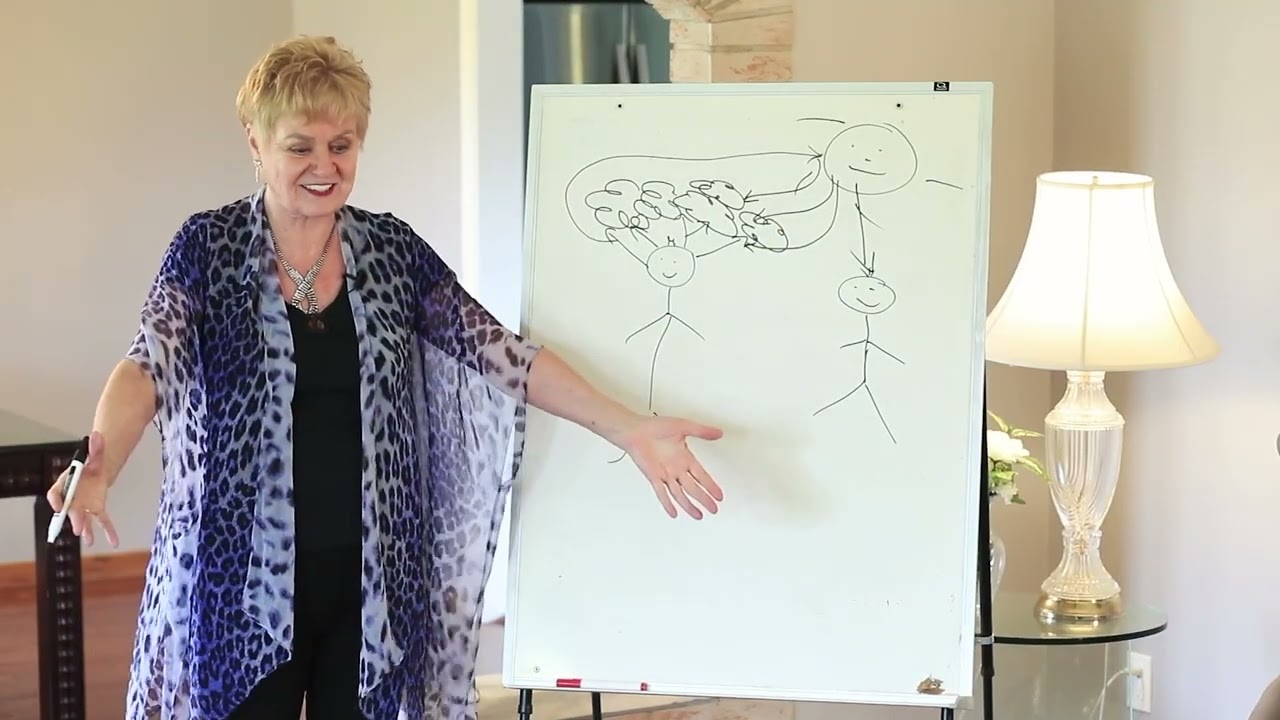
They're lack of light. They're an absence of light. Okay, so I kind of— when I'm explaining it simply, I'll say that as we get limiting beliefs and negative emotions, we start forming little black clouds above our head, stopping our access to the sunlight or God.
Mm-hmm.
Right? And our job is just to release those clouds. And if it happens to rain while we're doing it, that's fine too. Those tears are awesome. And the idea is to remove as many of those clouds as possible so we're standing in the light of God. You actually don't need to do anything else because you cannot have have love and hate in the same, in the same box. Right? You, if you're feeling love, freedom, happiness, joy, it's impossible to feel anger. Right? So what we've got to do is shift people's consciousness over to focusing on love, happiness, freedom, joy. And that doesn't mean to say you'll not have negative emotions, they're your survival mechanisms. So you're going to have them. What the idea is, though, can you have them and move through them quickly? Instead of sticking on.
Just accelerate that detoxifying process.
Exactly. You clear them fast, moving on.
Yeah, good. Now, this has been— I've enjoyed so much this chat that we've had. But before we end, is there anything else that you would like to add? Anything in your heart or mind that you'd like to share before we have to say goodbye?
Well, I am just about to go into a huge different direction again. It's like really interesting. I'm going to be in Switzerland teaching. I'm going to be in the Northwest Territories teaching. In Calgary as well. I'm going down to— I'm coming down to Virginia Beach in September.
Yes.
Awesome, to teach the NLP.
We're looking forward to it.
I'm literally at the point where I'm ready to sell everything and start just traveling and moving forward and teaching my methods. Because the more people who know what I do and the more people who get it, the faster we're going to improve humanity.
You have a beautiful home. So if you need anyone to house sit, just let me know. I'll be there in a minute.
Okay, yeah, it's great. I teach from here. It's beautiful.
It's very beautiful.
Thank you. Well, it was absolutely amazing meeting you, Peter. I'm looking forward to meeting you in person.
Yes, I'm sure. I'm looking forward to it too. So thank you so much for what you're doing and sharing. And you can tell just from your energy you're on the right track. You're sharing love and light in the world. So thank you so much for talking again soon.
Okay, well, I hope someone comes around too. Okay, goodbye. God bless. See you soon.
Bless you too. Thank you.