Transpersonal NLP Training
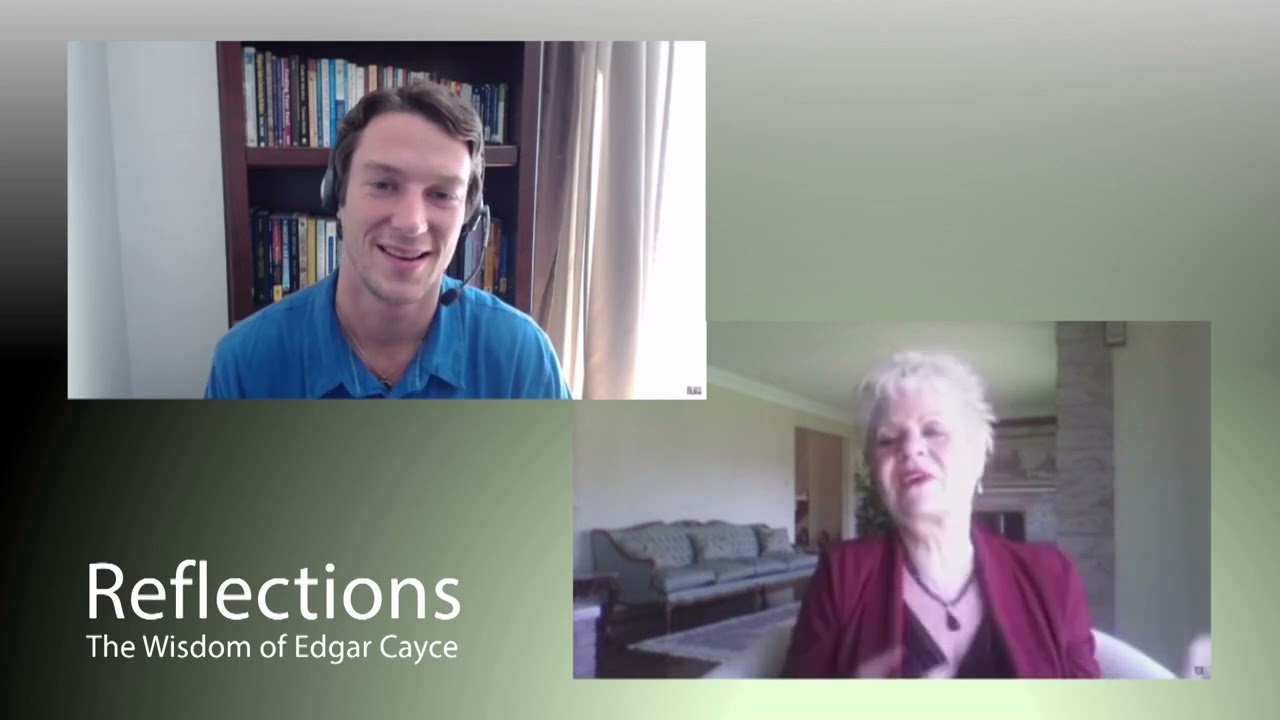
Dr. Yvonne Oswald discusses neuro-linguistic programming and her book Every Word Has Power, covering how posture, breathing, and word choice reshape your brain. She shares practical tools for parenting and business, and details her NLP certification training and breakthrough sessions at the ARE Virginia Beach event.
Chapters
¡Hey, everyone!
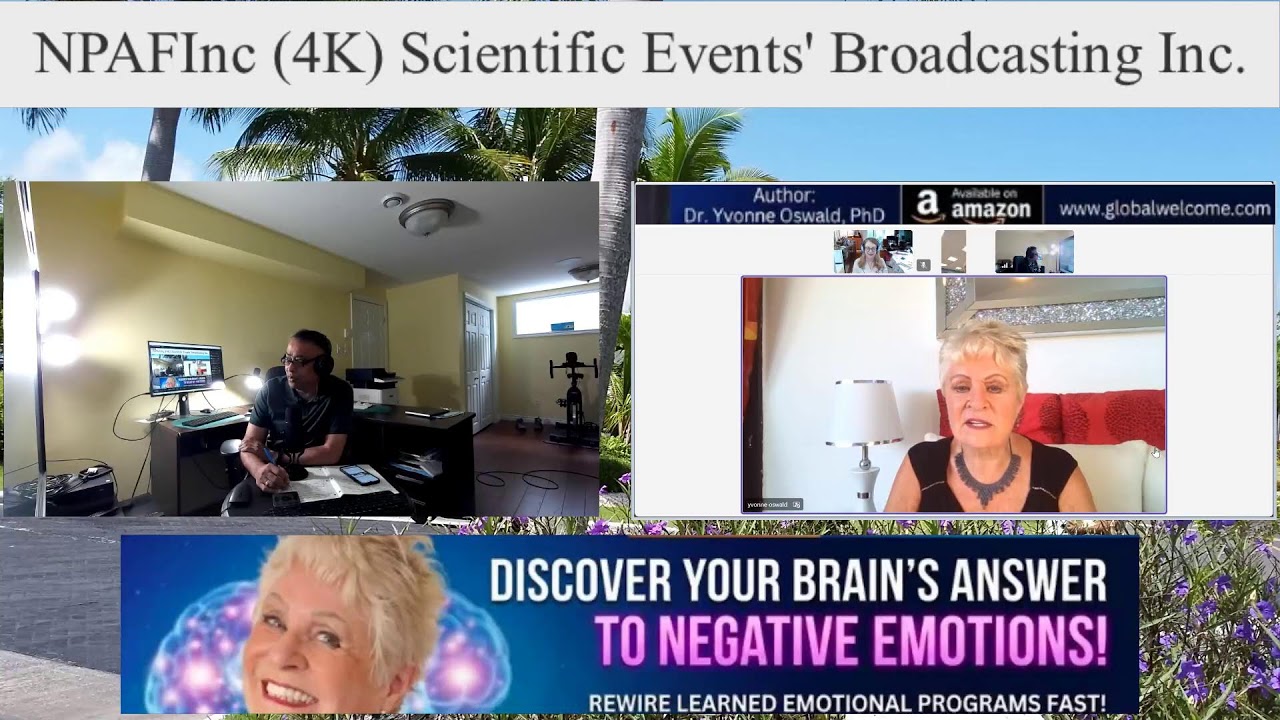
Welcome to Reflections: The Wisdom of Edgar Cayce. We're coming to you as always courtesy of our broadcasting partner, moortalk.tv. This week on the show, I'm honored to welcome back Dr. Yvonne Oswald. Dr. Yvonne is author of Every Word Has Power, an award-winning pioneer in the field of personal growth. She was voted a 2010 Woman of Influence and Inspiration by the Ministry of Government Services Ontario. She is a renowned and respected communications trainer and presenter. And a master trainer of hypnosis and neuro-linguistic programming. She was nominated for the Coalition of Visionary Resources Visionary Award for her unique CD Mind Magic. It's her method to release negative emotions and limiting beliefs in less than a minute. She will be at the ARE headquarters here in Virginia Beach from May 28th through the 31st for her neuro-linguistic programming certification training. And completion of this training leads to certification as an NLP practitioner. To register, you can visit our website at edgarcasey.org/conferences. Dr. Yvonne Oswald, thank you so much for joining us today on Reflections.
Thank you, Brett. I'm so excited to be here. Really nice to see you this time. It's great.
Yeah, absolutely. For our listeners who may be unfamiliar with the field of NLP, can you please give us a brief explanation of the field and your involvement in it?
Yeah, well, in 1985, John Grinder and Richard Bandler— Richard Bandler was then his student— realized that some people were really successful at things and other people weren't. And they said, how is it that someone can do something really, really well and then someone else can do the same thing and not achieve the same results? And they decided to study successful people such as Milton Erickson, who'd been doing therapy for 60 years. And they studied hours and hours of his videos, and what they wanted to do was model his, his whole therapy because he produced amazing results in one session. And they would literally looking at the videos and saying, why are you studying that woman's ankle? And he would say, because I'm looking to see if the heartbeat slows down. And then he'd say, why are you looking at her breasts? You know, and he's like, no, I'm looking at her breathing to see if she's breathing slower. And I'm matching my breathing with hers. And what they realized was that they could take his personality out and then literally model bit by bit exactly what he was doing, and they produced exactly the same results. They did the same with Virginia Satir, who worked with— who worked as a family therapist for many years. And she worked with the body language. She realized that, you know, this was the helpless, hopeless kind of body language. This was the thing that the men used, the blamer. And, you know, this was the one that said, "It's okay. Unbelievable." And literally, they followed her movements and copied her again. They modeled her. Tony Robbins then studied under them, and then they modeled him. So it was very interesting that the whole thing of NLP is all neurolinguistic programming is a pattern interrupt. We're interrupting the old behaviors and we're putting new behaviors in their place. We're also studying communication models, and we're also making sure that the person achieves successful results every single time. So theoretically, if I teach you one thing one day, if you model me exactly, you will be able to do it exactly the same way the same day, pretty produce the same results, which is why it's so magnificent. It's literally like deleting files on a computer and replacing them with brand new ones. It's wonderful stuff.
Wow, sounds amazing.
Yeah.
I want to touch a little bit on your pioneering book, Every Word Has Power, and this book is incredible. It's helped countless individuals change their lives. And can you tell us exactly why you chose this title and what it means for someone who may be picking it up for the first time?
Right, well, Every Word Has Power is now in 11 languages. The last language is Hebrew apparently, so I'm really excited about that. And it was really when I had my daughter, I was, she was 10 months old and I'd worked for 10 years to change my patterns, make sure I didn't repeat my childhood stuff. And I was really happy I had her. And then she was crying and pulling at my skirt. And I literally turned around and I remember thinking, if you don't stop crying, I'll give you something to cry for. And I was like, I was about to say that. And it shocked me so much. I literally thought, wow. How many other things have I said without thinking? And I literally, I put her in the other room and said, I'll look after you in a minute, sweetie. Look at, watch TV for a minute while I'm finishing the dishes. And I literally thought that day, this absolutely anything that comes out of my mouth is going to be supportive and positive. I didn't say no for 3 years, which was not easy to a 2-year-old. And I'd say, you know, if you do this, my sweetheart, this is the result. I let her, let her all her anger out. So she yelled at me or anything, I'd say, aw, sweetheart, Sweetie, thank you for the silver medal. You're still not having candies before you go to bed tonight, though. She'd slam the door and I'd say, you know what, you could do much better than that. Come back and slam it a lot louder. And literally did the opposite of everything I was taught and it worked beautifully. And she turned out to be the luckiest kid. She would send off to TV shows for like t-shirts and things and she would win these things. And it was literally because I literally didn't put any negatives in there. The average kid hears about 150,000 nos before they're 7 years old. So I literally thought that all she's going to hear is yes from me. Right. So as she grew older, I started writing things down and started thinking, how important is language? And it's huge. It's huge. So every single word we use is picked up by the unconscious mind. And it's rather like a quantum internet. It does like a word search just on the keywords. It doesn't get grammar. It doesn't get context. So If I say to you, don't think of a pink elephant climbing a tree with a hat on waving at you, what are you thinking of?
Right, the pink elephant.
Exactly, right? So if I say to you, don't worry, what do you think I've sent you off doing?
Worrying, right?
Worrying, yeah. Or not problem, or not bad, or, you know, it's kind of interesting. And I was picked up by the Secret publishers, and Cindy Blackman, she's since passed, phoned me and said, I need statistical evidence, not just word searches, because if you do word searches, you— it's out of context immediately. It's out of fashion. She said, "I want a proportionate thing." So I spent 5 months researching words on the internet every single day for hours and hours. It was actually really good fun working out how many negative words and positive words there were. And it turns out you can have 2 high-energy words in a sentence and 1 low-energy, and it will cancel itself out. If you have two low energy words though, and no high energy words, you're going four times the opposite direction than the one you want to go. If you have two high energy words in a sentence and no low energy words, you're going four times exponentially the opposite way into success. So it was really, really interesting. And I even stopped calling them negative and positive words because I looked up the word positive on the internet and guess what came up? Negative. Hepatitis C, HIV.
Oh no.
Yeah, I was like, wow, it's a whole different context than, than now, than it used to be 20 years ago, right? So I started using the words, low energy words and high energy words. And the beauty of it is when you use high energy words, you're using the prefrontal cortex, which is what I call the happy brain. So it's awesome.
Excellent. I'm curious, can you tell us a little bit about what is meant by human behavioral technology? This may be a new term to a lot of our listeners, and can you tell us about how this is involved in your field?
Right. Well, because I'm a human behavioral scientist, it's really important to me to be able to change behaviors really simply and sweetly. And what we have— what happens is if you— we have things stored in our heads, and when we actually have a behavior happening, it's because we, we witness an event and And we filter it through our filter. And there's 3 things that happen, of course, with all the— you've got your attitudes and your things that you're brought up with. But the event is filtered. And the event is filtered by generalization. We generalize, you know, so if we see a little dog running down the street and it's got 2 little ears and it's wagging its tail, we can assume it's a dog and then we can specify which kind of dog it is. It's also deleted. We delete a huge amount of information. We— the unconscious mind picks up 2 million plus bits of information every second, puts them into groups of 126, and then we only are aware of 7 bits. That's why phone numbers are in groups of 7, because it's— we pick up a very small amount of information each time. So, and that's an efficiency thing, you know. Habits are the same thing. If we get into a habit, we delete a lot of the information around it. And of course, sometimes that results in limiting decisions as well. The most important thing though is that the information is sometimes distorted. And the reason it's distorted is emotions. If you have emotions attached to a word, and there's 20% of the words we use have emotions attached to them, then when you go to file the information away and then retrieve it, it can come back differently. So, you know, chair, table, those are kind of filed away and they come back the same. However, if you have something like mother, father, lover, friend, child, anything you feel emotional about, it will come back in a whole different way. That's why eyewitness accounts are not very reliable. You know, we had them, right? I was living years ago in Manchester and there were 9 apartments in this house and we heard some glass breaking. And all 9 of us went to the top of the stairs and we were looking down. And this hand came around inside the glass and opened the door. And then this man was standing there and we all went, ah! And he went, ah! And he ran off down the road. And then the policeman came and he said, so we said, what was it? What did he look like? Well, he was Chinese, he was black, he was white, he had glasses on, he was bald, he had a hat on, he was wearing a jacket, he wasn't wearing a jacket, he was wearing jeans, he was wearing a suit. It was like every single one of us had a different person. In our heads. And what we've done is we've projected our fears onto him. And that's another perception, and that's another quality of NLP, is perception is projection. What we perceive is only what we, we have in our heads. We project it onto someone else. Very, very fascinating stuff. So we want to change those behaviors so that— and every behavior begins with a positive intent. So before you're 7, we have these self-soothing mechanisms. You know, we find that eating a candy makes us feel better, or eating chocolate. And then By the time we're 15, we're eating a lot of chocolate. And by the time you're 20, it's not very supportive because you put huge amounts of weight on. So we have to— all behaviors begin with that positive intent. Eventually they may become not supportive. Some do come, become supportive, and we keep those. If it's not supportive, we want to delete that file and replace it with something else. Very simple.
Yeah, absolutely. And this sounds like such an incredible practice, but I'm curious, for those who attend your conferences and your lectures, what are 3 things that our listeners can do right now to increase success? What do you give them as tools to take home?
Okay, well, we can literally change the physiology. So simply by sitting up straight and putting your chin up like an inch. So we can say, you know, if you put your— the expression keep your chin up literally means go into a different part of your brain. So you put your chin up, and then as I'm looking at you and you're looking at me, I'm aware of a window here and a doorway here. And literally, when you take a deep breath, so if you take a deep diaphragm breath, You immediately go into high energy. It's the alpha state, or hakalau in Hawaiian, and you literally cannot access a negative emotion at that point. It's really cool, actually.
Wow. Yeah.
What happens is when the prefrontal cortex is activated, it dampens down the amygdala, which is the fight-or-flight mechanism, and it actually boosts and activates the nucleus accumbens, which is the reward center. So it literally gets you feeling good and gets those endorphins going and dampens down the amygdala. The second thing to do would be to start actually changing those low-energy words in your vocabulary. And for that, you need a switch buddy. You need someone to say switch every time you say, so it's really not bad. Someone will say switch and you'll say, it's quite good. Or you'll say, no problem. And they'll say switch. And you'll say, you're welcome. You know, and it's a whole different way of thinking. It's like learning another language. We're going to be doing it when we, when we teach the NLP at the ARE in May, at the end of May. I'm going to be teaching people how to do this system and we'll be doing it the whole 3 days we're there. They're long days, so we'll get plenty of time to chat with each other. And what happens is you will absolutely know what's coming out of your lips. So instead of staying in the limbic brain, which is when people normally live, which is black, white, love, hate, all those kind of polarity feelings and you access immediately, or that you have access to negative emotions. When you're using prefrontal cortex, you don't have access to those emotions anymore, so you start to feel good all the time. Very nice, huh?
Yeah, wonderful.
Wow.
And you touched a little bit. Oh yeah, yeah. Well, you touched a little bit about— yeah, go. I'm sorry, go ahead.
No, no, no, it's okay. The third thing will be to literally become aware of your own behaviors, become aware of, you know, how you project onto other people and notice that what you see in someone else is yourself. So if I'm seeing you, you're really good looking, you're intelligent, you're very kind, you have a very nice face. So I'm seeing myself, right?
Right.
If I looked at you and saw someone different than that, if I saw someone who may be a bit suspicious or whatever, um, I'm literally seeing myself again. So life is simply a mirror, and when you meet someone you don't like, what you need to think is, what is it I don't like about them? How can I change that in myself? Excellent. Very simple.
Yeah, absolutely. And you touched about on your ARE headquarters conference that you'll be putting on. That's in Virginia Beach here, and it's May 28th through the 31st, and we'll make sure that we give our listeners all the information to register for that. But I also understand that you will be giving personal breakthrough sessions. You'll be staying for a week after the conference. So I was wondering, what is a personal breakthrough session and what's so special about that for our listeners?
Right.
Well, what happened last time, Brent, it was really interesting because I had about 60 people turn up at the training, which is wonderful. We had a fabulous, fabulous training. And everybody was saying, we want, we want more, we want more, we want more. And I'm like, well, what more do you want? And they were saying, you know, it's all very well this, we love this, can you do a personal breakthrough session with me for smoking, for post-traumatic stress? For success, for prosperity, for making me feel good, clearing my childhood abuse, whatever. And I did 3-hour breakthrough sessions. I, I've been since doing them a lot. I work with a lot of people in Florida doing post-traumatic stress with the Iraqi war vets. I do all kinds of breakthrough sessions. Basically, it's a 3 or 4-hour breakthrough session. It's one-on-one with me. We can do it on Skype or in person. I'll be in Virginia Beach, so we can do it in person in Virginia Beach. It's going to be great. I can do 2 a day maximum. That's all I can do. Because sometimes it takes more than 3 or 4 hours. It's the same price, whatever it is. And people are getting it half price in Virginia Beach, don't tell anyone. So literally we take everything that's a limiting belief. I ask for 3 pages ahead of time for everything that's not working in your life. You give me the 3 pages. I just literally spend that first hour unwinding the whole thing, clearing limiting beliefs. Then we get you back to your core self with core transformation. Then I do some submodalities, which is release old negative emotions, grief, etc. And then we close it off with the hypnosis and lock all the changes. It's fabulous. And unlike most therapies where you end up absolutely drained at the end of it and you feel like, oh my gosh, you feel a million dollars because all hypnosis, self-hypnosis and 20 minutes hypnosis is equal to 4 hours sleep. So you end up feeling like, yeah, at the end of it. It's amazing.
And for somebody who may be— you mentioned hypnosis— for somebody who may have a little bit of anxiety surrounding hypnosis, what advice would would you give them and what would you tell them?
Okay, that's a really good idea, because the old idea was that hypnosis used to be, oh, you're gonna make me cluck like a chicken or bark like a dog. And Krasner was the funniest with this. He— Krasner was a hypnotherapist, and he was at a convention once, and someone said to him, you're gonna make me— you're that Krasner, right? And he said, yes, I am. He said, so, you know, what about it? He said, you're gonna make me bark like a dog? And he said, no, of course I'm not gonna make you bark like a dog. He said, what kind of a dog are you talking about? And the guy said, well, I you know, a German Shepherd. And he said, well, what does a German Shepherd sound like? And he went, woof, woof. He said, see? He said, I wouldn't make you bark like a dog. You did it to yourself. The whole thing with hypnosis is all hypnosis, self-hypnosis. It's a normal and natural state. It's a state of alpha. It's like a deep meditation. It's beautiful, actually. And every day we go in and out of it. When you're watching TV and thinking of something else, when you're painting or drawing or just doing something creative, you're in alpha. And you're in a state of mild hypnosis. The idea that people, you know, people think this is gonna happen, and that's called sleep. We don't want you asleep. It's actually like hyper-awareness. It's actually a really nice state to be where you'll hear everything and you'll, you'll see everything. So let me show you how it feels. You ready? There's only two things you need to do to be hypnotized. Number one, you need to be able to follow instructions. Okay, number 2, you need to be intelligent, and we know you're intelligent. In fact, the more intelligent you are, the easier you are to hypnotize, right? So go ahead and just close your eyes for me a minute. Okay, just go ahead, just close your eyes. And as you close your eyes, you can hear my voice, you can feel yourself in the chair, you can feel the temperature of the room. And now open your eyes, and you were just hypnotized. That was it.
That makes sense.
Yeah.
You know, wonderful. Yeah, it basically says you're being compliant, you're allowing yourself to listen to some really lovely suggestions that without the filter, without that unconscious, without that conscious mind's filter. Okay, right. And you'll still hear your own voice saying, hmm, I don't think I'm hypnotized, maybe I am, maybe I'm not. So we do some proof to make you realize it's not a different state than normal, but there are some special qualities to it. It's a really, really cool place to be. And it gives you amazing healing. It literally puts you right in contact with your unconscious mind. It sets that bridge up again so that your unconscious mind can get in and do the work it needs to do to make you feel great. It's amazing.
Yeah, it is, truly. And I want to shift gears just a little bit here. I'm curious, coming from the ARE perspective, was there any connections and similarities that you found between what came up through the Casey principles and your experience and knowledge in NLP?
Oh, 100%, 100%. It's amazing how it all fits together. My PhD is in clinical hypnosis, and I started out looking for how to do happiness every day with NLP and hypnosis. And then I realized that literally every single old model, like the Seven Principles of Hermes, the Buddhism, ARE principles, the, you know, Christianity, every, every kind of religion, Judaism, all have these same principles. And I actually work with the, the, even the chakras, same principles exactly. And if we work from the bottom chakra right the way up to the top, from the base chakra to the crown chakra, we're literally going to the sacred marriage of the pineal and the pituitary gland. And that is that state you go into when you go into deep hypnosis and when you clear the files and you're in a nice state with the NLP. They're all the same. It's amazing how we're like a microcosm of the macrocosm. It's so simple when you follow the old principles. Yeah, and I love Edgar Cayce. I heard about him from my grandma who used to run the Spiritualist Church in Manchester years ago, and she said her one dream was to go to the Edgar Cayce Institute. So I did it for her. It was the first time I taught her. I said, this is for you, Grandma.
Yeah, dream fulfilled. That's beautiful. And this seems like just such an incredibly powerful tool, and it's— I'm curious, as you shared your story as a mother using this, how important is it for parents to be aware of NLP and be aware of positive self-talk and to help their kids with that?
Yeah, huge, huge, huge. I've heard people in the supermarket, and I have to literally walk away when I hear people in the supermarket because they're saying, "Stop that! Don't do that! Be careful! Watch it!" 'Put that in.' And it's kind of constant, like you would talk to a dog that way. And then they say, 'Why don't you say please and thank you?' Well, duh. No, you never said it to me any time in my childhood. And what happens is I see a lot of teenagers, and the reason I see teenagers is that they're treating their parents the way their parents treated them as 5-year-olds. It's so interesting that, you know, this teen thing doesn't have to happen. My daughter and I have always had a wonderful relationship. It's been great right the way through. And I teach parents, you're the keeper of the sacred space. Would an angel speak to your child the way you speak to them? No. An angel is there saying, well, what do you think we should do? Well, how do you think we should resolve this? I think, you know, you'll— you'll— it'll be fine. It'll all work out. That's what an angel would do. And that's really what we want to do with our kids, is give them that sacred space feeling of safety. When they don't have that, they're going to self-soothe with drugs and with drink and with all the other stuff, or they're going to pop into the genetic patterning Our job is to change that genetic patterning and make sure that it stops here and then our next generation are the ones who are going to be the new kids who are going to bring in that beautiful peace and harmony that we all want. It's going to be great.
Right. Yeah, it seems like it could solve so many problems, things like bullying, things like fights at schools, low self-esteem amongst teenagers, like you said, drug problems. It seems like it could wipe out all that over time.
It will, because the thing is, the reason they're like that is that they were brought up like that.
Right.
If you're being bullied, the only option you have is to bully someone else. If we can stop the bullying with the parents, then they won't have to feel like they're bullied. And neglect too, you know, the idea of not feeling like— you often get the one who's the good child, the kind child, the clever child, not getting the attention that the naughty one does. Right. And they're the ones who go off the rails because it's like, well, I've been good all these years and nobody's ever said well done. You know, they say, why can't you be like your sister? Why can't you be like your brother? But nobody actually says, you're amazing, you're fantastic, you're brilliant. You know, they really can't hear enough praise, kids. And you need to consciously praise them every day with no buts afterwards. None of this, you're wonderful but, or you're wonderful and you should, you know. It's like, right, it's just, it stops right there. You're amazing, finish.
Excellent.
Yeah.
It also seems like this could be a powerful tool for the business world when it comes to, especially in the managerial realm where it could do so much to increase productivity and keep an incredible positive environment in the workplace.
Huge, huge. I've been doing a lot more corporate work recently and it seems to be the way I'm going. I get into companies and I work with the management and teach them about the rep systems, what people use to communicate and how people communicate so they can actually adapt to each person's rep system. To communicate exactly what they mean instead of, you know, what they think they mean. I mean, with the IBM managers, I said to them, who would like to be able to communicate with a techie the first time? They all went, oh, yes!
Yes!
They were going in with visual things like, could you see this and look at it and make sure it looks good when it comes back? And the techie's like, I have no idea what they're talking about. As long as it functions, it's fine. Right? And they take it back and the manager says, it doesn't look good. And the techie's like, yeah, but it functions. So that's all you need, right? And it's very interesting, you'll find with people setting websites up, I've had a lot of people who have been great visual on my website and then some who— and then the backend didn't work, right? So now I've got the backend working beautifully and I'm still trying to get my techie guy to understand that it needs to look good when you look at it. It's kind of interesting. Yeah, so in the workplace, you know, a lot of time is spent political, you know, oh, she said this, do you know what she said to me? Well, you know what I said to her and him? And it's like, yeah, well, I can't deal with it. And if you can just literally go into the tea room and do the mind magic that I teach on the NLP, which is my own invention, clearing a negative emotion and limiting belief in 2 minutes, you go right back in and you're neutral, you know, you're not invested in it anymore, you know. So it's a huge, huge way so that people don't have to spend all day, you know, just talking about other people or not, or not getting on and building resentments up. You literally understand. When you have true understanding of everything, there's no possibility of a negative emotion. It's really simple.
Right. Absolutely.
Mm-hmm.
And I want to talk a little bit about, as you being a pioneer in the field, I'm curious, what are some of the latest developments in NLP and positive self-talk that really have you excited for the future?
Right. Well, the most important thing about NLP is, is that basically changing behaviors and understanding other people, other person's model. When we can change our own behaviors, when we can work work on ourselves very simply and sweetly, and it literally takes minutes, not months or years, then what happens is we're in control of our life, which is what we all want, right? And we're going to start producing prosperity and harmony and understanding. A lot of the old models don't work. A lot of the old therapy models don't work. You know, the talk therapy and the, you know, it just basically to me lights up the old files. And why would you want to open up old files? It's like, that's like opening a virus file on a computer. You know, let's talk about the anger. Well, let's not talk about the anger. Why don't we just delete it? You know, people talk about anger management. You can't manage anger. You have to delete it from its source, which is before you were 7. So, you know, it's kind of interesting that there's no way you can manage anger because the unconscious mind will stand there and go, I don't think so. There's something that's incomplete. The most important thing to know about the unconscious mind, apart from regarding emotions Apart from the fact that it needs to keep you alive, and its system of speaking to you is through emotions, and that's its communication method. So it will give you a high-energy emotion if it's saying, we're good, we're on track, we're feeling good, I'm safe. And it will give you a low-energy emotion if it's saying, I think we need to talk about this, this reminds me of before, are we safe yet? When you get that, that it's just a messaging system, it becomes really simple. And like I said, the old behavioral work works quite well. Hypnosis works fantastically. Fantastically well. It's something like 6 sessions produces like 90-odd percent of results. It's ridiculously good. NLP is even faster. And if we can get the NLP and hypnosis into the mental health industry, we're going to clear out the drug things. And of course, the drugs are the number one cause of death in the mental health industry.
Wow.
You know, people actually get suicidal thoughts from the drugs they're being given to stop them commit suicide. It's really, really It's a catch-22 with that. If you can clear it from source, then there's no reason to have those negative emotions or flashbacks or limiting beliefs. It's great.
Right.
Wow.
How promising for the future. Thank you for sharing that.
Mm-hmm.
And I'm curious, there's this term neuroplasticity. For some of our listeners, they may not be familiar with this. Can you tell us a little bit about what neuroplasticity entails and how it applies to your field?
Yeah. It used to be thought, and it was a guy I think in the '60s, I remember watching a TV show on it. And he opened up someone's brain and he was putting little electrodes in and they were bringing memories back and they were going, "Oh my gosh, I can see my friend play with me skipping." And they thought in the old days that each part of the brain had a different memory source and it was very isolated. And what they realized was people could have brain damage and then they suddenly realized that the brain can set up new connections. It's magic. It really can. It's so plastic that it can totally find its own way through and make a new connection simply by doing a new behavior. And that's what's exciting, is that we don't have to believe that alcoholism is genetic and it's going to be with me for the rest of my life. You can change it. You know, the idea of going into an AA meeting saying, hi, I'm so-and-so, I'm an alcoholic— why would you keep saying that? I don't get that. It's like, hi, I'm so-and-so, and I'm recovering really well recently. Send them in the right direction. Rather than keep reiterating the same old beliefs. And the idea that we can change that brain and change the behaviors is amazing. Usually it takes me one session or maximum two to clear— to get alcoholism way under control. And, you know, when people have been doing it for years, drug addicts, the whole thing, it's really, really simple for me because when you know how the brain works, you know how to change the files. And we have to remember, it's a machine. It literally is a machine. The unconscious mind is a servo mechanism. That means it does exactly what you tell it to do. And if an old program is running, we have to get in touch with the old program and change it. That's all. And the interesting thing is, um, the old program is running because we set up a program before we were 7. And the unconscious mind basically thinks the old program is still running. It's still believing that there's something something not good happening. So it's on high alert. So if we tell it, you know, it's okay, you can go off high alert, the danger is over, we're good. It will go, really? Okay, cool. And it will totally change and become the brain you want it to be. Yeah, it's fabulous.
That's great. And I know our society kind of stresses the importance of being logical. We have that so deeply ingrained in our culture. And you say that most decisions are actually not based on logic. So I'm curious, how do we make our decisions than if they're not based on logic.
Great. Well, we, but we base our decision-making on emotions, of course, because it's been proven that if you've got 3 people going for an interview, they've all got the same qualifications, the one who's most enthusiastic will get the job.
Ah, right.
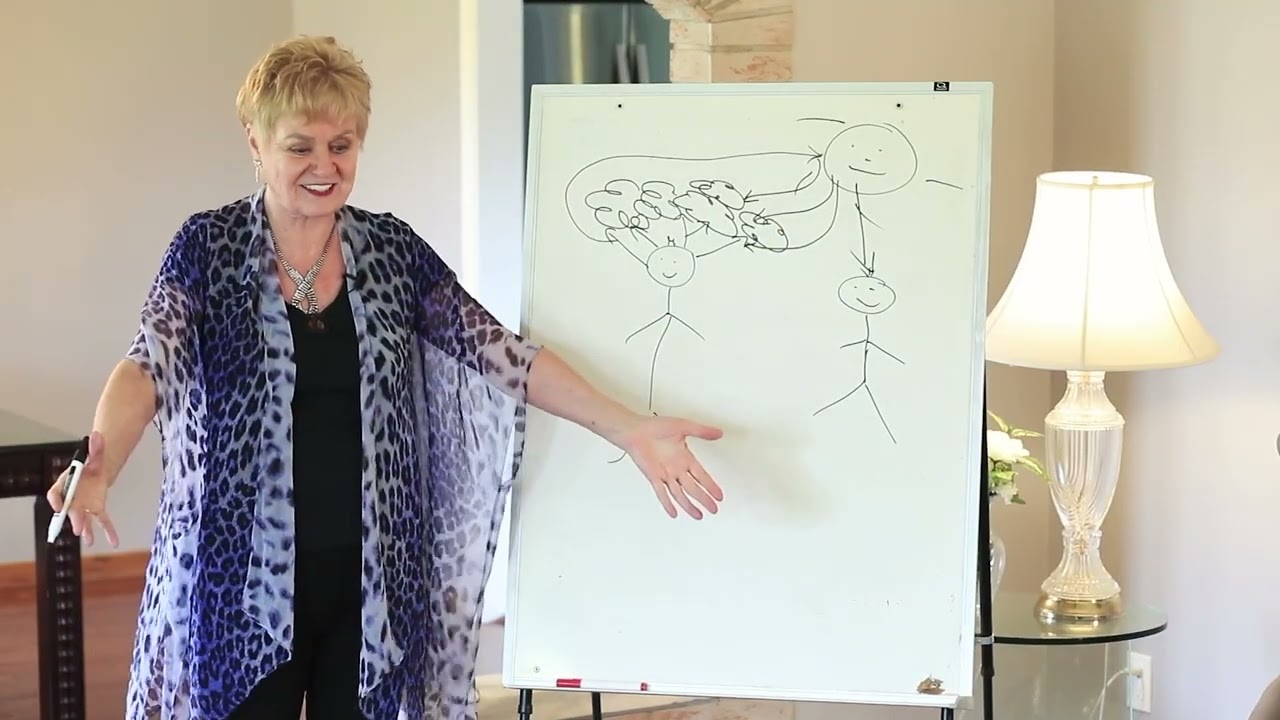
The one who shows the most emotion will get the job because that's how we relate to people, is through emotions. However, what I love about NLP is it's extremely logical. It puts things into file folders. It makes it so that it's extremely predictable as well, and that's what I love about the NLP. Is logical, is predictable. And if you have those low-energy little clouds away from your head— so we build up those little low-energy clouds stopping our connection with God and abundance and joy— when we clear those, we're in that light, and therefore, you know, you'll be choosing from a really good place. You'll be making decisions from a really good logical place that has good emotions, you know, positive emotions associated with it. So you'll be right every time.
Good.
Yeah, they've proven that instinct is a real good— successful people are usually very good with regard to their instinct. Unfortunately, most parents override kids' instincts. So it's like, yes, I know you'd like to do that, but I'd like you to do this. So the instinct that they have is overridden and overridden so much that they don't have a connection with it anymore anyway. The NLP teaches you to get back in touch with that instinct and really start to use it logically and happily.
Excellent. I want to talk just a little bit about your book, Every Word Has Power. I'm curious, this is such a pioneering book. What to you makes it so much different than what other NLP stuff is out there?
Well, what was interesting was NLP is all about changing behaviors, changing the way you think. It's not really focused on the power of words except to say, tell it like it is. Instead of saying, you know, I want to not be sick, you'll say I want to be healthy. Instead of saying I don't want to be poor, you'll say I want to be rich. So you'll be going towards your results rather than away from. That's really as much as NLP has done along, along the power of words. What I realized was that the actual words we use and the self-talk we use produces 100% of our results. So you can be going towards something all you like, and if you've got an old pattern running in your head of, you know, oh, you can't do that, oh, money doesn't grow on trees, all the other stuff that's happening in your head, then no matter what you do, the behavior is going to result in self-sabotage. You know, at the best, you're going to produce inconsistent results. So what happened was, when I realized how powerful each individual word is, then I started realizing, right, if we change those words, we can actually move— be moving in the right direction most of the time. Okay, if the— and of course, sometimes it takes a little delay, you know, when you've planted your seeds and you've put your soil on them and they're starting to grow, you know, yelling at them, I want my dinner tonight, where are my vegetables? Doesn't really help, you know. You have to wait a little while sometimes for it to unfold. However, when you are clear about where you're going, you get those results right back. That's the principle of the law of attraction, is if you— even if you've got the little clouds above your head, if you get excited about something— I believe excitement's the hotline to God. That's the one that really— it just zooms through everything when you get excited The request goes up to God. Thank you, I won the lottery. Thank you so much. Yes, I've got the money. Woo-hoo! Suddenly it gets through and it comes right back and lands in your lap. And that's the goal, is to be able to be focused on where we're going. If you just sit there thinking, oh gosh, this, you know, I mean, you can have all the luck in the world. If you're supposed to meet the love of your life that day, you have to go out to meet them. You can't just sit in the house going, love of my life is coming today, yay, knocking on the door. You've got to go out and take action to make it happen, which is really, really, you know, part of the whole NLP principle is taking the action and having that intent, clear intent.
Right, absolutely. And I want to end on a final question of— we talked about your upcoming conference here in Virginia Beach, and that'll be your Neuro Linguistic Program certification training. So people will be certified to be NLP practitioners themselves. I'm curious though, what can they expect for those who are planning to attend this or who are curious about the program? What can they expect from the program?
Very intense. It's gonna be a long day. There's a lot of people there. It's fabulous though. What happens is, I believe that we bring soul groups together when we do this kind of training. I really do. We bring the soul groups together. So anybody who's in my soul group, I expect to see you there in Virginia Beach. And because— and, and that's lovely because it means I'm working from a much higher level. I'm working from a spiritual perspective. From, you know, that connection of spiritual, the angels, the gods in the room kind of thing. We're going to work on communication strategies, we're going to work on behavioral strategies, we'll work on how to understand other people, how to make someone like you in less than 2 minutes, 2 seconds actually. It takes 0.012 of a second to make someone like you. So I'm going to teach you how to do that. I'm going to teach people how to release negative emotions, how to do anchors, which is how to make yourself feel good in a few seconds, and also how to work with other people doing this too. The certification process will involve 30 hours practice afterwards, an exam, and I always go through the exam with people so that they know their stuff. It's no good to me just taking an exam. I want— and it's, and it's fairly simple. It's in the order of the book. It's an open book exam. We have a lot of material to cover. We do phobias, we do fast phobia release, we do how to set goals, how to do motivation strategies, how to clear all those negative emotions, limiting beliefs that are keeping you back in the past. And it's a fabulous, fabulous training. People adore it. It's— it's so— it'd be literally people say, can we come back tomorrow? And I'm like, no, I'm good. I've really worked a lot. I've never had a training where people have said, wow, you know. And what happens is I will do hypnosis during the 3-day training just to give people a boost of energy, because I truly believe if I give them a 10-minute hypnosis, what happens is instead of just all information coming in and doing stuff on yourself, you actually get back to peace and then just feel enlivened. So people feel more energized over the 3 days, not less. It's good.
Excellent. Of course, you talked about them not wanting it to come to an end, so they will be able to do the personal breakthrough sessions afterwards in the week to follow the conference. We'll make sure we give our listeners everything to register for that.
Yes, or book a breakthrough session. I can do it by Skype after the conference as well. Excellent. I'm excited to come there.
I love—
I love— I love Virginia Beach. I'm so excited to come there. Wonderful.
We are so excited to have you, and we're honored We're honored. We're glad that you'll come and put on your incredible certification program. Absolutely. Dr. Yvonne Oswald, thank you so much for joining me today on the show. It's been a pleasure to listen to you talk about NLP and share all your incredible wisdom. So thank you so much, and we look forward to seeing you in Virginia Beach.
Fabulous. Look forward to seeing you. Bye!
Alright, take care. Bye. Don't miss your opportunity to become a certified NLP practitioner with Dr. Yvonne Oswald as she hosts her Neuro Linguistic Programming certification training right here at the ARE in Virginia Beach on May 28th through the 31st. If you'd like to register for this incredible event, you can visit our website at edgarcasey.org/conferences. If you'd like to learn more about Dr. Yvonne Oswald, you can visit her website at globalwelcome.com. On behalf of everyone here at the Association for Research in Enlightenment and moretalk.tv, I'm your host, Brenton Bickerstaff, reminding you to keep the self-talk positive and choose those high-energy words. Thank you so much for tuning in to Reflections: The Wisdom of Edgar Cayce. Hope everyone has a wonderful week. Much love. And now it has come that time for the Thought for the Day here on Reflections. And joining me for the Thought for the Day is Dr. Bill Austin. And Bill, thank you so much for joining us on the Thought for the Day today.
Oh, thank you, Brent. It's a pleasure to be with you.
Of course. Honor to have you on the show. And if you can go ahead and read the Thought for the Day today for our listeners and share a little bit of your personal thoughts on the excerpt.
I'd be happy to. This thought comes from Reading 3374-1. The entity should keep close to all those things that have to do with the outdoor activities, for it is the best way to keep yourself young, to stay close to nature, close to those activities in every form of exercise that breathes in the deep ozone and the beauty of nature, for you may breathe it into your own soul as you would a sunset or a morning sunrise, and see that sometimes it's as pretty as the sunset. What great advice. You know, I was reading in Time magazine recently of the aging body. Body, you know, when we start to fall apart. And about 35, we start to go downhill, and it gets worse as we hit 40, because things seem to— the breakdown seems to speed up. If we turn to the Cayce readings, there's always something positive that we can do to restore health to the body. And one of the central focuses focuses is exercise, whether it be in front of an open window or more importantly, and he stresses this a lot, out in nature. About a year ago, my wife and I bought some bicycles, and I'm not the greatest thing on a moving object by any means, but we would go around the neighborhood and we would also take it down to the green way, which runs along the Roanoke River. It's, and it's really beautiful. We'd go down midweek where there wasn't too many, there weren't too many people there, and we'd really cruise along. And I've grown to absolutely love it. And now that winter is here, we still try to get out to, to walk, but it's a little cold on the bicycle to do that, and sometimes a bit snowy. But just being outside is glorious. Uh, we were out shoveling the other day, and, uh, I just felt so good being out in the fresh air, physically working, doing some exercise. And it's comical because, uh, one of our neighbors has a little child care center, and I had dug a trench for the water to run down into the gutter, and he was out with his shovel and he was filling it all in. And there was a part of me that was saying, oh, what are you doing to my canal? And another part a spot inside of me that was saying, "Oh, thank you. I get to go outside again. I get to do some physical activity outside." Being outside is magical. Years ago, I worked as a wilderness instructor and took kids out into the wilderness for 2 or 3 weeks at a time, sleeping out under the stars and hiking all day or rock climbing, rappelling. I can't think of a time when I felt so good as when I was physically active. But when I am physically active outdoors, being close to nature, Casey always said, was being close to God.
Yeah, absolutely. That's wonderful. Thank you for sharing all that. Yeah, I resonate completely with this. You raise a great point in that I don't think I've ever felt so alive and kind of healthy than the times when I'm outdoors and I'm really immersed in nature. I've always found too the more— you talked about how when you take your bike rides down to the Roanoke River, you do it midweek. So you can kind of have a more pristine form of nature I guess you can say where there's— you can kind of get moments of solitude to yourself where it's just you and nature. I think there's a very powerful feedback that's created when that when that's the case. You really get to— for me recently, I live here in Virginia Beach and there's a nice state park. There's been a lot of snowfall lately. We live near a Navy base where there's jets that are constantly flying over. But because of the snowfall, the jets were not flying over. These are very loud fighter jets, Navy jets. So when the snowfall came, I was always out in First Landing and it's beautiful. Not only to see First Landing covered in snow, but also to finally, probably for one of the first times since I've been living here in Virginia Beach, to hear what it sounds like, what nature sounds like. For me, that was a very spiritual healing experience. And I love how Casey addresses that this is the best way to keep yourself young. And I absolutely could not agree more with that. My— I've spent a lot of time out in nature, and it's absolutely an essential part of my spiritual practice to spend time out in nature. And there's a couple things I can contribute my health to over the years. As I see many of my friends kind of not keeping up with health practices, I think one of the most essential things is being out in nature, the amount of time that I spend out in nature. I see a lot of people, especially this younger generation, where we sit in front of a— put a screen in front of us and we're okay. We can stay inside all day or give us Netflix or give us a television and we'll be fine. I tend not to subscribe to that, that paradigm because I've felt the spiritual effect, the healing effect, and how it can really keep you young and enlivened and really optimistic. It can help you to stay grateful. It can humble you to be out in nature. There's all these incredible health benefits that I think a lot of people really need to start incorporating more into their lives and You know, it's, it's, it's just absolutely essential for us to, to be out in nature. The other thing that Cayce brings up in this reading is the emphasis on exercise, and the way he words his readings is always so powerful. He says, um, to stay close to nature, close to those activities in every form of exercise that breathes in the deep ozone, the beauty of nature. And I love how he says every form of exercise because because there's this emphasis within that, I guess, the health movement, the health community, the health-conscious people where you have— they have very specific— everyone has their own specific exercise and they think that might be the best. But the beauty I love of the Casey material is that any form of exercise is wonderful. It's beneficial. And for me personally, I do very simple stretches daily and I think that's a beautiful form of exercise or I just go out hiking in nature. You know, I'm not going out and I'm not sprinting and running miles and doing heavy lifting weights. I'm just, just, just doing these very simple forms of exercise. And I think it's essential that people understand that any form of exercise is, is in a way a way to keep you more in touch with God because it helps you to be more in tune with your own personal body.
Mm-hmm. I think you bring up a good point about the exercise. The best exercise is the one you do. And Casey refers to that idea a number of times, you know, when asked, uh, what's the best Bible to read? The one you read and apply. You know, what's the best discipline? The one you do and apply. What's the best exercise? The one you do. And do it outdoors. You know, when he was talking about his stretching exercises, he said, you know, wear light clothing, open up the window, stand on your toes, throw your arms up and breathe deeply, you know, and then bend down to touch your toes. I mean, it's such a simple exercise, but one of the keys is open up that window, get some fresh air into those lungs there. You won't freeze to death.
Yeah. Absolutely. Yeah, I can't stress enough the— and he hits it right on the head here when he talks about breathing in the deep ozone. All he means is that getting fresh air, it's so, so essential for our health to get that fresh air. I think that's absolutely essential for a health practice.
Mm. Yes. Yeah.
Wonderful. Well, this is an excellent Thought for the Day. Thank you, Bill, for joining me. It's always a pleasure listening to your thoughts.
Oh, thank you, Brett. Always a pleasure to be with you. Have a salubrious day. Absolutely.
Thank you so much. You too. I'll see you next week.
I look forward to it.