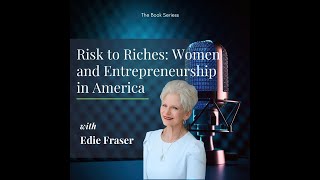
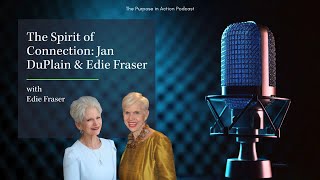
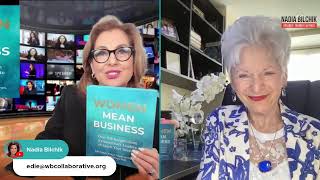
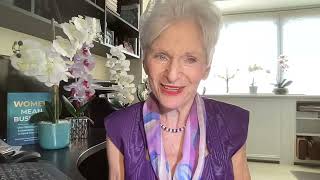
Recorded conversation between host Esther and Edie Fraser about women and entrepreneurship. Edie describes her 1986 book Risk to Riches (Women and Entrepreneurship in America), highlights examples of women entrepreneurs featured (~120 profiles in the book), discusses persistent barriers (data/certification, contracting, pay equity, legal/policy challenges), and emphasizes mentorship efforts—notably the Million Women Mentors initiative (goal of 1M, reached 2.5M) and a Young Women Entrepreneurs program reaching 30 communities and targeting 4–5,000 students this year.
Welcome to today's conversation. I'm joined by a true trailblazer, Edie Frazier, someone whose work has shaped the way we think about leadership, entrepreneurship, and purpose. With eight powerful books under her belt, she has continually challenged the status quo and elevated women's voices in business. One title that stands out to me is Risk to Women and Entrepreneurship in America. It's bold, it's timely, and it makes me curious. So I have to ask, Edie, what kinds of risks do you believe women must take in order to turn risk into opportunity and ultimately into success?
Esther, thank you so much. You know, it was extraordinary back in the late 70s and 80s when we all started with women in Business. And it was in 1986 that I authored a book, Risk to Riches, Women and Entrepreneurship in America. And I did it with the NFIB and their foundation. But it's the story of women in different industries and what they did by taking risk to make riches or acknowledge, as we all do, that we can fail at something, learn from it. That's the risk, and keep going. So the risk to Riches Women Entrepreneurship in America. And as I reviewed it, industry by industry, there were such stars. So many of them are now deceased. But the ones that are still there, and there are so many of those are just extraordinary as they keep going. And they took deep risk, every one of them. And Mickey Siebert, the first woman on the board of the New York Stock Exchange, was one in finance and is. She just kept going. Kay Unger lost her business, got it back. She's in there, and we all know it. But there are at least 120 women in the book Risk to Riches that took risks. So what is risk? It's a willingness to understand you're building something with a product or service as an entrepreneur. And you can keep building it, but be very careful that you get the right financial advice and the right legal advice, the right. The right people around you. So that risk is so carefully averted, and they go to riches. And once you get to riches, you want to give back. But just want to share that out of that book, we did many years Women, Wow. Facts. We hit this. We did a big kickoff in the Senate. We did for about five years looking at women's data and the risk that they had taken. And then, of course, the same thing in the book that Andy Simon and I did of 102 women, they all took risk and are still today taking risk.
Thank you so much for that, Edie. Building on that thought, what barriers do you believe women entrepreneurs still face? Today. And how did you hope to address those challenges and risk to riches?
The risk to riches was all entrepreneurship. And today all women in every category, as we showed in 102, are facing risk and challenges. We thought we had made such inroads on getting the 5% sent aside for entrepreneurs and more for entrepreneurs of color working. And today we are threatened by taking away the data and the getting certified, using that certification to advance. And so when we look at hitting the numbers with government contracts, corporate contracts, universities, we want to see that they have the right percentage if women 14 million women entrepreneurs in America get recognized. And there's so many great organizations, as you and I know, that are supporting. So we at WBC and is clearly NALBO and we bank and WPO and all the organizations pushing women entrepreneurs, we work together. But there are still not only the barriers overall and pay equity, equal rights. We tried to get ERA through and is it's clearly a sisterhood now where we fight to make sure, as WIP does in a nonpartisan way for entrepreneurs, that we're working together to keep elevating each other, introduce and make sure we are collaborating for each other's success. Because we will not tarry on this journey. We will not deal with negativity. We will stay focused in support of each other because our risk has to be our riches and our data has to keep showing that we can make such a difference.
Thank you, Edie. You've given us a lot to think about. And finally, I know you often speak about the importance of mentorship and giving back. How do you see mentorship playing a role in helping women navigate the kinds of risks you describe in Risk to Riches?
It's so extraordinary to make sure that everyone is mentoring and every organization is mentoring and sponsoring. We also mean that means that you are speaking up when somebody's not in the room, but you are double set. So there's so many great mentoring programs. The one that we're most proud of was started by us at STEM Connector called Million Women Mentors. And for that, we said, can we do a million mentors in five years? Meaning you had to give 20 hours a year to mentor and support a woman up the system. And we set that goal. And of a million, we hit 2.5 million. And that program goes on today and clearly important. And then Enterprising Women magazine's foundation picked up the program and that's Young Women Entrepreneurs. We're going to 30 communities this year to take disadvantaged high school girls, particularly in STEM careers. And now we've got hundreds of women volunteering to be mentors in that program. And we're set to hit 4 to 5,000 young people this year. So there are other programs on mentoring and support that are so important because it's taking that hand back and making sure with individuals we are helping them. And today we when the mental health program and the financial pressures are on and we then know it's mentoring, we're there for each other each and every day.
Edie, thank you for sharing your insight and wisdom with us today. And to everyone listening, thank you for tuning in. We'll be back next week with another powerful conversation, so stay tuned.