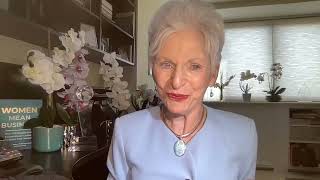
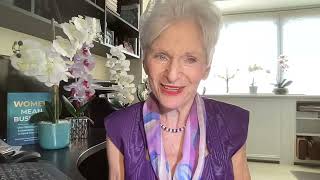
Women Mean Business co-author Edie Fraser is a trailblazer!
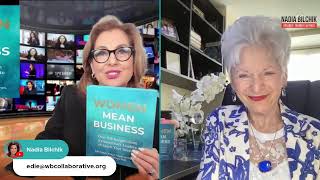
Interview (March 2024) of Edie Fraser by Nadia Bilchik about Fraser’s decades-long leadership advancing women, diversity, and inclusion. Fraser recounts her civil-service and entrepreneurship origins, founding and leading initiatives (Women’s Business Collaborative, STEM Connector, Million Women Mentors, Diversity Best Practices, Enterprising Women Foundation), describes personal obstacles (gender bias and antisemitism), and promotes her co‑authored book Women Mean Business as a movement of practical wisdoms and events to elevate women and women of color. The conversation highlights concrete programs, mentoring/championing practices, and contact information for engagement.
And communications consultant.
19 number one best sellers have been nominated and won so many awards throughout your careers.
She has a wealth of experience interviewing and consulting with well renowned figures, celebrities and corporations. Nadia speaks on how to get people to like you, trust you and want to do business with you.
Over the last few weeks the entire, entire world has been monitoring the treatment of your grandfather Nelson Mandela. And my job was to introduce it.
And provide with topics like leveraging the power of your personal presence, networking for success and lighting the fire. Nadia Bilchik.
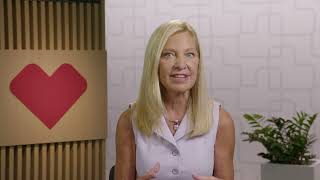
And today it is my honor and privilege to be interviewing Edie Fraser. And I wanted to read a little bit about Edie to you. Now this is her co authoring of her latest book. Edie is a renowned trailblazer, entrepreneur, philanthropist and advocate for gender and diversity. She's the founder and first CEO and now chairman of Women's Business Collaborative, WBC founder and past CEO of STEM Connector and Million women mentors and founder of Diversity Best Practices. She now has 83 major awards for leadership, gender and diversity advocacy. She's also authored and some of them this is a co authoring five books. So Edie, what a pleasure to have you join me on this fabulous Tuesday morning in March, which of course is Women's History Month.
Nadia, what a treat it is to celebrate with you Women's History Month and for all of us to know you're incredible, incredible career and what we learned from you about communications and to get your message out and build your strengths. So it's just a joy that you are in the book Women mean business and you are every day teaching us as women to be bold, to be brilliant and be connected.
Now that is Edie for you because here I am wanting to highlight Edie. And we always say in networking, be a go giver as much as a go getter. And Edie just exemplifies being a go giver. So for you Edie, let's hear how it all began. Because the concept of women and leadership and diversity is something that's become very mainstream. But you really have been a trailblazer. So take us back to how you started this work.
Thank you Nadia. You know, when John Kennedy said what are you doing for your nation? I came to Washington and signed up for the Peace Corps staff and I did college recruiting and then I became a desk officer for Africa. And truly back and forth, I then was thoughtful about the domestic problems of America. When Bobby Kennedy was shot, when Martin Luther King was shot, I said why can't we all get engaged and try to understand So I spent my next five years as a consultant for domestic and poverty. And I spent one year in 52 cities or communities from Indian reservations to migrant camps to inner city ghettos, just with a team trying to understand and we can relate that so much today, I hired the first black women ever off welfare under a government contract. But then as I moved up and I headed health communications for the government, I then established a PR public affairs firm. And in those days, hardly anybody was active with the US Chamber and others. Today, as we see word about parity for engagement. And I went on through the years and the sisterhood. I was so proud 42 years ago to be a founder of the committee of 200. And then organization by organization came together, the national association of Women's Business Owners. In Those days, getting entrepreneurs 5% of contracts was so significant as we founded women Impacting public Policy. And then the women's Business National Council we bank, which has grown to be amazing. So then in the corporate world, looking at what we could do to advance women and what we could do with entrepreneurs, what we could do for nonprofit organizations, I was just so pleased to be the first chair, first woman of the World affairs council in Washington D.C. and so much else. But it was always bringing other women and men as great allies with us and a deep focus on women of color. So then it was so neat to go into executive search with diversified search and to really focus on the advancement of women there and women of color. And with that, we spun off STEM Connector. And in those days think everyone thought STEM was stem cells. But what we said was this is our future. And it is today when we look at AI and we look at cyber and we look at all the trends, we look at those STEM jobs and careers and 60% of those can be filled by women. So it was building that. And a few years ago, after being deeply involved in the enterprising Women now reaching 1 million women entrepreneurs, we built this foundation, the Enterprising Women foundation. We're now in 18 cities giving back to young women in STEM and we're going to 30 communities next year. And then being on the board of SCORE for so many years, truly. And today my husband and I are funding SCORE in six communities a year for gender to get women to be able to compete for contract. And it was only five and a half years ago when I said, we said, what if all the women's business organizations did not compete but rather collaborate? We built the women's business collaborative with 85 women's business organizations now about 10 million women. And we are so focused to really drive the change in the women CEOs and the C suite boards of directors. And we complain, but we doubled the numbers in terms of. And now on the pay equity and on entrepreneurs, there's still such a lack of capital going to women. You know, it's only 2%. And we have women of color getting only less than 1%. But we're driving those changes and we're doing it with a new sisterhood of all of us. And what this book says, what can we do every day to elevate others and to celebrate their impact and success?
So, Edie, the reality is you really have an astounding career and the best. If you're just joining us, I'm talking to Edie Fraser, who is really considered a trailblazer in the area of DEI women's empowerment. I mean, your resume, your legacy is extraordinary. But Edie, let's take a step back for a moment and talk about challenges. You have done astounding things, but along the way you speak about we've done this. Now let's talk about the challenges to get there in what is still remains a fundamentally male dominated, certainly corporate world. Right. We've made great strides. They're women CEOs. You speak about women of color, but let's talk about some of the personal challenges and some of the obstacles to that you personally have faced in getting to this point in your life.
Thank you, Nadia. None of it's easy, right? I think you and I would always say we take two steps forward, but we take one step back. But you got to keep going with that persistence in terms of what you can do. So I, you know, like you're in Atlanta. I grew up in Atlanta, was president of Westminster. But you know, I found tremendous anti Semitism in that era, which still persists today. I went on to Duke and I.
So not only being a female, you're saying as a Jewish woman, you experience not only prejudice against you being a woman, prejudice against you being a Jewish woman. So you had to overcome that.
Right. But I think what we did, you know, I tell the story sometimes that I couldn't get in the number one popular sorority at Duke because they had a national goal not to let in any women that were Jewish. Right. And it was amazing those days. So it was interesting. Five years, six years after I came to Washington, I got a letter from the woman that was head of the sorority and is traced me down and said she had one regret in life that she didn't fight for what was right that I was her favorite freshman and that she did not stand up to national and she had married somebody Jewish and she was raising her kids, but she was thinking of me. So every day we think of others and we can go through story after story. So many in the C suite today are leaving the C suite because they don't see the opportunity to be CEO and therefore is they're going on corporate boards. Our numbers are going way up on corporate boards. And after George Floyd, we really saw the advent of women of color. That's fallen back too.
But let's pause for a moment here. It's just really important, Edie, that we understand this. First of all, the concept of prejudice in general. And one of the things I know you look at in detail and is the concept of unconscious bias, prejudice towards other. And I know part of your work is educating everybody to see the person as an individual. And how do you advise? Because we want to make progress in this area. So how do we do this? You've experienced prejudice yourself. There are so many people joining us today who have experienced prejudice based on background, ethnicity, race, religion, gender. You found a way of dealing with it. What advice and guidance do you give to people who feel they are victims of bias?
We must speak out for each other. I think that we are now using the word inclusion as the key word for DEI and the cultures best companies, best stock prices are those that are truly including women and women of color. As women go on corporate boards and head up nominating committees, audit committees, et cetera, on boards of directors, we're seeing great progress. But if we don't speak out for the new demographics of America, you know, we said 20 years ago that by 2040, this country, America was going to be a majority minority led country. And already 10 states have minorities as the majorities. There's pushback in that prejudice rather than the recognition that they're our workforce, there are consumers, they're our marketplace, they are our suppliers. And what a joy it is to be able to advocate for each other, to push them forward and to never let up in terms of our steadfast efforts to say no more. This is the day for women and women of color as we end Women's History Month. We need to practice it every day.
So I'm curious and Edie, along your journey, individuals that you've impacted, people who because of your initiatives, because of women's collaborative, because of things you've done, and because of really how you've created a whole different narrative, are there any individuals that come to mind who go, Edie, because of your work, because you have inspired me to speak up. I'm just curious, you know, who comes to mind. What comes to mind when I say.
That, oh, Nadia, I can name 30 people. But out of that it's so reciprocal, right? It's just so great when we look at because they're really, we think we mentor, but we get mentored back and the relationships become so endearing and so important that we become each other's cheerleaders. And is there, you know, there's a woman in WBC that's on our board of directors, Sharon Reynolds, black entrepreneur out of Nashville. She's got patents now with Morehouse School of Medicine. She's doing amazing things in manufacturing. I take her every day and work with her and see. I want to see her get to a billion dollars. And there are so many others in our sisterhood to give that kind of fierce counsel. And none of you know when you may have heard me say, I say, can we take and champion five women every day? And if so, we may miss a day, but that means that we reach out the next day to more. Because if we all do that, we are really changing this country and the.
World one woman at a time. Right, Edie? So you've written several books. Let's start with Women Mean Business, the book that you co authored with Robin Friedman, Spiceman and Andy Simon. Let's talk about this book because it's your you talk about it not as a book but as a movement. I'd love to hear what catalyzed this.
It truly is a movement because as you know, and Nadia, you're One of the one or 102 people we profiled is that we've done over 50 events and we're scheduling into the end of 2024 and 2025. We're just so thrilled to see the companies that that are using it to get five or six speakers for their workforce. Truest Financial out of Atlanta and Carolina is going to have 4,000 people from their business resource groups online. Today we're doing a major one with five or six with committee of 200. Last week we were we bank the and at the Women's Forum in New York everywhere we go, and with Andy Simon in particular and with Robin. But we're absolutely profiling the others to really tell their stories, add their wisdoms. You know, I think that as we look at somebody like Cindy Ken in the book Black Woman Superstar, but she uses that phrase soul joy. What gives your soul true joy every day and is don't take the negative, take the positive. And as I always say, Maya Angelo said, get rid of negative people, put your time with positive people, and propel others forward. So that's what this movement is. It's just extraordinary because we're lighting a fire. You know, as Amanda Gorman, the poet, has said, find that light despite the darkness. And we are finding the light in this book, in this movement. As we continue to schedule events and we continue to highlight what everyone's wisdoms are, we then ask everyone that comes to our event, what are your wisdoms? We did that in Atlanta with IBM, with about 120 black women every one. We did that everywhere we go. We ask others, what is your wisdom and what are you doing to elevate others?
It's so wonderfully set out, this book, by the way. And if you are in hr, you're in professional development. I'll give you contact details for Edie, but it's such a worthwhile discussion because so many women with wonderful wisdom. One of my favorites, Edie, and then I want to really hear yours, Cathy Halou. And her name I need to pronounce correctly. But she always says, and this is one of my favorite wisdoms from the book, she says, instead of waking up in the morning and going, oh, my goodness, what do I have to do today? You wake up. And I did it this morning with Edie. I thought, what do I get to do today? Oh, I get to interact with really the legendary. And you are the formidable, amazing Edie Fraser. That's what I get to do today. And they're just so many other simple wisdoms about life and people, and every person that's contributed to the book has put it in a very unique way. But if your wisdoms, I mean, you have. If people today are watching and listening to us and going, you know, what they saying is all very well, but I feel stuck. What are Edie phrases? Wisdoms for getting unstuck, for overcoming obstacles. Because the reality is the world right now is what we call vuca. Volatile, uncertain, complex, ambiguous. I mean, just this morning, you. You're watching the news. And this beautiful bridge in Baltimore has a massive ship that takes the slight wrong turn and destroys the bridge and people are killed. And you're just watching this in front of your eyes. It's horrific. And day to day, there's some kind of horror, whether it's a war in Ukraine or what's going on in the Middle east and Israel with Hamas, Gaza, one's watching really difficult things. And what wisdom do you have to all of us for coping? And I say being a proactive influencer being versus being a reactive responder.
I think what we have to do is one, stay positive in this age of negativity and that we've got to be involved everyone as we would look at Pam Eason, head of Wii bank in the book, who said it's our time to be bold now. And so you can pick. One of the things I've picked is to advance more women in the U.S. senate and to absolutely make sure that we get more women in office. What we all have to do is pick what we can impact. Thank God we've put more money into infrastructure and we need to make sure that everyone is safe. But Kimber Matarazzo, who's in the book and the former chair of C200, says, Show your gratitude. She and I stayed together for about five days and we took a gratitude walk every morning to think about the two or three things every day that we are grateful for. Then really concentrate on those and get rid of those things that are aggravating and ask for help. Because good people, good women are there to be your allies, your advocates and to amplify your interest.
I'm going to just open the book randomly and read another one. So we have Carla Grant Pickens, who's the vice president of IBM Global Operations Platforms and Delivery. And he says, be heard, building skills to make you more competitive for your next role is essential. You must state your intentions of what you want and be by when for your career. Having meaningful conversations with your leader about your career aspirations is crucial. And that's such a good one, Edie, because don't you think women tend to be a little bit more reticent and just something as simple as that reminder, when you read that just again, won't you just elaborate on that one?
Can you hear me?
Yes, I can.
Well, let me just is tell you. Can you see me?
I can hear you and see you.
Perfect. Well, let us just say Carl is a wonderful example because she went through some sickness and she is still there at IBM driving that change. And she too has talked about being heard, being seen, being recognized as you grow in your career. She says, get a mentor and be mentored, be an ally and again, be recognized and know your worth. So those are the samples as you pick other people out of really what is so great and so important as we take this journey together.
And Felicity Hessen is the founder of Define. She says be authentic, leverage allies, find support, be curious and interesting. She says Stop working so hard. So please find another one, Edie, because each one. And again, I often say there's certain universal truths, but sometimes people phrase it in a way that resonates with you or it's what you need to hear in that moment.
Felicity is a marvelous person. And when she went through coming from Great Britain to the US and coming with a British firm that established in Search but she had a dream of her own business and she made that happen a year and a half ago. And so she's on our board of the Women's Business Collaborative. She is so strategic, she is so strong. She reaches out to others, she spends time talking to people because you build long term relationships. And so she is just exemplary of what it does mean to sustain and build other people and to value that time, value your family, value your friends and be so purposeful in your life.
I love that. And I wish we could do this all day, but I'll go to Mia Mens who's the CEO CNW Services, a division of Cushman Wakefield. And I don't know if you can see the picture, mine will disappear with my background. But she says and you go to her Mia and that is on page 64. And again I'll read she says leadership is about service. In ascending to a leadership role, you must cultivate servant's heart and understand that leadership is an act of selflessness. Our role is to serve the mission and people and then please her five wisdoms Edie and each person comes with something so unique. You have Claire Sunwoo who has an apparel company and just so many. Every time I open it and I read something else I go oh, that's so good. So let's go to Mia for a moment.
Well, Mia is extraordinary and it's been fun to two companies now she's at Cushman and Wakefield. But she does talk about a great career requires persistence and grit. And so she cares so much about humanity and authenticity. And she says basically the practice of gratefulness that we were just talking about. And then she says take risk and submit those to the emotional penetration of those moments. Right. And when you talk about the Sun Woos how exciting to see a family that escaped with nothing and have built the Clara Sun Wu Co. Because as.
You see, there's Clara and Roseanne.
Yes, that you basically make women feel good and spread joy one woman at a time is what she says. And know that those relationships are key and is put together your talent listen to others and spread joy one woman at a time.
I love that, Edie, as we draw to the end of our wonderful, stimulating half hour for you, you at a point in your career, and I know you keep thinking. So there's several other books. So let's hear about the other Edie Fraser books.
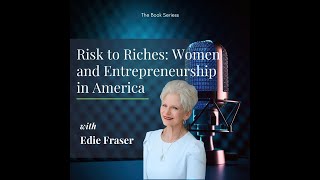
Oh, thank you, Nadia. You know, early on, 25 years ago, I wrote a book called Women Entrepreneurship in America, right? Risk to riches. You got to take the risk and figure out how to get the riches. You know, it was so fun to think about that. You know, with Robin, we wrote the greatest book called do youo Giving while you're Living? And that's the epitome of life. So the fact is, everyone thinks about that. For those of us that have been blessed, what are we doing to really give back? And that's time and money in terms of what we do. In that book, we profiled 65 nonprofits. We kicked it off in the United States Senate, at the National Press Club, at the NASDAQ stock market. It was amazing. And that is clearly if we live that every day. Do your giving while you're living. There are several others, and some of that is just always including others and their wisdoms because the only way that happiness quotient works is to make sure that you're surrounded by those that you absolutely care about and love.
Such a good universal wisdom and a great reminder. So for you in your life right now, I know you're really busy speaking to women's groups. Edie Fraser will give you her contact details. They're happy to come in, speak to business resource groups, hear wisdom from you. What are the things for you that help get you through the day? What are your wisdoms? If you were to come up with five wisdoms? And it's a great conversation. And it's also, Edie, I love how you're doing it because people sometimes forget to have a philosophy for their lives, and that's what you're helping them come up with. What is your philosophy for your life? These women have come up with it. What is yours? So I think, yeah, I think part.
Of that is do your giving while you're living. But I am so grateful for a fabulous husband and family. But my husband is really been there as partner. And I never forget when I was in business and beginning to rise, because you always rise and then you fall back and then you keep rising. You know, someone said to me, what do you want limousines that you want to ride around is? Or do you really want partners in life? And when you reflect on that and see what the essence are there's so many people that we've known that are really unhappy. They may have a lot of money, but they're not happy. And so to build the personal along with the professional, along with the community and to really achieve that happiness quotient, the joy, the fun and truly, yes, the love.
And that's in your life. So Edie, what's next? Is there, what's the next phase? What are you working towards right now? Because one thing I know about you is your mind is always going and you're always thinking about what can I contribute next?
Nadia, we're so pleased with the Women's Business Collaborative because I'm chairman for another year, I was proud to found it. The fact is that bringing all those women together and then participating in all the groups because I'm still active in at least eight of those efforts and every one of those efforts, we're redoubling the Enterprising Women foundation. As we've hit 18 communities, we're going to 30 next year. So I think I will stay steadfast in looking at how we get more women senators elected because we know so with everything there it is to make sure that we take time and to continue my entire life to reach out to at least five others every day and to know that we're there for one another as we build because what a great chain in life. And you propel the amazing communications because as we also keep learning and listening and reach out and share with everyone why they're so important to us. It's magical.
I love magical. Edie Fraser, if people are interested in the Women's Business Collaborative, if they are interested in you joining them for a business resource group to come and talk to the women in the organization, please tell us the best way to reach you and I will make sure that I have written that down so that I can put it at the bottom of the screen. Best way to reach out to Edie Fraser for anything you've spoken about today, please let us know.
Nadia, thank you. And to everyone, my email and Nadia and I will get it out is simply Edie E D I e@wbcollaborative.org or just ediefrazermail.com and what a joy to hear from you and to want to know what you're doing, to think big. We would love to do an event with you at for the book. We would love you to join Women Business Collaborative. We would love to listen to you. You know, we built a group at WBC called the Advisory Council of about 375 women. We've changed that word to champions. So you may want to be a champion. We would love to include you. And Nadia, you are a champion.
Well, coming from you. But the reality is, I think as we end today's conversation, Edie, we all need constant, constant inspiration because people go through periods in their lives where they just need to hear something in the moment that reaches them, them and says, right now, this is what I need to hear to move forward. And I think you've done such a great book in Women Mean business and the 500 insights from extraordinary leaders. And just on a personal and professional level, I want to thank you as a trailblazing women woman because, you know, we say it is woman and women like you, women, not women. It is women like you, Edie, who have made it possible for other women. You know, if we look at the world 100 years ago, if we look at the world 50 years ago, 40 years ago, and I'll end with this. I was asked recently in an interview, somebody said, if you weren't living in 2020, for what era would you like to be living in? And if you look back in terms of women's rights and where we all are today because of women like you, right now, having daughters is a good place. Women do feel more and more empowered. And yes, there is a long way to go. But thank you, Edie Fraser, for literally trailblazing the way forward for many of us. And last words, edwb collaborative.org my website is nadia speaks.com I'm nadiadiabilchik.com if you need details for Edie. But women do mean business, Edie, and you mean business. And it's just been fabulous having a real conversation with you, Nadia.
Thank you. And to us as allies forever, we absolutely are grateful. We're energized by one another and we need to communicate that with a kind of clarity and compassion that you represent. Nadia, thank you.
And for Women's History Month, I've been talking to trailblazer Edie Fraser, the book Women Mean Business. Thank you so much, Edie, and look forward to many, many more conversations and getting your insight and wisdom.
Thank you. Thank you.
More from Edie
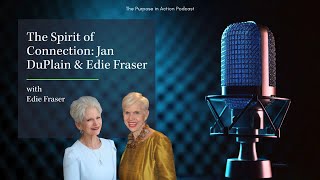
The Power of Purpose & Connection – A Conversation with Edie Fraser & Jan Duplain
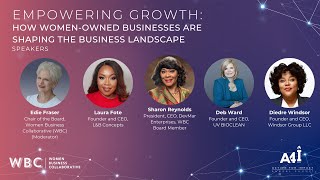
Empowering Growth: How Women-Owned Businesses Are Shaping The Business Landscape
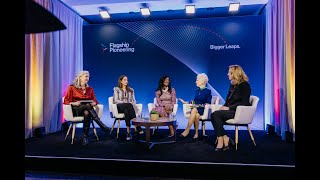
WBC A4I 2023: CEO Excellence in Gender Equality and Diversity Awards Opening Remarks Day 2
WBC A4I 2023: CEO Excellence in Gender Equity and Diversity Awards Opening Remarks