HOW TO go from College to PRO

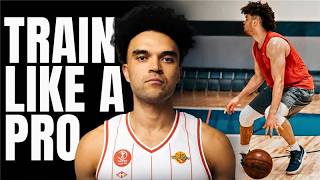
Elijah Bryant, who played college, NBA, and EuroLeague basketball, walks through how to go pro overseas. He covers scouting reports and offseason training, building your reputation on and off court, performing in front of scouts, strength and injury prevention, mental toughness for living abroad, choosing an agent, and prioritizing playing time over early money. Top European players earn around $4 million net per year.
Chapters
You play basketball, right? Like, you're in college and you need to be honest with yourself. Like, what skills do you possess that someone will spend money to or take an opportunity on you to play at the next level? Do you shoot it like Curry? Do you pass it like Steve Nash? What skills do you have to offer a team to pay you? Now you're thinking, well, I don't know what my skills are. Well, luckily for you, you can go ask your college coach right now exactly for your scouting report. What are your weaknesses? And The thing is, a lot of us sometimes have trouble really looking in the mirror and say, I'm not good at doing this. I'm not good at shooting mid-range or corner threes because it's our ego that's bothering us. So put your ego aside and really go and ask your coach what you can do to get better. And once you get that information, use it as a data point to really understand how to systemize your workouts. So when you're— instead of doing random stuff in your workouts, literally take what the coach has given you and structure your workout around that. And then eventually you'll be able to turn those weaknesses into strengths. And I think too many people think that, oh, I'm just gonna work on it during the summer, or I'm just gonna work on it when we're not in season. No, like for me personally, what I do during the offseason, I want to incorporate or add 2 new moves too during the whole summer. So I want to have the move and then I want to have the counter move. So my workouts before the mobility, before all this other stuff, I'm repping those out over and over and over because I don't really care about all the, you know, mumbo jumbo. So I'm trying to make make the connection between my body and my brain that I feel comfortable doing it. Because in the game, you're going to revert back to your habits. So I'm trying to build this as a habit. I think if you're able to do that, or at least able to identify at an early age exactly where your weaknesses are and adopt that approach of, okay, I'm just gonna keep adding a few moves each year, a few moves each year, eventually you'll look back and be like, dang, my bag's getting kind of big. So if you are a hooper that doesn't have a bag, don't worry. You can get a bag. Okay, so that's number one. Number two, reputation. What you don't understand about playing basketball overseas is that all these teams talk from your colleges, from your janitors, from your teachers, all this stuff. So what you have to understand is that no matter where you are on campus, no matter what you're doing, it is always a job interview. Because at the end of the day, you want everyone to speak highly of you. So even if you're having a bad day, treat someone as you would want to be treated. Even when you have signed and you're in that city, you are still being watched because the team has invested in you. So you need to make sure that you're not only respecting yourself, respecting your family, but respecting the team because the team has sponsors too. Like, you gotta look at yourself as a brand. Like, you're a brand working with another brand, and you have to make sure that you are living up to those expectations that the brand holds. So that goes with social media too. Whatever you're posting on social media, remember, once you post it out there, you can't get it back. So if it's not building your brand or doing something positive for the room, it's just best to not put it out. Side story. So during my time with the Bucks, I signed with the Bucks late in the season, played one regular season game, and this was during COVID And basically I had reposted something about health, and basically the post was like, you know, people are focused on the vaccine but they're not focused on their health. Meanwhile, I had been the first person to get the vaccine, but people reacted and said, oh, you need to cut this guy, all this stuff. But I just reposted because I'm into health. I'm not a vax, I'm not a political guy, I'm not any of that. I just post because I thought it funny thing for health. But looking back, I learned that like I have to understand that I'm representing something bigger than me. Like I'm representing myself, my family, a team. And especially if you're guys trying to make it, there's no reason to bring extra reasons to the team to not sign you. So when you— when it comes to social media and stuff, understand that you're being watched at all times. So don't take that lightly. It's not your role to talk about global issues. And if you don't feel comfortable and the team asks you to post something for something that you necessarily don't agree with or you don't want to even post it, don't Do it because at the end of the day it's your brand, right? And you're not obligated to post stuff for the team. Number 3, moving on to money games. Money games will always happen in your career, whether you're in college, professional, NBA, wherever it is. Money games are games, especially in college, or where you know NBA scouts are going to be there. You know there's a lot of NBA prospects there to watch the, the players, right? So me personally, I only had a few money games because BYU played in the WCC. We didn't— we weren't in the Big 12 yet. So that means our money games were Gonzaga and St. Mary's, and then any big non-conference games we had. So for those games, I know I have to perform because the most eyeballs are there. So what do I mean when I say perform? I mean show that you compete at the highest level. And that doesn't always mean scoring, that doesn't mean— but you have to produce. You have to produce for these, for these people to see you. And honestly, it's sad to say, but a lot of the scouts, NBA stuff, like what's going to catch their eyes, like, okay, boom, he can score. Especially for a lower level guy, they're not gonna be like, oh, he can rebound, he's rebounding 15 rebounds in the WCC. So these are things you have to think about when you think about your trajectory of your career. Now, you might be a great rebounder in the WCC, and that you might actually be a really player. But the thing is, is scouts don't think that way. They're thinking of like, oh, he has potential to be a scorer, he has potential to be this guy. Like, when they look at a player, they'd rather take an 18-year-old long, lanky Giannis type than a guy who's scoring 25 a game, a senior who's a knockdown shooter, because they think long-term potential. And obviously I'm not an NBA scout, but I'm just looking from the outside in. So if you are that guy that's the rebounder that is playing at a smaller school, understand that you can still make it, because I was that guy pretty much. I played at a smaller school, and I know plenty of players who basically paid their way to play overseas and then eventually moved all the way up to EuroLeague. And if you don't know the leagues, keep watching because at the end we're going to kind of explain the dynamics of exactly how the leagues work in Europe in terms of European competition and local competition. Moving on to the fourth, physical training. Understand that playing overseas, like, you're not going to have the facilities usually that you have, let's say, in college, like, like we had in college. But the weight room is going to protect you on the court, and in order for you to make money to actually have a chance, you have to be healthy. So the best availability is availability, right? So understanding that if I'm not healthy, I don't even have a chance to get a contract. So, and I always believe in like prehab, right? Like the weight room is going to make you strong, it's going to protect your body. So if you aren't emphasizing weight training in your program, your career trajectory is not going to be how you want it because you might deal with injuries. Now don't get me wrong, injuries are part of the game, but do everything in your power to limit them. And I think the weight room is a big component of that. Oh, and if you don't have an idea of like what what some morning flow is or to wake your body up. I'll leave in the description, it's free, um, you just have to enter your email. But it's basically a guide of what I do in the morning just to kind of wake the body up on a daily routine because I'm trying to maintenance. I'm not just trying to lift one day a week really, really hard. It's more so I'm trying to spread everything out based on how my body feels. And me personally, I use like a data track, Whoop. I don't know if you guys familiar with, just to kind of manage my body and know what I'm feeling and how I'm feeling and what makes me feel more load in order— do I need to do a weight workout today or do I need to do a pull workout? So that's kind of like my thought process. I'm really big and I understand, I believe in, you can't manage what you don't measure, right? So that's kind of my philosophy. So the next thing is mental preparation. Playing overseas isn't easy, but it comes with a bunch of cool experiences, a bunch of benefits. And funny story, we'll do a little story time. When I was coming out of BYU, you know, you do pre-draft, do the workouts, you do summer league, and then you're trying to find a contract if you're not signing with the NBA or whatnot. So then finally looking for a contract and a team is like, oh, we can't sign him because of his YouTube channel. At the time it hurt so bad because it was like, I don't drink, I don't smoke, I don't do any of this stuff. I have nothing against people who do that, but how's my YouTube channel like? Like, that's something that like I'm just documenting everything. And fast forward now, like everyone has a YouTube channel. So teams will make decisions sometimes in your control, sometimes not in your control, but don't give them an opportunity to not choose you over something that you could control, right? So being away from your family for 10 months is, is hard. Like, I'm not gonna lie to you, but you understand is you grow accustomed to Europe lifestyle. Like, honestly, I feel like I've lived— obviously I lived in Europe longer than I lived in America in terms of being married after college. So it's been very good for my marriage. And if you guys plan to get married, because you only have each other, especially in countries where they don't speak English, so you really only have each other. So it's been a great thing for my relationship with my wife, but also relationship with my Heavenly Father, right? So I have to depend on them so much because I don't have family around. So that's kind of the grateful mindset, the way to look at it. Just to give you kind of a timeline on the mental preparation, the smaller teams— and we'll talk about types of leagues and teams in the, in a little bit— but the smaller teams usually start mid-August, early August, and then you're not going to finish for 10 months depending on how far you go in playoffs. So understanding that, like, it's gonna be a long process, but what are you willing to sacrifice? You want to play basketball to take care of your family, so you're gonna have to sacrifice something. You're gonna have to do something that other people don't want to do to have things that other people don't want to have. Do you understand that? I'm gonna say it one more time, and this is the philosophy of like, get comfortable with being uncomfortable. If this guy won't get in the ice tub, you get in the ice tub. If this guy doesn't want to do sprints, you can do sprints. Because if you think about it just from like a logistics standpoint, if I do more than him every day consistently, then like math-wise, like eventually I'll be better. Like I might fail, but even if I fail, I'm gonna fail more, which is going to allow me to get better faster. Like think about that, like write it down if it doesn't make sense, because I didn't really understand that coming out of, you know, going into college. I kind of just worked, worked. Okay, I understood it, but I didn't understand like that mindset. Like, I just knew work because I wasn't— I was a 2-star, 3-star. But adopt that mindset now, not just in basketball but in life, and you will be ahead of 95% of your peers, I promise. So one thing I would suggest, if you are overseas playing, during the hard times, avoid the things that like bring short happiness, not everlasting joy, like scrolling on your phone, watching things on your phone you shouldn't be watching, eating the junk food. And write in your journal and remember the times because these times are the times that are gonna freaking build you or break you. If you get through these times, now you're one step ahead of the next person. Like, over— like, it's just gonna— there's gonna be a bumpy road, but keep the main thing the main thing. Like, under— be professional. Make sure you're in the gym, all that stuff, all the core stuff. I mean, my first year, freaking, they tried to come and take our cars. I can't control that. Like, I'll let my agent deal with that. And it gets into the agent stuff, we'll talk about that later. But your agent's gonna handle most all your stuff off the court so you can stay focused on the court. Okay, now moving on to your agent. So your agent is basically a representative that is going to negotiate your contracts, find you pre-draft stuff. And how do you find your agent? So for me personally, I have been talking to my agent throughout college, and we had had a meeting kind of gauging out, seeing. So when it came time to pick for me and everyone came running— it was— I say running, I mean, everyone wasn't running. I wasn't a first round. I wasn't even— I was undrafted. But when there's multiple agents out there, when I say everyone running, I mean like a bunch of people were asking, you know, what's the situation with your agency? Are you gonna— who are you signing with? And there's a lot of corrupt agents out there too, so be aware yourself a relationship based on the fact of like, this guy believed in me when no one did, he came out and visited me, so I'm going off relationship. At the end of the day, like, your age is not gonna get you the best job. You're gonna get yourself the best job by producing. Like, so don't think as your starting point as— don't think as your spot as like where you're gonna be forever. Just think of it as a starting point. Always say this when choosing a place to play overseas: choose the opportunity not the money earlier in your career, because you want to develop a great reputation. You want to develop— you want to be able to produce, and it's way easier to do that when you're playing. Everyone knows how it feels when you're not playing. No matter how much you love your friend who's doing well, we all want to be him. We all envy him, and that's just the natural competitor in us. So if you give yourself a chance in a place where you can actually play, then it's gonna work out. And keep your expenses low. When you get your first check, you don't need a Gucci bag. You don't need a Louis Vuitton belt. Okay, you can get it, but I'm trying to say if you keep your expenses low, then you can make more rational decisions because you're not depending on this money coming in. And that's a whole topic for another video. But if you keep your expenses low, then you can keep the main thing the main thing and not stress out about stuff that doesn't matter and actually be focused on basketball. But going back to your agent, your agent's going to take 10% of your contract in. Lucky for you, team's gonna pay it. So the team overseas pays your agent's agency fee. So me personally, I've had the same agent my whole career. And I think a lot of people don't understand that, like, once you start playing well, every agent's going to come out of the woodworks to try to get you. And for me, it was based on, like, the grass isn't always greener on the other side. So make that decision, but understand it's up to you what type of contract you get. So don't— like, your agent's really not going to determine that. If you're playing well, okay, yes, you're gonna be able to find a contract. So for me, it was based off relationship. And a good agent's gonna have an idea of what you're going to get coming out of college. And obviously, if you go to a bigger college, you can land at a bigger spot overseas. But teams are usually going to want to take players with more experience overseas versus lucky because they don't know what they're getting. Hence, I had a tryout in my first contract, and it was nerve-wracking. But what can I do, you know? For me, it was— it made me lock in even more. But we'll talk about that later. But don't forget, stay till the end. I'm gonna tell you exactly how much the highest paid player makes in Europe, and you'll— it'll be crazy. You'll, you'll probably start stretching as soon as we get out— you get done with this video. So teams can cut you. Yes, you can get cut, you can get fired. But understand this, let me say this before I move on: getting cut or failing isn't always the worst thing. Because there's a saying that basically, how much does water cost? Water costs here a dollar, but in the airport it costs $4. And the theme park costs $2. It's the same water, but it's valued different at different places. So maybe the place you get cut, you're not valued as much, and you'll go to a place where you are the airport water. So keep that in mind. Like, understand these failures that might happen in your career— they're not failures if you learn from them. So learn from them, embrace them, because if you don't learn from them, that's when they become failures. And if you quit, that's when they become failures. So keep that in your mind. So we're talking about my 45-day trial. So for me, during the 45-day trial, basically the team cut me and like, get rid of for the 45 days. So best believe I was doing everything possible to show how professional I was early— stretching, working out with the weight coach, shooting after, talking to the coach, being a good teammate— all these things to reassure the organization that I was a good player, I was a good person. Because you could be a good player, but you might not be a good person. And you're going to understand, back to what we said about reputation, your reputation is still being evaluated when you get over there, no matter what people have said. Because they're watching you when you go out in the club, they're watching how you interact with fans, how you interact with referees, how you interact with your teammates, how you interact with the coach. All this stuff is being evaluated and you're getting a reputation developed in Europe. So don't give them an opportunity to give you a bad reputation that could potentially make you not have a contract. So think about that. It's crazy because I have a story of— I've never been cut, thankfully, but there was a player, I won't say his name, just, I don't know, you can do the math. There was a player in Galatasaray last year, card, he got cut. And I was thinking like, dang, that sucks, right? That sucks to get cut. Like, oh, he used to move, he used to do all this stuff, right? And I was going kind of in that like, woe is me mindset. Like, oh, that sucks. But he He goes to a new team and he starts freaking killing, and he's supposed to sign with the bigger team, but yeah, yeah, the moral of the story is like, back to the water. You might be valued higher somewhere else. So always, you know, weigh your options. Don't emotionally make a decision, but understand, like I said, if you're just consistent over time and keep building, everything's gonna work out. You just— when you get hit in the face, just get back up and keep doing it. You get in the face, get back up and keep doing what you're doing. Like, it's gonna work out, I promise. And no matter all the drama you deal with, if you can stick it out, eventually you're gonna gain a reputation and you're gonna be able to to enjoy life overseas playing basketball, taking care of your family. It's pretty crazy. So if you like this video and you want to see more videos like this, let me know in the comments. I personally have dealt with insecurities, fear of failing, all this stuff. I was 5'7" in 9th grade. If you want to see my full story on how I went from 5'7" in 9th grade to NBA and EuroLeague champion, I'll leave a link in the bio. I have a newsletter that's called Playbook, and it basically like is a weekly playbook to give confidence to young players on the court because I think too many players don't have confidence when it comes to playing basketball. Basketball, and that hinders them. They're great in workouts, they're great and everything else, but the game comes, they get analysis paralysis. And there's a lot of things to that that can help you with. So come over, say what's up, and we can get you some stuff and get you, you know, getting buckets on the court. If you want me to explain life as a basketball player overseas, not just making it, but life, like what was a daily life look like as a basketball player overseas, get this video to 500 likes and we'll get it done. Now that you stayed to the end, the highest paid player Makes $4 million a year net. $4 million. It's a lot of money. So you should probably go get in the gym. Thanks for watching.