Live Q&A
Eric Deeran, Evan Andrews, Ethan, and Brett discuss scaling video businesses. They cover Facebook lead form troubleshooting, moving clients from one-off projects to 6-12 month retainers, preventing scope creep with clear onboarding, and getting case studies using Riverside. For ad testing, measure baseline cost-per-lead, run 3-5 hook variations, and wait 3-4x KPI spend before cutting.
Chapters
Oh, yeah I'm feeling like a brand new me I blew away the clouds I was standing under Traded all my rainy days for a little summer I fly so high right now that I might not come back down Sweet.
We are live, guys. What is going on? I got Evan Andrews in the building. If you're on Instagram, I'm looking over here seeing if you guys have any questions. And we got LinkedIn, Facebook, YouTube, all of the other platforms over here. What's going on, Evan? How are you?
I'm doing all right, man.
Let's go.
Got some troubleshooting today.
Troubleshooting? What are you troubleshooting?
Got.
I don't know.
I've got a weird thing going on with. I'm getting leads on my Facebook lead forms, but they're not populating in the ads manager.
Figure out why that is odd. Let me get everybody in here. Ethan, what's up, dude? How's it going?
How we doing?
Good. What is going on, everyone? We are live. If you have any questions about scaling your video business, getting more leads, getting more clients, drop those questions down below and we'll get to those and we'll make sure we answer them for you. If you're just tuning in, let us know where you're calling in from. We'd love to know. We're just going to use this as kind of a Q and A session for any questions you guys have around scaling. I thought I would bring a topic, but it's been crazy today and I haven't had a second. Any sort of like things you guys are running into that we could start kind of talking about based on clients and whatnot? Anything you're running into.
On my end? No, it's a lot of the same old tech. Mostly it's tech stuff for me right now with most people for sure, it's not so much high level or like the philosophy of what it is that we do and all of that. It's, you know, people encountering new tools for the first time and like really just navigating that kind of stuff. But I think that just is an overall arcing thing in business anyway. Like, we all do new things.
Yep.
And like navigating those waters is tough sometimes, but it's just over and over again with repetition and doing it for sure.
Yeah. I just got off a case study with Tori from the program. She's closed a 45k deal the first two weeks of joining the program, which I think is a new record. I'd have to check, but I think one of the Biggest things she said was just having a, like having a way to get leads is a gonna be huge. But this one was even from just changing the sales process and Ethan worked her a lot to just make a couple of tweaks within the packages. I think Ethan, you got her from a, a three month package to a 12 month. Was that what you guys did and what you worked on?
Yeah. And you tweak, tweaking like what's in, like what's in the packages.
Okay.
So I was even talking to somebody this morning where you know, a big light bulb moment for him too was, you know, offering something because he was to only offer 12 month packages. He was like think to offer a 3 or 6 month package.
Interesting. Yeah, yeah. And for her she was just saying, I, I told her it was like, it's really the, the small hinges that swing the big doors here. We're not always overhauling every single thing that a client's doing like that a video business owner is doing. When they come to us, we're really looking at like what are those little things that we can work on that are going to help them get outsized returns for the effort that they put right sense. Right. So that's really what we're looking for. And for her it was like, let's look at adding a six month and a 12 month package. And obviously the client was like, hey, we want to go with the 12 month and actually, and actually do the 45k package, which is huge. So made a big difference. Obviously increased a ton of cash collected that she got up front. And, and this is somebody that she was, she was going to pitch a lower package. I think. Do you know what she was going to pitch her or pitch them before? Ethan.
I forget what the packages she came in with were, but another thing I do with the offers too is the longer the packages, the lower the monthly rate is to go from like 3 to 6 or from 6 to 12.
Yeah.
So like, you know, the three month package on that offer might, you know, might be closer to, you know, five grand a month.
Right, right. Yeah, yeah. And I know with, I think before she wasn't even doing any retainers, it was just one off stuff. So she went from one offs and selling like larger one off packages to doing a larger retainer based package to where she can do, you know, she's getting paid every single month and she's like, I think she said she's starting at like 8 to 10k a month every month from the retainers without selling anything else. So like, imagine if you could start every month and know you're getting 10k coming in. It's huge, right? It gives you a lot of stability and I think it just gives you the mindset. Something I was talking to Brandon Link about today, he's doing about 50k a month right now in his video agency, working with home service companies. And one of the things I told him is like, he's getting a lot of people who don't necessarily always want to put all the money. They don't want to. They don't want to do more than like a monthly. So everybody's doing a monthly payment plan with him. And so what I said is like, let's test telling them you only do split pace or three pace and see how that changes some of the people there. And one of his fears was like, oh, well, I don't know if I want to. Like, what if they say no? I'm like, dude. I asked him, I said, are you making enough money right now? You're happy? Because, yeah, I'm making more money than I know what to do with right now. I said, so then have fun on the sales calls and don't need it, right? It's like the people who don't need the thing get more of it. So it's like, you have to be able to go into those sales calls and be like, I don't need this. This is about your business and about your, your problems and your company. If you want our help, we're happy to help you. If not, no big deal, right? But you get a lot of leverage there because you can't control the person that doesn't need anything, right? And I told him that, let's try this on the next calls. And he's like, well, what if they say like, we're going to do monthly or we have to do monthly? Then you just say, no, that's not the way we do it. This is our policy. And that kind of led into the call I had with Tori too. It's like, I think a lot of times we think we have to bow down to the client. When it's like, it's your business, you make the rules, set the expectations. I don't know if there's ever been a situation like that for you, Evan, but like, for me, there's been tons of light bulb moments. For me.
Oh, yeah, sure. I think it definitely early on in any equation. I mean, it just goes back to the waiter scenario. Like, we always just feel like, what do they want? Okay, can we do it? For them, if we can. Okay, it's this. And then just whatever it is to make them happy. Because we think that subconsciously making them happy makes them rebuy, which is not about making them happy. It's about the result.
So I always go to the doctor analogy, but it's like, does your surgeon really care if you're happy?
No.
He cares if you're healthy, right? Yeah. Like, I hope my surgeon isn't, like, bowing down to my needs. And he's like, oh, I'll do whatever to make you happy. It's like, I would hope he's just like this. Like, you have to have authority and say, like, no, yeah, we're not creating these video packages. That's not going to help. No, we're doing this, like, right. They don't need to like you as much as they need to respect you and respect what it is that you're doing. And if the client doesn't respect you in the relationship, then you just have a ton of mismanaged expectations and a bunch of. A bunch of stuff you have to work through there. It just makes it really, really difficult, you know, but, like, you make the rules. It's your business at the end of the day. Who else suffers from that? Like, clients taking advantage of them, not respecting their time, texting them at all hours of the night. We can kind of go into client fulfillment a little bit. And some of the stuff that we do.
I think that in expectations, how do you.
How would you say we set. You should set proper expectations, Ethan. Like, what does that say? I would do it?
Like, where I would do it is like, on the. Like on the onboarding call that you have with them, you know, like. Like, we do, like, our clients only communicate us, you know, through slack. Like, don't email, don't text, you know, that kind of, like, everything's through slack, you know, and then, you know, like, hey, two rounds of revisions are on the house, or, you know, whatever rules that you set and just being upfront about it versus waiting for it to happen, just like being proactive rather than reactive.
Reactive, yeah, I like that. So maybe we go into that a little bit. What is proactive versus reactive? Meaning, mean, specifically?
I mean.
Yeah, like, just like. Like I was saying, like, setting expectations, being proactive, getting ahead of it versus.
Getting ahead of it.
Waiting for the fire to start so we can put it out. Like, don't even let the fire start.
Yeah, yeah. And then, like, reactive is like waiting for something to happen and then basically reacting to it. Yeah.
Yep.
Alex, Says me, I've had a tough time with retainers. They often ask for way more than what is intellectual intended. So, yes, figuring out expectations is important, but you also want to be a team player. Yeah. I mean, you. You want to help your clients, right? Like, you don't want to be, like, always shutting them down, but you also need to have boundaries so they respect it. Because people don't respect. Like, clients are always going to push you and push you and push you and try to, like, get as much as they can. That's just, like, human behavior. If I know I can get it, I'm going to ask for it. It's like, the kids, like, kids know this at a young age. Like, kids will know which parent they can ask to get the thing that they want. I mean, I know I did for sure. I wasn't going to ask my dad. My dad was like, no, no, no. My mom would be like, yeah, maybe. Yeah, that's fine. Right? And it's like, I know if I just keep asking, I'll get it eventually get what I want. And like, humans and clients know that as well, where they're like, I know if I just keep asking you, you'll just do it for me.
Right?
But you have to set hard expectations and be like, no, that's not what we're doing. That's outside of scope. I appreciate you asking me that, but it's using firm. But, Ethan, we talk about this a lot, but it's like using firm but respectful language. It's like, can you do this? No, unfortunately, we can't. But we can do XYZ or. No, unfortunately, we can't do that. It's not within the scope. If you'd like to talk about that, we could talk about adding that to the project. Right? It's like, Alex, if you have. If you're having that, it's setting clear expectations from the start and saying, hey, this is what we're giving you. This is what's included. And then if they start pushing you, you call it out that it's outside of scope and you catch it early. What, what the problem is, what most people do is they don't catch it early and they let it slip that first time. So then if you try to go back, the client's like, well, you told me before that we could do it, so why is it changing now? Right? So it's like, if you're going to set the expectations, you have to. You have to set it from the start and you have to keep it there. You can't just keep changing.
Right.
Otherwise people are going to just keep about it.
Or if they ask about it, like, yes, we can do that. It'll just be X amount, it'll be X more.
Or we could talk about what that would look like and insinuating that it's going to cost additional. Additional funds for that. Right. Alex says, so how do you say you have done. So how do you say you have done the expectation without causing it to. In the beginning, you just, when you onboard, you're just like, hey, here's what we do, here's what we don't do. And then if they start pushing up against things where they're like, well, we really want this video, or we want this thing or we want this, you'd say, yeah, no problem. That would be in an another that's not covered within the scope of what we initially talked about. That would be another additional fee. And I'd be happy to hop on a call and talk about what that would look like if we were to go down that path. Right. And then just setting it and cutting it there. It's hard to put your foot down with a value client. Yes. But here's the thing, and this is what I was talking to Brandon about, one of our other clients. It is about having leverage. So you're not scared because if this is the one client you have and they make up all of your revenue, well, what's the best thing to do? Just bow down to everything they say? Or would it be better to. For us to set up a system to get more leads, more clients, and get other people on retainer? So we diversify our client base? So then if that client gets angry and you never want to make a client angry, but if you're like, no, I'm sorry, that's outside of the boundaries, we could talk about doing it more. If they leave, you have other clients, it's not as big. You don't have key client risk. That's what I see a lot of people struggle with is like they have one or two clients that make up all of their revenue. It's very, very dangerous place to be. You have to. You have to. Like, all you should be doing at that point is maintaining those relationships, trying to go get as many more clients as you can handle and then diversifying and then you can reset expectations once you have more leverage in the business. Right. What's everyone's thoughts on that?
No, I agree.
Yeah. I mean, I've, I've been in those situations before and they're. They're not fun to deal with.
But I think we've all been there. I've been there, man. Like, when I was first starting, I've been there because I'm like, man, I need this money. Like, I need this client.
Right.
I need this coming in. And if I put my foot down, like, it's easier said than done, Eric. Like, that's. That's easier for you to say. And it's like, yes, I totally understand that. But, like, we have. That's why it's so important that you understand how to get more clients as a video. Like, if you do not understand that, you are literally at the mercy and at the whim of. Of every client that works with you, and they. They own you. They own you, and it's a terrible place to be because you're like, man, I can't get out of this.
I can't.
I can't. I. I can't tell them to go f off or. Or say, no. Not that you would, but, like, I can't do that because I don't have anyone else. Right, right. You gotta have options.
Right?
And it also just puts you in this place where you're not desperate. Like, Brandon Link fired a couple of his clients. God. For like. And. And I think a lot of people are like, fire. Fired your clients.
Right.
He fired them. How can you. I don't.
I didn't even know a Tony Robbins thing earlier. And he was talking about firing a client or firing a. Yeah. Somebody that was threatening to go badmouth them or whatever that had been to his stuff before. And he was like, yeah, you can do that.
Yeah. It's like, you. You can. You're allowed. You. You are a human being as well. As much as most people are like, no, I'm just. The video. It's like, no, you. You're allowed to do that. You're allowed to do that. Right. I think it's just an eliminating belief. A lot of people have. Are like, I can't do that. But you can only do that when you have other clients. And then that also comes. It bleeds into the sales side as well. Because when you have a system that's booking you leads, calls, and clients, if one client doesn't move forward, who cares? You have 100 other calls this month or four other calls this month. Right. It's like, it doesn't put you in that desperation. The only way to not be desperate is to have other options.
That's it.
And to have other options, you have to have a system that you set up. And you have to have leads coming in. You have to have calls on the calendar. You got to have other people who are interested. You got to have other clients that are paying you. Right. You got to diversify. You never want to have like one or two clients making up all of your revenue because it's just super risky. It's not a fun place to be.
Right.
Someone said, yep, I'm in that situation right now. 500 client went bankrupt.
Yeah.
And you can't control that stuff either. Like, there's no way for you to know if that's going to happen or not. Right. So you just have to diversify and have a bunch of. Have a bunch of people on different retainers so that if one one you lose one, then it's like 2 or 3% of your revenue that dips, as opposed to like 20 to 30% or 50%. And I think that the main kind of thought process there is leverage, having more leverage in the business. You know, how do you grow your portfolio when starting out so that clients trust your work? Evan, I'm tired of talking. You got this.
So, I mean.
Just be blunt with them.
Yeah.
No, I mean, it kind of depends on where you're at.
Right.
Like, if you're in that, if you have a lengthy portfolio. Right. You're likely looking at your portfolio a little bit in the wrong light. Right. You're looking at it from just the standpoint of the pretty visual, not so much the result of the visual. Right. Or the result of the project. So if you have to first kind of ask yourself, what is my portfolio made up of? Now, if you have nothing to show anybody, then you probably have to do free work.
Yeah.
And that's just the long and short of that. But again, you have to go into that free work with what's the goal of what this is supposed to do? If you're just sitting back and doing the, you know, the artist mindset of things, then likely it's not going to do anything other than just be that an art piece. Right. Now, in some cases, rare cases, that kind of is the goal for some people. They want this nice thing to look at or whatever. But that is not what most cases are made up. Made up of. But doing free work is. Is likely the. The starting point. Yeah.
I mean, we call revisiting your portfolio.
To find out what those, you know, the result, the results were of that and then reconfiguring that to be able to showcase this was able to do this for this person.
Well, and number one, if you have so a. If you have past clients, go back to them, get a case study. So just ask. I was talking to Tori about this on our case study, on my case study with her. Right. She went back and was getting case studies with people and she just had never thought like, hey, let me go back to my past clients and ask them what results I got for them. So number one, very tactical, Kaden. Like, go back to your past clients if you've had any, and go and like first just email them, text them, be like, hey, what. What kind of results did you see from the video? Can be anything. We got more views, we grew our followers, we got more sales, whatever. We got more leads. And then say, could. Would you be willing to do a case study with me on, like, you use Riverside, it's called Riverside.
Sure, yeah.
And then just do like an online case study where we. I have questions on my YouTube on what to ask. And you do a case study because it's not valuable to have a pretty piece of video on your portfolio. It's valuable to say, hey, here's this pretty piece of video we made. Plus here's the results we got. And they have a case study, a video case study with that as business owner, them talking about how they increase their revenue. Got more clients, whatever it may be. Right? And that's where like, it really does it. It helps you because it, it puts you in a place where you're selling the results, not the pretty video. So that's number one is go back to your past clients, get case studies, and then if you don't have any clients, do a free to case study is what we say. So it's like, go, go to, you know, figure out who is your target audience. Okay, I want to go after medical companies.
Great.
Go Google medical companies in your area. Literally call them, text them, send them a message on Instagram, say, hey, we'd love to do a free piece of video or free piece of whatever for you. Free social media videos, free brand video, whatever it may be in exchange for a case study. We're only looking to work with a couple clients in the area or a couple medical companies in the area. Let us know if you'd be interested. Right, so what I'm doing is I'm adding scarcity, Only looking for a couple people. You have to give me something in return so I don't look desperate. And then you go and you knock it out of the park. You do a case study with them, and then after that you simply try to upsell them to your main retainer packages after that and turn that into clients. Like one of our clients, esteban, closed like 95k doing that. And then you also have proof that you can get your market results right. That's another huge part of it is, like making sure that you have a way to say, like, hey, we don't just make content, we actually help our clients make more money or whatever it may be, whatever your result is that you're promising your clients, because that's really what you're paying for. So hopefully that helps. Kaden, I wouldn't focus on growing your. Your portfolio. I would focus on growing, figuring out what niche are you going after and then growing the amount of case studies you get in that niche and the results you get for your clients. Focus on how can I create certain types of videos to get them results. That's all you should be thinking. That's the question. And then go out there, offer it for free. Get a case study. Do a good job, Upsell them to a main, main package. From there, Brett says yes, get a case study. It's been a game changer. Brett's a. Brett's a client. Brett, I might send you a slack invite to join here if you got two seconds. I'd love to hear your take on this real quick. I'm gonna, I'm gonna slack you if you're cool with it. If not, no worries. But if you want to join on here, we'd love to, love to get your take on from an actual client who has done this. You'd love that. Absolutely. Bring them on, please. We're doing Phone a Friend today. Phone a friend. B, come on. I just sent him the link, so he should be jumping on, but yeah, it's huge. Like, you have to, you have to get that. Just signed up. Alex, dude, we're happy to have you. These are the, the, the public calls, if you want to go. We have 16 live coaching calls every single week, so make sure to hop on mine tomorrow at 5pm Eastern. And also I'd love to meet you on there and go through, Go through everything and get you. Get you rolling. Happy signed up? Yeah, Brett, I sent you that link if you want to check that out. But yeah, I mean, it's, it's about results clients want to get. Whether you're running ads for them, whether you're setting up the social content for them they care about. How am I going to drive more engagement awareness leads, calls, clients.
Right.
Like that's really what they care about. At the end of the day, what Did Alex say yes? I'm just getting up and running onboarding tomorrow. You're to going to talk with my man Ethan over here. He's gonna get you right. Make sure you're set up. And Brett's logging on. Nice. No worries, dude. Yeah. Anything else on that, guys? On case studies? Like what, what are some questions you should be asking in a case study? Evan, what are you thinking?
So obviously we want. Before you start, you want to, you want to, you want to allow the person out there to say what it is that they do. Because we want the people that are watching the case study to know that they're like that person. So I always start there first, but I also start with like big issues that they were facing prior to us even knowing each other. Right. So that the people also again watching know if they're facing those same things. Right. And then talking definitely one about the results, but also to like the tying that into like the emotional aspect of what that's like, like what that transformation was. Like not just what the transformation was, but what it was like for them. What were the, you know, direct correlative benefits of that transformation happening? And then definitely why they. If they. If and why they would recommend the people watching to reach out to you?
Love it.
Yeah.
And we have a script if you want to go on my YouTube and check that out. Brett, you're our first client. If my camera has been on our live stream. Dude, let's go.
Heck yeah.
How's it going? What kind of case studies have you gotten? Tell us about it.
Oh man. Well, I just started getting case studies when I signed up for your course. It was crazy to me that I never even thought about doing it beforehand. I immediately got three and I'm working on, currently working on getting some more.
Nice. I love it. I love it. Alex asks, do you do case studies as just like a document or testimonial written or are you filming them, Brett, I'll let you answer that one.
Sure. Yeah, I do. I've, I've done filming them actually. That's been, that's been the key for me is being able to get on with these, with these business owners and just ask them really open ended questions about like I actually stole a bunch of them from you, Eric. And, and you know, like what made you go with me as opposed to the competition and you know, might be kind of a weird question but you know, if someone was on the fence about giving me a call, you know, what would you have to say to them?
Yep.
So stuff like that Just, just allow them to do the talking and just keep giving them probing questions and let them just, just go to town. And it's huge for me.
Well, and I know that you've, you've had, you've had a lot of, like, what kind of clients have you worked with before? Because you've had some pretty reputable brands and people you've worked with. Like, what, what did you approach and how did that, how did that conversation go?
I've worked with Milwaukee Tool, American Eagle, Airy Pret Coffee. Kind of a local celebrity in Pittsburgh is a guy named Edgar Snyder, is a lawyer. So, yeah, I've had a chance to work with some, some really cool companies and, and just being able to talk to people and have them, like, just have them know who you are because they've, they've seen your work, they've seen the case studies that you've. You've gotten from other companies is like, it immediately catapults.
Yeah. Gives you more authority, for sure.
Yeah.
And then, Alex, I would do it on Riverside fm, which is like an online platform, because what it'll do is, like, you can have them set up in a nice area. If you can go in person, that's always going to be preferred. But sometimes clients don't have time to do that. But I would use something like Riverside fm, and basically with that, you can hop on. It'll record lossless on both sides, so the quality is good. And then you can basically take that, edit it, and then you get both cuts of the. The source files. So then your editor can edit it from there.
There.
But I would try to make it look nice. Obviously, because we're a video company, we want to make sure that we're doing that. But if you can't, like, having one is better than not having one. So if you can't go in person, I would just do it on Riverside. Make it easy. How did you do yours, Brett? Did you do them in person or on Riverside?
Oh, yeah, I did them virtually.
Okay.
The business owners weren't able to. To meet up in person because they're just, they're just busy. So I was like, hey, that's totally fine. We can do it virtually.
Make it easy. Yeah, for sure. Yeah. I love it. I love it. Brett, how's the experience been so far? Are we a bunch of fake people out here or are we real human beings?
Real deal. Okay. Man, it's been huge. I. I have wanted to get. Wanted to take my business to the next level. Something where I could actually support a Family with it and, you know, we're 10 years down the line. It's not just, I'm not just a solopreneur, but for me, this has been literally the thing that's, that's getting me there. I mean, I'm like in the thick of it right now, working the system and it's like already I'm like, this is, this is working.
I appreciate it, dude. I'm excited for you. I'm super excited for you. I can't wait to get you to your first 40k month, 50k month, 100k month. And yeah, you're gonna absolutely crush. Any other questions? Guys, we're gonna log off here in just a minute. Any other questions?
Let's see.
I know we get some people, Instagram, Facebook. Let's see. Any questions for us, Brett, that you want to go over? Obviously we can go over it on our main coaching calls, but just curious if you have any general ones that you think might apply to some other people watching.
Yeah, well, one of the things that you and I have been chatting about in your calls and, and something I have a question about today is, you know, if you're trying to figure out, like, if an, if an ad is working or not working and like, should I begin split testing or should I, you know, decrease the amount I'm spending on this ad, but increase it on this one and.
Yep.
And yeah, just, just having your guidance on like on how to approach an ad when you want it to perform a little bit better.
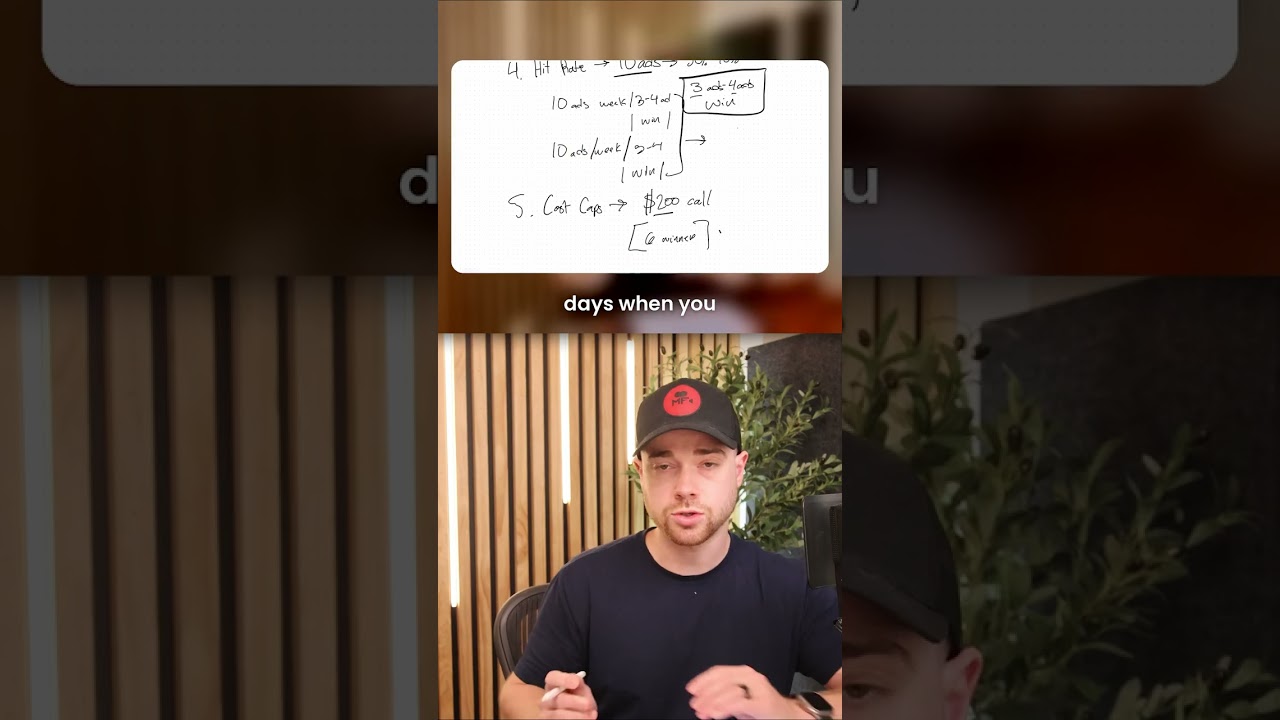
That's for sure. Yeah. So like I was saying on our last call, we want to look at a. If we have a baseline because I know you've gotten leads on one of the other ads, but then the other one we're testing, we're still letting it run a little bit longer. Like, we want to look at what is the baseline cost per lead. So for the other ones, like 15 bucks or something. And then you want to wait till it spends at least 3-4x KPI before you cut it. Right. So like, if the one we launched is, you know, 3 to 4x that and still hasn't gotten any leads at this point, then at this point I would say, okay, let's cut that. Let's test some new hooks. And then typically we're trying to test like 3 to 5 second hooks on the front end of that to see if we can try to get some different lift. Because typically people are seeing an ad and they're not watching past the first three, three to five seconds and then they're making a decision to either scroll past it or click on it. So, like, usually you don't have to redo the entire, like, entire middle of the ad. You could just put on a different hook. Whether it's like you recording a hook on your phone, you recording a hook in a different environment, saying something different, playing on different pain points, and testing three to five of those. So I would test three or five more hooks, put that on the front end of the ad we already have, and then see if we can get some lift there. Because I've done that with a lot of my ads and I've gotten like completely different results when I've done that. It's like it's a completely new ad, essentially.
Yeah.
Yeah, that's awesome. I'm definitely going to try that. Try a different. Couple different hooks, call outs.
It's just about saying too right. It's just finding the right. Finding the one that wins and then figuring out, Figuring out, okay, cool. This is the messaging that works with my target audience that I'm trying to target. Like, they like this. Let me go iterate on that, right? So maybe it's like a specific pain point or a specific message or a specific call out, or I use a specific word, right? And then I figure out, okay, that that has gotten me, you know, five times as cheap leads on that specific hook. Let me go find a way to, you know, give it to ChatGPT and give it to have it make me like a bunch of different variations of that exact thing. And then I just run those. So it's almost like process of elimination. I test a bunch of things, two things work, I go down to the next. I iterate on those two, and then of those two, two more of them work. And then I iterate on those two, and then I just keep going down the path until I figure out, okay, what's really working and what's not.
Yeah, that makes it so much easier than trying to just approach it. Like, well, I guess I need to create a new ad.
It's like, no.
Yeah, you usually don't. You usually don't. Usually you can. Like, I've seen hooks as long as 45 seconds. Like, you could do a new hook that's 45 seconds and then just put it on, put it on the back end of that other ad. But it could just be like you talking to camera. You're. You're targeting medical companies, right?
Yeah.
Yeah. So it could be like, you know, are you tired of not having. Are you tired of only relying on Patients that are walking in your door, and you want a more consistent way to get clients coming in every single month. That's one angle. And then maybe I have another angle where it's like, evan, I don't know if you have any other ideas. I'm just spitballing on the top of my head. But, like, there's another angle that could go into, like, a different pain point or a different selling proposition.
Right?
And then we just test those, and we're like, okay, the patients walking in the door. One's working really well, but the other ones aren't. And then we go all about, like, low.
Like a low calendar booking.
Like, you know, low calendar booking. It could be when, like, attention. Exactly. It could be like, with Max and them, where they test, like, they have a case study with a doctor. It's like when you get a case study testing sound bites from the case study on the front end of the ad to use the social proof.
Right?
Because the one that worked really well for them was like, we're totally booked out with clients we can't take on anymore. And if I'm like a dentist scrolling through, I'm like, ooh, what's that? That's interesting. I want to be booked out. Cool. And then you could use that as a hook and be like, hey, are you tired of not being booked out for months on end and you don't know where that next patient's coming from? You're just tired of the inconsistency within that. Within that. And then you use that as another hook, and we just keep testing. So I would say come up with three to five different angles, test that. Throw that hook on the front end of the ad you've already made, and then test those as variations, if that makes sense.
Yeah, makes perfect sense.
Cool. Perfect. Awesome. Guys, that's time for us. If you want to learn more about scaling your video business, get more clients, go ahead and click the link below if you're on. And my camera won't work. If you're on Instagram, go to my bio. If you're on LinkedIn, Facebook, YouTube, there should be a link below. And we'll talk to you guys soon. Appreciate, everybody. See you in the next one.
For the very first time I'm meant to be I'm a feel like a brand new me Brand new brand.
Nine.
I just took a little visit and the old.