How To Get Your Adult Child To Move Out (Without Starting a War)

In this coaching video, Evan Sanchez, founder of NewGrad Launchpad, presents a practical 6‑step framework for parents who need to help their adult children move out of the family home without conflict. The process begins with diagnosing the child’s mindset (entitled, comfortable, or stuck) through calm, reflective conversations conducted in neutral settings like a car ride or walk. Next, he reframes the dreaded rent discussion as a "contribution" model, allowing for financial payments, chore‑based labor, or a hybrid, and suggests using an escrow account to build a hidden safety‑net. The third step shifts the dialogue toward career independence, using open‑ended "what" questions to elicit the child’s own ideas and avoid giving advice. The fourth step provides de‑escalation scripts that label emotions with phrases like "it seems like" or "it sounds like" and mirror the child’s language to defuse attacks. The fifth step establishes a concrete move‑out date, defining readiness criteria, milestones, and a timeline, while holding the child accountable to those milestones. Finally, the sixth step outlines how to assess true readiness—money, habits, income path, and mindset—and proposes a 60‑day trial where the child lives as if on their own, followed by a supportive post‑move‑out check‑in. Throughout, Sanchez emphasizes moving from a manager‑parent role to a mentor‑advisor role and offers a downloadable 60‑page PDF of reflective prompts for deeper work.
Chapters
So one of the most common complaints that I get from parents is, my adult child's living at my house, they're stuck, they're unmotivated, they're not contributing to the household in any way, shape, or form, and I don't know what to do. They just seem stuck. So in this video, I'm going to talk about the 6-step framework that I would have you use to get your adult child out of the house. We're going to actually give you scripts, and some of the things that we're going to talk about is: 1, how to charge rent without starting a war, how to make sure conversations don't go into arguments, and how to set a move-out date that actually sticks. For those of you who don't know me, my name is Evan Sanchez, and I'm the founder of NewGrad Launchpad. And it's a coaching service that helps adult children find career independence. So with that, let's get your adult child off the sofa and start moving on in their life. The first thing we need to do is we need to diagnose the problem. Are they arrogant? Are they filled with shame? Are they feeling entitled? By figuring out which bucket they fall into, we can then frame the rest of the conversations. So let's talk about exactly how to do that. Now, before I go into this, I just want to caveat, it's very important that you're in a calm environment for both you and your adult child. You have to make sure that you're calm and they are calm. So the best way to do this in my experience Go for a car ride. Not only is that a calm space, but you're not looking at each other, and that kind of breaks the tension. Same thing with a walk. You're not looking at each other, and so that can allow people to feel more open. Okay, so the first question you want to ask in a calm tone is, how are things going right now? And then pause. Do not fill in the space. And they may answer with like something like, oh, it's fine. Everything's okay. Something along those lines. Then a follow-up question can be like, what's the hardest part about living at home right now? Or what's the hardest part of your life right now? By asking them questions that start with what, this opens them up for reflection. And this is really important because we don't want to be giving them the answers. We want them to come up with the answers. So listen to their answers. It's going to reveal which category they're in. So maybe they fall into the first category, the entitled. Well, family helps family. They just feel like this is their place unconditionally. Category 2 is they feel comfortable. Yeah, all my meals are paid for, my rent is paid for, I don't have to clean the house. This is awesome. And the third category is I feel stuck. I feel like I'm behind. I feel like I'm not making progress. That is the stuck category. The reason why we want to have this conversation first and figure out which bucket they're in is because we want to know how to have the money conversation without starting a fight. The money talk. This is one of the most dreaded conversations any parent has with their adult child who's living at home. And what I'd like for you to do is to reframe it as the contribution conversation. Because when we talk about money, it feels like you're the landlord and they're the tenant just evading rent. And the reason why I call this the contribution model is because it can take two different forms. One is they actually contribute money, $300, $400, $500, whatever you deem is appropriate and whatever you can negotiate with them. You sit down with them and you say, I love you. I want to prepare you for the real world. And that includes some level of contribution. It can either be in the form of money or it can be in the form of labor, or it can be a combination of both. What level of contribution feels right to you? Let's say they decide, I'm going to contribute financially. I'm going to contribute $300 a month. Now, if you can, what I would do is I would put that in an escrow account, basically put it in a separate account that accumulates and don't tell them that that's what you're doing with the money. You want that money there. So when they move out, that is their gift that helps them with their security deposit or rent or whatever they need to get out of the house. Again, you don't want them knowing about it, but this is a great way to do it if you can afford to do that. But if they don't have any money, you can negotiate some sort of split between money and contribution. It can be 80% money and 20% contribution, meaning chores, things around the house, vacuuming, mowing the lawn, doing laundry, picking up groceries, anything like that. And you can actually set a financial amount. You can say, I will pay you $20 an hour to do XYZ chore. If it only takes them half an hour, then you, they only get $10, right? But this would be a way to make them feel like they're earning money and contributing at the same time. So if you're talking to an entitled adult child, you could say, I'm not doing you any favors from protecting you from the cost and labor of living. Now, if they're the comfortable adult child, you might want to say, this contribution, whether it's financial or doing chores, is to make sure you don't get too cozy here. We want you hungry for your own place. To the ashamed adult child, you might want to say something along these lines: Listen, I know you're struggling now, and contributing, even if it's mostly through chores, is going to make you feel like an adult again and not a dependent. Now, contribution is only part of the equation. Whether they're helping out with chores or financially, you really want to help them launch. So now that we've had the money talk, now we can transition into the career independence talk because you don't want someone who's just contributing financially or through chores living at your house. You actually want them to launch. Okay. Career independence. This is what we all want, and this is just going to be a short version of what's possible here, but I did want to give you some questions that you can ask. To talk about their career that are non-3rd. Because while paying $300 a month in rent or doing chores is great, it doesn't really teach them how to fish. They really need to learn on their own of how to go out and make money. But the key is we don't want them earning money in something that they don't like doing, something that drains them, something that doesn't energize them. We want them to have alignment in who they are and what they do. And that's really the key. So here are a few questions you can ask that will help uncover that. So this is just a taste. I actually have a whole PDF that's over 60 pages long that has a ton of reflective prompts. That can help your adult child figure out what they want to do and what's in alignment with them. So if you're interested in that, I'll put a link down below and you can check it out. But another thing I did want to note here is don't give them advice. Do not tell them what to do. They're not going to do it because if it's not their idea, they do not have buy-in. So we have to phrase our questions in such a way that they actually have buy-in. And we do that with what questions. So here's a few of them that you can use to get the conversation started. So instead of asking, did you apply for jobs today? Because that feels very threatening. It has a lot of judgment behind it. So what you should ask instead is, what looks interesting to you right now? Or what's a role that you would be excited about? Or you can ask something like this. You can ask, what would your future self be proud of? The great thing about a question like that is that they can go in several different directions. They can talk about the one thing that they need to do today to get a job, and they could talk about a skill that they need to develop. They could talk about just working out, making sure that their physical body is okay, and that will help their mental energy. When they're feeling physically well, when they're doing workouts, going for walks, they come up with better ideas. Nobody ever came back from a walk and felt depressed, or at least not in my experience. But, but one of the things I learned from Tony Robbins was that motion creates emotion. So if you can get them to move, that's also going to help them answer these questions. And also the great thing about these questions is that you're treating them like a roommate. Not like a child. Another thing you can tell them is you can say, I'm retiring from being your alarm clock and being your manager. I love you too much to treat you like a child because I know these are the types of things that are happening. You're probably making the food, getting them up at certain times. This is a common thing I see in lots of situations. Now that you have the diagnosis, you have the money plan, you have the motivation plan. Now we're going to give you practical scripts so that you can make sure that the conversations that you have don't go into arguments. Stop the fighting. So this is one of the hardest things to do because you're so emotionally entrenched with your adult child, and rightfully so. It's hard to not put the emotion into the conversation. And lots of times what they'll do is they'll start attacking you and they'll say, you're just being selfish, or you're not a great parent, or something like that. They'll do something to attack you. And what you want to do is you want to stop the attack by not addressing it. What do I mean by that? What you want to do is you want to label it. So you can do that by saying, it seems like this conversation feels like an attack on you. What you did right there is you just said a statement. You didn't make an accusation. You didn't respond to their accusation. You just labeled how you thought it feels. And they're going to respond back. With either that's true or that's not true. And then they're going to tell you how they feel. So the other thing that you can do is start with, it sounds like. Same sort of thing. It sounds like this is a really tough situation for us both. It sounds like you're going through a hard time. It sounds like this is very upsetting to you. See, when you use "it sounds like" and "it seems like," you're taking the accusation and you're putting it into a feeling, and you're labeling the feeling. And that's what you want to do. So if they come at you with attacks, make sure to start each sentence with "it seems like" or "it sounds like." Really important. So after you use "it seems like" or it sounds like to label the feeling, they're going to come out with something else. And what I want you to do is just say the last 3 to 5 words of whatever they say. So if they say, you're just trying to kick me out, just say, kick you out? And then you let them keep talking until the emotion drops. Then you can say something like, "Listen, I'm not trying to kick you out. I'm trying to make sure that when you do leave, you're ready. I'm willing to slow this conversation down, but I'm not going to go back to pretending like this isn't a problem." Again, keep it matter of fact. Take all the emotion out of it. And then if you get into real trouble, You're like, it sounds like this conversation is a lot right now. What would make this conversation more doable for you? Taking a break and picking it up tomorrow, or just talking about one step instead of talking about everything? See, by doing that, you're letting them tell you what they think, and they're coming up with the idea. Again, if they come up with the idea, They have buy-in, and if they have buy-in, they're more likely to do it. And a lot of parents think just because you're having conflict, you're failing as a parent, and that's not true. You're just changing the dynamic of the relationship because you can't use same strategies that you use when they were children when you're dealing with an adult child now. And what you're really doing is you're moving from manager to mentor. That's really the key. Again, there's a PDF in the description. Feel free to get that. It has 60 pages worth of reflection questions that they can ask themselves to get more clear on what they want out of life. And now we're going to switch gears to planning the exit. How do you actually get them to leave the house? The timeline. Someday I'll move out is not a plan. You need a date and you need a date that you both agree on. Before you pick a date, you need to define what ready means. Here's the question you can ask. So when you picture living on your own, what needs to be true for you to feel ready? So let them answer, and whatever they answer, you want to acknowledge it. And the way you do that is you just paraphrase exactly what they said. You can also use, "It sounds like," "It seems like," so you make sure you understand exactly what they're saying. And you can also explain what ready means to you. You can say, "For you to be ready, I need to know that you can cover your basic costs." I need to know that you can handle life without me doing the invisible work. So the next thing you can say is, listen, I know this isn't going to be an overnight thing, but I also don't want to drag it on forever. I understand that this could take 6 to 12 months. When you think about it, what does a realistic timeline look like for you? So let them propose the date. Once they give you a date, then see if that makes sense. If you feel like it's too long, or if you feel comfortable enough, you can say, what would have to change in your plans to make that 3 months earlier? So once you have a date, you can ask them, so what do you think are the milestones that need to be in place to make sure you reach the state and let them set out the milestones. So if they say, I have to be making $1,000 a month by month 3, write that down. Whatever they say, write it down. You can also say, listen, if you're not on track by June, we may have to revisit your levels of contribution. That sets the expectation. That things may have to change if they don't meet their dates that they agreed to. So, as I mentioned in the beginning of this video, not everything is going to apply to all situations, so please pick and choose from the options presented here and see what works best for you. So, how do you know if they're ready? This is a hard thing to gauge because Parents don't want to push their adult children out too fast and have them fail, but they don't want it to linger on forever. Well, here are 4 things that you can look at to see if your adult child is really ready to make the next move. The first, obviously, is money. Do they have money coming in? Can they cover their costs? That's the first key. The second one are habits. Can they do their own laundry? Can they wake themselves up in the morning? These are key things that they need to be able to do on their own. 3, do they actually have a clear income path? Even if it's not their dream career yet, as long as they're making strides, that's the most important thing. And the 4th is really important. It's just a mindset. Of this is my place, this is my job, this is my house, this is my rent. Anything where they talk about owning it, that means that they're ready. And the last thing that you can do is give them 60 days to see if they have everything down. You can tell them, listen, for the next 2 months, I want you to run your life as if you're living by yourself. I'll be here, but I'm not going to step in unless you specifically ask me. That way, that gives them 60 days and you 60 days to see if they actually are ready to be on their own. And a few weeks before moving day, you can finally sit down and say, listen, I am so proud of you. You've accomplished so much. What part are you most nervous about about living on your own? And what part are you most confident about, about living on your own? And then after all of this, you can say, listen, why don't we meet every Sunday for about 20 minutes and you can bring all your questions and I will answer them. And just remember, moving out is not the end of your relationship with your adult child. It's a new relationship between two adults. Now you've shifted your relationship so that you're not the crisis manager anymore. You're the trusted advisor, and that's ultimately the goal. So I hope you found this video useful. I put a lot in here and it's a lot to unpack, and so I get it. You may have to go back and just rewatch parts of it, but if you need my help, please reach out. I'm always happy to have a conversation. Until then, I'll see you in the next video.
More from Evan



How To Enforce Household Rules With Your Adult Children #parenting #family #chores


Why Gen Z Isn't Broken: What Parents of Stuck Grads Are Missing (with Ryan Vet)
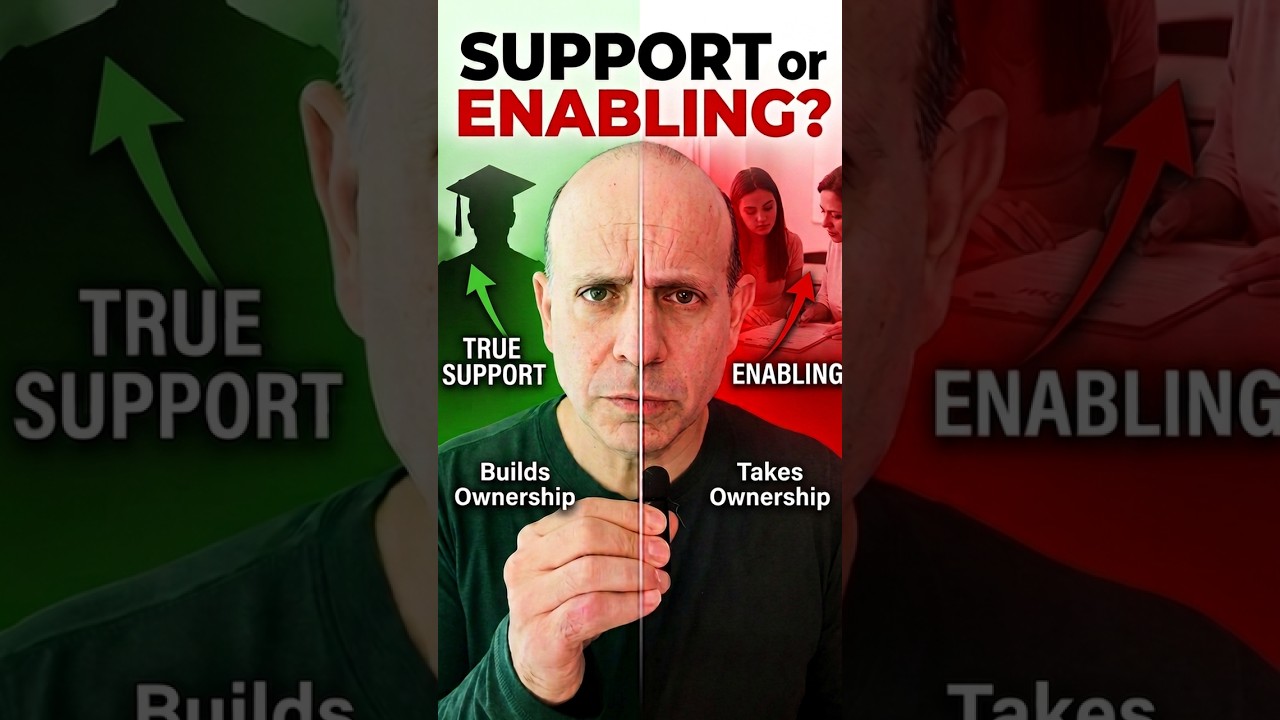
When Helping Your Adult Child Becomes Enabling #parenting #family #relationships

Don't fight over their gaming habits—try this instead #parentingadvice #boundaries