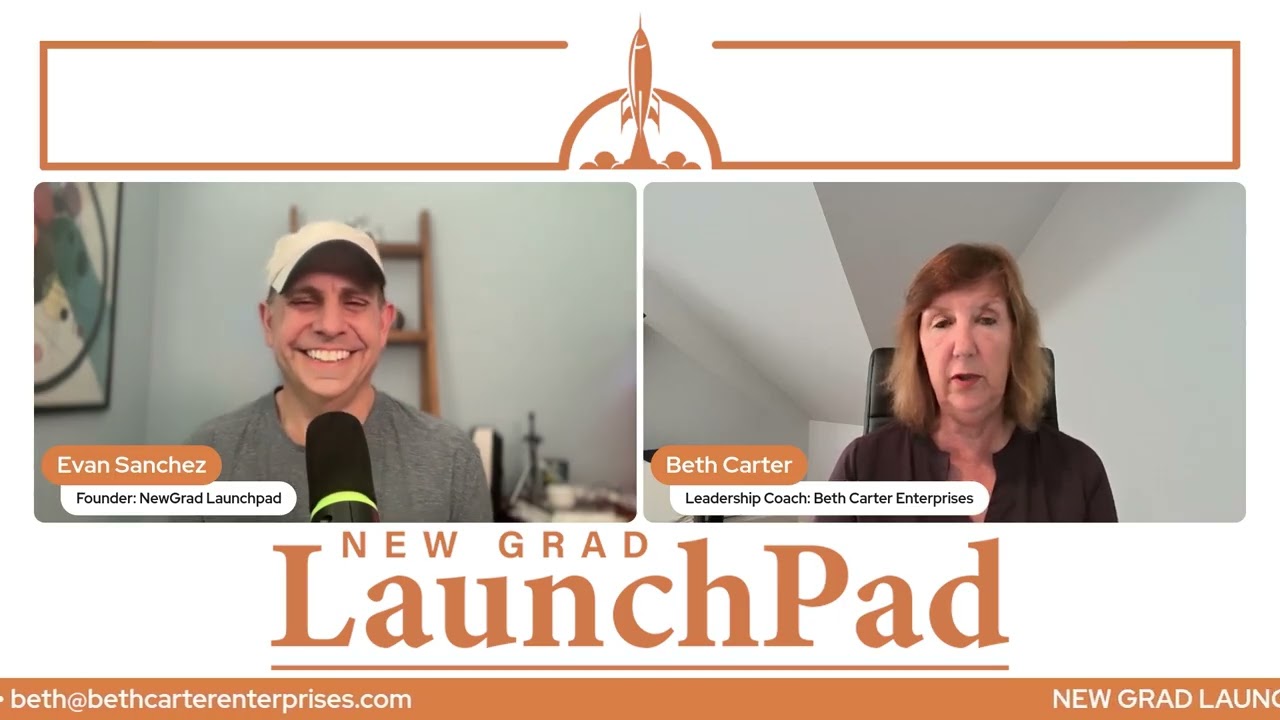
Menopausal Metabolism: Why Traditional Diets Fail You

In this YouTube interview, host Evan Sanchez talks with health coach Janet Yilmaz about the unique metabolic challenges faced by menopausal women, especially mothers over 50. Janet explains that most Americans suffer from some form of metabolic dysfunction—cholesterol, insulin resistance, diabetes, high blood pressure, brain fog, low energy—and that these issues often overlap with menopausal symptoms. She describes how she assesses clients using tools like the Renpho body composition scale and metabolic scans to gauge visceral fat, metabolic age, and other markers beyond weight alone. Janet highlights common pitfalls such as starvation mode, muscle loss, and misuse of GLP‑1 medications, emphasizing the importance of preserving muscle mass through adequate protein, essential amino acids, and consistent, low‑intensity activity. She outlines her coaching model: daily check‑ins for the first four days, weekly sessions thereafter, and a supportive Facebook community. The conversation also covers emotional and social barriers—family pressure, decision fatigue, societal expectations—and how a “village” approach helps clients stay accountable. Janet shares her personal story of transitioning from a 20‑year career in office supplies to full‑time health coaching after a transformative weight‑loss experience during the pandemic. Practical nutrition advice includes the 80/20 rule, managing cravings, and focusing on long‑term lifestyle changes rather than short‑term diets. The interview concludes with ways to contact Janet via social media and a light‑hearted discussion about aging, activity levels, and celebrating milestones.
Chapters
Hi, Janet. Thanks for talking to me today.
Thanks so much for having me, Evan. I'm really happy to be here.
Yeah, we just met recently at a Chamber of Commerce, and what struck me was, you know, we have such similar audiences, but we do different things. And what you do is really captivating to me because, you know, a large portion, portion of the, the people that I talk to are moms over 50. And they're going through a lot of changes. At the same time, they have a kid living at home, right? So, so they have that stress. But, you know, also just, you know, going into menopause or, you know, is, is also a struggle. So they have all these things going on. So tell me about you and what you do.
Yeah, boy, you just described me. So I guide menopausal moms through a program that reboots your metabolism and evens out your blood sugar and can reverse metabolic dysfunction. 9 out of 10 Americans have some form of metabolic dysfunction, and many don't even know what that means. Metabolic dysfunction includes the 4 big health issues: cholesterol, diabetes, insulin resistance, and these— blood pressure, cholesterol, and insulin resistance. And it can also include things like brain fog, low energy, poor concentration. And a lot of these things overlap with menopausal symptoms. So it's, it's, it's a balancing act to see what works for you. But I found when I did this program that when my blood sugar was even, no spikes and dips, my hot flashes went away, my concentration improved. So it's, it's a, it's a, it's a lot. And at that age, like you just described, I was 54 at the time, so mid-50s, and my two eldest children, my boys, left the nest. My daughter was still at home, and I was redefining my life a little bit. I thought she was going to leave the nest. She did not. She's still here.
Spoiler alert.
Yeah, yeah, it takes you, it takes you on a funny trip because you, you're questioning what your reality was, what it is now. It's a, it's a new dynamic with the children leaving house and redefining who I am. And I sold office supplies for 20 years. I worked at a college counseling firm for a few years, and then I decided to become a coach full-time. So my whole life kind of upended in one fell swoop.
Yeah. And how do women— like, how do you know that that's the issue? Like, because like, even as a guy, I have mental lapses during the day, right? Trouble accessing words, right? Um, yes, brain fog, low energy. And so, and so how does that— how can women tell the difference between just aging and what's, you know, metabolic issues and, and sure, that sort of thing?
So oftentimes it can be both. So the, the, you want to identify where those issues stem from. And there's two ways to do that. There's a Renpho scale that you can buy on Amazon for $25, and it tells you your metabolic markers, your metabolic age, your visceral fat. Visceral fat is so important. It does tell you your weight. Weight is one of our markers that we should track, but that's not the whole picture. It's no longer the whole picture. The health industry is changing. It's more about your body fat percentage, your skeletal mass, all these other numbers that unless you have some sort of scale to track it, it's very difficult to track. And I have a metabolic scan that you can take, which gives you a snapshot of your health. And oftentimes there is that overlap, but of course, and it's not just your meta— I don't want to, I don't want to say that you're not suffering from metabolic, excuse me, you're not suffering from menopausal symptoms. Because we all are, but they manifest themselves in different ways. You can line up 10 women, same age, same height, same weight, and their symptoms of menopause or metabolic dysfunction can be completely different person to person. Same with men, same with children, same with seniors. It's, it's a very personal thing. Some people have fatty liver disease, some do not. It's it manifests itself in different ways according to your current health. Yeah.
So you've helped hundreds of women with it. I think 300+ was what I heard. Yes. And when people contact you initially, do you find surprises between what they tell you and then what you actually find out?
Do you mean between what they're telling me and what they can achieve?
Yes.
Not really, to be honest with you. It's, it's, it's, well, it's usually this. I usually hear the same story. I have tried everything and nothing works. I don't follow through. I don't have the confidence to put myself first. I find most programs too arduous, too difficult, too time-consuming, which is a big deal. I don't find them motivating because the weight comes off too Slowly. Many of my clients are not eating enough, and they don't realize that. They're in starvation mode. They think, "If I just stop eating, the weight will come off." Well, eventually, sure, it will come off, but when you're burning calories at a caloric deficit, you're burning through your muscle, not fat. So, it's pretty bad, which is why many on the GLP-1s suffer from that gaunt look. Or losing muscle mass because they're not also addressing their body's need for proper nutrition, especially protein. So we work with people on the GLP-1s as well to make sure they're also getting in the right amount of nutrition.
Right. And you mentioned muscle mass, and that becomes increasingly important as people get older.
Yes.
And, and do you find that a lot of women don't focus on that or Yes, even I, I'm a health coach.
I've been coaching for 5 and a half years. I despise working out. I hate it. I absolutely hate it. Let me go play tennis or pickleball or let me walk for 5 miles. I'm in. But I know it's a necessary evil. I, I, it's just good for us. At, from the age of 30, we start to lose a half a pound to a pound of muscle per year. So we have to, we have to Then we have to take steps to avoid things like breaking our bones when we get older. You hear so many elderly will break a bone, break a hip, all these different things. It's because we're not preserving our muscle. And that's a big deal. It's a big problem. So yeah, our program preserves 98% of your muscle mass. And there are things, there are certain things you can take and do, and there's essential amino acids, a whole host of things. Everyone is different in their health journey. But yeah, that's, that has to be number one priority. Preserving your muscle.
And how do you go about analyzing somebody when they get into your program? You mentioned, you mentioned the scale. I actually have one of those too, but is there any other things that you look at?
I look at what their daily food intake is. I do look at their symptoms. We discuss what's happening, what they're feeling, what's going on. The metabolic scan that I use, the Renfro scan we discussed. Everything contributes to give me a bigger picture, but it's a customizable program. So as we go, we start to learn things about each other. So back to the scenario about the 10 women or men or people doing any kind of health program. Your output in exercise or activity also affects how much you should eat each day. So I could be the same size, same height, same weight as someone else. We both play a tennis match, but I require more back than they do. So I might need more veggies, more proteins. They might just need a low-fat cheese stick or hard-boiled egg. It's, it's a, you know, as you go, because there are, there are two distinct ways of knowing if things are working. Yes, the scale numbers are moving for sure. But you, your energy starts to creep back up. You have no cravings, but the big one is your hunger levels. If you're not hungry and you're feeling energized, things are working. And that's how we know we're going to get success.
That's tremendous. I mean, like one of the things my wife says is, I mean, well, she, you know, she gets tired at like 3 o'clock in the afternoon, you know, that crash. And I think that's very common. Also, she's just, you know, as she ages, she's increasingly more frustrated with the fact that her body's not doing the things that she wants it to do, right? And she's like, yeah, I'm never gonna, you know, and she has to go through her closet and be like, I'm not that size anymore, right? And that's really a, you know, it's an emotional component as well.
Very true. And sometimes I'll get pushback. Sometimes people will say, well, shouldn't you love your body? Shouldn't you be happy in your body? 1,000 million percent, yes. But are you being honest with yourself? Do you feel good in your body? Are you able to get down on the ground with your grandchildren? Are you able to walk up the stairs without huffing and puffing? That's loving your body. Making sure you're doing all the things for longevity. But yeah, I'm a woman, I want to look good in my clothes too. So it, it's very personal. Some, some people come to me and say, I don't want to lose a lot of weight, I don't want to buy new clothes. Now that's your journey, we will work through that. But then they start to see improvements in other areas, and then I understand that that was a fear mechanism they were setting up because they were setting themselves up if they were going to fail. They wanted an out. I sat with men and teens for a long time, and I can usually recognize the hesitation and we work through it together. It takes a village, you know, that saying is so true. If you don't have community and you feel like you're doing this all alone, it's hard. It doesn't have to be hard. So let's not make it hard.
Yeah. And as we get older, it's harder to find that community of people who are supportive because there's some people in our families who, who who may be jealous or who may not want them to get better because that makes them feel better, right? There's, there's a lot of like external components that, that go into this that, you know, it's not only societal pressures, there's also just the people close to you don't want you to change because then they feel left behind.
Yes, or it holds up a mirror and they just don't— they're not ready or willing or able to look at it. And yeah, I've had to talk my clients through that too. I will have a client who will go to a business function and literally people are berating them for not having an alcoholic drink. Like, that's, that's your choice. It's— you have to either feel strong in saying, I'm not choosing to, to drink right now, or that does not align with my health goals and how I want to feel. Or simply putting some seltzer in a glass with a little fancy umbrella and saying, I am drinking. They don't know what's in there. It's none of their business.
Yeah, I forget how much, because alcohol is not a part of my life or my, or my wife's. It's just like, it's amazing. There is a lot of pressure to drink and there's a lot of pressure to go out and eat. And you know, the more people you're eating with, usually is the stats say the more that you eat, like if you eat by yourself, you're not going to eat as much as if there's like 10 people around.
Yes.
And so, so that's, that's a very tough thing to navigate too. How do you find that they're dealing with, you know, just their— it's hard to accept aging, right?
Oh yeah. You preach them to the choir. I just changed.
Right. Right.
Yeah.
I look at my son, he's 6'5", full head of hair, like, you know, He's a rower. He has six-pack abs. He does 5 reps of lifting a weight and he has muscles, right? And I'm just like, yeah, that's not going to happen for me. We go on bike rides and he just smokes me. He doesn't even go with me anymore. So there's a lot of that too, because women may have been athletic in their younger years, but it's very hard to maintain that athleticism. Right. Do you see that a lot too?
I do. I see, I see it all. So for me personally, it's kind of a strange story, but I had bad knees in high school. Oshkoshlash. I couldn't participate in even gym class.
And I was like, cool.
I don't like working out. I don't like gym anyway. Although I did love square dancing, but I digress. And I never played a sport until I was 40, I took up tennis. I was so bored. I remember distinctly having a conversation with my next-door neighbor, a good friend of mine, and saying, "I'm happily married, I love my children, but I'm bored. There's something missing or something wrong." So I took up tennis because my sister played tennis and I thought, "Oh, we could play together." And it changed my life. And now recently we were up in the mountains for my 60th birthday and my two oldest boys and I and a couple other family members went, walked up Chimney Rock, which is incredibly arduous stairs and trails. But my youngest daughter and a couple other people on the trip wouldn't do it. So they didn't think they could do it. So I was pretty proud of myself that I could do that now at 60 when I probably could not have done that even when I was 30 because I, I didn't take care of myself.
Yeah, that's huge. And, and I think you're right. It's like, it's all about finding that one sport or one thing that you will be consistent with.
Yes, yes. And it can be something easy. I tell clients all the time, do 10 squats while your coffee's brewing. Walk up the stairs while you're on— up and down the stairs while you're on a phone call. There are easy ways to, to put in place some sort of activity and then we build on that. It's, it's actually not good for you to work out when you have a lot of extra weight on you. It can be dangerous. But of course, working out is such a healthy habit. We want you to do that. So we, we, we do baby steps and we get to a place where you feel comfortable and then we maintain that comfortableness and then we say, okay, now where, where are we going to level up? Because we should always be leveling up in our health. I, I recently did this StepBet. It's an app and you, the system tells you based on your past history how many steps you should be getting each day. And you bet $30 towards— against yourself. And if you can keep up your steps, your required steps for 5 weeks, you get that back and more. So I was doing it. I loved it. It forced me to get outside. It forced me to get all my steps. But what I didn't realize until closest to the— closer to the end was that I was using that as an excuse to neglect my, my strength training, which I shared with you that I despise. So instead of doing it again, which I wanted to, because it got me my steps in. I was like, no, no, no, you can't do that. You don't have time for an hour and a half walk, and you don't have an hour workout. So, I now do a modified. I do a little bit of strength training, a little bit of walking, or I do it every other day. But yeah, you have to find the thing that works for you, and it's, it's so different for everyone.
Yeah, and I think you hit, hit the nail on the head. It's about consistency more than intensity, right? Doing 5 minutes a day. Is going to be much as, as long as you're consistent about it, right? Because if you do an hour and a half one day and then an hour and a half another day, you're probably not going to be consistent in that. You're probably going to tire out really, really fast.
100%. Progress over perfection. One sit-up, one sit-up, one sit-up, one sit-up, one sit-up, one sit-up. Okay. Now I can do two, two sit-ups, two, two, two, two, you know, like that.. And that's how you can train your brain. It's, it's smaller, easier chunks to digest.
Yeah. And how do you work with your clients? Is it, is it like you have meetings every week or do you have group coaching or how does that work?
So we have a community that I have all my clients dialed into. It's a Facebook online community where we're all going after the same thing. So it's a very supportive group.
Mm-hmm.
I speak to my clients every day for the first 4 days. It's a quick check-in, make sure I set them up for success and that they're doing all the things. And then we move to a weekly check-in, but I'm always available to my clients in between. It's important that they know I'm available to them. I recently went away. I have been celebrating my 60th birthday for a couple of months now. And I came back.
Happy birthday, by the way. Thank you.
Any chance I get to tell someone. And I came back and a client shared with me that she was struggling but didn't want to bother me while I was traveling. And that broke my heart because I, I wanted— I try and make it all my clients understand I'm available to you. You're not doing this alone. I'm so lucky that I get to do this job from anywhere, that a call from you saying I need help is, is the reason I do this. Because people sometimes just need that pat on the back where they need to bitch and moan and they need someone to listen and just be there for them. So I'm always available to my clients, but As a standard procedure, we talk once a week.
That's fantastic because I think that, you know, not only having the community, but that one-on-one is so important because, yeah, because people get in their own way, right? Life happens. Things, things get in the way. They weren't able to exercise this day because of X, Y, Z, and then they beat themselves up over it.
Right.
Yes. And that's really, you know, or they just have some sort of limiting belief that like, I can't do this. I've never been in shape. Why is this time any different? Right. That sort of thing.
Yes. People, especially women, really beat themselves up over things. They oftentimes like you said, have these limiting beliefs that they cannot do it, they won't be good at it, they shouldn't do it, how is it going to affect my family? And, and they need reminders that you can't show up for the people you love if you're not showing up for yourself first. You, the, as the expression goes, you have to pour from a full cup. And it's hard. It's really hard. But yeah. You're right. People need that. They need someone in their corner. They need the accountability. They need the village. They need that community. So important.
And what I do is I talk to mostly moms because moms carry the emotional weight of the family. So for the most part, right? So I'm talking to a lot of moms who are stressed out. Burnt out. They're caging— they're, they're caring for an aging parent. They're caring for their college grad who isn't launching, right? And, you know, one of the moms I spoke to recently, she was just like, I'm just— I'm not myself. I know I'm not myself. And, and I can tell she's just not taking any time for herself, but And to your point, like, in order to be there for those people in your life, you have to put on your oxygen mask first. And that's easier said than done when, you know, you wake up and you're just like all of a sudden taking care of dogs or kids or whatever. It's, it's easier said than done, but it's so important to, to make sure that you find that time for yourself because that radiates throughout the house is what I teach people. It's like it's a calm authority, right? If you're getting triggered all the time, or if you find yourself angry a lot, then your family is going to feel that, right? And as a guy, I don't know what it's like to have menopause, right? Or to go through that hormonal change. And, and so, you know, I, I see my wife struggle with it. I see so many people struggle with like, I'm caring for all these other people except for me. My body's changing, right? Not in the ways I want it to. I'm tired at 3 o'clock in the afternoon. I have no more brain power. Right? And it's like, what do you do? It's, it's, it's really like— and, and that's why I love what you do, is because I think that's so needed. Because again, if you can't be calm within your family, right, that affects them. And, and it's, you know, I, I teach a lot of parents, don't give advice, right? Well, it's very hard to do. If you're feeling a lot of anxiety or if you're not feeling good about yourself. When you're in a great state, probably that's easier, right? After vacation, right? Something like that.
Yes.
Right. But day to day, like, all the pressures of society and all the pressures that women have on themselves and just what society throws at women is overwhelming, I think.
Overwhelming. There's— I wish I could remember the statistic. It's called decision fatigue. But the amount of decisions we make in a day, it's some staggering number. I wish I could remember.
It's like 70,000.
Yes, it's something crazy. I was gonna say 300,000. There's a 3 in there somewhere.
But yeah, but it's something crazy.
It's incredible. Yes.
And, and like, I heard that you should never ask anybody a why question after like 3 o'clock, right?
I like that.
Because that requires a lot of brain processing. So, um, so, um, so yeah, this is— and how did you come into this? How did you, how did you, how did you get into this? Because you've been working in office supplies.
Yeah, 5 and a half years ago, you may have remembered COVID, trapped— I mean, lovingly hanging with my family. And my daughter, who was 17 at the time, just wanted to do TikTok videos and do reels and pictures. And I was so uncomfortable in my body. I was eating and drinking like I was being sent to prison. I bent over one day to tie my shoes and I was like, what is that? It was my stomach. And I'll never forget the day. I can still picture looking down. I can still picture where I was sitting in the kitchen. And I paused and I already knew I was up on weight, up in weight. Then I got on the scale and I was double up the amount of weight that I thought I was. I reached out to a friend on Facebook who was posting about how she's had success with this particular program. I spoke with her and it's— the program spoke to me. I liked how it incorporated into my life. It aligns with the American Heart Association, which was very important to me. And I started it. I started the program and In 17 weeks, I lost 32 lbs. and 18 inches. My energy was like it hadn't been in years. I was cleaning out closets, just doing so much stuff around the house. And my Coach was asking me about my day and she's like, "Ah, that's the program. That's what that is." I wasn't hungry. I had no cravings. I felt so good that I was telling everybody I knew about it. My friends, my family, they're like, "I want to do it too." I was like, okay, here you go, here's my coach's number. And they said, no, you've done it, you're my friend, I know you, I trust you, I want you to teach me. So I started teaching my friends and family, and it blew up. People needed this, really needed this, especially at that time. And it was a year and a half, 2 years later maybe, that I decided to spend all of my time doing it, and I quit my job and became a full-time health coach.
That's great. I mean, it's not great though. I mean, it's unfortunate how you had to get there, but I mean, but you're the proof, right?
Yeah.
You're the proof that it works.
Yeah. And I, it's, it's so meaningful. I'll, I remember I was on a walk in my neighborhood and one of my high school friends who was doing the program with me, I was his coach, called me in the middle of the day. He's like, I'm so sorry to call you in the middle of the day, but I just had to call you. I was like, oh my gosh, what's wrong? He says, I just came from my doctor's office. He took me off my statins. He's lowered all my meds, and it's all because of the program. It's all because of you helping me. And that flipped a switch in me. That was like, this is why I'm here. This is what I'm meant to do. It, it's so much more rewarding than helping someone else achieve their dreams. So just, I, I really do enjoy helping I was always told you should be a teacher, you should be a psychologist, you should be a therapist, you should be in some form of helping people. And I was like, no, I just like to tell people what to do. I don't want to guide them through anything. And here it is, all these years later, I just love it.
That's amazing. That's amazing. Well, I can tell because you just had that energy when I met you of just like, you know, thank you. Just like, you know, very positive, very warm. Very caring and, and really genuinely wants to help people. And, and, you know, and that's, you know, that's what we have in common is like that, that ability to help. And that's why I wanted to have you, you on this channel is because I just know that a lot of the people that I talk to have this problem and they just don't know where to turn, right? And they've tried the diets right? They're trying to lose weight. They're going on Ozempic and all that sort of stuff. But it's more about creating a lifestyle than anything, one that you can control and being consistent.
Right?
Right.
If you treat this like a diet, it will treat you back like a diet. I used to diet all the time. I would lose 5 pounds and be like, cool, let's go out for pizza. But that's not how it works. I mean, do I have pizza? Sure I do. But I choose long-term health. I am now always thinking about my health. Okay, so if I'm having pizza Saturday, then Friday I'm not going to— also nachos. I'm just going to be, you know, you have to always be thinking about how you're going to contend for your own health.
Right. And not to completely deprive yourself. Yeah, right. Scratch that itch. You know, I've been on diets where they're like 6 days. You follow a diet. Seventh day, go have cookies, cake, ice cream, whipped cream, whatever you want.
Right.
But it is about the 80/20 rule. It's like most of the time you're good, but you're allowed to indulge sometimes. This is life. You need to give yourself some pleasures.
Yeah. I don't want to live in a world where I can't have nachos or I can't partake in birthday cake. No, thank you.
Right. Or ice cream.
I mean, ice cream, you know, I'm funny that ice cream is not my thing. Put it in front of me, I'll eat it, but I don't seek it out.
So interesting.
Yeah. And I used to be a chocoholic. I used to call up my neighbors. Hey, got any chocolate? I needed that fix. And now I can walk past the Hershey Kisses bowl I keep in my kitchen for the kids all day long and doesn't bother me.
That's amazing. That's amazing. Well, this has been great. So, well, thank you so much for, for talking with me today and, and sharing your knowledge. How can people get in touch with you if they want to reach out?
Um, they can— I can put a link under the video when you, when you put it up, but also, so Janet Yilmaz, I'm on Facebook, I'm on LinkedIn, Instagram, TikTok. I make lots of videos with my my daughter makes fun of me. And yeah, I would— I, I'm very big on just telling people about the program and they can see if it sounds like a good fit for them. And I can also offer tips and tricks, and if they follow me, they'll get great recipes and some Wellness Wednesday and Fitness Friday information. So yeah, there's a bunch of ways you can get, get in touch with me. And of course, feel free to share my number with anybody who reaches out to you. But I'm so glad you asked to do this because I felt a connection with us when we met too, because like you said, we have the same audience. We're trying to help the same person, and that's special.
Right. Well, thank you. I think that, yeah, I'll put all the links down in the show notes so people can get in touch with you. But yeah, it's really about, you know, it's such a difficult age, you know, getting to this phase. I like to think of it as levels. Like, I hit level 57, like on the video game. Like, you'd be really excited if you did that in Donkey Kong or in Ms. Pac-Man.
So stealing that.
Yeah, absolutely, please do. So I had a birthday recently, I'm like, I'm at level 57. It just sounds more badass, you know? So yeah, anyway, well, thank you so much for your time, Janet.
Thank you, Evan Sanchez Sanchez.
Hope to talk to you soon. Okay.
More from Evan



How To Enforce Household Rules With Your Adult Children #parenting #family #chores

Why Gen Z Isn't Broken: What Parents of Stuck Grads Are Missing (with Ryan Vet)
When Helping Your Adult Child Becomes Enabling #parenting #family #relationships
Don't fight over their gaming habits—try this instead #parentingadvice #boundaries