Evan Sanchez, founder of New Grad Launchpad, tells parents that their stuck 20-something isn't lazy but overwhelmed and afraid. The fix isn't tough love or advice, it's reshaping the home environment and proving small wins work. His blueprint targets income, purpose, and independence through three stages: finding a survivable next step, stacking evidence of success, and building a marketable profile.
Chapters
Hi, my name is Evan Sanchez, and I'm the founder of New Grad Launchpad. And what I do is I help parents get their college graduates unstuck and moving towards career independence. So if you're the parent of a young adult who's currently struggling, then this video is for you. Now, here's a moment you probably recognize. You come home from work, you're exhausted, and you see your young adult just sitting there on the sofa. They're probably on their phone, either watching YouTube videos or messaging with their friends, but it doesn't look like a lot of things have been making progress today. And so you casually say, "Hey, how was your day?" And they respond with like a, "Oh, it was fine," or "Okay," or maybe they just even shrug. And in this moment, You feel the tension in the air. You know what you're up against. You have been walking on eggshells. You know exactly how fragile things are right now. If you push too hard or if you say the wrong thing, you know you're taking a big risk. And the reason why you know this is because you've seen this happen before. You've seen an innocent comment just send them sideways, or you say something and they just become defensive or reactive or just angry. And this may set them back a day, a week, or months. So what do you do? You do what every parent does. You hesitate. You freeze. It's not because you don't care. It's because you care enough to know that whatever you say could cost you real ground. And the real question that's going on in the back of your mind is, are they really moving forward? Is this just a phase, or is this the new normal? What makes this really hard for a lot of parents is that their young adult is not failing in any obvious way. They're not having a meltdown. They're not in trouble. They're not panicking. But what you know is that your young adult is smart enough, capable, and fully able to handle a full-time job. They check all the boxes, absolutely. But what's really the challenge is that they're not committing to anything, and they're not really moving forward either. They're just kind of in this no man's land where they're kind of in adulthood, but not in adulthood at the same time. And so it really doesn't feel urgent enough to like sit them down and have an intervention. But you also know, hey, I can't just like let this go by. I have to do something because if I don't do something, this is going to just drift on. And you understand at this point that you're not looking for perfection. You're not looking for the perfect plan or the perfect career. You're just looking for momentum and for them to commit to something and be excited about it. That's what you want for them. But I know what a lot of you parents think is like you failed somehow. And let me reassure you, you did not fail. You've done your part. So you haven't failed at all. You've done exactly what you're supposed to do. You're a good parent. And yes, technically they are an adult, but they're not where they thought they would be, and they're not where you thought they would be by now. The gap between expectation and reality doesn't always show up as panic or anger. Sometimes it just sits there quietly, like when you're asking that one question in the back of your mind of, Is this the new normal? Is this the way it's going to be from now on? And here's what I really want you to know, and this is so important: your young adult is not lazy. They are not unmotivated. They are not incapable. And they are not broken. It's very easy for our society to say, well, oh, they're just lazy and unmotivated. That's the problem. You just need to motivate them. Give them some tough love. But what's really happening here is that they're overwhelmed and they're not clear. They don't lack ability, they just lack momentum and direction. And some people might say, well, it looks like they're just failing at adulthood. No, they're just at the threshold of adulthood. What's really going on here is that they don't trust their own decisions yet. That's the point. They're worried about committing to something and not seeing it through. Or if they do commit to something, they're worried that they're going to be trapped there. And one of the other fears that they have is that they're afraid of disappointing you. Whatever they do right now feels really heavy and permanent to them. So naturally they stall, and it's not because they don't care. On the contrary, They care a lot. And the reason why I understand this so deeply is because I've lived with that uncertainty in my life. I've survived cancer. I've survived bankruptcy. I've been laid off. And I know what to do when you're out of alignment and have to reinvent yourself. I also know what it's like to worry about the future and not trust in your own decisions yet. I know what it's like to force clarity before you're really ready. And this naturally happens. People stall, they get burnt out, they fall out of alignment, and they commit to paths and stay there for way too long. And I've done all of those things. I've stayed in situations that were wrong for me because it looked good on paper and because leaving it felt too risky. And what happened? I paid for it in stress, in my confidence, in my health, and more importantly, in time I am never going to get back. There are many seasons of my life where I felt like I was just surviving and not living at all, where I was just checking the boxes saying, yep, this looks good, this looks good, but not doing anything meaningful or fulfilling. And what that did to me over time is it made me feel like I'm not worthy. Like somehow I missed the boat. I felt left behind. I felt like everyone else got the memo, but I didn't. And this is why this work matters to me so much, because I don't want your kids drifting. I don't want them in and out of alignment their whole life. I don't want them having regrets. I want your kids to have a life of purpose, of excitement, and doing stuff that they're proud of, that their future self will be proud of. And I don't want parents to be stuck in the situation having conversations where everything feels like they're walking on eggshells and things are going to explode any minute. That's not living. And there is something I really want to clarify here because a lot of parents really misunderstand what creates change. So in my work, the parent is the client because the parent is the lever for change. And this isn't because you can control your young adult or you're responsible for everything that they do, but it's because you are the environment that they are growing in. The way you show up, the way you communicate, the way you respond, that is all shaping what they feel is possible in their lives. It's where you can create change without turning your home into a battlefield. And when your young adult is ready and it makes sense, then we bring them into the work. But we don't ever force it because dragging a young adult into coaching before they're ready is only going to create resistance. And it's not going to move anything forward. So the first thing that we have to do is change the environment because we have to re-establish that trust in the relationship. And then at that point, engagement is possible again. So here's what doesn't work. And what doesn't work is giving advice. But you're like, hey, what am I supposed to do if I don't give advice? Here's the thing. Most parents give advice for two reasons. The first reason is because, well, that's what worked when they were younger. I would give them advice. I'd give them logical next steps, and they would do it, and that worked. The second reason why that worked is because when we were younger, that's what our parents did with us, and that worked when we were younger because the The world was simpler and the paths were clearer. That's why that advice worked. But today, when advice doesn't work, what do parents do? They say, "Oh, well, we gotta tough love them. We gotta let them struggle, kick them out. We gotta make them hit rock bottom." Or worse, parents are now being told, "Well, you know, this generation, they just don't want to work." That's the problem. And that can be very tempting because then it takes the pressure off the parent, but it's wrong. You see, what happens is that when you give advice, that comes across as judgment and pressure. And what happens when you feel judged or pressured? You start acting fearful. And naturally, when they feel fear, they're not going to move. They're afraid to do anything. And that's the problem. That is why advice doesn't work. So a lot of parents are stuck between saying too much or not saying enough. And they're worried that whichever decision they make is just going to make the situation worse. So here's what actually works, because what we want is we want momentum. But in order for them to have momentum, they have to have clarity. They have to be clear on exactly what that next step is, what that survivable next step is. So if they're taking the next step that they're not feeling pressured into, that feels aligned with where they want to go and feels survivable, then they will do that. Because if they make that small step they learn something. And when they learn something, that creates evidence. Evidence that they didn't die, nothing bad happened, and that they were actually able to make progress. So what evidence does is it rebuilds their confidence, and confidence creates momentum. And that's what we want. And this is how direction forms. So this is why I created the New Grad Launchpad blueprint. And what we're doing in this blueprint is replacing pressure with progress. And in this blueprint, we're going to build 3 things that actually matter for your college grad. The first thing is income. They need income to create that confidence to know that they can actually do it. The second thing is purpose, something that feels in alignment with what they want to do. Not what society thinks, or not what the parents think, but what feels good to them in the moment. That's the key. A clear direction that feels meaningful and worth committing to. And the third part, independent living. They need to feel like they can take care of themselves, make their own decisions, and stand on their own two feet. Those are the three outcomes. That's what career independence means. In order to do this, there are 3 stages. The first stage is Momentum Activation. This is where we break the paralysis. We identify one small, achievable, survivable next step that your young adult can take this week. This isn't a life-changing decision. It's just one small step. Maybe it's reaching out to someone who's doing the job that they want to do. Maybe it's updating a resume. Maybe it's just applying for a job. The goal isn't perfection here. It's just movement. Taking one small step that feels purposeful and that they're committed to. Because once they do that one small step, once they move in a single direction, That's where their confidence gets rebuilt. The second phase is what I call confidence-proof stacking. So what we're doing in this phase is we're just stacking those small incremental achievable steps. Once they've taken a few small steps, then they can start to handle bigger things. Here's what this looks like. It's about completing a project, something that they've wanted to do that felt overwhelming. Having a difficult conversation and not falling apart. And what we're doing here in this phase is we're stacking those experiences, not to pad a resume, but to rebuild the trust in themselves that they can actually go out there and do things. Because confidence doesn't come from affirmations or thinking about it. It comes from proof. It comes from evidence. Now, the third part of this I call building a high-value profile. This is where we position them as someone worth getting hired, worth promoting, and worth investing in. And in this phase, we also want them to learn how to communicate their value clearly. And here's where they build a portfolio of actual work. They develop the skills that employers are looking for. Or that people are willing to invest in. And when they have all this proof, when they have all this evidence, they start to see themselves differently. Their identity changes. They don't feel like someone stuck or behind, but as someone building something that feels real and meaningful to them. Together, these three stages help them build income, purpose, and independent living. And it's all without the parents giving advice or forcing them to do something that they don't want to do. What's happening is they are living in alignment with themselves, and when they live in alignment, they're more likely to act, and when they act, they have momentum. If you've listened to this video and me talking for all this time, then you know something needs to change. You can feel it. Every day that passes is just making things worse. Your relationship with your young adult is drifting. Conversations are going nowhere, and it feels like you're going backwards. Every day that you sit on this just makes the problem worse. So let's start compounding in the right direction. Somewhere around this video, probably below, there's a link where you can schedule a call. This is what I call the Career Independence Parenting Session. Now, this isn't a conversation about just what's going wrong. We're actually going to build a plan in this 15 minutes specific to your family, your young adult, and actually what's going on in the moment. You'll walk away knowing exactly what's stuck and exactly what you need to do. And here's what I really want you to understand: This part of parenting a young adult is not really discussed. There's plenty of things for 0 to 5 and getting them through grade school and middle school and high school. There's plenty of resources for that and getting into college. That's all taken care of. But schools don't prepare anyone for how to parent a young adult. No institution is designed to do this. But you can, you can be the superhero in your young adult's life, not by giving them advice or telling them what to do, but stepping into this with the right plan and the right support behind you. So click on the link and let's build your plan together. That way you get your young adult out of this phase, out of this stuckness, out of this misalignment, and get them moving with direction and clarity. Now, if slow and steady is the best thing, you can get on my email list. I even have a YouTube channel that has a ton of free resources that you can tap into right now when you're having those difficult conversations and you don't know what to do. There are videos that can actually help you. So follow me on LinkedIn, Instagram, YouTube. You'll see all those links down below. So you can easily access them anytime you need help. That way, when you're finally ready to step into this, you'll already have a head start. Just remember, nothing is going to change with a young adult until you make the action steps to make it happen. So if you know that your family needs to move on this right now, please do not wait. Click on the link below, book your session today, And let's get started.
More from Evan



How To Enforce Household Rules With Your Adult Children #parenting #family #chores

Why Gen Z Isn't Broken: What Parents of Stuck Grads Are Missing (with Ryan Vet)
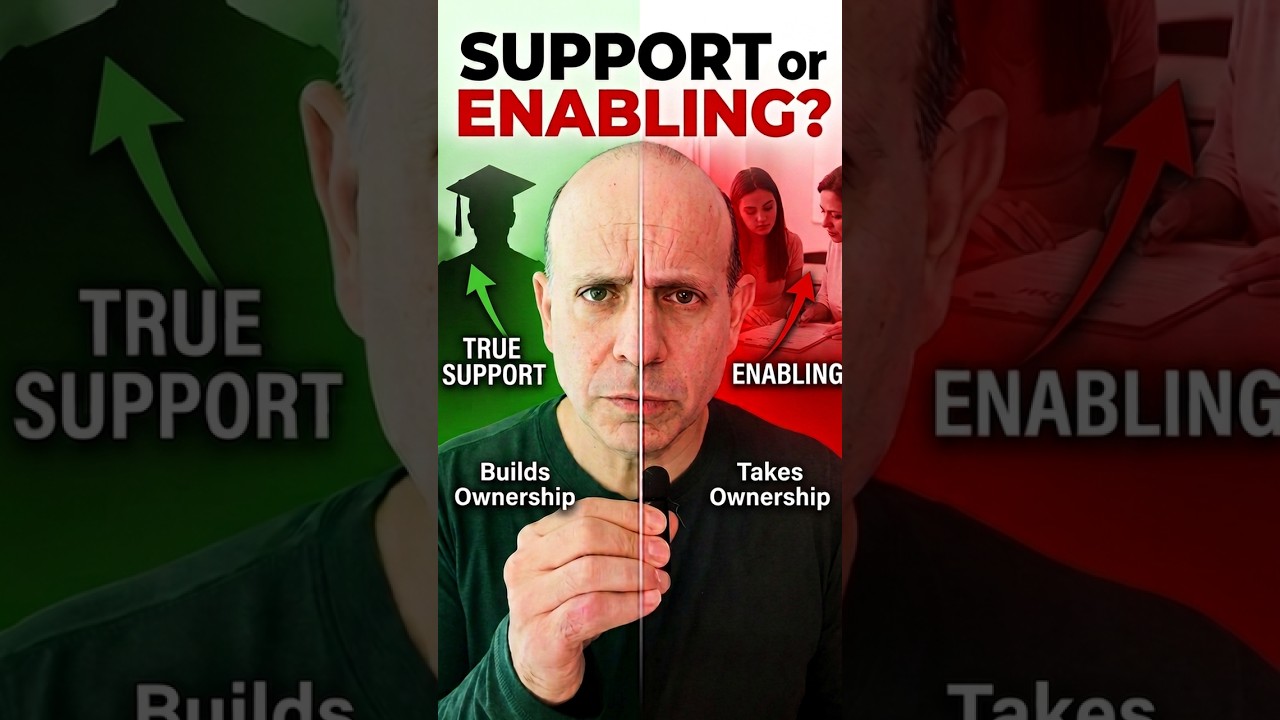
When Helping Your Adult Child Becomes Enabling #parenting #family #relationships
Don't fight over their gaming habits—try this instead #parentingadvice #boundaries