AI found the sellers. My team booked the calls. I make $100k/m (wholesaling)
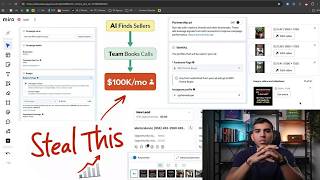
Fidel runs a wholesaling business that closes 6-10 deals monthly and makes $100k/month using AI to find sellers and Facebook ads to book calls. His five-person team uses an AI bot to schedule appointments from leads, then makes two offers: cash or creative financing. He spends $6-10k/month on ads and pays $1,500 per contract closed.
Chapters
What's going on, guys? Fidel here, and I've been pretty much using AI to run my wholesaling business recently. And in this video, I'm going to show you exactly how we use AI to find motivated sellers, how my team books the calls, and how me and my clients close 6 to 10 deals every single month while spending $6,000 all the way up to $10,000 on ads. So this isn't going to be your basic ChatGPT tutorial or some guru telling you that AI is going to replace everything. I'm going to show you step by step how AI is literally finding me sellers while I sleep. And how my 5-person team handles everything from qualification to closing. So let's get into it. So I'm going to show you my ad account and show you exactly how I run ads. Because if you have heard of kind of like an agency running your ads or you're using pay-per-lead, the most important thing when it comes to finding motivated sellers is you want to focus on pain. You don't want to run the generic, "Sell your house fast for cash," or "Get multiple offers for your property," because all that is doing is filtering people who are not really that serious about selling. And if you really look into business into the wholesaling model is we're trying to find people who actively have a problem going on that would make them want to sell at a discount. So taking that into consideration with our strategy, the way that we run our ads is we are focusing on pain-based ads, calling out foreclosure, divorce, inheritance, problem property. And we do this by a mix of having video ads and also having static image ads. So as you can see here from my screen, this is kind of like the last 3 months on our campaign. Gains. And we have really good cost per leads, right? Like $23 averages, $30 averages, $50 averages. And sometimes this number is going to change. But if you compare an agency or using a paper lead company, you're going to be paying $100,000 to $200,000 per lead. Whereas when you can run this within your business, you're going to be paying $30 to $60 to get a high quality motivated lead. And oftentimes this is often the same sort of quality as a Google PPC, but a lot of the times you get in one of them before they even search for a PPC competitor. So that is exactly why I love Facebook ads. And I want to give you a little bit of a breakdown on kind of like the actual ads that we run. So with the ads manager, there's a lot of tricks, ninja tricks that we do and we give our clients. But the whole basis and the whole point of running ads on Facebook is to call out intent and pain. Right. So for example, here I have some more like top of funnel, like, hey, have you been thinking about selling your property? And this is kind of more so what the ad looks like. So in the beginning, you see how when the ad— you have a headline, right? Which is what is it that you do and what can the audience, whenever they read it, like, what do they know that you're going to do? Right. So here we're doing some trust-based angles. So on this one, we're doing the angle of like, hey, we are local because we run ads here in our local market. But this works anywhere. But you want to have a headline that explains kind of what you do, and that is super important. And then the other thing that we do is I like to be the one in the ads, and a lot of our clients that are crushing, they are the ones in the ads. But with these ads, like I said, they're built, they're built to build that trust with your audience. Because I'm gonna show you the other ads that I'm running that are more pain-based, but sometimes you're gonna click on one of your pain-based ads and they're not gonna submit their information. But later on, if they see you kind of showing that proof, by the time that they submit their information, they know exactly who you are. So on those other ones, they're more so like pain-based. But here to give you a little bit of an example, we are calling out kind of like the problems or issues that they may be facing on the ad copy. So on the ad, you're going to have the ad, the ad copy, and the headlines. And you want to call out specifically where it is that you are marketing. If you're doing nationwide, you just want to call them broad, like, you know, homeowners. But you do want the ad copy to be pain-based as well as the headline. So here, like I said, it's more so like on the trust building. And I'm going to show you another one that is a little bit more pain-based. And I'm going to show you one of my other clients' accounts that is also crushing. So over here I'm running another sort of campaign where I'm compelling, you know, I'm compiling a lot of the pain-based ads together. So basically here is— here I'm calling about downsizing because typically people are trying to downsize, they are trying to sell quick, right? And then also standard images like this, right? Like, hey, if you're falling behind on your mortgage payments, if you have an inherited house that you don't want to deal with, you know, like different things that will let us know that they're a motivated seller. And then in this other ad, I'm calling about, you know, timeliness. They want to sell in the next 30 days. Do they have a problem property? Here is more so the kind of other common objections that we often hear from sellers. Hey, I know that if you want to sell fast, you don't want to get lowballed. And then that's more so like trust building on myself and how I run my business. And then here, more proof on how we have bought some properties. And then here's more so, you know, a little bit more how we buy the houses and all of this. But just going to give you an idea of how you can run campaigns, because if you do it, that is exactly how you get way better results. Because remember, like wholesaling, it's just like sales and marketing. And if you can focus on the marketing and being really good at sales, by the time that the person clicks on one of your ads and then they see one of your other trust-building ads where they know who you are, how do you work, whenever you talk to them, you or your team, you're going to have way more trust than if you were to run the generic sell my house fast for cash or with an agency because you don't get to build that trust with them. So this is exactly how we went from paying around $5,000 cost per deal all the way down to around $1,500 by running this in-house. And it is the exact same setup that me and my clients are using. And of course, I cannot show everything on here. You can actually learn how to do this for 1 to 2 hours a week. So pretty much what we are doing is we're letting the AI from Facebook find us the people who actually want to sell right now instead of us having to do a lot of like complex things on the backend. Because everything's gonna come down to the ad that you actually run. And whenever we work with the clients, we tell them exactly what is working, cuz we can see multiple markets, multiple client accounts, and we have the best creatives where we know exactly what is working. And what is not working. So if you plug this into your business, you're going to have way better results than if you were to just use it with an agency. And AI is so advanced. And remember, Facebook has been gathering all of our points, you know, has— they have like 50,000 points that they have per customer. So whenever we run ads, their job is to make us money. So we focus on these things. That is exactly how we can get a massive ROI instead of using an agency or depending on somebody else. To get us the leads or having to buy a lead or do the cold calling or the SMS where you're having to chase down sellers and convince them for them to sell. Where with inbound you attract them directly to you and you're going to have way more leverage and way better results. So here you see another one of my clients was primarily just focusing on pain points and him being in the ad. So he's calling out, hey, behind on payments, tax liens, right? You know, problem properties. and he has a ton of creatives that he has done. He's crushing with them. But if you are the one in the ad, you're going to have way better results. Now, if you're running nationwide, you can use like one of our ads and still get really good results. But I find that if you are focusing on one market specifically, it's going to crush way more than if you do a bunch of different, like, nationwide angles. And both work. It's just depending on how you are more comfortable with basically running them because both are going to work. It's just going to come down to preference. Typically with nationwide, you're going to need more leads to get a contract. So with our clients, the average, the ones that are targeting their backyard, they are at 15 to 20 leads to get a contract, whereas nationwide is like 20 to 30. So both are going to work. You can have way better results with both of them. We just want to show you a little bit of examples of how we run the ads and how we get 6 to 10 deals every single month by running these pain-based ads. So we get the lead. Now what? Okay, so here's where our job actually starts. So I have a lead manager. And his job is to call these leads within 5 minutes. But the way that we have it set up is we actually have an AI bot within our CRM that is going to send automated messages for them to schedule a call for us to be able to call them. And he's still gonna call them within those 5 minutes because speed to lead is very important. So once we make contact with the lead, it's very important that we pretty much explain to them who we are, how do we work, But the main objective of the first call is we are trying to find two things. Number one is, are they motivated? And two, are they actually ready to sell right now? Because you can spend a lot of the time with people who they're thinking about selling, but they may not be a good fit or they're asking way too much. But the main thing is finding out exactly what is going on. Do they have a problem that we can solve? Because that is why people sell to us. They're going through something and we— our job is to Basically solve it. And I feel like a lot of people overcomplicate the business and they get in the business of making offers instead of solving problems. So lead comes in and our lead manager is going to call them within 5 minutes. They're going, they're going to qualify the lead. Hey, if they're urgent and motivated, they are going to set an appointment with my closer. And I'm going to show you a little bit of kind of like how automations work. So you can see the Slack thread with my team. As soon as we get a lead, it's going to come down here on Slack. And as soon as the appointment is scheduled, he's going to tag my closer here. So he'll put everything how it went with a call. And then my closer is going to call them. So I'm going to blur out their information because we're still working through these leads. But speed to lead is going to be the most important thing and not giving up with the sellers because all of the times they are going to submit their information late at night when they are thinking about all the problems that they have. So it's very important that you still do your job to making sure that you reach them. And there's things that you can do within the Ads Manager to make sure that you actually contact them. So one is you can do a two-step authentication for them to receive a code before submitting. Now, since you're adding friction, your cost really is going to increase. But if you're getting spam leads or you have trouble reaching them, this can be a good option. But lately what we have been doing is as soon as they submit their information, we have an automation with the Messenger. So on the ad level, there's this option called Chat with Leads in Messenger. So as soon as they submit information, they basically get a resume of what they just submitted. And we have a way of contacting them within the Messenger. So if they're not answering our phone calls, we already know that they submitted through Facebook, so we can still talk to them within the Messenger. And we are noticing a lot of lead flow from just doing that. So something to keep in mind is turning that on. But like I said, speed to lead is going to be the most important thing. And once my closer kind of receives that appointment, then that is when the actual work starts. And that is the most important call because there we are going to set up the proper expectations. We're gonna tell 'em like how we work. We're gonna verify that they are urgent. And basically that call is to really dig deep into what is going on. What do we need to solve in order for them to sell? What have they looked into doing in the past? Why aren't they just keeping the property? Is there any roadblocks or influencers that we need to be that we need to know of. That way, whenever we give out the offer, this is not gonna hurt us in the backend. But as long as you have the influencers, the roadblocks, that timeline, the expectations, where they would go if they sold, and what we needed in order to solve, that is going to give you a better chance of actually getting that deal. And these phone calls need to take 30 to 40 to 50 minutes because we're not trying to be another wholesaler. We're actually trying to get this deal and help them solve the problem. So we have a full-on training with the closers that we kind of go over to make sure that we actually accomplish our job, which is helping the sellers. And if you actually care more for the sellers, you're going to be able to get more deals. So lead managers qualify some, and then the closer, whenever he goes into the appointment via phone number or in person, our main job is to paint the picture, explore the pain, and then solve it with our offer. As long as we ask all of the things that would have an impact when it comes to them selling. So once we have all that information, we are going to give them the offer call, right? So in the beginning, we're not doing any comping or anything when the closer is talking to them because we want them to have the full attention on the seller into what we need to do. So once we take all that information, he's going to send us the feedback, the property needs and repairs, and I like the main motives for selling. And then we're going to come up with the best offers, right? So we're going to give them two offers. We're going to give them a cash offer and a novation offer, which he will present in the later call. So at that time, we're ready pre-frame the calls like, hey, if it's something like you don't want to do, please just tell me yes or no. Because a lot of times what we find is like they're going to tell you our offers are going to be low and they're going to say like, hey, I want to think about it and things like that. So what we want is to overcome that objection because if we don't keep on talking into like what's going to happen if they don't sell, they're probably going to ghost us. So once we frame the offer call, if we get any feedback where like they don't want to sell or they say that they want to think about it, we just kind of just keep on digging deep like, hey, I know that he's going through this problem and we're going to solve it with this and this and that. I'm assuming it's more so like on the money, you know, things like that. There's like ninja tactics that we pretty much do in order to make sure that we get more deals. But we got the first call, the intake call where we qualify, and then we set the appointment and then we do the offer call. And that is exactly how we get one contract, one contract for every 4 to 5 offers that we give, because we're very, very, very, very aligned when it comes to following the sales process. And if you don't have a sales process, you're probably going to be missing out on deals. And if any of these leads aren't ready to sell now, we're going to put them in a nurture sequence and our AI is just going to keep on following up until they're ready to speak again and is going to continuously keep on checking on to make sure that nothing has changed. So by the time they're ready, we can go in there and give them an offer. Now, if you don't have a big team and you don't have a lead manager yet, you can do this yourself because these leads are coming directly to you. So you hold the leverage. And you can skip one of the steps pretty much. You're going to be able to qualify it and go to the appointment call within the first call and then just give them the offer call. The way that we have our lead managers, because we get a lot of leads every single day and then we want the closer to spend most of his time with the people who are most likely ready to sell right now. So if you have a lead manager, you can still do this yourself, especially if you are in your local market. You can have way better results if you actually do this. By the way, if you're a wholesaler who's spending $3,000 to $5,000 per contract on cold calling or using direct mail or using a PPC agency and you want help setting up a system exactly like this where the leads come to you instead of you having to chase after them, click on the first link in the description down below and book a call with me and my team. We have helped wholesalers who are stuck at $20K per month and we have consistently helped them scale to $50,000 to $100,000 per month using this exact same system. So we're going to map out exactly what it will look like for your business and your specific markets so you can crush as well. So click on the link and book a call right now. Now, we do in-person appointments to the leads that are the hottest. And the reason why I prefer to do this in person is because when they see you face to face, your ability to actually get that deal increases by 10% to 20% by them actually getting to know you. Now, I'm going to walk you through exactly our in-person appointment process usually goes. So we get to the property and then of course we meet the seller outside. It's like, hey, Mr. Homeowner, so nice to meet you. Is it okay if I explain how these appointments usually go? You're going to be like, yes. Okay. So of course we're going to talk primarily about what's going on with the property and your steps, you know, kind of moving forward and what you want to accomplish. Of course, we're also going to talk about the property, the condition. You know, we're going to take some photos. You can walk me through kind of what's going on. After that, I'm going to go back into my car and talk to my partners, and they're going to let me know exactly how much the property qualifies for. Then I want to come back here inside. We're going to discuss kind of what the offers came back at and what we could do. Can I tell you what my biggest fear is? Whenever we start talking about the numbers, I'm going to be like, yeah, sure. Okay. My biggest fear is that whenever we get to the offer, if it's a number that you don't like, you're going to tell me that you want to think about it or that you don't want to move forward. Can you make me a promise? If we get to the offer and it's something that you don't like, can you just let me know a yes or a no? I promise that you're not going to hurt my feelings, but we're going to give it a best shot. Does that sound fair enough? You're going to be like, oh yeah. So basically what he's doing is you putting your cards on the table and you already know that you're not going to have that objection. It's either going to be like a yes or a no. And if we are at a no, we can still overcome some of the objections and maybe offering them a little bit more money in order to actually get a deal under contract. And to give you context, in this in-person appointments, it's 70% about the seller. We rarely talk about the property until the very end, but we're spending 30, 40, 50, 1 hour with these sellers talking about what they are going through, what have they tried to do in the past, what happens if they don't sell for the price that they want to sell at, what sort of repairs the property needs, what is actually going on. So to give you a little bit of an example, I'm going to give you a story of like one of the sellers that we recently helped. So they pretty much had solar panels in the property and they couldn't sell for market price because people who are trying to buy a property with solar panels, they basically have to get a higher loan amount because since most sellers have a loan for their solar panels, it's going to add on into their whatever it is that they qualify in their DTI. Right. So pretty much what we did with this specific seller, they had already met with other wholesalers. They told them that they couldn't help them. So what I did is I put the property under contract and I told them like, hey, I'm going to negotiate with the solar lien people and we're going to do a creative deal. I'm not going to pay you anything right now. but what I'm going to do is I'm going to put some money into the property in order for us to actually be able to sell it for this higher price. Okay. Now what I did is I spent around $10,000 updating the kitchen, the floors, the paint, and we were able to fetch a higher price. But before I did that, I talked to the Solar Lean people and I renegotiated the lien amount and we were able to drop over like 60% of whatever they owed. So we had way more margin for myself and for them to still walk away with the money that they needed in order to do their next step. So they actually bought an RV in order for them to travel the country. And, you know, it's very rewarding when you are able to do this and actually help these people because a lot of people think that we're just here trying to lowball people and we're not solving problems. But if that seller wouldn't have found me, they would have probably lost the house because they couldn't afford to just keep on paying the loan for the solar. And the mortgage for the property. So we talked about what they had tried to do in the past, how to go with the other wholesalers. And honestly, we're just very transparent when it comes to our process, how much we are offering them. We tell them out like, "Hey, this is kind of how the market is doing, how much we would sell it for, how much profit we're trying to make if we do this cash offer. And if we don't do the cash, we're going to do the renovation." But we're going to pitch both of them. So in the beginning, we're going to pitch the cash deal if they want to sell quick. And then if they are more flexible, like, "Hey, if I was to offer you a little bit more money and you give me more time to close, would that be something that you'd be interested in hearing? They'd be like, oh yeah, okay. And then we basically explain how our innovation process work. So we tell them like, hey, we come up with this program 'cause a lot of sellers love the idea of working with us and not having to pay the commissions or the fees. But what they don't like a lot of the price is the, a lot of the times is the price, how we are doing it right now. So we were thinking like, hey, how can we still help the sellers and still make money for the company and our buyers that we have? So that's exactly how we come up with this program. And pretty much what we tell Mr. Seller is we have over 10,000 buyers that we work directly with and we help them get into the properties. A lot of the times we will get them into the property. We're going to remodel the property after we close on it. And then if you give us more time to close and you allow us to have access into the property, I can offer you more money than the cash. Now, if we're able to do this, would this be an option that you would like to hear about? And they'd be like, oh yeah, okay. And so, okay, Mr. Seller, we are here with this cash price. You told me that it's not enough and you want this amount. If we were to do this option, what would be a price that you would say yes to? So we were going to have our max allowable offer on the cash and the novation. So before we pitch the offer on what the amount is for the novation, we're still going to come below in order for them to still negotiate a little bit, right? So like, let's say that we offered $100,000 in cash and they wanted like $150K and then we can't, you know, kind of get there with the cash. Be like, hey, what if I could do like $120K if we were to do this option? And then we're trying to meet in the middle at like $130K and we tell them exactly what's going to happen, how it's going to work. And this is what is allowing us to make $20K, $25K+ per deal by implementing this same strategy. But in the end, they get the same benefits of a cash offer, but they are able to walk away with more money by us still solving the problem and getting an end buyer into the property. And we can list on the MLS and get a retail buyer. We can get a mom-and-pop flipper or someone who's looking for a rental. But the more that we market the deal, the higher chance that we have of getting a higher offer. And what we don't want is just make small fees. We want to make big fees. So this is exactly how we are conducting a lot of these deals. And this is how the in-person appointment usually goes. So if you're not marketing in your backyard, you're probably missing out on a good chunk of revenue. And then if you're doing this over the phone, just kind of follow the same structure and you're going to be able to have a great result. Now let's talk about dispositions and actually getting paid. So we have two ways of getting paid. Either we're going to wholesale the deal or we're going to innovate it. So if we're going to do a cash deal, we need to have buyers. So if you are in your market, you should have already joined your local Facebook groups where investors are actually buying. And what I want you to do is if you don't have a list, this is the free way and usually one of the best ways to start building your cash buyer list. And what you're trying to do is build a relationship. So I want you to filter through these groups wherever your market is at and see exactly what people are posting and who is commenting on the deals. So if you see another deal that a wholesaler has, see who is commenting. And then I want you to cross-reference any past, uh, post that that person has interacted with. And I want you to make a relationship with each flipper that you can verify that has actually done a deal. And I want you to call them and build that relationship. So that's going to give you your first couple cash buyers in your market. And then you have the paid versions like Investor Lift or Investorbase. I usually prefer Investorbase over InvestorLift. You pretty much just plug the address of the property you're trying to dispose, and then you're going to be able to see what has sold around that specific area, and it's going to give you their phone number, and you're going to be able to know exactly what they bought for. And then you're just going to call them and be like, hey, I saw that you bought this property at 123 Main Street, would you be interested in purchasing another one? And you're basically pitching the deal to more buyers. Now, this works a little bit better if you are more nationwide because what it's going to do is going to filter down to the people who are actually doing deals, and that's Those are really the two best ways for you to get cash buyers if you're doing a cash deal, whether it's in-house or nationwide. And then the third option that is actually really good as well is I want you to look for flips that are nearby of the deal that you have. And that's what I got. They're probably already going to have an agent that sold their past flip. I want you to call the agent and ask if their investor is looking for another deal, and then pitch the deal as well to them and pay them a small commission to the agent because they're still going to list it probably whenever the flipper is selling it market, so they're able to get a little bit more money. But the agents are going to help you as well. Now, when it comes to novations out here, what we're doing is we're getting a realtor to market the deal for us. And then what we want, and the reason why I prefer it, is because when we list it in the MLS, there's going to be way more eyeballs into the deal. And then what we don't want is for an agent to get spooked about what we're doing. So we talk to our agent and then we want them to think it's just another regular transaction. So we set up the proper expectations with our agent. And with our seller so that whenever we have a showing or someone who is potentially interested in seeing the property, we're going to ask for proof of funds. And then before we put the property under contract, we ask the seller, hey, which days are you more available for the people that we want to bring into the property for them to be able to see it so that we can close this in time? So we just set up the proper expectations. And then whenever we get an agent, we take really good photos of the property and then we usually list for, you know, a small discount so that by the time that they come and see the property, they know more or less kind of what to expect. And then we also in the remarks, we tell them like this property is going to be sold as is, and that's why it's priced that way. Usually what we find is that we're going to get an offer. They're probably going to ask for some concessions or some small repairs. You know, pretty much we prefer just to give them a small concession. But if it's something cheap, we're going to like fix it, right? Like if we need to fix a door or something, we're going to do it before closing. But what this allows you to do is to market and get more eyeballs into the deal. With people that can actually pay you a little bit more. So some tips on getting good agents is you want to cold call agents in your market, and you're able to see like how much properties they actually sell. But what I want you to do is also to make a relationship with these agents and be like, hey, do you work with investors? And then tell them exactly how do you work and how do you help them. And then here, what you want is someone who's actually competent and someone who actually has sold properties before and is actually good. Because nowadays, you know, a lot of realtors, they don't even sell enough properties, you know, in a year. They sell 1 to 3. That's the average. So what What they want is someone who's actually good. And as long as they can work with us, they're going to be able to make $30K, $40K, $50K a year if you scale your business the right way. So they're going to be very appreciative of you sending them business. And as long as you are transparent with the sellers and the agents, they should be smooth transactions. So there are some good agents out there, but there's also bad ones. So just going to be cautious on who you choose and just choose the person that you align with the most and then have a couple of different options. And then the better that you get at this, the better that the deals are going to go. A good agent is going to be super, super important for you to have success with this strategy. Now, how do you know if you need to choose a cash deal over renovation? It's going to come down to preference to the seller. A lot of the times they're probably not going to accept your cash offer, but if they do, whether it's renovation or a cash deal, what I want you to do is to not take the first offer. You want to have, you know, 2 to 3 offers that you can basically choose from. And then I would get an offer that is more guaranteed, and if they're paying cash, over a higher offer that has more, you know, contingencies. Because what we want is to make sure that it actually sells, because a lot of the times if they're using financing like conventional financing, they're going to need a lender and appraiser and they're probably going to want you to fix multiple things. So when possible, maybe you can get cash for the deal. I would prefer for you to do that. But if it's an innovation, I want you to get 2 to 3 offers before accepting one of them and choose the one that has the least amount of contingencies and that they know they're purchasing the property as is. That way, whenever you put on the contract, and they go through the option period, they don't want— they don't come down, they don't come back at you asking for more things to repair. Like, there's times that we negotiate with them, but I want you to have 3 offers and then just pick the best one. And then if you do this, you're going to be able to close way more deals. Now I want to talk about the cost deal math and when it comes to kind of actually getting deals, because there's a lot of people that think that wholesaling, you can get deals without spending money, and that is a complete lie. You actually do need capital in order for you to make this work. And if you're doing deals, you already know this. But to give you a little bit of context, before I learned how to run own ads, my standard, like I was paying $4,000 to $5,000 to get one contract that would make me $20,000. So I was getting like a 4x. Nowadays, like I said, I spend $6,000 to $10,000 a month, but it cost us like $1,500 to get one contract because our average cost per lead is like $30 to $40 and we need 20 to 25 to get a $20,000 deal. So we are saving more than half of what we used to spend back then. And this is the exact same, you know, sort of numbers that my clients are experiencing as well by learning exactly how to run this. And to give you a little bit more context, One of the years I spent like $250,000 in marketing that gave me like a 1 to 2x, but I had one channel at a time, which was Google PPC that was giving me like a 4x, and I could have put that $150,000 and make an additional $600,000. But because I wasn't tracking my numbers, I missed out on that. And that is why it's super important that you actually track this and become good at this, because if we fundamentally break down the wholesaling business, like I said, it's all sales and marketing. And usually sales, we always bring it in-house and we're the one doing the sales. But when it comes to marketing, if it's one of the most important levers, why do you need to delegate it to somebody else for a 3 to 4x when you can get an 8 to 10x if you actually learn how to do this? The main point here is that you can actually master one of the channels and get way better results than if you were scattered doing a bunch of different marketing channels or not having control. Because in the end, it's how much money you actually net in the business, not how much revenue you make. And therefore that is why we scale back our wholesaling business, where for me it's more about the net. And if some months I can net $30,000, $40,000, $50,000, I'm going to do that instead of having to have a huge team and spending a lot of money in marketing. And that is why we only spend $5,000 to $10,000 a month because we have way better results doing it that way and we're able to keep way more money instead of having to have a huge operation. And when it comes to having your team, you're probably going to pay commissions. So the standard is like 7 to 10%. So you're going to take that off of the deal, right? Because like I said, after that is how much you actually net and then you can start building it smartly. But the main thing is that you actually want to have a huge ROI where you start hiring people and it's all about where you want to take the business and you don't need to follow, you know, anyone else's business. In the end, like I said, the most important thing is how much you actually net. Because the bigger that you grow, the smaller that your margin is going to become. So that is the entire process, how the AI finds the sellers, how your team books the calls, and how you close deals and collect the checks. But here's something that I didn't mention at the start of this video. This isn't all going to matter if you don't have the right team or process to actually run it. You can have the best ads in the world and pulling in $27 leads all day long, but if you don't know how to qualify the lead, how to dig for the motivation, and how to actually sell these deals so that you can actually make money fast, you're going to be wasting a ton of money, which is exactly why I made a full breakdown on exactly how I build my 5% team that runs my entire business without me having to do everything. Who to hire, where to find them, and how to train them, and the exact KPIs of how I hold my team accountable every single week. So click on this video right now if you want to see that. And if you want to help us install this into your business from scratch, click on the first link in the description down below to apply, and I'll see you in the next one. Bye-bye.
More from Fidel
I Restarted My Wholesaling Business 4 Days Ago With AI And Already Got A Contract


The best marketing funnel that will make homeowners beg you to buy their house at a discount
He Closes 20% of His Leads. Other Wholesalers Called It Luck. He Just Hit $100K This Month.