How To Scale Your Real Estate Business Without Hiring A Huge Team
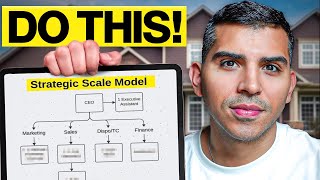
In this instructional video, Fidel, a three‑year veteran wholesaler, explains why many wholesalers are stuck in unprofitable growth cycles and presents a clear framework for scaling without building a massive team. He outlines three distinct wholesale business models—Solo Empire, Strategic Scale, and Freedom Builder—detailing the typical team composition, deal volume, marketing spend, and profit margins for each stage. Fidel stresses that revenue alone is misleading; net profit and cash‑flow timing are the true measures of success. He then introduces a reverse‑engineering calculator that translates a desired monthly revenue target into the required marketing spend, using five key inputs: revenue goal, average deal size, success rate, leads‑per‑deal, and cost‑per‑lead. The video walks through a concrete example, shows how to factor in salaries and overhead, and highlights the importance of a reliable lead‑generation system (primarily Facebook ads) and a well‑trained sales team. Throughout, he emphasizes the shift from hustling to systematic delegation, KPI tracking, and culture building as the business matures. The video ends with a call to action to download the calculator, watch related content on Facebook‑ad strategies, and book a consultation.
Chapters
Most wholesalers are stuck. They are either working 12-hour shifts and barely profitable, or they're trying to scale way too fast with nothing to show for it. And in this video, I'll break down the 3 models that every wholesale business fits into and how to reverse engineer your marketing spend based on the revenue and profit that you actually want. So if you're tired of the chaos, I hope this gives you some clarity. Everyone wants to grow. They want leads, more team, more deals, but no one talks about whether that growth is actually profitable. I know wholesalers doing $150K a month who are netting less than a guy who's making $40K a month with a tight sales process and marketing system. So more revenue does not equal more money in your pocket. So let's break it down. My name is Fidel. I've been in real estate for 3 years, have done hundreds of deals. Uh, wholesale assignments, have done multiple 7 figures. So the goal with the channel is just to give you applicable information that you can apply into your business. So with that being said, let's get started. Um, oh, by the way, this month we did over $220,000 in assignment fees. Uh, I know you guys love to see the proof. Uh, so with that being said, let's talk about the 3 models that every wholesale operation is going to fit into. Okay, so basically we will have what we call the Solo Empire Model, and then basically here is anyone who's doing, you know, 1 to 3 deals a month with a marketing spend of $3,000 to $15,000 per month in marketing spend, right? So basically it's you who usually have like an executive assistant, and then you will have 1 to 2 inbound marketing channels. You will have maybe 1 follow-up specialist or appointment setter, and you're basically doing all of the sales calls to the sellers. You are going through the appointments, negotiating, all that stuff, right? Uh, you do the dispo and TC work. So you get the deal sold, you talk to the agents, you send it to title. Um, and then usually Some people have a bookkeeper. Most people don't have it, but this is basically where you are the most profitable. And then what is required from you as a founder is you are wearing all the hats. You're kind of running crazy. You outsource probably the marketing. You take the sales calls, manage the dispo, follow up with title, all of it. And it can get hectic, right? So you're basically working long hours and you're trading your time for money, 'cause you net more at the end of the day. And you are in the sweat equity stage. So resourcefulness is greater than delegation. So you're trying to do everything yourself. You haven't hired anyone just yet. You're just starting out. And this is a profitable business if this is what you like to do. If you do flips or you're in a market that has bigger deal size, this can be great just depending on what your goals are. And like I said, you are margin-focused. Your main advantage is that you keep almost everything and then you have a low overhead. So that means that you take more money home, right? Uh, speed matters. You move fast, you pivot fast, and you execute before perfection. So once you get into the revenue of $60K to $120K, And that's what we call the strategic scale model, which is you, you still have your executive assistant, and then you still have your 1 to 2 profitable marketing channels. Here you already have a sales team. So you have 1 or 2 salespeople. You're still gonna have a follow-up specialist or like lead manager or appointment setter. Some people call them differently. And then here you already have your dispo person that is helping you out with, you know, the listings, making sure the property gets sold, talking to the agents, talking to title, all that stuff, right? And you have your bookkeeper in here. So, you know, your deals per month, it'll be anywhere from 3 to 6. And then your monthly expenses will be anywhere from the $12K to $50K, just depending on your business, right? Now, with this strategic model, What's required from you as the founder in this stage is you now are starting to become a manager of people. This is where you make your first couple hires, where you make kind of mistakes, and this is where you start learning that it's more about like delegating and giving your people the right training, right? So like I said, you already have a couple of acquisition managers, you're holding them accountable, you're still involved, but you don't have to do everything on the day to day. Today. Um, delegation becomes essential. So you can't hold every task, so you have to let go and build out those trustable, scalable systems to hold your team accountable to where they know what they need to do at every step of whatever, whatever the business is at. Um, cash flow management becomes a game of timing. So since we're in real estate, the cash conversion cycle is usually longer. So we need to account for marketing spend, the salary of the team, all of those things. So you just got to be patient and be smart with how you manage your cash flow because you can get in instances where things slow down, you're not selling properties, and you still have this huge overhead. So you got to be smart with that, right? Uh, you're spending more upfront. Like I said, you're spending the ads, the salaries, the tools. So your sales process has to convert or else you bleed. So your sales team has to be trained daily. You need to know what you're looking for, how to monitor calls, how to do reviews and have one-on-ones with your team so that you don't miss any opportunity. Because a missed opportunity can be a significant amount of money lost, $20K, $30K, $40K, $50K, $60K. But here is where a lot of people struggle, right? You need to build a replicable process that your team can follow. That means setting up a hiring pipeline, you know, holding call reviews, tracking KPIs and forecasting. Now the KPIs aspect is very important. It took me 2.5 years to look into this and I lost hundreds of thousands by not doing this. So for you to scale, you gotta stop thinking as a hustler and this is where you start thinking as a business owner, right? Your leadership, you are managing the small team and you're holding everyone accountable, but everyone is counting on you. You are creating scorecards, KPIs, you're hiring, you're training, and then you have better marketing and conversion strategy. So on this, you're probably looking at probably 40 to 60% profit margins once you're here, whereas in with the Solo Empire model, your profit margins can be significantly higher. 65 to 85%, right? Um, and then on the Freedom Builder, here's where you already have like a legit business running. Probably it's going to take you 2 to 3 years to get to this stage, but it's you at the top, you have an assistant, you have your marketing channels. Now you have a little bit more people on your sales team, uh, you have your discipline manager, you have in-house TC. And you have an admin that helps the TC to make sure everything's going to plan. You have your bookkeeper. Here you're making probably, I would say a little bit more than $100K, probably you're doing $150K to $250K to $300K. Your deals per month, it'll be anywhere from 6 to like 14. And your expenses can range from $40K to $800,000. And here you're basically kind of delegating a lot of the day-to-day and your goal here is to just implement the vision of the company and help everyone with whatever resource they need, right? So you are now the leader, you're not the operator. You're still solving any fires that may come up, but you have a team that can help you, right? Your vision and your culture matter. So everyone has to be a core value fit, where they know what the mission is and what the goals are for the company. You gotta be able to have weekly reviews, monthly reviews, quarterly reviews, and goals every quarter so that everyone is held accountable, right? Here is where you build leaders and you don't just train employees. So you gotta have people that are, if not as good as you, if not better, right? Acquisition managers, Dispo, and TC, they need to make decisions without you handholding. So where they take the transaction without you being involved. This is where all your systems and processes start happening. And this is when you basically start to enjoy your business, right? But one bad month can mean that you lose $60,000, $30,000. So you must be predictable in the acquisition systems and a strong backend process, right? So if you send out an offer that didn't get approved, your team and your manager. They need to have a TO where they call the seller and try to get those leads closed, uh, in order to keep the pipeline, you know, nice and healthy, right? But here, the skill that matters the most would be the leadership and the team development, where you give them the tools and the resources that they need to keep on getting better, right? Uh, this is where you manage the cash flow, where you forecast, and when you do your financial planning. This is where you're hiring managers, not just doers. So like I said, you need people that are really good that you can trust and you can build. And then basically you do any vision casting and you're removing any bottlenecks that the business may have. And like I said, you're still running weekly meetings, check-ins, and you are strategically planning everything with the business. And then here the profit margin can be anywhere from 20 to like 50, 60% even. And this is where you start, you know, kind of like I said, enjoying the fruits of your labor that you've put on. So for us, I'd say we're a mix between the strategic model and the freedom builder. We're way more lean than this, but we kind of operated like the strategic approach where now my dispo manager, he is my right-hand man. He can do everything that I can do. So my sole job is used to be in charge of the marketing and then hold everyone accountable. And lead the whole team on what we need to do and how we need to do it. But here I'd say probably like 80% is delegated and the 20% that I'm focusing on, it is the most revenue, the most revenue generating activities that I can find and I can do, right? So on all of these models, what matters the most is having a marketing system that gives you leads and opportunities for your team to actually make money because that's where the majority of the expenses are going to go to, right? If you're spending, you know, $15 grand, $20 grand, $30 grand, that's a big chunk of your monthly revenue, right? So if you're making $100, $150, and you're spending $50, and you have salaries and all that stuff, I mean, your net can be $30 grand, $40 grand. So that's why I always tell people they need to reverse engineer where they need, what they wanna get to and how do they get there. And I feel there's a big disconnect on how they get there. So I made this reverse engineering calculator that basically tells you how much you need to spend each month in marketing to achieve the revenue goal that you want to hit. So let's say that your goal is to get to $100,000 $10,000 per month with one marketing channel. And your average deal, like how much you make per deal on average, is let's say $20,000. This tool, it'll help you kind of reverse engineer how much you need to spend in order to hit this goal based on a couple things. So we need to know our goal. So what's our goal? What's our average deal size? What's our success rate? How many leads to a contract? And what's our cost per lead? So success rate basically just means if you have 10 contracts and your success rate is 70%, that means that 7 out of the 10 contracts actually close. So 30% are going to fall out, right? And then your leads per deal. So for us, on average is 25 to 28 leads. That means that we need 28 leads in order to get 1 deal. Okay. Now you need to take into consideration what's your average cost per lead. So for us, it's anywhere in the $40,000 to $50,000 range. As of this year, it's been dropping every month, but I'm just giving you a higher example for it to make sense. So if I want to hit $100,000 per month and my average deals have been $20,000, and I know I have a success rate of 70%, for me to get to $100,000 with this marketing channel, that would mean that if my cost per lead is $55 and I need 28 leads, that means that I need to spend in marketing $11 grand to hit this goal of $100,000. So if you take this into account and you account your team salaries, your overhead, your expenses, and all of that, this is how you can reverse engineer how much money you want to actually keep in your business. And this is cool 'cause it gives you the ROI and the estimated cost per deal. So if you wanna scale, you basically just do this math and then you ask yourself, okay, do I have the team to do that? Do I have the people to manage the sales team so they don't miss opportunities? And you know, what's my goal? Where do I wanna get to? So with this calculator, I'm gonna drop it here down below in the video. And I hope it helps you, but just be mindful that industry standards for inbound channel, you'll be looking at anywhere from the 15 to 30 leads to a contract. Um, and of course it varies depending on the lead source. You know that we do Facebook ads and we do extremely well with it. So if you would like for us to see how we can help you, book a call down below and keep watching the channel. So I hope that you found the calculator valuable, but like I said, what's most important is that at every stage, uh, the breaking point would be your marketing. So if you're not getting opportunities to make offers on, you're not getting deals under contract. But also, if you don't have a good sales team to contract those deals, you're not going to be making any money. So this is basically how we reverse engineer our goals. We're going to hit $200 grand and our average deal size is $22,500, and we have a success rate of 70%. Now I know that in order for me to hit that number, I need to spend anywhere from $15,000 to $20,000, which is what we're doing right now. But I feel like a lot of people are kind of lost on how much they need to spend or they have unrealistic expectations. But the cool thing is that we help people that are already doing deals get better with their marketing, through our Facebook Ads strategy, which I'll pull up over here. I've done a video on the channel on this, but basically we get cheap leads based on ads like this, and we teach you how to do all this stuff. We implement your first campaigns on your behalf so that you can get those opportunities. We take them into a landing page, we collect their information, and then that's basically when our team starts the actual replicable sales process so that it's tight-knit and we don't miss out on any opportunities. Um, so like I said, if you are already doing deals and you want to see how this would work in your business, follow the channel and watch this video where I break it down in depth on how we do our Facebook ad strategy. So I'll catch you in the next one.
More from Fidel
I Restarted My Wholesaling Business 4 Days Ago With AI And Already Got A Contract


The best marketing funnel that will make homeowners beg you to buy their house at a discount
He Closes 20% of His Leads. Other Wholesalers Called It Luck. He Just Hit $100K This Month.