How We Closed 300+ Real Estate Deals With This Sales Script
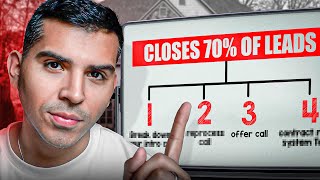
A real estate investor walks through the exact sales system his team uses to close 300+ deals. The process uses five people, Facebook and Google leads, and a four-call script framework from initial contact to contract signing. He closes about one deal per four offers and does 10-12 deals monthly.
Chapters
What if I told you that sales is not a God-given talent, but rather something that can actually be learned? You see, most investors think that they have a sales problem, but in reality they have a process problem. And when you're able to follow a step-by-step sales process and take the time to actually learn it, you will not only be able to close more deals, but you'll be able to replicate those same results over and over again. And in this video, I'm breaking down my exact sales process that we have used to close over 300 real estate deals like clockwork. And if you stick around till the end, I'll reveal my 4-step sales framework that gets us 1 deal for every 4 offers that we send out. And I don't care if you're an agent, a wholesaler, or just a regular sales rep, I'm sure you'll find some gold in this video. Now, before we start talking to people, we need to get them into our system. And this is why I love inbound leads rather than outbound leads, right? So instead of cold calling and doing direct mail and all these old methods, what I like to do is advertise on Facebook and Google so that the people that reach out to us, they already said that they want to sell and they are reaching out to us instead of us having to chase them. And we basically, like I said, we use Facebook and Google and we get pretty good results with this. I've made a video kind of going over our process with Facebook. So if you're interested in plugging that into your own business, send me a DM and see if you qualify. But basically we get very good results. So this is last week, we got close to 50 leads for an average of cost per lead of like $40. And out of those 20, 25 leads, we convert into a deal, right? So our ROI is huge. And then with Google, it's a little bit more expensive, but we get pretty good quality. So it costs us anywhere from $150 to $200 to get a lead, and then we usually need 10 to 12 leads to get one contract. And basically with these two channels, we have profitable inbound system. So as soon as the lead comes in, we have a lead manager that calls them within 5 minutes, and then the goal is to qualify that lead, right? And then basically their job is to set an appointment with a closer if they are actually qualified, and motivated to move forward. Now, most people think that they have, they need a huge team in order to close deals. So we close like 10 to 12 deals a month, but our team is very, very small. So it's a 5-person team. It's me that I do the marketing and I kind of oversee everyone, but I have 2 lead managers, 1 closer, 1 dispo, and 1 TC. So basically the lead manager is the one that reaches out to the lead first and tries to qualify them. They're like the first point of contact. And they do follow-up in the CRM. And then they're constantly kind of reaching out to the seller that submitted the information that we haven't been able to talk to. The closer, his whole job is to talk to the people that we set appointments with. Because the goal is to give out the offer in order for us to be able to get the deal. And like I said in the intro, out of 4 offers that we send out, we get 1 deal. And then I have 1 dispo/manager that helps me oversee everyone and everything. And we run very, very lean. And then we have someone in-house that does the TC work that starts talking to the title company in order to get a deal started. But we run very, very lean. And I think you should do something like this because, well, what matters most is the profit, not the revenue. And then the expenses, your marketing expenses are going to be your biggest overhead. But then also if you have sales rep, you need to pay them a salary. So you need to account for all the those things. And I kind of want to walk you through, um, the process map of when a lead comes in, and then I kind of go over the script that we use at each stage. And I'll be breaking it down very, very detailed, uh, because like I said, a lot of people think that it's God-given, but in reality, the sales process can be learned. And when you're able to follow it, you'll be able to replicate your results 'cause you know what to ask, when to ask it, and why we ask it, right? So basically we see over here, the lead comes in and then the lead manager, this is all the lead manager, okay? The lead manager is gonna start the intro call, right? I'll go over it, kind of what the intro call is right now, but we do the intro call and then we set the expectations, that how we work, like kind of all that stuff, you're gonna be a good fit, all those things. We ask what made them inquire, and then what we want to find out is, are they urgent and ready to sell? And then, is there some sort of motivation? And then we kind of talk about the timeline, condition, possible roadblocks. We kind of go for the motivation, and like, if they have like a price in mind that they want to get for the property, then they will do some price anchoring. Um, the lead manager is going to be like, hey, I mean, how much we looking to get for the property? How much do you need in your pocket in order to move forward? And then we can let them know like, hey, we see that investors in your area are paying around 40 to 60% of whatever Cello says. And we say, hey, this is not our offer, but it's basically what we're seeing. If someone offer you this, what would you say about that? So that's kind of like our soft anchor. It's not an actual offer, but we are kind of like dropping them on their expectation. And then the result of this call is to find out, okay, are they motivated and urgent? Yes or no. If they're not, then we tell them like, hey, we're not going to be a good fit. And then we basically, we can refer them to an agent or we put it in our follow-up sequence through our CRM. But if they are motivated, then we are going to set the expectation. Let them like, hey, this is a good fit. This is something that we'd be interested in. And then the lead manager is going to make an appointment with the closer. And then the closer is going to reach out to confirm the appointment and introduce himself like, hey, my name is Vinnie. I know you talked to Brian. In. Uh, he told me to call you at this time, so just expect a call from this number. Yes. Okay. And then we ask them to send some photos of the property. Uh, but after that, my closer is going to start the process call. And then with everything, we set the intro like, hey, my name is Vinnie. And then we kind of set the stage. Hey, some of the questions that we are going to ask you may sound repetitive, but my whole goal is for me to actually understand the situation in order to give you the best offer. And then this got kind of messed up, but after that, after we set the stage, we can address some roadblocks, right? So whatever the conversation was with the lead manager, we kind of wanna go over it and kind of talk about, okay, what are they looking to sell? What's what I'm thinking about selling? Like if they sold, then what? So this is kind of the chance that my closer has in order to build that trust and build that rapport. Because what we do is same side selling, where it's basically my salesperson teams up with a seller, kind of like they're trying to get their price against me, the big bad partner. Because we always say that the finance manager is going to be the one that's going to set the price. So whenever we give the offer, it's not him, but rather on the big bad team. And this works very, very well in order to get your deals approved and your offers approved, right? But basically, this is just like a straight line. It got kind of messed up a little bit here, but after you can address the roadblocks, see who is an influencer, what their plan is moving forward, like if they sold, where would they go, kind of like after we figure out like those things, we kind of dive deeper into the motivation and we kind of like, we check them like, hey, like if we, if you sold, then what? I mean, how long have you been thinking about selling? Um, why don't you just keep the house? Why don't you list it with an agent, right? Because we want to know about everything that would potentially be a deal killer. And we have like a very honest and easy conversation with the sellers where I tell my guys, hey, you need to understand that these people, they like, they don't trust you. So the more that we can humanize ourselves and basically talk like a regular human being and explain kind of like the process and where we need to be at in order to make a profit, um, it just becomes way easier because these people, they want to sell. It's just a matter of who they're going to sell to. And the question— I'm sorry, the is they're going to sell to whoever they trust the most and whoever understands their situation the better, right? So after we kind of dive into the motivation and talk about possible influencers, we always like to ask these questions because there's nothing worse than whenever you give out the offer and then they tell you like, oh, I need to think about it. Oh, I need to talk about it with X, Y, and Z, right? But that's why we always position this before the kind of offer call so that we know if they're gonna talk to someone. That we need to get 'em involved and see what the process is gonna be because it can either be a smokescreen or a legit concern and our job is to alleviate those concerns. Okay? So like that, the way that I like to think about it is most people will, for example, if you go to a car dealership, people hate sales, car salesmen because they don't trust them. They don't know what's going on. So for us, like we want to let 'em know exactly what's going on at each part of the process and what's the expected outcome of each call. So that's why I have this tarp here where in every part of the call, we kind of talk about the timeline, the agenda, kind of meaning what we're gonna discuss, the result. We basically let 'em know like, hey, if this is a good fit, we're gonna give you an offer. And then the permission is like, hey, you have permission to say no, 'cause that's gonna lower the guard. Because imagine if you go into a car dealership And you already know they're just gonna, they're not gonna let you leave because they want you to say yes, say yes. But for us, like, hey, if this doesn't work out, it's okay to say no. You're not going to hurt our feelings, but at least you'll know what your options look like. And this way they feel more like understood and we can discuss different options depending on their situation. So we do a lot of wholesale, a lot of MLS listings, a lot of novations. So the more tools in your tool belt that you have, the better that you're gonna be able to convert. So super important to be able to do this and use the TARP to let them know exactly what's going on at every point of the process. But after he kind of goes through all of this and they start talking about like the money, like, hey, I mean, how much would you need in order to walk away from this property? Assuming that you already know kind of what the condition is and you know we need to do the roof and all this stuff. I mean, what is this gonna help you accomplish? What is selling the property gonna help you accomplish in your life? And what is that doing for you? 'Cause we wanna get 'em thinking about those next steps after the sale, 'cause that's when everything happens and it just starts becoming more real. Now, after they kind of talk about that, my closer will kind of just give them information about how we go about giving out the offers and all that stuff. But we want to know what their minimum amount that they need in the bank account in order to sell the property. But after he kind of goes through this process, he basically is going to set up the offer call. And then we did the same thing, we set up the expectation, what's going to happen, and then they have permission to say no. And then whenever we start the phone call, hey, this phone call is going to take 5 to 10 minutes. Uh, I'll let kind of let you know what the properties want to qualify for and the next step moving forward. And like I said, if you don't like the offer, you don't have to accept it. You can just let me know. You're not going to hurt my feelings. But in the actual offer call, we started, we set the expectation kind of what's going to happen using the TARP. And then if we let them know, like, hey, if you decide to sell, then the next step is we need to send you over a written agreement and we're gonna go through it together. It takes 5 to 10 minutes or however long you need. And basically, if everything looks good, we'll sign the agreement and get it open to title. You have any questions about that? No? Okay. And then we basically kind of give out the offer. But before we give it, it's like, hey, this is what you property qualify for. Like I said, you don't have to pay any closing costs, commissions, repairs. We'll be able to move on your timeline. And with that being said, the financing say that the property qualify for $93,500, right? Now, after he gives out that initial offer, two things are going to happen. They're either going to say yes or they're going to say no. Most of the time they're going to say no, um, but they're either going to say, whenever we have the offer, we give it below our maximum, maximum, maximum allowable offer. So meaning like, if a property is worth $200,000 and our first offer came in, it's going to come in like at $100,000 and our max allowable offer, let's say it's $115,000, $120,000. We're going to start like $20,000 below that. And then they're either going to say the price is too low. And then we will do two more price rebuttals where like, hey, what if I can do an extra $5K, an extra $10K? Would that change anything? Yes or no? So he's going to negotiate a little bit with them. And then if that gets accepted, then it'll move to the next stage, which is kind of sending over the DocuSign or the contract. But let's say that it is not accepted, then that's when we pitch our Novation pitch. And then basically we tell like, hey, we can do this with cash because we need to do X, Y, and Z, and then we need to put on the market and account for the risk and the repairs and the holding costs and all that stuff. But it seems like this number that you're trying to get to is important to you, So we have an option that we can get there, but we just need two things from you, right? One would be flexible timeline on the closing date. So instead of closing in 30 days, we need to close in 60 to 120 days. And the second thing that we will need would be reasonable access into the property. If we were able to offer you more money, would you grant us those two things? Yes or no? And then if they say yes, we basically, we're going to try to come up with the offer price that makes sense, uh, for this MLS Novation pitch. But the cool thing about this is that we can offer probably an extra $15,000 to $20,000 more than the cash offer because we can sell to a retail buyer, or like a normal investor, or like a mom-and-pop that are able to pay more than flipper and still help the sellers accomplish their goal of selling and help them with the closing cost commissions and all of that. And then basically what we make is what we agreed with, that they're going to net in the offer and they're going to list it for a higher price on the MLS. We're going to sell it. We're going to, we're going to make our money. And from our net, we paid the real estate agents, the commissions, the closing costs, and all those things. And if we need to do any lender required repairs, we'll do it. But now we're able to convert more deals because we have this strategy. So if it's accepted, it gets moved to the contract stage. And if it's not, then we put it in our follow-up process. But after, let's say we get it approved, then we set the expectations for the contract call. So if this is approved, like, okay, Mr. Seller, then the next step, we need to send over agreement. Will you be available in the next 15 minutes? That way I can type it up and send it over and we'll go over it on the phone. Now it's very important in over 300 deals that we have done, we never, ever, ever send out the contract. Without letting them know that we're gonna go through it together. Because there's nothing worse than expecting them to sign without you going over the contract, because it's gonna be— they're gonna have some questions, and then you need to be there to kind of reassure them what everything means so that they're— everyone's on the same page, right? But on that, whenever we get them on the phone, um, we say like, hey, Mr. Seller, um, you have 5 minutes so we can review the contract. And it's very important that both decision makers, if there's any, that they are on that call. So we don't send it out just then. We only send it whenever we have them on the phone and we ask them, "Hey, do you have access to your email?" If they say yes, we tell them like, "Hey, you're going to be getting a document from DocuSign. Let me know when you see it." And then we tell them, "Okay, you need to review it, open it, and I'm going to walk you through what everything says." And then we kind of go over all the terms once again, what we're going to do. And then we kind of set the expectations. We try to get it signed right then and there on the actual phone call, but we kind of set the expectations and kind of review the process one more time and the next steps moving forward. And then after we get it signed, we start a DISPO process where my DISPO manager's gonna call them and set up photos. We're gonna send it to title and our TC is going to start. Now with that being said, that's kind of like the timeline, the overview of what it looks like. And now I want to individually talk about each of the scripts that we go over. Now, the first one, it'll be the intro setter script, which is this first part. This is what the lead manager talks about. And I'm going to kind of give you the frameworks of why we ask, why we, what we ask. Now I can't give you the script. That's only for our clients and our paying members that we work with. So if you're interested in hearing how we do our sales process, and the actual Novation pitch. Um, like I said, send me a DM and see if you qualify and if we can help you implement this into your business. But what I can do is kind of give you the frameworks of what we do right now. This script is used to qualify the sellers fast, and we want to know if it's a workable opportunity or not, and we want to know if you can take them to the next step or if it's not a good fit, right? So if it's a good If it's a good fit, then we would move to our process script, which is the one that the closer is going to go over. But basically with the intro setter script, the goal is to find out if the seller has motivation and urgency. Hey, Mr. Seller, if we gave you an offer today, would you sell? If yes, we want to know, okay, what's the reason why they want to sell? Are they actually motivated? Are they moving away from pain or are they moving towards pleasure? Because there's gotta be something significant happening to them in order for them to accept our lower offer than what they would get with like a market value with a real estate agent, right? Um, but what is very important is whenever they reach out, like the first phone call, whenever they submit their information, it's very important that we don't sound like a traditional salesperson. So what my lead managers do is like, hey, Mr. Seller, seems like you found us on Facebook. Well, what about the ad made you kind of want to look into this a little bit further? Right? Because then we want to know exactly what's going to have some thinking about selling. But if we sound curious rather than, hey, this is Fidel with ABC Homebuyer, how are you doing today? It sounds like a sales call. And nope, people just don't like salespeople. Like, that's kind of what it is. So we do this in order to kind of alleviate their concerns. And so that we sound more serious and more curious so that we can talk to them, you know, at a deeper level. Um, and then number 2, we do permission-based control. Hey, if this at any point in this phone call, does it sound like we're not going to be a good fit, we can just end the call. And I kind of let you know, and I expect for you to tell me the same thing. Does that sound fair enough? Yes. Where we're like, okay, like we're going to let them sell themselves to us rather than us to them, right? And then after that, we kind of go into the timeline. Hey, if everything sold, I mean, how soon— I'm sorry, if we came to an agreement, how soon were you going to sell? Now what we're going to know is like, if they came— we come with an offer, are they ready this second or this week in order to accept it? Because if they're not looking to sell for the next 4 or 6 months, I mean, there's no point in us talking to them right now. We're going to let them know like, hey, we buy many houses, so it'll be better if we just kind of talk to you in the next couple weeks to see if everything has changed. That sound fair enough? And they're like, okay, yes. Now. Oh, it also kind of lets us know, like, if you're thinking about selling or if they're kind of actually serious. Now we talk about the motivation, like, hey, I know we've been talking for a little bit. What even has you thinking about selling or considering selling in the first place? And then we're gonna, we're gonna uncover the real problem. Like I said, if there's any sort of pain or they just kind of want, want it gone and there's no motivation and they just like the convenience aspect. But we'll find out many motivation, um, clauses like divorce, foreclosure, inheritance, or maybe just moving or downsizing. And then we kind of filter through these people. Now, after we have the timeline and motivation, that means that it's a qualified opportunity. And then we start kind of talking a little bit about the price, you know? Oh yeah, it sounds something that we may be able to help with, but I'll be upfront, like we just don't pay market value. We gotta make a profit. We don't tell them this exactly, but like, hey, how much will you need in your pocket in order to move forward? And then whatever number they say, like, oh, okay, gotcha. I'm not saying this is our offer, but we can see that other investors are paying around 40 to 60% of whatever the Zillow says on the link for the property. And we're like, hey, like I'm saying, this is not our offer, but if someone offer you this, what would you say to that? And then we want to kind of like pressure check them and check what they would say to that. And we're like, yeah, that's not our offer. We're just kind of letting you know what we're seeing with these other investors, but we're not like, we're gonna try to make a deal with you. We wanna make a win-win situation. But, you know, taking account of all this notes. And then basically we kind of set the stage. Hey, I mean, this sounds like something that we can help you with. The next step is you need to talk over to our home buying specialist. He's gonna give you a call and kind of go over kind of how we can give you the best offer. Would you be available? When would you be available? And we trying to set up the time and the lead manager is going to set up that offer call. I'm sorry, that process call with the closer and let them know about the time. So then that was basically kind of like this first part right now. If it's qualified, like I said, it's going to go over here where we, where we do the process script. So this is all the closer. Okay. Now, what is the goal of his phone call? The goal is to build rapport and to build that trust with the sellers in order to do that same side selling where it's him and the seller against us, the big bad partners. So at this stage, we know they have motivation, urgency, and his job is to build trust and gather the full picture and the next steps moving forward if they were to sell. And like I said, we use that same side selling to position ourselves as their ally, not as their like adversary, right? And then the seller feels like he's on their team and they were working together in order to help them move forward. But we've set the expectations like, hey, I'm gonna ask you some questions that may be, that they may sound repetitive on what we talked about with, you talked with the lead manager, but my goal is that I get the best information in order that I can present the best possible offer or solution to your situation. Um, does that sound fair enough? And they'll be like, yes. Okay, but this is kind of the rapport builder because if, if my closer is going to be the one negotiating, we don't want the lead manager to build more rapport than him, right? Now on here, the main objectives of the process call is to build that rapport, confirm the property details and condition of the property, uncover the deeper motivation behind selling, and then check the urgency. Hey, just to confirm, if we came to a to a fair price today, you would be ready to move forward, right? Yes. Okay. And then we find out who the decision makers are. We kind of ask about what they've done in the past in order to sell, where they would go if they sold, why they just keep the property, kind of go over anything that may kill the deal. And then we can explain our process, how we do it. Hey, yeah, we do it based on market value, condition, all that. Of course, we buy and resell the properties in order to make a profit, but we're kind of very transparent on how we do things. And then it's basically serving as strengthening that emotional connection. And then after all this is said and done, we talk a little bit more about price. Um, and then if we think it's going to be an Ovation Fit or MLS, uh, listing, we kind of position it here. Like, hey, by the way, if a cash offer doesn't work, we have another program that we're able to help a lot of sellers with. And would you like to hear what that would look like? After I give you kind of like the offer on our next call. And they'd be like, oh yeah, okay, cool. Um, but after this is done, the seller trusts you. They feel heard, understood, and respected, and you're now their advisor, not just a sales rep. And this is what sets up your team in order to deliver offers fast, to build that rapport, and to help with the conversions, right? Now, after all that is said and done, We already completed this part, right? Which now we're kind of going into the offer call. So the offer call script is going to go over kind of these things over here. Okay. So I'm sorry, here and here. Now the offer call. Okay. This is what the property qualifies for according to my finance team. Like I said, like this is on them. It's not on me. I'm like, kind of like my goal is to help you out. Right. This is kind of like our, our one of the final steps on the seller's process. And then basically we kind of go over the offer call and let them know like, hey, this is what the property qualifies for. And then if you like it, then the next step is that we would send over a written agreement, which we're going to go through it together. It takes 5-10 minutes or however long you need. It's very simple. We kind of go over the terms once again, but after If you decide to work with us, we're basically going to send that to title and start the process. Do you have any questions about that specifically with the transaction? Yes. No. Okay, cool. And then we start kind of talking about the price, right? Um, where we present the offer, right? And we're like, hey, with that being said, the property qualified for X, Y, and Z. You don't have to pay any closing cost commissions or do any repairs. And then we're going to offer below our maximum allowable offer on the cash. And then we're gonna do some price rebuttals, right? We're gonna try to come up and negotiate a little bit. Uh, but if that's not approved, then we would introduce our Novation or MLS pitch. Um, and then we share why it exists, how we came up with it, and how it helps them and how it helps us as well. We basically let them know like, hey, we have so many buyers that we work with and we're able to close this, uh, pretty fast with retail buyers just because everybody knows for our properties. And all the deals that we do. So we're able to help them get into the property and help you accomplish your goal of selling, um, without having to take on a lower offer, right? Now, after we kind of do that, we handle objections, whatever the concern they may have, uh, kind of explain our process, how we do it, super simple for them. And then here, the seller psychology is the decision friction is reduced by setting the clear expectations. And that's with anything, you always need to set clear expectations. And then you do the same type selling where you're partnering with them, not just a buyer trying to win the property, right? And then we can overcome the price objections. Um, and then we basically manage it as, okay, we have access, we have more leverage. That way we can give you more money, uh, because we're really good at what we do, right? And then basically the frameworks that we use is upfront contract to remove the ambiguity. So we let them know that we're going to send them the, the contract and we're going to go over it together. We anchor and back in the guide. To price the expectations, and then we kind of do our Novation pitch. Um, and then like if they're considering other options, we kind of scratch the earth and then like, hey, I know you're working with X company, but we have over 50 reviews on Google. We're the— we're here locally and we're more trusted than everyone else. So our goal is to kind of help you move forward. And then basically after a price is approved, then we will set up our offer call and we're almost Done, right? So the contract call would be this part over here. After this is accepted, the goal is to— we're gonna walk in, we're gonna be walking through this together. And the goal is once they verbally agree, we need to set up immediately the contract call to go over the agreement together. We never email the— we never email the offer blindly. We always do it together because that can kill your deal, right? And the goal is to reinforce the trust, eliminate surprises, and walk him Exactly through each step that's going to happen in the sales process, right? Hey, Mr. Homeowner, this is kind of our, our offer call, kind of going to go over it together. And like I mentioned over here, do you have access to email? Yes, no? Okay. Once they open it up, then basically we're going to confirm the price timeline and any expectations, repairs, items that are behind, kind of all those things. And then we let them know like, hey, we're going to take photos and start our marketing process. We kind of reframe it as it's a mutual agreement and kind of let them know, okay, the price, when the closing date is, kind of like all those things, and then answer any final questions and get the verbal green light to sign. And then after they sign, we send it over to a dispute manager who is going to reach out and kind of go over the process once again. And then the transaction coordinator is going to open the title with the title company. But on here, the trust— the seller psychology is Okay, trust is being reinforced by showing transparency and availability and that we're like human beings just like them. We are going to help them with the decision anxiety since it's lower when we guide them through the process like life step by step. And then the commitment is solidified. When they say yes, we can let them know everything's gonna happen. We let them know it's a legally binding agreement and we're gonna try our best and put all of our efforts in order to get this done. And then you remain in control by never handing off the contract without framing it. And if they want to review with someone, we already knew who it would be, and then we would need to, um, manage that according to whatever the conversation was. But after that, we pre-framed the call as collaborative and short, and we let them know what's going to happen. And then we walk them line by line through the contract to eliminate any surprises. And then we kind of go over the expectations with my team and what's going to happen and all the touch points. And then we get like another verbal, written yes in order to solidify the deal even more. So I hope this was helpful for you guys. Like I said, if you want to build this into your business, I mean, at the end is in the, if you qualify, but I think you can get some good stuff from the process because if you can master this, you'll be able to close more deals. And with that being said, watch this video next. I'll catch you on the next one.
More from Fidel
I Restarted My Wholesaling Business 4 Days Ago With AI And Already Got A Contract


The best marketing funnel that will make homeowners beg you to buy their house at a discount
He Closes 20% of His Leads. Other Wholesalers Called It Luck. He Just Hit $100K This Month.