How We Cut Ad Costs By Over Half With This Simple Trick!
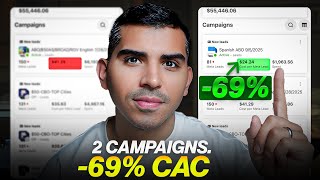
A real estate wholesaler walks through a Facebook ad system for cutting costs in half. Build ads with a 5-second hook, value proposition, and clear CTA, then batch-produce dozens of variations. Test each ad set for 3-5 days, kill anything over $25 per lead, and scale winners.
Chapters
I'm going to show you two of our most used campaign structures that we use to drop our cost per contract from $5,000 all the way down to around $1,500 per closed contract by implementing our Facebook ad strategy. And I'm going to give it to you for free without the agency fluff or without any of the BS. And if you are someone that's interested in firing your agency and you want to take control over your leads so that you have the same results as well, book a call down below so that we can help you scale your ads and we're going to teach you exactly what you need to do so you can fire your agency. With that being said, you need to be already doing deals and you're going to be willing to spend at least $2,000 a month in ads in order for us to help you make more money. So with that being said, let's get on with the video. Now, the main reason why I see people fail is because they suck at making ads. So with this SOP, I'm going to show you exactly how to make great ads, right? So if you create better ads, your cost per lead is going to be cheaper and your cost per contract is going to be cheaper. So step number 1, you need to identify the pain points. So with their ads, I like to do pain-based ads, and I keep like a broad approach when it comes to targeting the sellers where we just keep it broad. Like, hey, if you want to sell your house fast for cash, click on the link down below. You know, videos like that, static images like that work very well, but we want to have a mix between top of funnel, middle of funnel, and bottom of funnel. That way your campaign is spread between multiple categories based on the stressor and based on motivation. But for the sake of the video, I'm going to keep it very simple. So for example, if we wanted to pick, you know, a pain point based ad where we talk about foreclosure, you can pick foreclosure, divorce, inherited property, costly repairs, tired landlord. The world is your oyster. So you can choose whatever you think you are good at. So after we identify what the pain point is going to be, then when we're making ads, we need to make very good hooks. Okay, the hook is the first 5 seconds of video, and that's where 80% of your effort should be. So, you know, those 3-5 seconds are super important because you want to get the attention, and then you only have like one chance to basically make an impression with anyone, right? So an example of a hook can be, hey, are you falling behind on your mortgage? Hey, did you inherit a property that you don't know what to do with? If you're downsizing and need to sell your house now, I can pay you cash for your house and pay for your fees. That's an example of a hook. And you basically, after you get your hooks, you want to go into the meat and potatoes of your offer and your solution and what you guys do and what you're good at, right? But you want to keep it direct, empathetic, and to the point. You don't want to sound generic like everyone else, but you also want to sound relatable and friendly. That way, when people see you, you can build some trust even before they submit their information. So the second part is going to be the meat, right? Which is the meat and potatoes of what you're offering is, which talks about like, what do you do and what is the value equation and how long do you do it? What's the outcome? And you wanna do it without any risk for them so that they submit their information, right? So when it comes to making the meat, like I said, you wanna have empathy where you actually acknowledge their problem. It's like, hey, We know dealing with this can be very stressful. Our company specializes in helping homeowners just like you. We actually just walked out of this seller appointment and we're purchasing this property. They didn't want to deal with the agents or the other investors. We were actually, you know, able to come out here and make a deal and make it a win-win. So if you're interested in hearing how we can help you, click on the link below and send me your information. That way we can talk to you and give you the same, um, you know, offer that we gave this seller, right? You can do it Based on the solution, present what you do. Like, you know, we buy houses as is, pay closing costs, and we can close in 14 days. Or you can go based on relief where you show the outcome. Maybe you're talking to a seller, you are in a title company closing with them. All of these things are going to work very well. And then example of a sample script. This is very basic, but hey, if you're facing foreclosure, we buy houses in as-is conditions. No repair, no fees, and we cover your closing costs. We have helped hundreds of homeowners sell their home the easy way. So if you want us to help you, click the link down below. And then after, so first you get the hook, then you get the meat, which explains what you do and how do you do it. And then the last step is the CTA, which is the call to action. And basically what you wanna have is a bunch of hooks. So 10 to 20, you record 'em separately. And then with the meat, Like your value offering, you want to have, you know, 2 to 3, I think it's enough. And then when it comes to the call to action, you want to have 2 to 3, right? Example is like, hey, click below to see what your home qualifies for. Click below to schedule a consultation call. Fill out the form below and we'll talk to you within 2 hours. You know, that's an example of a CTA and you can mix and match different parts of the video to make a good ad. But most of the time what I see people are not doing right is the actual ads. And if this sounds very complex, like this is what we help all of our clients do. We already have a library of like 50 winning ads that can be plug and play in any market. And they work very well because they're founder-faced. And I believe that the founder of the business should be the one on the ads because no one's going to care as much as you will. So you gotta take a look into this, right? So after you have your ad where it's a static image ad or a video ad, and then we talk about the headline and the ad copy. So the headline is the little letters that are next to the actual ad. And then the ad copy is the bigger text that you basically call out your audience and then you offer the value proposition. So you wanna say kind of like the same thing that you're saying in the video, but in a different way that whenever they're reading, it becomes appealing and they submit their information and it's something that they can relate to. Okay, so example of a headline can be, "Sell as is, fast, avoid foreclosure, get cash today, no repairs, no fees, close in 14 days." Right now, um, the ad copy is basically you want to call out your ideal audience. So if you are marketing in Dallas, you want to say, hey, Dallas Homeowners. And then you kind of go into what the hook is and the meat and potatoes of your offering. And then you just want to have compelling ad copy that makes the people want to click on the actual ad. Um, now when it comes to visuals, you could do founder face videos like I do in my videos. You can hire people to record on your behalf. You can hire your friends to record on your behalf. Maybe if it's you on the video, you can have your female friend that is on the video and maybe she's going to perform better than you will. So you got to be able to use different avatars to get better results. Um, but an example of a UGC video, you can have the same script that you say, you just have someone else say it, and then you can use these people to record a testimonial style on, on what the experience was with them working with you and your company, and the pros, the cons, and all that stuff. And that just become more relatable. When it comes to static images, they work well, and you should just kind of diversify between video ads and static image ads. But you can have a picture of a house that you bought, bought in 7 days. Uh, we buy assets, we can buy 5 more houses this month, so submit your information below. Um, and then when it comes to the batch production, I'm going to show you the easy hack. So like I said, you can record 10 to 20 5 to 10 second, uh, ads. And then you can have 3 to 5, 3 to 5, you know, meat and potatoes of the video, which talks about what you do and how do you do it and the outcome. And then you want to have 2 to 3 calls to actions. And then you can mix and match the different ones, and then you can have up to 60 to 100 different ads that you can actually test. And I will tell you about the different structures that you can try and do to get that cost per lead um, down, right? So you want to launch 5 to 10 variations at once and be able to test them, right? And then you want to kill the ads where the cost per lead is more expensive than you used to, and then you want to scale the ones that are actually winning. And you can make more variations of what's actually working because now the market already told you that it's actually working. But the key principles to this is lead with empathy where you show and understand their situation. Keep it simple, don't over-exaggerate, just become relatable. You can show proof, whether it's you sending a wire to close on a property, seller testimonials, any text that you got from the seller with your experience with you. If you can be with them, that's gonna perform way better, maybe even like some closings. So you can record a bunch of ads and you can test them. So the core principle of this is just making more, just doing more, 'cause there's no way that you put the input, that you don't get the results that you are basically looking for, right? So that's how we make good ads. Now let's talk about the campaign structure. So it's something that I like to call the shotgun approach because instead of just putting all of our eggs in one basket, in one campaign, we want to have multiple campaigns at a lower budget each and test different variations. What we need is the ads, the ad copies, and the headlines. So you can have 3 to 5 different ads that you want to basically test. And then when it comes to the actual structure of the campaign, you could do a campaign that has audiences where you are doing broad targeting without any filters or without any interest or inclusions or exclusions. And then this doesn't really work because we're doing the housing category, but here you could do broad homeowners, intra— interests plus inclusions and exclusions. Um, and then when it comes to the actual campaign, you know, showing you in the beginning of the video, when you launch the campaign, you have something that's called the dynamic creative. So what the dynamic creative does is you can plug 3 to 4 different ads, and then you can have 2 to 3 different ad copies and headline. And then what Facebook is going to do is going to mix and match the ad with the ad copy and the headline in different variations to put it in front of people that are most likely to respond to that ad. Okay, and then you have also something that's called the, just like the individual ads. So on the ad set level, you know how you could do it based on the campaign budget, or you can do the ad set budget. I recommend when you're starting out doing ad set level, and then let's say that you're spending $100 a day, having probably like 3 to 4 campaigns at $25 per, um, like structure. So an example of this would be you do one ad set and you turn off the dynamic creative, and then you upload your 3 video ads with the same ad copy. And then a variation of that, you can do the exact same thing, but instead of doing it individually, you want to turn on the dynamic creative and then you put the same, the same ads and the same ad copy and see which one is going to perform better. So you want to test it for 3 to 5 days. And after you get the winning ones, you want to scale those into the campaign budget optimization. So it's called CBO. So instead of putting the budget on the ad set level, you can put it on the actual campaign. And then usually that's the best way to scale the winning ads. So we use the ad set to like test and see what works better. And then we want to put the better ones into the campaign budget, because that's going to give you usually better results. You can still get really good results if you stick to the ad set budget, but that's usually what we have found that works very well with all of our clients. So like what I was saying earlier, you can break up your spend between 3 different structures: ABO individual, ABO with the dynamic, or CBO with the dynamic. And then the main thing that you want to take a look at is you want to kill, you want to kill the ad sets that are not giving you a good cost per lead. So for example, for us, I already know that a winning campaign is going to get me leads for from $15 to $25. So if it's anything above that, I know I need to change either my ad copy, my headline, or the actual ad itself. So after they, 7 to 10, you want to shift the spend from the losers onto the winners, and then your cost per lead is going to drop. And then after day 14, you can start implementing what it's called the, um, the retargeting. So anyone who viewed the form and didn't submit, or anyone who interacted with your page, you want to retarget them at a lower budget with a different creative that shows you that you're more like friendly and most, like, their common concerns that most of the sellers that you talk to have questions on, where you just talk about those things. That way, whenever they see your retargeting ad, they just submit their information. Um, and then this is just basically, like I said, it's going to come down to having better ads. And if for whatever reason your ads are not performing well, I'm going to teach you how to make better hooks. So basically you can change your offering. So for example, instead of saying, hey, sell your home in 14 days, or we'll cover your next month's mortgage— that's a variation that you can have— or you can do something along the lines of like, hey, schedule your free consultation and see how much cash you can get, or something like, hey, get the highest cash offer in your market guaranteed. So things like this are going to help you. Um, and you can also add some lead magnets. So for example, something like, hey, 'If you are in foreclosure, I'm going to give you the 3 options that every homeowner has when they're facing foreclosure,' or something like, 'Hey, how to sell your inherited property without touching a hammer,' you know, things like that. And then this is basically kind of just recapping what I went over in the first part of the video. But basically, if you are kind of able to test a bunch of these things and you are able to check on your ads and see exactly how everything is performing. And you get a cost per lead under $70. And so the, the other thing that I look at is when I know something is working, ideally a campaign that's fully optimized, that's working very well, you want to be getting 1 lead, uh, for every 5 link clicks or less. That tells us that the audience is relating to that ad. And now we know we have a winning ad copy headline and video, so we can just make different variations of the actual ad, and we know that ad copy and headline is going to work. So then, you know, you have the data where you can just test new stuff and keep on having good results at all times. So your to-do, you know, read through the hooks and meats and CTA section, come up with your own hooks, um, plug in the ad copy and headlines and test the different variations. Because if you do this, I know you're gonna find a winner. And like I said, if this seems too complex to you, this is exactly what we help our clients do. So if you are someone who doesn't do— like, want to do all the guessing work, and you have at least $2,000 that you can invest a month, and you want to have the same results that we're getting and our clients are getting, where they're spending 2 to 4 grand and they're making $30,000 to $40,000 by implementing this system. I want to help you, so book a call down below and let's see how we can help you. Because like I said in the beginning of the video, the most important thing that we can control in our wholesaling business is how much money we make per deal, which we can fix with a good sales process. And the other thing is going to be by dropping your cost per deal, because in the end, if your cost per deal is cheap and you're making a lot of money per deal, all that is profit. And you don't need to have a huge business to net $20K, $30K, $40K, $60K, $100K a month. And I just see all these people that are just trying to overcomplicate things. In the end, it's just sales and marketing. And the better that you become at marketing, the better that you become at sales, the more money that you are going to, you know, the more money you're gonna make and you're gonna be able to have a better business. So I hope this was valuable for you guys. If you have any questions, feel free to send me a DM on Instagram. And with that being said, I'll catch you on the next video. Thank you.
More from Fidel
I Restarted My Wholesaling Business 4 Days Ago With AI And Already Got A Contract


The best marketing funnel that will make homeowners beg you to buy their house at a discount
He Closes 20% of His Leads. Other Wholesalers Called It Luck. He Just Hit $100K This Month.