The Exact Ad Funnel That Prints Me 30–50 MOTIVATED Inbound Seller Leads A Week
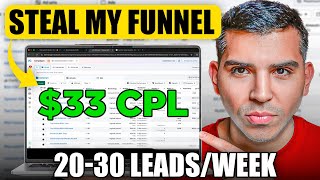
Real estate investor walks through his Facebook ad funnel that generates 30-50 seller leads weekly at $20-35 per lead. He shows campaign setup, targeting with instant lead forms, black-background creative, and a 4-5 question form with conditional logic. His data: $6,000 spend yielded 166 leads and 6 closed contracts.
Chapters
Most wholesalers and investors are paying $2,000 to $5,000 to get one deal from their marketing. And in this video, I'm going to literally open up my ad account and show you the exact Facebook funnel that is getting us 20 to 30 inbound seller leads a week and how we are paying at around $20 to $30 a lead and how we are getting one contract for every 20 to 25 leads. So I'm not going to blur out anything besides their names and phone numbers because we're still working through some of these leads, but you'll be able to see the exact campaigns, our cost per lead, our projected revenue. And if you're already doing at least $20K per month and you're tired of relying on agencies or doing cold calling or just buying leads from paper lead providers, watch this video all the way through and make sure that you apply some of these things in your market. And if you want help implementing this much quicker and better, I'm going to link a training down below with an application at the end. So you can see my last 30 days on my ad account. You can see that we spent close to $6,000. We got 166 leads at around $35 a lead. and we got like 6 contracts from this campaign. And I'm going to break down exactly how I'm doing a bunch of these campaigns. That way I can help you guys do this and get leads cheaper. But you see, I made this new campaign during the holidays. We've gotten 5 leads at $26. And just today I launched a new, some new campaigns. You can see we got around 11 leads so far, and super cheap. So I'm going to show you the type of leads that we are getting. That way you can take a look and why it's worth it for you guys to maybe do this. But as you can see from this, we do stuff in Spanish, but you can see from this one, they're selling because they are in a divorce. This other one, she lives here. It's not listed, good condition, they're downsizing. This other guy, vacant property, they wanna sell ASAP, good. Divorce. This other one is in Spanish as well. So, you know, good lead. This other one, okay, we can see it there. This one going through a divorce, they wanna sell fast. So these are the type of leads that you can get if you use Facebook, but I'm gonna break down. Some of the campaigns that way you get an idea of how we are running these ads. So basically I'm going to show you my whole setup. So for me, it depends what I want to do. So basically this, I was testing some ads. So if you are testing, you want to put the budget on the ad set level, that way you know if it works or if it doesn't work. And then once you know that you're getting cheap leads with a campaign, you can move it into campaign budget, and usually Facebook prefers that, so it'll be more efficient with the budget. But I'm going to show you exactly how to set up these campaigns. I don't do anything with the A/B test. I choose the housing category. I know some people do it outside of this, but I just don't think it's worth it. So on top, you're going to have your campaign. Make sure you name it and you know what it is. And then the ad set, that's basically all your targeting, where you're going to send them to, all that stuff, right? So for us, we're doing a lot of instant forms. And then on the performance goal, you could either do maximize the number of leads, or you can do maximize the number of conversion leads. Now the main difference is with the conversion leads, it's basically going to pull from your pixel. So since I am testing a new one, um, I just wanted to try the maximize number of leads. You don't need to choose one or the other. Uh, if you're brand new, probably just doing maximize the number of leads and then just let the ad do the work because I'm going to show you exactly how we break it down. And then one thing that we found is that with dynamic creative, it works very well once you know what kind of ads are working well. So you're going to see the ads, some of the ads that I'm running right now, because I know that the people are liking those ads, right? So the budget for this campaign is super low, $30 a day. I'm probably going to spend more, more money here because we're getting good quality leads like you were seeing earlier, divorce, inheritance, downsizing. With the audience, honestly, I don't do anything because the machine learning from Facebook is already really good. So what I am doing is I'm excluding anyone who submitted my form on my ad account for the last 90 days. And with the targeting, you just need to put the targets that you are— the markets that you are targeting. For me, it's here, my local market. And then I don't do anything with the interest or anything. I think Facebook is smart enough to do that. If you want to add some stuff, first do something broad and then add the interest, but I don't think it's necessary. And then I don't do anything with the placements. I used to play around with it, but now I just leave it on how it has it by default. And then we're going to go into the actual ads, right? So we found that ads with black background, black background in the back, and then just some words that are calling out specific motivation, that's working very well, right? So I'm going to show you some of the ads. So over here, you want to name the ads, choose your Facebook page, your company page. And then for us, I do turn this one, this one on the multi-advertiser ads. And then you can click on this. That way, whenever they submit, you actually get an idea of when, of why they're selling. That way you get a message on Messenger and your CRM. So I'm going to turn that on as well. Uh, but I'm gonna go back here and kind of show you a little bit of the ads that I'm running that are working well. So something like this, like, hey, did you inherit a property that you don't want to deal with? We'll buy it as is and handle the heavy lifting. So this is working very well. Or this one too, house needs many repairs. One second. Okay, I kind of messed that up, but yeah, it should process right now. But this is kind of like another example, house many repairs, you don't want to put more money into it, we'll buy as is so you can walk away with cash. Or fall, falling behind a payments, getting laid from the bank, go buy houses fast and pay fair, or going through divorce. Stuff like this is working very well. Uh, but with the dynamic creative, it allows you to add all the ads over here. And then what I like to do is turn on the optimized creative for each person. And then sometimes if you see some competitors that are running ads, sometimes they have good ad copies. So I found this one that seems to be working very well. Um, And I'm just running this ad with just one ad copy. I can test out some other ones, but this is working just fine. Uh, the headline, this is basically what they read on the, on the actual ad. So I guess I'll show you this right now when it publishes, but this is kind of like the headline, right? So when you do that, you basically are going to be able to preview what these ads basically look like, right? And then for me, The call to action that I like to use is learn more. I found that that works pretty well. And then what you want to do is have a lead form, right? So for us, this is the one that we are using. Uh, now you can get creative with the conditional logic and stuff like that, just to qualify the lead a little bit more. But for me, my algorithm works pretty well, which whenever we found like motivated sellers, but if you are getting a ton of like listed properties, you can add a conditional question where if the property is listed, they can't submit that way Facebook doesn't charge you for the lead. But we teach a lot of our students how to do this. And basically you just want to ask 4 to 5 questions, condition, timeline, who lives there, why they're thinking about selling, what's the address of the property. And then you'd be able to get the leads just like this. And for you to make a brand new campaign, I'm going to show you exactly how to do that. So all you need to do is click on Create and then go to Leads and then name your campaign, whatever you're going to target, market, whatever, bam, bam, bam. And then I do recommend doing ad set budget and you can start with $30, $40 a lead. I would turn that off because you don't know what's working just yet if you are brand new to doing ads. But over here, just click on, sorry, the housing category, United States. And then basically you need to go into your ad set where you're going to put your market. And then you need to choose if you're going to do through your website or instant form. For us, I'm liking instant form just because the leads are cheap and they're still motivated. But if you want to send them to your website, you can do that. If you have your website, you can put a pixel. And then instead of doing the number of leads, like I was showing you earlier, you can do the conversion leads. Which basically the difference is that it's going to show, it's going to use information from the pixel to make sure that the people that they show the ads to, that they're going to submit their information. You got to have a good pixel. It's more steps to doing that. If you want to not do that and save some time, just do this option. Then over here, if you are running brand new ads, I wouldn't turn on the dynamic creative. Because you want to be sure that each ad basically spends on its own. You know exactly what is working well, because you'd be able to track that, right? So let's say that you spend $50 a day and then you put your market, let's say it's Texas. So usually if you target a state, the cost per lead is going to be cheaper. So the bigger that the market is, the cheaper it's going to be. So if you are doing national, make sure that your ads are calling out specific pain points. That way you don't get the broad approach. I want to sell cash. And they would just want market value. There's going to be some sort of motivation. And usually the ads like the ones that I showed you are working pretty well. Uh, here I don't put anything, anything with the audience. All you need to do is basically after you do this, uh, the placement, it's okay, good. Then you're going to go into the actual ads. Uh, make sure you name it that way you know exactly which one it is, but you can basically upload different sort of ads. So let's say that you wanted to create a brand new form, just click on here. You need to be careful with the things you ask. Uh, so just be mindful of that, but over here you're gonna be able to set up your ads, right? So if you do a, uh, image or a video, just click on whichever. So for me, I'm gonna break down one of the ads that I've used that works pretty damn well. So this one, And this one is working— has worked pretty well, right? So here I want to show you what the ad looks like and tell you why it's good, right? So let's watch it. So this one works very well because I have a headline here. You are telling them exactly what you do. And in the beginning of the video, this is a hook, right? So this is a visual hook where it stops the scroll and they're going to want to listen to the whole thing, right? So remember, when it comes to making ads, the number one thing you need to have a callout. If you are doing, call it like local home buying, you'd be the name of your city. So Houston homeowners, or if you're doing like a national, do homeowners. And then you want to have a hook, right? You can sell your house fast for cash, right? Or whatever the hook you want to be. If you're downsizing and need to sell your house now, I can pay you cash for house and pay for your fees, right? So that's a hook. So each ad is going to have the hook and then it's going to have the value. So what do you do? How do you do it? With in what timeline? What are the benefits of doing it with you? And then At the end, you wanna have a call to action where you're gonna let 'em know exactly what they need to do in order for them to get in contact with you, right? So remember, call out, hook, value, and then call to action where you tell 'em exactly what they need to do. But once you have your ad, whether it's a video or image, if you are adding it onto the Facebook, all you need to do is click Skip and Continue. Just be mindful of the format. Usually you wanna be in 4:5 or square size for Static images, uh, or else it won't show on, um, Instagram. So click on here, click on here on the recommended, just make it look good. And then you're going to click on next. And then here you want to have your text as well. So the same thing as the video ad, you want to have your callout, your value add, and your call to action. So for that, remember hook. Okay. Sorry. Callout. And then hook, and then you want to have value. So think of Formosi's value equation, Formosi's, right? Which I guess I'll show you here. Formosi value equation, right? Which is value equals dream outcome with the perceived likelihood of achievement with less time delay and less effort and sacrifice, right? So dream outcome, sell your house fast without the closing costs, commissions, and You know, fees, we can close in as little as 3 weeks and we can purchase 5 more homes, right? So time delay, you know, it doesn't take as long as with the realtors and they don't have to do anything. All they need to do is submit their information so that you can give them a call offer, right? A cash offer. So you do that, you take a look into the value and then remember the CTA, which is a call to action. Let them know what to do next, right? So you can use Claude or ChatGPT. I recommend using Claude if you need to kind of help scripting this, but make sure you actually put some thought behind it because everyone can see when it's an AI-written primary text. Just be sure that you insert your market knowledge on here. And you could do different things like spotlight the fact that you are local or you've purchased homes in the area, or you have testimonials, copy and paste some of those testimonials. You can do anything here and test it out. And the headline is going to be right next to the actual ad. Okay? The description, I usually don't put anything. And then with the call to action, you could to get offer or learn more or get quote. I always do learn more, but let's say it's blah, whatever it is, you hit next and then you can use some of these video touch-ups and text improvements. Just watch it and see how it looks because sometimes it can be a little tacky, but that's usually how you set that up. So for us, our process is very easy. Once a lead comes in, So I don't want to, yeah, I don't want to publish this. So here I'm just going to delete this. Okay. So I'm going to show you the process that we have, right? So as soon as the lead comes in, our lead manager is basically going to call the lead within 5 minutes. As you can see, this one that we had, it was in Spanish. So she said the appointment and For me, I called that lead, right? So we get photos and then we got a time where we can give them the, whenever we can go through the appointment, we're going to talk about the introduction, the expectations, the agenda, permission to say no, dig deep into the motivation, talk about what they've done, what this helps them accomplish, any fears, anything they looked into doing in the past. And then we're going to ask for what is a fair price if we help you do X, Y, and Z. I want to set up the offer call. And basically if we do cash offers and novations, that's what we get. One contract for every 3 to 5 offers that we send out. And I know for sure, if you keep this in mind and you reach out to them within the 5 minutes and do what I'm telling you to do, you're going to get way more deals. So, so remember, if you're starting a brand new campaign, all you need to do, go into the ad account, create a campaign, do a leads campaign, make sure you set the targeting, make sure you already have your creatives ready, whether it's static images or videos. If you can compile the both of them together, that's what Facebook wants with the new algorithm. But be sure that you have a budget for your market on daily spend. Have average cost per lead targets. I think on Facebook you can get leads for below $70. If you are above that, something's wrong with your ad, your ad copy or headline. So you need to see exactly what the issue is. But as long as you have your lead per contract targets, you should be at around 15 to 30 leads a contract, and that's going to depend on your sales process. So I want to talk about when to kill a creative. So basically, if it's not getting you any spend over 7 to 10 days, you haven't gotten any leads. You can see a breakdown on Facebook on the ad account. You can just go to the last 7 days and then click breakdown. And then click on image or carousel or video, and you'll be able to see which of the ads is getting you the most amount of leads. And you can do the same thing with the ad copy and headline. That way you get to know which are your best ads from the batch and which ad copy and headlines people are clicking on. So if you do this the way that you optimize Facebook so that you can keep on getting low cost per lead, you need to be able to do this every couple of days. That way you are giving Facebook what it wants. What it wants, right? So if we know that a lead is liking some of the ads, we just need to do more of those and we're going to keep on getting low cost per lead. And the same thing with the ad copy, right? If you keep the same ad copy and introduce some new creatives that are similar to the other ones, that should get you the same amount of cost per lead, if not cheaper. And that is exactly why if you learn how to do this, your ROI is going to be crazy. Because if you saw from my ad account, I paid $30, $35 a lead and we're getting one contract for every 20 to 25. I mean, That's like $700 to $800, you know, per contract when everybody else is paying $2,000 to $5,000. I am 70% more efficient with my marketing dollars that way. That's why I don't need to spend so much money. And if we're getting 6 to 10 deals a month, you know, we're making more than $100K per month and it's only 6 of us. So if you are able to do this, you can make a ton of money without having to spend a whole lot of money. So for you guys that are making more than $20K per month and you need help implementing this into your business, that way you actually learn this skill, I'm gonna, I'm gonna leave a link in the description down below. It's a free training that you can watch where I go deeper on the funnel that you need to have. And I'm going to show you some more client examples, but just be sure to watch it. And if you're interested about the application, and if you're a fit, we'll book a call and walk you through how we can help you. But that being said, I hope this was valuable. Apply some of the things, you know, take action. That way you crush your 2026. But with that being said, I'll catch you on the next video. Thank you guys.
More from Fidel
I Restarted My Wholesaling Business 4 Days Ago With AI And Already Got A Contract


The best marketing funnel that will make homeowners beg you to buy their house at a discount
He Closes 20% of His Leads. Other Wholesalers Called It Luck. He Just Hit $100K This Month.