watch me build a $1M wholesaling facebook ad campaign in 25 min
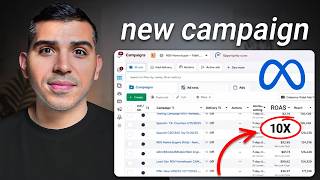
This content was created by invigorating-wildebeest. This content was uploaded by invigorating-wildebeest. This is a YouTube tutorial titled "watch me build a $1M wholesaling facebook ad campaign in 25 min" (created 2026-04-20). It is a single-presenter, instructional walkthrough for real estate wholesalers on how to set up and scale Facebook lead-generation campaigns. The presenter demonstrates campaign/ad set/ad-level setup (objectives, ABO vs CBO, budgets), targeting and placements, dynamic creative, Instant Forms and conditional logic, creative types and hooks (pain-based, UGC, AI/video/static), lead qualification and speed-to-lead, optimization and A/B/horizontal vs vertical scaling strategies, sales process and conversion metrics (leads → appointments → offers → contracts), and weekly KPI tracking. The video also includes a promotion to book a paid strategy call with the presenter’s team.
Chapters
On my screen right now is my Facebook Ads Manager, and let me show you a few things. This campaign right here has generated over $1 million in closed wholesale revenue, and I spend less than $10,000 a month in ads in order to do it. And this one right here did over $225,000 in one single month. And this one right here, $153,000 in 30 days in closed revenue. Different months, different deal flow, but they all use the exact same campaign structure. And I've gotten a few questions about how exactly do I set this up for my Facebook Ads for wholesaling— the retargeting, the creative, the budget, all of it. So today we're gonna hop into a new ad account of one of my new clients and build the exact same setup from scratch right in front of you so that you can see exactly what a campaign looks like that can generate between $20 to $40 leads and how you can get contracts from $600 to $1,500 while everyone else is paying around $3,000 to $5,000 per contract through agencies and PPC. And if you stick until the end of the entire video, you can literally just copy the entire setup. Now let's get into it. So right in front of me, it's my client's account. We're gonna launch a brand new campaign and I'm gonna walk you through exactly how everything looks within the Facebook ad account. So on the campaign level, best pretty much what we are going to set the objective as. And then the ad set, that's more so on the targeting, interest, uh, behaviors where you want the ads to show. And then the ad is the actual ad copy, what kind of video or image are you using, and of course the headlines. So I'm going to give you a macro overview of how everything works. That way, whenever you look into your ad account, it doesn't look intimidating. So I'm going to create a brand new campaign, and what we want is to select leads because we're trying to get leads, right? And I always do the manual leads campaign. And then just so you know, on the campaign level, you something that is called the campaign budget and the ad set budget. So pretty much is where you are putting the daily budget of the ad account, uh, if you're going to put it on the campaign level or on the ad set level. So on a campaign, you can have different ad sets, but the thing is that you can put the budget within each ad set. And if you do campaign, you put the budget within the campaign. Now both work, but in the beginning, we like to do ad set budget to test what kind of ads are going to perform best for that ad account. And then our goal is to identify the winners. And usually the best case scenario is that once you find the stuff that works, you can scale that on a campaign budget level and you let just kind of Facebook do its thing, right? So what should you name the campaign? I always like to put the budget that you have in place for, you know, for the campaign. And then if you're going to put ABO or, you know, CBO, I like to put that there. And then the other thing is, okay, what is the market that you are in, right? So this client, he is nationwide in Texas. So that is what we are going to be working on. So that's what I like to name it. I leave all of this. The same. And one of the things whenever you're launching your ads is you can't just copy and paste because the main thing is trying to figure out exactly what is the campaign structure, what angles, and what sort of setup is going to perform best for that client's ad account. So in the beginning, our job is to find out exactly what's going to perform best for that client's account. So here we have the campaign, and now here is pretty much where we are putting the targeting. So here within the ad set, I like to name it the kind of what the targeting is going to be strategic. Nationwide. And then here is pretty much where you are trying to send the people to once they submit on your ad. So for us, I like to do Instant Forms. I just think that is way easier because if you have a landing page, so basically landing page is you have your website and then you can ask them to submit their information on there. The thing is with the landing pages, it works, but you have way more variables to test. So with Facebook native Instant Forms, you can still get high quality leads for cheap because the user is not having to leave the platform in order to submit other information elsewhere. So that's pretty much what Facebook wants. And we've been having great success doing this. So here I also like to name it AB, ABO1. And then if we're going to be doing dynamic creative or individual ad sets, I'm sorry, individual ads, we'll put this on here. Now I'll explain exactly what that means. But what I like to do is you can choose between the maximize the number of leads and the maximize the number of conversion leads, right? So in the beginning, I recommend you select the maximize the number of leads we are trying to get lead flow within the ad account. And then I'm going to talk about the type of ads that we actually run. But for you to know, like our angle is we focus on pain-based ads that we're trying to target our ideal seller, people that are going through foreclosure, inheritance, divorce, you know, things like that, so that if they relate to the ad, they can give us their information. And that is exactly how we get leads for $15, $20, $30, you know, kind of nationwide, any strategic markets. And then also in local markets, we are at $40 to $60 cost per lead, 20 to 25 leads to a contract nationwide to get deal. And if you are doing it in your backyard, we are like 15 to 18 leads to a contract with an average deal size of $15,000. So the only things that you need to change within the ad account will be, okay, do the instant forms, do the maximize number of leads. And then what I like to do is turn on the dynamic creative because we pretty much already know what works with this client account. So in this client's account, the dynamic creative, we can turn that on. And what that basically means is instead of having separate ads individually that are going to spend the money, what the dynamic creative it compiles all the ads that you put in within that single ad, let's say like 4 to 5, like 3 videos, 2 images. And then you put your ad copy, which is the big paragraph on like, what do you do, how do you do it? And then the headline. And then what the dynamic creative is going to do is going to mix and match each of the ads and headlines and ad copy and serve it to the people that are most likely to respond to it. Right. So here, for example, for this one, I'm going to do a $30 budget and then we just go— we're just going to add more angles. So here's where you put the budget. That's pretty much what is going to be spending on a daily basis. And before you launch your ad, you want to have a plan into, okay, how much money are you going to spend? And then what is the outcome that you are trying to achieve? So on Facebook historical data, you are at 20 to 25 leads to a contract depending on the type of ads that you are running. So let's say that your goal historically is to get 2 deals a month that is going to make you $30,000. You got to be able to look back into your past cost per leads, cost per deals so that we can correctly estimate how much money we need to spend in marketing so that we get the leads and the appointments and we can give out the offers so that all of that in the back end turns into more revenue. So if you're not tracking your numbers, you're doing yourself a disservice. But if you do know your numbers, it's way easier for you to actually know exactly how much money you need to spend. So for this client, we only spent $2,500 for the last 30 days and now he's ready to scale it. So with an additional $30 a day, we are able to get a lot more lead flow. And in order for him to get to $5,200 per month, because that's what his goal is trying to— that's the goal that he's trying to achieve. So on here we'll put the ad set, we'll put the budget, and then I schedule the ads. You can schedule it like if you want. For me, he just— I just try to approve it and go from there. And then pretty much here is where you do the location. So this is where this client is targeting the leads. And then You know, you can do statewide, you can do your local market, you can do counties. Now I'm going to give you a tip. There's times that if you know where you're going to target, there's ways that if you leave everything the same, even the ad copy ads, and you change a variation from like, let's say in that campaign you're targeting counties and in the other campaign you're targeting cities like the same area, but one is cities and one is counties, one is going to perform way better than the other one. That's pretty much what we tend to find with Facebook. And then also there's times that we leave everything the same and instead of it being individual ads, we do dynamic creative and the dynamic creative performs way better. And then also vice versa, if we turn off the dynamic creative and we only put the individual ads, that tends to work best. So with Facebook, it's trying to, you know, we're trying to find out exactly what's going to perform best for that client. And then here I turn this off, the reach people that are most likely to respond because we're specifically just trying to target those areas within, right? Then something else that I like to do is I like to remove the audience network within the targeting. In order to do that, I like to do the manual placements and I like to turn off the audience network so that it only shows on Facebook and Instagram. Then you are able to track where the leads come from. For this specific one, That's pretty much kind of like what we do. And then, okay, we've already set up the campaign, how much budget that we're going to put, and then the ad set that we already did the targeting. And then something else that I was going to tell you is an additional iteration that you could do is when it comes to the, the audience, what you could do is you can try and target people with demographics and interests, right? So people that are interested in real estate, in moving services, you know, for sale by owner, if you are able to stack this interest, If you leave everything the same and then in one iteration you're testing interest, one of them can perform way better. So in the end, it's kind of testing what's going to perform best for you. Everything's going to work. But my main tip that I could give you is if you focus primarily on the type of ad that you're going to be running, that's going to be the most important thing. Now, a quick break from the video is if you need help and actually knowing exactly how you can scale to $30,000 to $50,000 to $100,000 per month by following our principles that you have to do no guesswork and you have our team handling everything with you so that we can teach exactly how to run this, book a call. In the description down below and book a call with me and my team. We'll go over a strategy session into how we can actually help you. But with that being said, let's proceed with the rest of the video. So now we are in the ads section. So here is where the juicy part comes in, right? What kind of ads are we going to run? Are we going to run video ads? Are we going to run static image ads? Are we going to run AI videos? Are we going to run UGC videos? Right. Everything's going to work. Just finding out exactly what's going to perform best for that market. Now, to give you some context, if you are targeting your backyard, meaning your local market, I'd really, really, really recommend that you are the one in the video because you're going to be able to create way more trust, right? So if you pair your videos with hooks where you're calling out people who may be dealing with some problem property, going through a divorce, foreclosure, inheritance, and then you tell them how you help them and what they need to do, then that's going to perform best, right? So if you think of Alex Ramos' value equation, he says, okay, what is the dream outcome? And then what is the perceived likelihood of achievement divided by less time delay, effort, and sacrifice. So if you think of a cash offer, right, that's less time delay, less complications, less guessing, right? Okay. But the other thing is we can add proof and testimonials into what it is that how we do it and proof of other people that we have actually helped. The number one tip when it comes to making the videos is you want to have a hook, right? A hook and a call out. Who is this for? Hey, debtless homeowners, if you are dealing with a property that needs a ton of repairs and you don't want to list it with an agent, my name is XYZ. We've been helping homeowners here in In the— for the past 5 years, we just bought this house from Susie. She was going through X, Y, Z, and we were able to come in here and give her a cash offer without dealing with the agent, agent costs or commissions. So if you want to have the same treatment, fill the link information down below and we'll talk to you today. So if you're doing your backyard ads like those tend to work very well. And if you pair them with static images where you're talking about foreclosure, inheritance, divorce, then it's only going to give you an influx of leads, right? Nationwide with videos and static images, and both are going to perform very good. But what I would recommend you is that you don't do the typical sell your house fast for cash because everyone has seen that. Everyone has, you know, like already seen those type of ads and you just get a bunch of tire kickers if you do it that way. So here I'm just going to give you some tips into, you know, how we run the ads and what you can try and do for you right now. We leave our best ads for our clients. So if you're interested in working with us, like I said, book a call down below and we'll help you scale. But just so you know, across 35 clients, we have an average cost per lead of of $58. And this is a lot of people that have their marketing in their backyard and some people are doing nationwide. Obviously the nationwide, the cost per lead is lower, but the lead to contract is a little bit higher. But in the end, we're at 20 to 25 leads to a contract. Where if you were to compare, you know, cost per deal is less than $2,000 when the average of using an agency or doing direct mail or cold calling, you're going to spend way more money without a ton of deal flow. And this is why I love Facebook because it's intrusive and you get feedback. The feedback loop is way quicker so you can make changes pretty damn quick then you can find out exactly what is working and what is not working. You can take a look into your historical data to see what needs to be cut and what needs to be scaled based on the best leads that you are getting. So whenever you're getting contracts, you can download the leads from your ad account and then compare, okay, where did these hot leads come from? Was it from this campaign? Okay. And then you can be like, okay, maybe the cost per lead on this campaign is higher, but the quality is way better. So what we want is to make data-driven decisions instead of having to guess. And Another thing that I love with Facebook is we can do the targeting, the messaging, and what is the whole angle that we are trying to convey. Whereas if you are dealing with an agency, you are outsourcing the most important component within your business, which is marketing, to somebody else. And a lot of people make it seem like it's way harder to learn. Like, yeah, it can be a little complex when you look into the ad account, you can get intimidated. But if you can actually learn how to do this, the ROI of your time investment and you learning it is going to pay back. Like, you know, tenfold, because now you know exactly what works, how to scale it. Your cost per lead is going to be cheaper, your cost per deal is going to be cheaper as well, and you don't have to spend so much money in order to get to your revenue goal, whether that is getting to $50K a month or $100,000 per month. You can do that if you invest 1 or 2 hours a week in order to actually do this. Okay, but okay, let's cut back into the ads. So in the ad here, uh, pretty much like I said, you can do lead form or landing pages. So here Since we selected the dynamic creative, now we want to add some videos and images. So for this specific client, I'm only going to add 4 and I'll show you kind of like more or less I'm going to add 2 and just kind of show you like how we would do it. So here we use AI to make some new images that are, you know, pain-based. So here I'm just going to kind of show you an example of how we run these ads. And then when it comes to the ad copy, right? So here is where you are actually able to, you know, put in the videos and the images. And then this is the dynamic creative, what I was telling you about. You can list all of the images together. And then what Facebook is going to do is going to mix and match and serve the ad to the people that is more likely to respond. And with the new Andromeda update, headlines like these work very well because they have been collecting our data for the last 20 years, right? And they have over 55,000 data points from us, right, over the last couple of years. So if they see an ad and they see this headline, Facebook algorithm is going to try and serve it to people that are likely to respond. To these ads, right? So that's why we want to have creative iteration. That way we do have, you know, the best results when it comes to running the campaigns and ads, right? And for example, for this client, I know what ad copy is working very well, but pretty much you can look back and see what has given you the best results. And then, for example, for this client, I'm just going to copy and paste this headline since already been proven to work. And then you can have different variations for you. I would recommend that you do like 2 to 3. That way you find which is going to be your winning one. And then you want to do the same thing when it comes to the actual headline. So the headline is going to be the little text that comes right next to your call to action button. And then the call to action button that I like to put, I always like to put learn more. But since these ads are more so like pain-based, we want the ad copy and headline to be similar to what we're trying to convey. Okay, so we do that and then we just make sure that everything is good as far as everything that we kind of set up. And then with the lead forms, now with the lead forms, there's two things. Like a lot of people have been saying like, hey, usually Facebook ads are, you know, like trash or they are like low intent. But on Facebook, there's something that's called the conditional logic, meaning you can make it where if they answer something specific, they can't submit their information. For example, if you're getting a lot of listed properties, you can have and you can turn on the the conditional logic so that if they select that the property is listed, they can submit. And basically what that is going to do is going to feed that data back into the algorithm and try to find you people that are most similar to that, right? So if you're getting a lot of leads with that filtering that they are not listed, then Facebook is going to give you more properties that are not listed. But here exactly what we try to do is for the approach to be pain-based so that we can actually get a lot of leads for cheap, right? And then also is since Facebook is intrusive, like I was saying, you are able to get a lead that you would have gotten on PPC for half off of the cost that it would cost you PPC. You know, maybe you pay $200 on a PPC lead. On Facebook, it's $30 to $50. And that is the power. But when it comes to the lead forms, what we like to ask is, okay, is the property listed? Timeline that they want to sell? Why are they thinking about selling? Who lives at the property? And then we ask them to give us the address. Now, there's times that it doesn't get approved. We just need to do multiple iterations for it to get approved. And to give you an extra tip is I like to turn this on, which is the chat with leads. With Instant Form. So pretty much whenever they submit their information, they're going to be able to receive a Facebook message of what they submitted, right? So if they don't answer you the phone whenever you call them, you can still chat with them within Messenger and you can still reach them because we want to be able to talk to these people within 5 minutes. And that is pretty much it. So all we need to do is kind of publish it now. Okay, you have launched your ads. How exactly do you optimize? So after we launch the ads, we want to wait 3 to 5 days. Alex Ramosi says you want to let the ad spend for at least 3 to 4x of what you anticipate is going to cost you. So for example, if you know that your cost per lead is, you know, you're shooting for $50, you want to let the ad spend at least $200 before you stop it. And it's important that you don't make so many changes in the beginning because we are trying to get as much data as we can, right? And then the main thing that we look at whenever we launch an ad account, we're going to make different campaigns to see which one's going to perform best depending on the client's budget. So if you are trying to get at least one contract a month, I would suggest $2,000 to $2,500 in ad spend. And then depending on the market, you can pay anywhere from $50 to you know, $70. Like, if you're in California, it'll be between $50 to $60. It's a little bit more expensive. But if you're in Texas, I know that you can get leads for $20 to $30 depending on the type of ads that you actually run. So there's two ways of actually scaling the ad account. And before I scale anything, the number one thing that we take a look at is within the first couple of days I ask, okay, are we getting leads? Yes or no? If we are, what is the cost per lead? And then three is like, am I happy with this cost per lead? Do I see it kind of like ramping up? Right. So that is the main thing that we are, you know, kind of trying to find out because we're trying to find out which is going to be the winning ad and structure ad copy and headline. So right after we find our winning ones and we have our average cost per lead, we're like, okay, are we getting high quality leads? Are we getting appointments? We're getting motivated people that actually want to sell, right? So that is the main important thing that we are trying to do whenever we launch the ad accounts. But okay, like let's say that your goal is to get 2 deals a month. You can do what is called horizontal scaling or you can do vertical scaling. So vertical scaling is you just put more budget within the campaign. Now there's a caveat to that because I don't like to increase the spend spend within the campaign as much because the more that you spend, usually your cost per lead is going to increase. So what I'd rather do is after we find exactly what is working, this is what is called the horizontal scaling. So let's say that we're spending $50 a day on some pain-based ads. We want to identify which of those ads are the ones that are giving us the best results. And what we want is to copy the same campaign but switch the ads to something else that is similar, right? So maybe it's a new iteration of what we were running and we want to run the same budget because that's still going to keep your cost per lead down. So if you think about it, you have multiple 3 to 4 campaigns that are running at the same amount of budget, but each campaign has a little bit of something different within the ad account. So you give a plethora of different leads, right? Maybe people that are in the top of the funnel, some people that are in the middle of the funnel, some people at the bottom of the funnel that they're actively looking for a solution. Maybe on, say, on these campaigns doing a lot of testimonials of screenshots of reviews that you have, or you talking to sellers, you know, more proof. Maybe some of them they're mainly pain-based, maybe other ones are properties that you bought. So you want all of these to make your marketing plan so that when people see you, you can stay on top of mine for the later days for it to come. That way you still get them if they click on the ad and they didn't submit. You can do that later. Now, okay, we have set this up, you are getting leads. Now what? Remember, the most important thing when it comes to marketing is that you have a good speed to lead. So we're going to be able to reach these people within 3 to 5 minutes and bang the phone 2 to 3 times a day if they don't answer you, because the chances are, and the studies have shown, that that if you don't call them within 5 minutes, the chances of you getting a deal goes down by like 80%. So what we want is, okay, we get the leads. Now it's exactly when our sales process starts. And I've made the video on our sales process, but basically what we want is to find out, okay, what is going on with the property? What made them kind of reach out? What are they experiencing? Are they going through some sort of pain? Would they be ready to sell if we came to a deal? And then do they have some sort of pain point that we need to solve for them to actually take less than what market value is? Because what we want is to spend time with the people that are actually most likely to respond to our ads and for us to make the most amount of money within those ads. Now, when it comes to the sales process, you can get cheap leads and good quality leads, but if you don't know how to close, nothing else matters. So remember, when people submit their information, they are going through some sort of problem, and our job is not to just give out cash offers, is to actually solve a problem. And what we want is to talk to these people like a regular human being, right? So we want to be able to know, okay, what about the ad made them want to look into this a little bit further? What is going on with the property? What plans do they have for that? And how is that affecting them? Because if we don't set up a proper expectation and how we work and what to expect, that is a reason why we get ghosted, why we, you know, don't get an answer when it comes to us giving them the offer. But our whole job is to solve whatever problem that they're dealing with and position our offer as the solution to all of the things that they are experiencing. So we have to earn the deals and know that the sales process can actually be learned. And you don't have to be this Jordan Belfort in The Wolf of Wall Street to close these people. Because genuinely, I believe that whoever cares the most for the client is going to get that deal. So know that you can learn the sales process. And there's a way where you understand what to ask, when to ask it, how to ask it, how to position cash offers, novation offers, and creative offers so that you can actually get more deal flow. And that is exactly how a lot of the wholesalers who are doing very well, the reason why they are doing that is because they have multiple exit strategies. And you got to be able to know that. And like I said, if you want to know like our sales process, I have some videos in the channel already kind of going over that. And we help our clients and students with the sales process so they can actually convert one contract for every 4 to 5 offers that they give the sellers. Now something else, okay? You have the marketing, you have this sales online. Now the thing is tracking the numbers on a weekly basis. So on Facebook, what we see is more or less 50% of the leads that you actually get are going to be a high quality lead where they're urgent to sell and they have some sort of motivation, right? So let's say that on a weekly basis you are getting 20 leads, probably 10 of those are actually ready to sell. What you want is to actually give out an offer to those 10 people. Usually 80% of the people that you take through the appointment call and the process where you dig deep for the motivation and see exactly what is going on, we gotta be able to give out an offer to at least 80%. And what we want is to contract 1 in every 4 to 5 offers. So if you don't track your numbers, you can't see exactly what is working or where you are missing the mark. Because let's say that your offer-to-contract ratio was at 8 to 10, then you're probably doing something wrong within the sales process, or, you know, setting other proper expectations. Or if you are getting a lot of junk leads, we know that's a marketing problem, and we got to be able to know what needs to be changed. But the only way that we will do that is if we are tracking the numbers. So the main things that I track on a weekly basis is that we hit the lead goal, then we hit the appointment goal? Did we hit the offer goal and the contract goal? If we didn't, we need to go back to the team on a weekly basis. Whenever we do the weekly meeting, go over the last week's numbers and see what needs to change and what do we need to do so that that doesn't happen again. And are there any deals that we can actually rescue and put under contract so that we can actually sell them? And know that it took me 2.5 years, guys, but I missed out on $600,000 because I was spending money on channels that would give me a 1 to 2x, and one channel was giving me like a 4x. So that $150,000, I could have put that in that channel and made an additional $600,000. So that is why it's super important that you actually track your numbers, because if you don't, you don't know exactly where you're at and where you're going. And like I said, wholesaling is about spending the money in marketing and making sure that the sales does the conversion so you can actually get deals on the contract. But if you want to truly scale to $50K a month or $200K per month, you need to be able to track these things, because if you don't, you are going to miss the mark. So don't make the same mistakes as me and actually track the numbers. So there you have it. That is exactly how you launch your Facebook ad campaign, how you do the marketing, how you do the sales, how you track the numbers. Everything that I covered gives you a macro view of how we run the ads. I'm not sharing everything that I know, that's only for our clients. So if you want to make sure that you actually can plug this into your business and you can actually scale to $50K a month, $1,000 per month, then like I said, book a call down below with me and my team because you can do it on your own and waste a ton of money and resources by not having the proper, you know, implementation and action plan. But if you get help from us, we can help you get there way much quicker. So I hope this was valuable and I hope that you crush. So if you're interested in a call, click on the link down below and I'll watch you in the next video. Thank you.
More from Fidel
I Restarted My Wholesaling Business 4 Days Ago With AI And Already Got A Contract


The best marketing funnel that will make homeowners beg you to buy their house at a discount
He Closes 20% of His Leads. Other Wholesalers Called It Luck. He Just Hit $100K This Month.