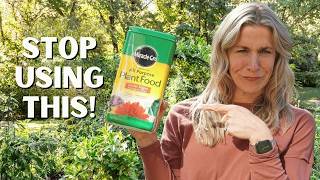
Nicole Johnsey Burke explains why synthetic fertilizer weakens produce flavor and damages soil, then walks through her alternative: a custom soil blend called the "103", companion planting, and natural amendments like earthworm castings instead.
Chapters
The most popular garden product in America is probably the worst product you could use for your plants. It's gardening season, which means millions of Americans are about to spend tens of millions of dollars on this one gardening product. But in this video, I'm going to teach you 3 reasons why I never use fertilizer in my garden and why you probably should stop too. I would never put fertilizer in my organic garden, most of all because I'm looking to grow the most nutrient-rich food possible. One of the main reasons that I love to grow food in my backyard is to have healthier food options for myself and my family. When you put fertilizer into your garden, you are changing the nature of your plants, and my goal is not to have tons of harvest, which fertilizers can give you that effect. Instead, I'm looking for plants that are full of nutrients, and that comes from a different kind of growth with your plant. So my goal in the garden is to have the most nutrient-rich, the tastiest, the juiciest, the best plants that I can get from my garden into my body. I like to think of it like building muscle. When I want to get healthy, I go to the gym and I lift weights. I do exercises to try to build muscle. The last thing I'd want to do to make my body healthier would be to introduce a foreign substance like a steroid. Yes, the steroid will give me the appearance of a muscle, but the source of that muscle is not a healthy one. In the same way, a harvest basket full full of all kinds of fruits and roots and leaves that have come from synthetic fertilizers is not the same as a smaller basket full of plants that have been grown that way naturally through organic nutrients, the sunlight, and the rain. Plus, growing with fertilizers is not a one-and-done type of situation. When your plants are started with fertilizers, then they become accustomed to getting that unnatural dose of nutrients. Something that's beyond what it can receive through the soil. It's similar to us getting sugars from candy instead of fruit or getting energy from caffeine instead of sleep. As your plants grow up on these fertilizers, they come to expect that heavy dose of nutrients, and if at any point you decide to slow down and let nature take over, the plants, they're going to slow down right alongside it. Growing nutrient-rich food is my number one reason for growing a garden, so the last thing I want to do is interrupt that with a synthetic fertilizer. If you're starting a garden this year, one of the things I talk about in my startup workshop is why you want to start a garden, and having this discussion in the first place not only helps you figure out what kind of garden you want to build but how you want to build it. If you haven't watched my garden startup workshop yet, I'll put a link to it right below this video, especially the first section. If you don't watch anything else, watch that first section. That's where I dive in and talk about priorities when it comes to setting up your garden so you make sure when you do all this work to get your garden set up and growing that it actually helps you accomplish your bigger goals. Besides growing nutrient-rich food, another huge priority for so many of us is sustainability, and adding synthetic fertilizers to your garden basically doesn't cut it. So there are a lot of ways that fertilizers have been shown to actually harm the environment instead of helping it. The first is with runoff pollution. So when fertilizer is applied, generally it's over-applied, and in that case, that extra fertilizer has been shown to run off through the rain or just trickle down out of your garden and get into our water supply. And they're showing all kinds of bad effects that happen in the environment and affect the wildlife from it. And even if you apply the right amount of fertilizer, your plants actually can't take up all of that extra nutrients. It's kind of like when you take a vitamin C that has 300% of your daily recommendation. Your body can't take it all in, and neither can the garden. So those excess nutrients, they get into the groundwater too. The second way it harms the environment is through the production. All synthetic fertilizers use fossil fuels in their production, not to mention the plastic wraps, the trucking, the shelving. All these things go in to produce these fertilizers that actually cost the environment in a place where we're trying to help it. And the biggest way that fertilizer is not sustainable is the effect that it has on our garden soil. Studies have shown that soils that are regularly treated with synthetic fertilizers, they lose their microbial activity. As these external nutrients are poured into your garden soil, your soil kind of forgets how to make its own nutrients. It loses its ability to sustain itself, to build itself back up, and it loses all those magical microbes that are generally working to create a magic garden soil that will grow your garden naturally. And that brings me to the third reason. And the third reason I never use fertilizers is because I simply don't need it. Over the years, I figured out a way to take care of my garden, to plant my garden so that it thrives on its own. In fact, in my first book, I talk about the phrase "think about nature." And as I took my family on these nature hikes in national parks around the country, I saw all these plants that were thriving in their natural environment with no extra weeding or watering or fertilizing no extra chemicals, and yet these plants were some of the biggest I'd ever seen. So I took that exposure to those plants in the wild, and I thought, if these plants can grow in the wild with no human interaction, then there's got to be a way to grow my plants in my garden without adding any chemicals. So I start first with a great soil blend. I use a custom blend that I created called the 103. It's a mix of topsoil, coarse sand, compost, and earthworm castings. I have a video where I break down the entire recipe, and I'll link that up right below this video. So I start my gardens with that soil, no synthetic fertilizers included. Then the next step is so important, and that is companion planting with leaves, roots, and fruit for every single season in every single garden bed. I put leaves, roots, and fruit together in every single bed so that there's no bare soil. These plants grow together in the same way that I observe them growing in these national parks, where the leafy greens are spreading out to the sides, the root crops are going down deep to break up the soil, and then these fruiting crops are growing nice and tall and shading the other plants. These 3 plants growing together in their own environment is nature's own Miracle-Gro. These plants thrive when they're all growing close together in a small space, so I plant each and every one of my gardens this way, and then I protect the edges of the gardens with herbs and flowers. These protect the gardens from pests, They welcome in beneficial insects, and they help the garden stay full all season long. But I don't stop there. The real natural fertilizer happens in the way that I tend the plants. First, I prune heavily. This allows my plants to have plenty of room to grow as they're packed so tightly into one garden. Plus, the pruning actually stimulates the growth hormone on all of my plants so that they actually produce more leaves, more roots, and more fruit. After pruning, I add a little bit of natural amendments, things like earthworm castings or natural finished animal manures, or just some leaf mold compost. I'll put a little bit of amendment along the side of my plants anytime they're going from one stage of growth to the next. With these 3 practices all in one garden, great soil, intensive planting, and intentional tending, people literally see my gardens online and ask, "For sure you use some Miracle-Gro, right?" But I have a practice I live by, which is if nature didn't make it, the garden doesn't take it. So tell me in the comments if you're ready to take on the no fertilizer challenge this season. We gotta cheer each other on and let each other know we can do it. Then you want to watch this video next so you learn how to plant just like me so your garden is packed and everybody's asking, "Wasn't it Miracle-Gro?" But you'll know that you did it in a much better way.