4 Essential Garden Design Elements to Create a More Magical Garden
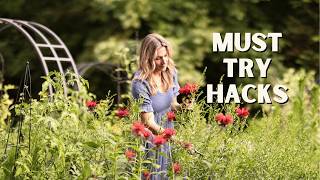
Garden designer Nicole Johnsey Burke outlines four elements that transform a vegetable garden into something magical: enclosure through layout and entrances, vertical structures like trellises, planting five types per bed to eliminate bare soil, and perennial herbs around the edges for year-round fullness and pollinator support.
Chapters
Have you ever walked into a garden and instantly felt like you'd been transported to a different universe? All the busyness and stress of your everyday life somehow disappeared, and you were just transfixed on all these plants in this new magical place. Over the last 10 years, I've been creating gardens just like this for hundreds of clients, and over the years, I figured out that there are a few elements that make a garden special, that make it a place that really does bring you to a totally different experience. So in this video, I'm going to share with you 4 design elements of beautiful and productive gardens so that you can incorporate these into your own backyard garden and create a space just like that one that you love, but right outside your back door. The first design element is enclosure. I learned this way back in 2015 when I first kicked off my garden design business called Rooted Garden. I ended up creating gardens for these very fancy backyards, and to be frank, I was nervous. I wasn't sure I was going to get this right, so I started doing a lot of research, like what is a garden anyway? What are the basics of a garden? And I found out that the root word of garden is "garde," G-A-R-D-E, and it really means enclosure. Like the essence of the word garden means an enclosed space. So from the beginning when I started creating these garden spaces, I worked to make the space feel enclosed. And oftentimes when you stumble upon a vegetable garden, it feels anything but. It's just one raised bed stuck out there in the middle of the yard, but a garden feels magical when you feel like there's an entrance and an exit. When there are spots in the garden where you can only see the other side if you move through it, if you go around it. When it feels this way, that a garden is enclosed, that there are pieces and parts of it that you can't yet see even though you're standing at the front of it, that's what starts to create a magical experience. That's what makes you start to feel like you've been transported, like you're no longer on this earth. So as you're creating your garden, you want to first focus on having an entrance You want to have a place where it's clear that this is the spot where you come into the garden space. Then you want there to be a clear exit as well. You want there to feel like there's a natural flow of activity, some direction in the garden that helps someone know how to come in and how to go out of the space. And then as you're creating the garden, think about ways that you could arrange the beds, the pathways, the structure of the garden so that you can't see it all at once. That when you come into the space, you have to actually immerse yourself into it. You have to go in and take a few turns before you get to see all that's in there. When you add enclosure to your space, you're going to feel an instant upgrade. My favorite design that I talk about in my book, "Kitchen Garden Revival," that truly represents enclosure is the formal potager garden. So this is a garden that is comprised of at least 4 L-shaped beds. The L shapes are formed to create almost like an outdoor room. The entrance of the garden comes in the middle of each L shape, so you actually have 4 different entrances and exits for the garden. If you're looking to truly create a beautiful enclosed garden space, you've got to try out the formal potager. You can still create that feeling of enclosure even in a small garden, especially when you incorporate design element number 2. The second element to include in your garden space to make it incredibly magical is vertical elements. When I first started gardening, I just put a bed out in the middle of the yard and put a lot of seeds in there. There were no structures, there were no trellises, there was just a bunch of plants. But when I started creating gardens for my clients, I was in fancy yards and I felt like I needed to step up my game a little. This is when I went shopping for something nicer than a tomato cage for those vining plants. and I was introduced to the world of trellises. Now trellises are strong structures that can support vining plants, and they can get pretty big in the garden. The thing I learned about trellises as I started to put them into my clients' gardens is they do so much more than just add support for your plants. First, trellises are going to give height and structure to your garden even in the off-season. Today you can see I'm in my garden in the middle of winter, and it still feels like the garden is full because this garden is packed with trellises. These vertical elements that give the garden structure and a feeling that it is full even when there aren't any plants. Trellises also contribute to that enclosure goal that we have with design element 1. Every single time you add a trellis to your garden, you've created that exact space where someone has to walk around the bed in order to see the full thing. Every time a trellis is put into the garden and covered with a plant, you've now created a more magical space. In my gardens, I use 3 different kinds of trellises. First is an obelisk trellis. This could also be described as somewhat of a teepee. You can build these very basically with just some bamboo poles, or you can get more ornate with steel or iron. The next kind of trellis is a panel trellis. This is essentially a fence, so this can go at the back of your garden space. It can go at the back of a narrow bed, or it can go right down the middle of a wider bed. You'll be able to put plants on both sides of the panel and essentially create a fence full of plants. And the final and perhaps most magical trellis of all is the arch. This allows you to grow plants up and over your garden beds, and the feeling is incredible. There are things you can plant on an arch trellis to cover it from spring until fall, and walking under a trellis that is completely covered with vines and flowers and fruit, it is one of the best experiences you'll ever have in the garden. And while we're on the subject of plants, let's consider design element 3. The third design element is all about the plants. One thing that will for sure make your garden magical is filling it as full as you possibly can with a wide variety of plants. Chances are those gardens that are unforgettable to you, they are packed with a wide variety of textures and colors and types of plants. You probably didn't see a lot of mulch when you went to those gardens. Instead, you saw tons of leaves, flowers, and fruit. When you plant up your vegetable garden, I want you to think about creating a space that feels as magical as an ornamental garden. And the way that we accomplish this is by putting 5 different types of plants in every single bed. You want to pick a fruiting plant. That's the one that's going to grow tallest. It'll likely be the plant that's on the trellises right down the middle of your garden. Then you want to add root crops. These are going to fill in the blank spaces. They'll have tall, lush foliage, and they'll take up space for quite a long time in the bed, which will add to the fullness. Next, you want to add leafy greens. These can be planted right alongside those root crops. They're going to act almost like a ground cover in your garden, being sure that you never see dirt or mulch when you look into your garden space and just a ton of greens that you could come out and cut and enjoy any time of the day. Finally, you want to add herbs all around the edges of your garden and flowers too. The herbs will provide unique scents and textures for more of the year, and then of course the flowers are going to give you tons of color. We have a planting rule with my company that 6 weeks after planting day, we don't want to see a bit of soil left in the garden. Anytime we see bare soil, We're heading back in to add some more seeds, some more greens, some flowers or herbs, and you should do the same. The fuller your garden, the more magical it's going to feel, and that especially happens as you consider design element number 4. These 4 design elements are just a small part of my entire kitchen garden system. It's what I've been using in my own garden and for my clients for years, and this week I'm teaching a class all about how to set up your garden for this coming season. You can watch it for free, just check out the link right below this video after we're done, of course. The fourth design element is adding perennials. I mostly work in vegetable gardens, and vegetables are almost all annual plants, which means they go from seed all the way to harvest in one single season. They don't come back year after year. They don't return from their roots. They have to be started from scratch every single year. And that's why I add perennials to my garden designs, and you should too. The first perennials I add to my garden are perennial herbs. And the smallest ones, the ones that I use in the kitchen most often, I actually add those right into my raised bed garden designs. As you walk into any of my gardens, you're going to find herbs like oregano, rosemary, chives, sage. All of these will be growing right along the edges of my raised bed gardens. These perennial herbs serve 3 purposes. First, they're incredible producers. Even if I'm at the start of the season, even if my crops have dried out, I can always count on my perennial herbs to be giving me tons of production year-round. Next, These herbs serve as pest protection. All of these herbs put off an incredible scent that repels pests and attracts good pollinators. So it's doing the hard work for me while also being super productive. And then finally, these herbs are giving me year-round beauty. I found as I was working in my clients' gardens that we wanted the gardens to look full even at the start of the season. In an annual vegetable garden, your plants are rising and falling all throughout the year. You'll have times when they look almost bare and then times when they are just packed with plants. So having perennials around the exterior of your beds really gives them a permanent beauty, a permanent look of fullness, even when your seeds are just starting to grow. Beyond herbs, I love to add native plants and pollinator-friendly plants around the exterior of my kitchen gardens. These serve lots of purposes as well. First, the native plants provide a living fence around the garden. They're going to block the view of your raised beds and your tasty vegetables from wildlife that may be on the hunt. They're also going to welcome in pollinating wildlife that's going to increase the production of your raised beds. And then finally, they're going to add that year-round beauty that you're often missing with a vegetable garden. You can find native plants and perennials that will be growing almost all the way through the year, from spring to the end of fall. And if you pick wisely, you can have plants that flower in the spring, plants that flower in the summer, and plants that flower in the fall. Perennial plants really do give a permanent beauty to your garden space. Even while you're still waiting for your annual vegetable seeds to pop up. If you want to learn the full Gardenary system, you can watch my class this week right below this video, and I also did a full breakdown on how to check out your sunlight, how to pick your location and measure your space. That's in this video that you should watch right here.
More from Nicole

Propagation is the secret to turn 1 oregano plant into 100 that’ll last forever! #garden #herbs

Plant some garlic this fall and you’ll never run out. Just follow these steps #garlic #gardening

Head to Gardenary.com to try out my FREE custom planting plan creator #garden #gardendesign #plants

Frost is coming so harvest all your tomatoes and make this soup🍅#garden #recipe #tomatosoup #tomato

Say bye to grocery store herbs this winter if you harvest and dry some of your own👀#garden #herbs

Can you grow your own Ube?! Let’s see if I grew anything besides purple vines🍠#garden #ube #plants

If your garden didn’t turn out how you wanted, it’s time for a fresh start😌#garden #fallgarden

Turns out you don’t have to sit at a desk all day…you can stay in the garden☀️#garden #meme #9to5

Do NOT buy soil with artificial fertilizers if you want a natural, organic garden😬#garden #soil


I wasn’t meant to send emails or work 9 to 5, I’m meant to stay in the garden all day🌿#garden #meme