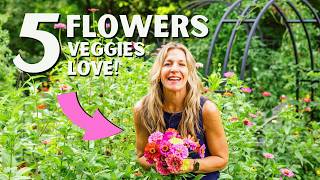
Nicole Johnsey Burke shows five flowers that boost vegetable gardens: snapdragons for early bee forage, marigolds to repel aphids and nematodes, calendula as a trap crop, pansies for frost-tolerant color, and zinnias to attract butterflies and improve fruit set.
Chapters
Most gardeners think they have to choose between growing flowers or growing vegetables, but I would never grow a vegetable without growing a flower right beside it. In this video, I'm going to show you my top 5 flowers that I plant for all my clients right alongside all of their vegetables so that we increase production, cut down on pest pressure, and make the garden so beautiful. So if you're trying to decide between flowers or vegetables, you don't have to. You can do both. First up is snapdragons. Snapdragons love cool seasons, so they do not mind frost, and they are the first flower that I put into my raised bed garden at the start of every season. Then I put them back into the garden at the beginning of the fall season, and they can even push through a mild summer. Here in my Nashville garden, these snapdragons that I put in in February may stay in the garden all the way until December. Snapdragons are one of the first foods available to the bees. In fact, these flowers are literally designed to hold bees. The blooms are strong enough that a bee can actually crawl inside the bloom and get the pollen. It is one of the most magical things to observe in the garden, so if you've never grown snapdragons and you really want to watch bees up close, you need to start planting. Snapdragons do great alongside all of your cool season crops. I love to put them along the edges of my cool season garden. They are really impactful alongside any of your brassicas, so things like kale, broccoli, cauliflower, Brussels sprouts, cabbages, and then they're also great alongside your leafy greens, any of your lettuces, your spinach, your arugula, your romaine. These grow right alongside them, and you can see they have a really nice upright structure. They do not take up a lot of space. You can literally tuck them right on the edge of all your raised beds. You'll get beauty, you'll get pest protection, and you'll also get bees. Next up are marigolds. Now marigolds love the warm season. They do not like frost. You'll have to wait till you're past your last frost to put these into the garden. These grow really well directly from seed planted right in the soil, or you can move plants into the garden too. Now marigolds have a very strong scent. You're going to smell it the leaves, the roots, and the blooms. They put off a scent that deters lots of insects: aphids, whiteflies, and even soil nematodes. Now, a particular kind of marigold, the Gem marigold, it has been shown to get nematodes out of the way in the soil. It will literally give you healthier soil, healthier plants by growing the French Gem marigolds. The magical thing about marigolds is all these blooms, every single petal, it turns into a seed. This is too soon to show you, but every single one of these petals See how this separates like this? These eventually, if you let them dry, these are all seeds. So if you plant a marigold one time in your life, you will have seeds for the rest of your life. You want to plant marigolds alongside all your fruiting plants. They're especially powerful next to tomatoes. You can plant them next to eggplants, peppers, zucchini, squash. Plant as many marigolds as you can. You can do literally a line right down the edge of the bed and then put a few extra next to your tomatoes and peppers. Marigolds are like little soldiers in the garden and also They smell so good, and they're beautiful. Calendula is by far the most powerhouse flower you can put in your garden. It is a year-round flower. You plant it very early in the season by seed. It is frost tolerant, so I started these by seed directly in the soil in February. The blooms are now here in April and May. You start it as soon as the soil can be worked by seed directly in the soil. You'll have blooms in the cool season. If you're in a milder climate, they're going to last throughout the summer in the warm season, and then they'll stay through the fall. And every bloom bloom gives way to another bloom, and every bloom is full of seeds that will give you flowers for the next year. Calendula is what's known as a trap crop, meaning a lot of pests are attracted to it instead of to the crops that you want to eat. So it's wonderful for protecting your plants against pests, especially the plants that are often attacked. So brassicas are one of the hardest plants to keep pest-free in the garden. We're talking kale, broccoli, cauliflower, cabbages. Those are most likely to get attacked by aphids or armyworms or caterpillars, and calendula Calendula puts off a scent and protects those plants from those pests. Calendula also works really well with your warm season plants, so tomatoes, peppers, basil, cucumbers, zucchini, squash. Seriously, you could put calendula in every single corner of your garden. That's basically what I did. If you don't do anything else after you watch this video, you want to buy one pack of calendula seed, plant it in all corners of your garden, and watch your garden look more beautiful, have less pests, and bonus, you can eat the leaves. You can make tea, you can make salves. This is edible and beautiful. Win-win. If I'm going to spend money on a plant at the flower store, I'm going to buy pansies. Pansies are one of the first flowers I put in my garden in the spring, and I love to grow them in the fall as well. They're one of the few flowers that doesn't mind frost, and they'll fill up your garden right at the start of the season. I love to buy a few different colors of pansies and put them around the edges of my bed right at the start of planting, and I love to use them both as pest control but also as beauty. I love the colors right at the start of the season, and then also you can eat these things, so I to have a spring salad with lots of pansies on top. You can make cute little cake decoration, cookie decorations. You can make drinks with these things. There's so many fun ways to use them, and they're one of the very first things that you get to harvest from the garden when you're waiting for all your vegetables to produce. So add some pansies to the edge of your garden in the cool season, spring and fall, and you won't regret it. And of course, zinnias, the very best cut flower, the easiest cut flower that any of us can grow. Zinnias love the warm season. They don't like frost, so you'll have to wait till your last frost has passed, but once it's passed,. You can take a seed and put it right in the soil, and you will get a zinnia flower about 55 to 60 days later. The more you cut your zinnia flowers, the more they grow. You can just pinch them off, and then you'll get 2, 3 blooms in their place. Zinnias are butterfly magnets. You're going to get monarchs, you're going to get swallowtails, you're going to get so many beautiful bees, butterflies, and birds coming to your garden when you've got zinnias growing. And there's a lot of plants that need pollen to move around their plants in order to form fruit—things like cucumbers, squash, zucchini, tomatoes. Peppers, melons, cantaloupes. They all benefit from having lots of pollinating insects and wildlife moving pollen around them. And so if you can plant your zinnias next to those plants, plants that need pollen to move to set fruit, you're going to get more fruit. You'll have more flowers and more fruit. It's awesome. So plant your zinnias next to any of your melons, any of your plants in the gourd family, the cucumber family, any of your tomatoes or peppers. Add zinnias alongside those plants, and you're going to get lots of color, but you're also going to get lots more fruit. Zinnias are part of our 10 seeds that we are giving away for free, so if you don't have yours yet, you can find a link to that right below this video. I made a whole video on how to grow zinnias from seed to harvest. These are the easiest— if you're going to grow flowers, you've got to grow zinnias. They're the easiest ones to grow, and I walk you through all the steps to do that right here.