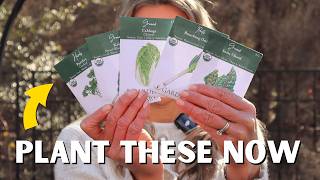
In this instructional gardening video, Nicole Johnsey Burke explains how to jump‑start a spring garden in February regardless of climate. She first asks viewers to classify themselves into three frost‑date categories (1 = last frost before Feb 28, 2 = last frost before Apr 30, 3 = last frost in May/June) and provides a tool for finding local frost dates. For each category she lists specific vegetables, herbs, and flowers that can be sown or started in February, describing planting methods (direct‑seed vs. indoor start), expected harvest windows, and simple care tips (e.g., using frost cloths, trellising). She shares personal anecdotes from gardening in Houston, Chicago, and Nashville to illustrate how the same principles apply across hot, mild, and cold zones. Throughout she promotes supplemental resources—a frost‑date calculator, seasonal planner PDFs, and a “Garden Game Plan Workshop” class—to help viewers plan planting, timing, and garden setup. The video concludes with encouragement for beginners, reminders to watch related videos on raised‑bed design, and a call to action to comment on their frost‑date category.
Chapters
No matter where you live, all of us should be planting something in February. Over the last 10 years, I've gardened in three climates. Hot, cold, and mild. And the things I plant in the month of February, they set the stage for the rest of the year. So whether you live in a cold place or a hot place or somewhere in between, I've got a list of five things that you should plant this month. So let's get started. Before I can give you the list, you've got to label yourself a 1, 2, or 3. And be sure you tell us in the comments which one you are so we know who we're working with. You are a one if your last frost date is before February 28th, meaning no more chance of frost after the month of February. You are a 2 if your last frost date is before April 30th. No more frost after April, and you're at 3 if your last frost date is somewhere in May or June. And if you have no idea when your last frost date is, no worries, we've got a tool for that. Our frost date calculator will give you your first and last frost date for your area. You can just check right below this video and go get your frost date and then come back and tell me if you're a 1, 2 or 3. If you are 2, you are right in the middle of your cool season. Actually, we have a little planner for that. I'll link this below. But in the cool season, you are going to be growing things that don't mind frost, because your frost isn't over till, like, April. This is the time to make the most of this cool weather because there are plants that absolutely love it. And these are the ones I always plant in February in a mild climate, if you're number two. So first up are carrots. These can be planted directly in the soil. As soon as the soil is workable, like three to four inches down, you're going to scatter these seeds and you're going to have carrots before the middle of May. Next up, the easiest seed to grow. I learned to garden growing this seed. This is spring mix lettuce. This also needs to be planted directly on the soil. Just scatter it. Give every seed about two or three inches to grow. You're going to have homegrown lettuce in like 35 days from planting. It's the most delicious salad you've ever tasted. Next up, our sugar snap peas. These can go in the ground right alongside a trellis. You want to soak these beforehand. Plant them directly in the soil. You're going to have peas that you can pick and eat by the middle of April. Next up is spinach. This is a cold, loving green. Now, it's going to take a few weeks before it starts to pop up and you're going to think it's not coming up, but it is coming up. Give it a little bit of time and you're going to have the most delicious spinach you've ever tasted. This stuff loves the cold. It doesn't mind a little bit of frost. It even a little bit of ice. And I'm telling you, delicious spinach salad, spinach souffle, spinach smoothies, all the spinach you want right here. Last but not least are beets. Beets are so good for you. They are in the superfood family. Same with Swiss chard and spinach. These grow from seed and they do not mind the cold. This is a great time to get these seeds in the ground and you're going to have beets to eat by May. Now, all these seeds, if you put them in the ground and you've got frost coming, you got snow coming, you got ice coming, you can cover these with a frost cloth, but these seeds can hang on in cold, cold soil as long as the soil is workable. You want to get these in, let them get nice and moist and kind of settle into the garden, feel that cold weather, and then they're going to start to sprout and grow. As soon as the weather starts to warm up, this soil gets to be about 45, 50 degrees. I want to invite you to a class I am teaching called the Garden Game Plan Workshop. I'm going to be covering garden setup, timing and planting. The three keys to success in the garden. You can join me today for the class. I'll put a link right below this video. If you're a number one, your last frost date is coming in February. Now, I'm going to give you this list, but here's the deal. Don't plant these things outside until you know for sure your last frost date has passed. When I was gardening in Houston, Texas, by February 1, no chance of frost. Like all these things, they could go into the garden on February 2nd, 3rd, 4th. We were definitely planting them by Valentine's Day. So if you're watching this and your last frost date isn't until February 28th, don't plant these yet, okay? Wait till that day, then plant them as soon as frost has passed. These are the beautiful things that you can plant and then call everybody Else up all the twos and threes and brag to us about the fact that you've got these plants growing in your garden, because trust me, we're going to be real jealous. So first up are cucumbers. Cucumbers grow so easily from seed. I'm telling you, you're going to have cucumbers by April. These are 55 to 60 day cucumbers. Plant them along a trellis, directly by seed, train them up the trellis, and you're going to be picking cucumbers before school gets out. It's crazy good. All right, tomatoes. These are not going in by seed. These need to go in by plant. Hopefully you followed my other videos on January and December and you planted these inside. If you didn't go to the store, go find an organic plant source and local store and buy yourself some nice tomato starts. These go out the minute that the last frost date has passed. Because trust me on this one, I gardened in Houston. I know if you wait to plant these until, like, May, it's too hot for tomatoes. You got to grow your tomatoes in early spring, so. So tomatoes go out in the garden in February. Bush beans, Beginner gardener, this is your plant. Okay? Bush beans, you can't miss on this. These are going to go by seed directly in the soil. In just 60 days, you're going to have handful, handfuls of beans. Your kids are going to be so grateful, they're going to sing that song about beans and the magical fruit and you will have grown them yourselves. It's going to be awesome. Arugula is a no fail plant. You literally can't mess this one up. So seed to harvest in about 45 days. This grain grows when it's cold, but it also grows when it warms up. I love to plant it right underneath the shade of tomatoes, cucumbers, peppers, all the other things we're talking about today. Next up is zucchini. This is going to be a much bigger plant. It doesn't need a trellis. You can trellis it. Actually, I made a whole video about that. But you can just plant this out in the middle of the bed if you want to, or you can plant it below the trellis and train it up. This thing is going to go wild. It's going to be huge. And you're going to have so much small zucchini to pick in like two months, like 60 days, you'll have zucchini. And then a little bonus I want to throw in is marigolds. These are so fragrant. So Pretty. Put these alongside the edges of your bed. It would be great to start with a plant, but you can also start with a seed. And you'll have marigold flowers by like summer. So it takes longer. But this is a must for all of us that are growing when there's no frost. Now, if you're wondering, Nicole, how do you know what to plant every month for all these different areas of the country? Well, because when I've gardened all these places, Houston, Chicago, here in Nashville, I really garden by zone, I garden by season. So I label the season where I am and then I just follow the steps. So, for instance, here in Nashville, where I'm waiting for the last frost till April, I'm in the cool season. Then for people who are in a warmer place where the last frost has already happened, are going to happen in February, they're in the warm season. And then people where it's really cold, where they're waiting for the frost to end in May or June, they're in the cold season. So in our seasonal planners, these are divided by three months, planting, tending and harvesting. And once I know what season I'm in, I just follow the steps. Like literally just open the book and let this thing tell me what to do. So if you want me to tell you what to do, you can check out these seasonal planners. They're on a major sale right below this video. Last but not least, my number three is this is the people who gotta wait so long for frost to leave. But I know after living in Chicago, you more than make up for it in the summer, right? The summer is glorious. It's beautiful. Long days, tons of sun and not too hot. So hang in there, all right? You're going to make it. And these things are going to get you through. So number ones and number twos, they're planting outdoors. You are still, you're still inside. Don't worry, next month we got you. You're going to go outside next month. Okay? So parsley is a fantastic herb to start indoors if you haven't yet. This is a slow growing herb and trust me on this one, you can't have too much parsley. You really can't. It's going to feed the butterflies. It is a pest protectant and it is so delicious as a topping, as a soup topping, as a dip, all kinds of things. Parsley is a fantastic seed to start right now. Also a great source of vitamin C. I didn't know that before. All right, Swiss chard. This is every year. I always have this right in the front of my beds. If you're looking for a showstopper plant, Swiss chard is for you. Also a superfood. Same plant family as beets and spinach. All kinds of colors. You really want to start this indoors. The plants are expensive and kind of questionable about how they were grown. You grow them indoors yourself, you're going to have gorgeous plants. And these last forever. They'll last you all the way till the end of the growing season, all the way almost to the next winter. Speaking of, another great green is cabbage. Napa cabbage is my favorite, but any kind of cabbage, you're going to get paid in huge heads of cabbage. If you start these indoors right now, you can move them out into the garden by the end of March. Then we've got kale. Of course, kale is a green that really pays off. You'll have this all the way until next winter started indoors. Now you don't need too many. Take it from me, I accidentally grew a kale jungle a couple of years ago because I got overzealous around this time when I lived in Chicago. So you only need about 6, 8 plants max. And you're going to have kale for yourself, your neighbors, your best friend, your sister, your mom. Anybody can come to your house for kale. So start that indoors as well. And then onions. Even if you don't want to harvest the onions, just having onions planted around these other plants in your garden is a pest protectant. It puts off a smell that keeps pests away from your greens. And also, if you want the onions, you'll get those, too. But these are slow growing. You need to start these indoors now so that you have them. You can move them out to the garden around the end of March. Now, you may be watching this and thinking, but, Nicole, I don't even have my garden set up yet, or I set up my garden, but I'm pretty sure I didn't do it right. So I made this whole video to teach you all about my favorite raised bed measurements. To be sure you get it right the first time, you should watch it right here.