8 Tomato Gardening Hacks that Actually Work 🍅
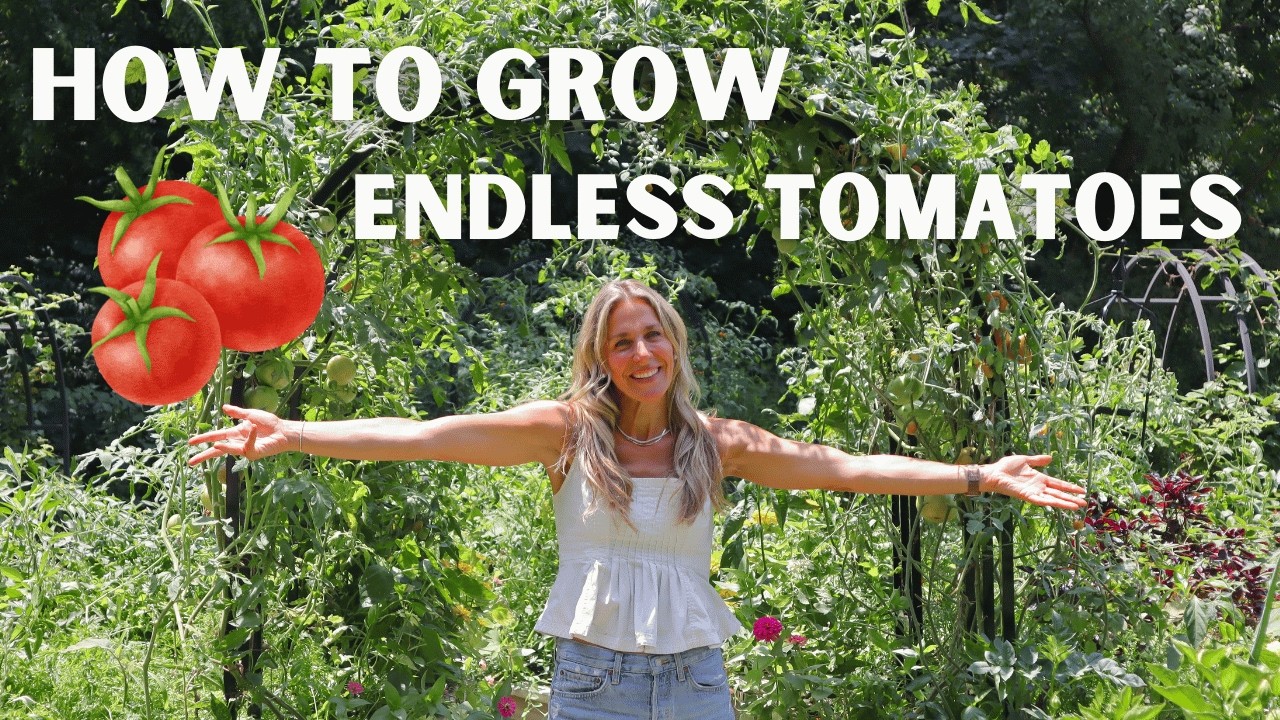
Nicole Johnsey Burke walks through eight tomato-growing techniques: the "103" soil recipe (one-third topsoil, sand, and compost), training plants to a single stem, deep weekly watering, and harvesting at first blush to keep wildlife away. She covers choosing varieties, selecting trellises, and timing the topping of indeterminate vines before frost.
Chapters
Tomatoes are the most confusing plant to grow in the garden. In fact, I get more DMs about tomatoes than any other plant. So today I'm going to be sharing with you my 8 tomato growing hacks so that you can get a year-round supply of tomatoes every single summer. And point number 6, you gotta stick around till that one because it took me more than 5 years to figure out. Let's get started. Number 1, pick the right types. When it comes to tomatoes, you've got several different varieties and several different growing types that you have to choose from, and the plant tags can be very confusing. So let's make it clear. First off, you've got two types of growing patterns for tomatoes. The fancy terms are determinate and indeterminate. Determinate, just think about it's determined. It's already been determined how big this plant is going to grow and how it's going to produce its fruit. A determined tomato is essentially, you want to think of it like a bush tomato. It's going to grow to about 4 to 5 feet in height, and it's going to fruit all at once, lots of tomatoes all at one time. The second type of tomato plant, indeterminate, think of it, it's never been determined. This is a vining tomato. It could literally grow forever. It just grow and grow and grow if the weather never changed. So an indeterminate, it is undetermined how long this plant will grow, and it will fruit all along its growth rather than fruiting all at once. If you're growing in a small space or you want a huge production all at once that you could turn into sauce or salsa, then you want to grow a determinate tomato. It's going to grow up and give you a ton of fruit from a small space. You can pick it all, can it all, and have your supply for the rest of winter. If you're the type of person who wants to keep making dishes from tomatoes every single week. We're talking caprices, pico de gallo, BLTs, any fresh food that you want to make week after week, you'd want to focus on indeterminate tomatoes. These are going to produce fruit for you all the way through the season. There's no wrong answer, but you need to know the information before you pick. I'll tell you which ones I choose in just a minute. Now beyond the style of growing, you also have the type of fruit. Among tomatoes, you have so many varieties of sizes, shapes, and flavor profiles, even colors. You start with mini tomatoes, cherry tomatoes, grape-sized tomatoes, then you have Roma tomatoes, and then finally you have these large slicing tomatoes. The small is great for snacking and having little veggie plates. The Romas are perfect for canning and putting away, and then the large slicers are great for fresh foods that you're having right away after picking. I personally am not someone who cans, and so I prefer to grow indeterminate tomatoes. I like to get a little bit of harvest every single week all through the growing season. I also like to have a wide variety of tomatoes. I love the cherries for quick snacks and putting out some veggies for my family before dinner. I love to also have the big slicers so that I could make BLTs or any kind of fancy tomato pie in the middle of the summer. The tomatoes I typically stay away from are the Romas because I'm not a big canner. I don't love to make tomato sauce. Picking the right tomatoes first is what will determine your ability to have tomatoes year-round. Point number 2 is to pick the right support for your tomatoes. When I first started growing, I did what pretty much everyone does. I headed to the hardware store and bought a tomato cage, and within a month and a half, I was seriously regretting my decision. Tomato cages put the tomato inside the cage, and within a month or two, that tomato, especially if it's indeterminate, has outgrown the tomato cage and basically made it completely fall over. Even if you're growing a determinate tomato, which is a bush type, I wouldn't recommend a tomato cage because it's going to be very hard to get into the plant to prune and to pick and to take care of the plant. Instead, I recommend growing tomatoes on trellises. You can make your own, you can buy a ready-made kit. I would recommend first an obelisk trellis. That's the closest to a tomato cage, but instead of putting the tomato inside the trellis, you put it on the outside and attach it to the trellis as it grows up. This way you always have access., and the trellis never falls over. If you want to grow like a fence of tomatoes, you can put a panel trellis up and grow tomatoes that way, or if you want to grow vining tomatoes basically forever, you can put tomatoes on an arch trellis. All these trellises, you can make them yourself by buying things like cattle panel and bamboo stakes, or you can buy a ready-made kit. We have kits for all 3 types of trellises, and ours are made to last pretty much forever. I'll link all of our trellises up right below this video. Number 3 is pay most attention to the soil that your tomatoes are growing in. Every garden expert tells you how to fertilize your tomatoes, but nobody tells you what kind of soil you should plant it in in the first place. You can use my soil recipe. I'm going to link it right below this video. I did a whole video on my soil recipe, but it is called the 103, and this is what it's made of. About 1/3 of this is going to be topsoil, and this can be just your native soil, or you can get it from a local soil yard. Then you're going to do a third of coarse sand. Now, if your topsoil is sand heavy, back up on the sand here. This is only if you have a really clay-rich topsoil, and then the other third is going to be an organic-rich compost. So you're going to mix those three together, and then we top it off with a little bit of worm castings, and that is what I call my 103 mix. That's what my gardens are filled with, and you can see my tomatoes are doing pretty well. So paying attention to the soil that your tomatoes go down into is so important. Roots of tomato plants, they like to dive very deep into the soil, and they're going to be out grabbing for nutrients. So the sand gives the porosity to the soil so that those roots can crawl and make these plants really nice and strong so they can hold all this fruit, and then the compost is going to give it lots of nutrients, and then that topsoil gives it just enough structure for the plants to hang on, be strong, and basically grow forever. Hack number 4 is the way you plant. Number 1, you're going to need to plant more plants than you think. On an obelisk trellis, I'm going to plant 3 to 4 plants around the outside of the obelisk. On a panel trellis, I'll plant 2 plants, and on an arch trellis, I might plant as many as 4 tomatoes on each side the trellis for a total of 8. A minimum would be at least a total of 4, 2 per side. Each of these tomato plants maximizes the amount and the type of tomatoes I can grow in each space. By planting more tomatoes, you're going to have the plants taking care of one another and then also giving you a wider variety of tomatoes and lots more production. When you plant your tomatoes, you want to plant them very deep, at least 1 foot deep at the base of each one of these trellises. That's another reason to have great soil because you're going to be digging quite a bit. As you As you dig deep, you are allowing this plant to set up really deep roots that are going to hold it and support it as it grows to the sky. Once you've got your tomatoes planted, you want to go ahead and tie the main stem to the base of the trellis right away. Tomatoes aren't like cucumbers or pole beans. They will not naturally grab to supports, so you're going to have to be the attacher all the way through, and it starts right away in case there's a storm or rain or anything that might break the tomato stem as it's just starting out. Hack number 5 is caring for your tomato plants. If tomato is an indeterminate plant, then you've got to not miss this step like I did. So as your tomato starts to grow, it's going to produce its first big main stem, and then it's going to want to produce 2 or 3 other stems off the main stem just as it starts to grow. And I've found over the years it's best to prune it to just one main stem until the plant gets to be about 1 foot high. I planted these tomatoes a little late in the season, then I took a trip, and I missed the window to prune the extra main stems, and so I I've got like a 3 or 4-stemmed tomato, and you can tell this is fruiting a lot slower than my other plants. So do what I say, not what I do. Prune to just one main stem unless you've got a determinate, a bush tomato. Let it stem out because it's just going to grow short and then produce a ton of fruit. Number 2 is watering. It's going to be better for you to water your tomatoes deeply once a week than to water them shallowly, just a little, little sprinkle here and there every single day. Tomatoes are going to have deep roots, and you want them to be sending their roots deep down into the soil. That's what Makes the plant nice and strong, so plan to water at least once a week really deeply, maybe just a little every other day. Obviously, if it gets really hot and dry, keep your plant moisturized, but don't do a lot of shallow watering. You're going to end up with shallow roots. I love to come in on, say, a Saturday and just put the hose right at the base of the tomato and let it run for a little bit just so we can get water really nice and deep on the plant. Then after watering, you may want to pay attention to the food that your plant needs. I personally don't do a ton of adding nutrients to my tomatoes. I think I'd get a lot more if I did. It's just a time thing for me, but a lot of gardeners will tell you to do a fertilizer that has all three main nutrients in it just to feed the plant all along, but I'm more of a believer in giving the plant what it needs at each stage. So at the very beginning of your plant's life, it needs mostly nitrogen. This is when your plant is putting off a ton of leaves, growing nice strong stems. If you need to supplement your soil, if the soil you created with me or you didn't create with me isn't doing the job, you can add a little bit of blood meal. This is going to have have a natural source of nitrogen for your tomatoes. Not too much, follow the directions. You can sprinkle a little bit, it's a granular feed, and put it right around the base of your plant just at the start. Then at the first sign of flowers, this is a good time to supplement with a little bit of potassium. This would be kelp meal. It's going to be a very low amount that will supplement growing really nice deep roots to support your plants as they're starting to flower and fruit. And then as those flowers start to move to tiny little fruit, it's a great thing to add a little bit of phosphorus. Phosphorus is a mineral that will help to support fruiting, and this can be added by putting in some bone meal. Again, a little granular, not too much, follow the directions, right around the base of the plant. I find I mostly let my plants just do their thing with the soil that I've provided. I might add a little bit of compost in the middle of the season, but if you're wanting tons and tons and tons of tomatoes and you've got the time, adding a little organic nutrients never hurt. Hack number 6 is pruning, and this one took me years to figure out, I followed all the advice to prune all the suckers when I first started growing tomatoes, and it took me a few years of very little production to learn a different way. So I'm going to teach you. So as your plant is starting to grow, first off, you prune to just one main stem when it's just getting started, but once you get to about 1.5 to 2 feet, this is when I start to let the plant spread out. I start to let the suckers keep growing, and the reason is I have a very long growing season. I grow from April all the way till October, and I want to get as as many tomatoes as possible. When you prune the suckers, you're giving your large tomatoes a chance to get larger, but if you leave the suckers, you'll actually get more tomatoes as long as there's time for them to finish. We'll cover what to do if there's no more time in another point. So here is a great example of the main stem. So you can see this main stem growing from the start of the plant. Then we have this side stem here, and this is going to grow perpendicular to the main stem. Then you get what is called a sucker, and the sucker grows at a 45-degree angle in between the main stem and the perpendicular one. So most gardeners would tell you to cut this off, but check this out. At the end of this sucker are flowers, lots of flowers growing, and more coming right here in the center because this sucker, it's actually a brand new little tomato plant. So up until about a month and a half before my first frost, I let the suckers grow so that I can get as much fruit as possible because I'm a more fruit kind of gardener. And instead of cutting the suckers, I actually cut these perpendicular stems. So I come right to the edge where the sucker is, I cut that stem off instead, and that's what gives the energy to the sucker to grow and give us fruit. Number 7 is all about harvesting, picking at just the right moment. Now if you're anything like me, you have a lot animals, a lot of wildlife competing for your tomatoes. So I have learned the hard way that picking smaller and earlier is better. I have started to pick my tomatoes when they are at this first sign of blush, the ones you see that are more red. I only left them on the vine to make this video for you, but I start to pick my tomatoes as soon as they start to turn a little bit of color because especially these bigger tomatoes, I've learned that they just get hit by the wildlife before I can get to them. So I'll come to a tomato that looks like this, Always bringing pruners instead of just by hand. You can injure the vine and hurt these other tomatoes. I would not pick them when they are this green, but as soon as they start to blush like this, then I'm ready to pick them. This one is even further than I would normally wait for, so I come in, cut right here, and still end up with a pretty perfect tomato. And then you're going to bring it indoors, and I like to put it just right on my windowsill, and I have a few that I maybe 3 days ago, and I picked them all at that first blush, and you can see how they're all starting to really turn dark and look great. Now, I've shared this before online, and you guys are like, "Doesn't taste the same," and I agree, but nothing tastes worse than a tomato that got eaten halfway by a squirrel or a bird or a deer. So I like to say, you know, If I ripen this myself, it's going to taste better than it would if I didn't get to eat it at all. If you don't have a pest problem or a wildlife problem, then obviously let them go all the way till the sun fully ripens them. Don't let them go further, and that is one thing that we have to know about any kind of fruiting plant. And you can again do as I say, not as I do. All of these tomatoes, they should be picked the minute that they start to turn color so that the plant can put its energy into making more tomatoes. The more you pick, the more you get, and that's true for every single size and type. Hack number 8 is to get as many tomatoes as you can before your first frost arrives. Now, as you're growing these tomatoes over your trellis, they're going to continue to produce more and more fruit. They're going to continue to give you more and more leaves. And about a month and a half before your first frost, you want to come to the end of each one of these vines and do what we call topping it off. Now, this hurts my heart to do this because we're not yet at that part, but I'm doing it for you. So you're going to take your pruners, and you basically just want to cut off the tip of that main leading stem, the one that's growing and producing more leaves, more flowers, more fruit. What this does is it directs energy in the plant back into all the things it's already made. That indeterminate tomato, it's going to keep producing more and more forever, so you have to tell it, "Stop getting bigger and finish off all the other things that are growing on this plant." This is going to maximize the number of tomatoes that you get from your plant, before your first frost arrives. If you're growing determinate tomatoes, you won't need to worry about topping these off because they're going to top themselves off. They'll stop and produce all at once. You'll get a huge harvest and then pull the plant. Growing tomatoes is absolutely rewarding, but you know what's easier, faster, and also produces even more? Our cucumbers. I made a whole video to make sure that you get tons of fruit from your cucumber plants, and you can watch it right here.
More from Nicole

Propagation is the secret to turn 1 oregano plant into 100 that’ll last forever! #garden #herbs

Plant some garlic this fall and you’ll never run out. Just follow these steps #garlic #gardening

Head to Gardenary.com to try out my FREE custom planting plan creator #garden #gardendesign #plants

Frost is coming so harvest all your tomatoes and make this soup🍅#garden #recipe #tomatosoup #tomato

Say bye to grocery store herbs this winter if you harvest and dry some of your own👀#garden #herbs

Can you grow your own Ube?! Let’s see if I grew anything besides purple vines🍠#garden #ube #plants

If your garden didn’t turn out how you wanted, it’s time for a fresh start😌#garden #fallgarden

Turns out you don’t have to sit at a desk all day…you can stay in the garden☀️#garden #meme #9to5

Do NOT buy soil with artificial fertilizers if you want a natural, organic garden😬#garden #soil


I wasn’t meant to send emails or work 9 to 5, I’m meant to stay in the garden all day🌿#garden #meme