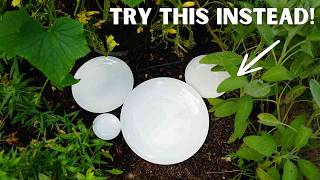
Nicole Johnsey Burke argues her plate planting method beats the square foot gardening grid. She uses circular rows instead of 4x4 squares, groups plants by leaves, roots, and fruit, and swaps peat for a sustainable sandy loam soil mix.
Questions this video answers
Over 3 million copies.
Compost, peat moss, and vermiculite.
Coarse sand, topsoil, organic compost, and earthworm castings (top-dressed).
About 60 to 75 days.
Over 70 days.
Chapters
This is the world's most popular gardening book. Square Foot Gardening has sold over 3 million copies worldwide. Mel Bartholomew, the author, is an engineer and he developed this garden method in the 1980s with an engineering mind. I'm Nicole Burke, a self taught gardener who learned how to garden from visiting national parks and wild spaces. Today I'm going to give you three reasons why my gardening method is superior to the worldwide famous square Square foot gardening. Today I want to introduce you to the concept of square inch gardening. Let me start off by saying we owe the world to Mel Bartholomew. No hate to him because he absolutely simplified gardening for the home gardener in the 1980s. He wrote this book and taught us how to all grow in very small spaces. He had a simple soil mix, he had easy calculations. He took a very complex subject like farming and gardening and and turned it into this step by step process that anyone could use. There's a reason why this book has sold 3 million copies, because his method works. So thank you Mel. We owe the world to you. So, funny story, even though I've written three books on gardening, I actually didn't learn to garden by reading books. I learned by being out in nature with my four kids and my husband Jason and I dug up and set up our first garden over 14 years ago. We had time, tons of mistakes and learned by trial and error and then would spend lots of time out in nature with my family. Every time we were out at a park or a wild place, I would take the lessons, the pictures I saw out in the wild and bring them back and put them into my own garden. I started seeing huge success when I switched up my planting to better mimic what I was seeing in nature. And then when I started my business back in 2015, I took those same lessons and put them into practice in all my clients gardens. And these people, y', all, they had never gardened before. One of them told me that her house was where the dead fern grows. And all these women who hadn't gardened hadn't had success. When I planted up their gardens the way I planted mine, they were suddenly having more beautiful, productive gardens that looked like they could be on the COVID of a magazine but were still packed with food. And that's when I honed in on my square inch gardening method. So what is the difference? The first difference is the layout of the garden. The when you take a look at Mel Bartholomew's method, the square foot gardening method, he generally uses a 4x4 bed. He works in 16 square feet at a time. Then he recommends that the gardener breaks up their garden into squares, literally square feet. Lots of gardeners who use this method even put boards or string in their garden to divide up their garden space, almost like a tic tac toe board, only this one is four by four. Then Mel instructs that each each square is planted with a different crop, filling up the square to the max with the proper spacing. So if you look at a square foot gardening bed that is truly following Mel's directions, you might see 16 different crops all in one bed, with each being given just one square foot. So my planting method, which you probably first read about in my first book, Kitchen Garden Revival, I called it there the intensive planting method. I. I've since created an entire training calling it the plate planting method, which I'll show you why in a second. But for this video, I'm calling it the square inch method because it literally does define plant spacing based on the inch, not the feet. My planting method considers the entire garden box, all with one plan. It starts with a border of herbs and flowers that surrounds the perimeter of the bed. This is meant to protect the entire garden from pest, to attract beneficial insects for more production and fruiting, and also to create seasonal and year round beauty as the plants inside the bed rise and fall throughout every season, then on the interior of the bed. Rather than setting up the garden as a grid, which may increase production, but doesn't really mimic nature, I recommend laying out the garden in rows that are lined up by circles rather than squares. If you look at a plant in general, almost all plants have a circular shape as they grow. So to me, it makes much more sense to lay out your plants in circles. This is how I coined the plate planting method. Seeing each of your plants as a plate, ranging in size from large to extra small, helps you see all the planting potential in your garden. Once the border is set up for pest protection and beauty, you then lay out your garden in long rows that vary in size, using these different circular sizes and then fitting the plants together like a tetris, much more like what we see in nature, where all these plants are growing together in one space, making room for each other both underneath the ground with their roots, but also above ground. So for instance, this large plate would represent fruiting plants, things like eggplants and tomatoes and cucumbers. This is what you'll have down the middle of your bed or along the edge of your bed. If you have a narrower bed that's pushed up against a wall or a fence, then this size represents your medium Sized plant plants, often still fruiting plants, but smaller in size, things like peppers. You also might have some of those larger greens, things like kale and Swiss chard. They also are around this size. This size is great for larger root crops like beets, and also for larger herbs, things like cilantro or parsley or dill that are going to go really tall and need more space to spread out. And then finally, this represents your smallest root crops, things like radishes and carrots, and also your greens. Things like lettuces, arugula, butter crunch. They all fit in this size. So all these circles fit together in rows, filling up the entire garden bed based on the size of the mature plant when it's ready to be harvested. Square Foot gardening gives you full liberty on where you want to put every single plant in its square. So you might put carrots right in the middle of the bed. You might put something like a tomato in the back corner. Corner. You might have herbs right in the center of the bed or a flower on a corner. There's not a lot of structure or classification when it comes to where you put all the plants in the grid. This is what I clear up in my second book, Leaves, Roots and Fruit. When I divide pretty much every single plant you're going to have in your garden into one of three categories, we classify these plants based on what we harvest them for. So your leaves are going to be any plant that you harvest just for the leaf. This could be herbs, leafy greens, kale, Swiss chard. Any plant where your main harvest is the leafy green, we are going to classify that in the leaves category. And when we're planting with the square inch method, you're going to give that the smallest circle in the garden, and it has to be on the edges of the beds. Next, we have our rooting crops. They're going to be classified from small to medium. And these plants, they need to be planted right inside those leafy greens. And then we finish up with the fruiting crops. So these are plants that we harvest for the fruit. Squash, zucchini, broccoli, cauliflower, cabbages. All the plants where we harvest the fruit, these are going to be the largest circle and they need to go down the very center of the bed. If you're working in a bed, you can access from all edges or on the back side of the bed, if you're working on a bed that you can only access from three sides. The reason why this type of planting is superior to the square foot gardening method is, is because it Works with the way you'll need to work in your garden. Those leafy greens, you can harvest from them almost every day. So by having them on the outside edges of your bed right inside the border, you can get access to them right away every time you come into the garden space, keep them nicely pruned and continue to cut from them week after week without disturbing the rest of the garden. The root crops, they're going to be on the inside and they'll be harvested not quite as often, but they'll just sit and do their thing, enriching the soil around these fruiting and leafy green crops. And then you'll be ready to pull those at about 60 to 75 days without disturbing the fruit crops down the center and without disturbing the leafy greens on the outside. Then finally, your fruiting crops being on the center or the back side of the garden, these are going to sit and do their thing. They're going to take over 70 days to produce fruit. So you let them sit and work and do their thing. While you're harvesting root crops and leafy green crops, they continue to produce to vine, to go crazy without disturbing the other types of plants that are in the garden. Finally, we have to compare Mel's mix, which is his simplified soil mix, to what we use in the gardenary method. So Mel's mix is made up of compost, peat moss, and vermiculite. It's a very light soil mix, which made home gardening so, so much simpler. This book made it possible for someone to run down to Home Depot, buy three bags of vermiculite, peat moss, and compost, mix them together, and get some great results in the garden. The problem is that vermiculite and peat moss, they're not very sustainable sources. So with my gardening method, we use my 103 blend. This was developed after working with several soil experts in Houston. When I started my first company, we we developed a sandy loam blend, which is a mix of coarse sand, topsoil and organic compost, and some earthworm castings on top, blended together for a soil mix that is still very light and fluffy, produces incredible results, but isn't nearly as hard on the environment. By the way, I made a whole video about how I mix up my soil. The soil mix that I've been using for years, I break it down exactly. I'll put a link to that video right below this one. This gardening book got over 3 million people to start gardening in their own backyard. But I'm hopeful that my garden method will get I don't know 10 million people to start gardening because the soil mix is way more sustainable but still very easy to make. The gardens are way more beautiful because they more closely mimic the way nature grows and the productivity. Well, I dare you to try this method and see if you don't get way more food from even the smallest spaces. Now, if you want to learn more, dive into my plate planting method, my square square inch gardening method. Check out a link right below this video and you can watch a video all about the details right here.