Groceries You Can Easily Grow Yourself in 2026
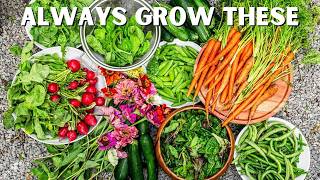
Nicole Johnsey Burke shows how to grow 15 grocery staples at home, even in small spaces with no gardening experience. She covers planting windows, yields, and how to store what you harvest, from freezing to pickling to root cellar.
Questions this video answers
5.2% ("prices have risen over 5.2% in just the last year alone")
About 25 days
About 5 to 20 zucchini fruit (speaker says "5, 10, maybe 20")
About 20 to 30 beans per seed (speaker says "maybe 20, 25, 30 beans per seed")
About 9 cloves per square foot
Chapters
Groceries are so expensive, prices have risen over 5.2% in just the last year alone, and they don't show any sign of stopping. But before you get too stressed out, imagine this. You in the grocery store, walking right past the produce aisle. Because all that food over there, you learn to grow a lot of it yourself. In this video, I'm going to show you 15 groceries that you can replace with food that you grow yourself in your own backyard. So let's lay the ground rules for these 15 groceries that you can replace. Number one, no green thumb required. We're going to talk about 15 groceries that you can start growing even if you've never grown anything before. No experience in the garden. No problem. Ground rule number two, you don't have to be a farmer for this to work. You don't have to have acres and acres of land. You don't even have to have a half an acre. We're going to talk about plants that you can grow in just a few hundred square feet and still have enough to replace your groceries. Ground rule number three, you don't have to garden full time for this to work. I'm going to pick 15 plants that grow while you're doing your life. Driving around, running carpool, making dinner, folding the laundry, going to work. You get to live your life while these plants are doing their work in your backyard and and are ready to harvest, even if you haven't spent hours and hours taking care of them. First up, the easiest grocery to replace is arugula. This is the easiest plant to grow in the garden. Plants grow from seed planted directly in the soil. You get your first harvest about 25 days in. I've grown this in the middle of the summer when it's 95 degrees outside, and I've grown it in the middle of the winter when it's 45 or 55 degrees outside. You get to harvest from each and every seed two to three times. All you need is a few of these seed packets, a little patch of soil, and you never have to buy arugula from the grocery store again. Next is cucumbers. Now, these only grow when there's no chance of frost. But when they start growing, man, do they give you a ton of cucumbers. So you'll get a lot of fresh cucumbers to pick and enjoy all in the summer when it's warm outside and there's no chance of frost. And then you're going to pick so many that you can pickle them and have them as an incredible vegetable to enjoy all winter. Long. Plant this one packet of seed and you'll have enough cucumbers to enjoy fresh in the summer and pickled through the winter so you never have to buy a cucumber again. Next up is carrots. Carrots can be planted early in the winter when the soil is just ready to be worked. And carrots will grow all the way through the spring. Spring. From this one packet of seed, you're going to get hundreds of carrots. You'll get carrots through the spring, and then the extra carrots that you harvest that you can't eat yet, you can either pickle them, you can freeze them, or you can keep them stored in a root cellar so that you can pull them out and enjoy them all summer long. Then, as soon as summer is almost over, you'll plant another packet of these seeds and you'll have carrots to enjoy all the way through the fall season. Take those extras that you harvest. You can pickle them, you can freeze them. You can also put them in the root cellar, and you'll have carrots all the way through the winter. Number four is basil. Basil gives you a ton of leaves off of just one seed, and it grows prolifically through the entire growing season when there's no chance of frost. So you're going to plant seeds directly in the garden. About a month before your last frost, these basil seeds are going to turn into these huge plants. You're going to get loads of basil all the way through the summer, and you're going to pick so much that you can store it for the winter. Teach a man to fish and you fed him for a lifetime. Teach a woman to garden, and the whole neighborhood gets zucchini. There's a reason that's a meme, because zucchini will give you a ton of food. In this one seed packet would grow enough zucchini to feed you and your family and the five other families around you for the entire year. Every single one of these seeds is going to give you 5, 10, maybe 20 zucchini fruit. You can enjoy zucchini when there's no frost outside. Plant the seeds directly in the garden and harvest zucchinis every single week throughout the entirety of the summer. Harvest enough to enjoy some fresh and then to freeze for the winter. Just this one packet of zucchini will give you zucchini all summer long, and then enough frozen zucchini to enjoy all winter long until it's time to start again. Number six is kale. Kale is a biennial green, which means it wants to stay in the garden for two years before it goes to seed, which also means it doesn't want to die in your garden. Kale doesn't mind frost, and it can also hang on when it's hot outside. So you want to start seeding seeds in your garden right as the soil is workable. As soon as you can get a seed into the soil, it's time to put kale seeds in there. You'll get these baby kale plants in early spring that you can start harvesting from, and then through the summer, you're going to have so many harvests that you want to use some fresh and then freeze some for later. Number seven is spinach. Spinach grows so fast from seed planted directly in the soil. It doesn't like hot weather. So this is going to sustain you and keep you out of the produce aisle when it's cold outside. In fact, spinach. Spinach loves it when the temperatures are in the 30s, 40s, 50s. So you can grow spinach early in the early spring. You can grow it all the way through the spring weather. And during that time, you're going to get so many cuts from each and every plant that you can eat some now and then save it for the summer months. Next up is green beans. We got to get our plant protein in, and beans make it possible. Beans are literally the most underrated plant in the garden. I made a whole video about it. You'll have to check out the link right below this video after this one's over. These go in the garden by seed, right in the soil, and then each seed is going to give you handfuls of beans, maybe 20, 25, 30 beans per seed. You get to plant these successively through the summer. They don't like it when there's frost, but when there's no chance of frost, you could plant a new row of these bean seeds every three to four weeks. You'll come back every month, get these big bushels of beans, and then do it again three to four weeks later, all during the growing season when there's no chance of frost. Do your sweet potatoes from the grocery look like this? They're telling you something. They want you to plant them. Sweet potatoes are one of the easiest groceries that we can grow ourselves, but you do need more space to do this. Sweet potatoes are tubers that grow underground, and they like it hot. Sweet potatoes love the summer months for growing. They'll create these huge vines that will sprawl over literally yards of space in your backyard. While underground, they are growing these massive tubers that you can Dig up at the end of summer and have all through the winter, the spring, until the following summer, when you can grow them over again. The magical thing is every single sweet potato you grow can create new slips that will create new plants for the next year. So once you plant these groceries and turn them into sweet potatoes you grew yourself, you. You might never, ever have to buy a sweet potato from the grocery again. Number 10 is garlic, one of the best groceries you can replace because you can grow it so easily and store it easily, too. So every little clove on your bulb of garlic that you get from the grocery, you probably want to buy these from the farmer's market or even order from a company online. But if you get an organic garlic bulb, every single clove can turn into another bulb. So in the fall, in fact, if you're watching this in the fall, it's time to plant your garlic. We made a whole video about it, so you could. I'll link that right below this video, too. But you want to take each clove and you want to plant it. You want to give yourself about 9 per square foot. That one clove is going to sit in the garden all through the winter. Then in the spring, it's going to put up a little green sprout. Then about four months later, you're going to have all these greens above the soil. And when those lower ones start to turn brown, that's the sign that it's time to dig up your garlic. I don't know. How much garlic do you use in a year? Well, you could replace all your grocery garlic with garlic you grew yourself itself. All you got to do is take the cloves, stick them in the soil, and wait about nine months, and then you've grown it all yourself and replace those groceries. Number 11 was the first grocery I ever learned to replace, and that is spring mix lettuce. You know those plastic bins that you get at the grocery? They cost about 6, 7, 8 dollars. Where I live, they sit at the back of your fridge, and then, I don't know, two or three weeks later, after you spent seven or eight dollars on them, they go in the trash. Yeah, me too. You can replace those with greens that don't go bad because instead of sitting at the back of your fridge, they're sitting in your garden just waiting for you to come and pick them when you're ready. Number 12 is a plant you just can't kill. You only need one plant, and you will never have to buy this from the store again. And that is chives Chives, Really? They weren't meant to be bought from the grocery, let's be honest. But they sell them for like $5 in this little plastic box at the grocery. It doesn't make any sense. Chives are like a weed, okay? They're the easiest thing you're ever gonna grow. You need one plant, and it's the coolest thing. Every year it multiplies. So by one, two, maybe three or four chive plants, you'll be giving chive plants away to your neighbors within about two to three years. And you literally will never, ever, ever have to buy chives from the grocery. Number 13 is potatoes. So potatoes are also tubers. They grow in the early spring. They need to be planted. You can liter take one potato, plant it in the soil. You could put it in a raised bed. But I actually made a whole video. Why I never do that. Instead, I usually plant potatoes either in wine barrels or in the ground directly. And one potato is going to create five to six more. So one potato for every five to six that you need next year. Plant those potatoes in the early spring and you'll have plenty of potatoes to enjoy all year long. And hint, cool thing. If you live in a mild climate that doesn't have a frost early in the fall, you can actually grow potatoes in the fall as well for a double harvest. You don't have to store as many through the summer. And you can grow them twice a year and have potatoes all year long. Never buying a grocery potato again. Next up are green onions. Now, these are kind of like chives, but much bigger. Every time you cut a green onion, more greens grow in its place place. So you can have green onions all through the spring. Chop up a bunch and stick those in the freezer in case you run out during the summer. Then you can grow them in the fall again and again, chop up enough to enjoy them through the winter. Then you'll never have to buy one of those little green onion packages for three or four dollars because they're all inside your garden or in your freezer. Last but not least are peas. I don't know if you've noticed, but at my grocery store store, sugar snap peas and snow peas, they're so expensive. It's like $8 for this tiny little bag. Well, each of these pea seeds is going to give you at least one or two or three of those bags worth of peas. And you can plant these again and again through the spring season. You can plant these before frost is over in your early spring and do it again in early fall. And you can grow so many peas that you enjoy some now, but also put them in the freezer to enjoy through the summer and through the winter. Now, I put 10 of these plants into one package called the Easy Garden Kit. So if you want to get started growing your own groceries, you can learn more about the Easy Garden Kit right here.
More from Nicole

Propagation is the secret to turn 1 oregano plant into 100 that’ll last forever! #garden #herbs

Plant some garlic this fall and you’ll never run out. Just follow these steps #garlic #gardening

Head to Gardenary.com to try out my FREE custom planting plan creator #garden #gardendesign #plants

Frost is coming so harvest all your tomatoes and make this soup🍅#garden #recipe #tomatosoup #tomato

Say bye to grocery store herbs this winter if you harvest and dry some of your own👀#garden #herbs

Can you grow your own Ube?! Let’s see if I grew anything besides purple vines🍠#garden #ube #plants

If your garden didn’t turn out how you wanted, it’s time for a fresh start😌#garden #fallgarden

Turns out you don’t have to sit at a desk all day…you can stay in the garden☀️#garden #meme #9to5

Do NOT buy soil with artificial fertilizers if you want a natural, organic garden😬#garden #soil


I wasn’t meant to send emails or work 9 to 5, I’m meant to stay in the garden all day🌿#garden #meme