Growing Your Own Lettuce: From Seed to Harvest
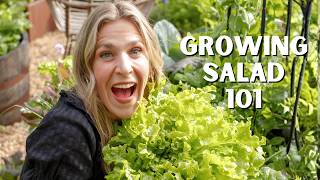
Grow spring-mix lettuce from a single seed packet using direct sowing in loose soil. Seedlings emerge in 5-6 days, and you can harvest within 21-28 days using a cut-and-come-again method that yields 2-3 harvests per plant, potentially 300-400 total harvests over six months.
Chapters
Salad is one of the most common vegetables that all of us buy at the grocery store. But I haven't spent money on grocery store salad in months. We all know that grocery prices are rising, but there are so many other reasons to not buy grocery salad than just the money. So in this video, I'm going to teach you how we can change all this. How you can grow your own salad from just one seed packet so you can step outside, cut your own salad from your backyard, and skip past all those boxes at the grocery store for good. This is part of our Easy Gardening series, which is me on a mission to convince you that you don't need a horticulture degree or grown up on a farm in order to grow some of your own food. This is just one of ten of the seeds I'm teaching you to grow inside the Easy Gardening series. And all of these grow from seed to harvest in a super short period of time. So check out more of that series right after you watch this one now. Spring mixed lettuce. This is maybe possibly the best thing you can grow in your garden. You're going to get a huge ROI when you plant these seeds. Lettuce loves to grow when it is cool outside. So if you are in a hot climate, you're going to be growing this from like, October to March. If you are in a cold climate, you're going to grow this from like, March to May and then from August to October. And then if you're in a mild climate, you're going to grow this from probably March to May and then start again in August or September. You can even grow it deep into November or December. I like to promise everybody that we can all grow at least six months of this salad. And trust me, once you've eaten the salad that you grow yourself, you'll never want to buy the stuff at the grocery. So it grows in the cool season. It needs to be under 80 degrees. And as soon as your soil can be worked. So at the very, very start of spring, or if you're in a hot climate at the very start of, like, fallish weather for you, you're going to go out. If the soil can be worked, this top 2 or 3 inches of soil can be worked. You can put in some lettuce seed, and this lettuce needs to be planted directly in the soil. I've seen some videos on here where people teach to plant this in cells under a light. And I have to tell you, it's just not worth it. Save those cells and plants and lights for Things like peppers and tomatoes. These plants, they want to go straight into the soil, and you can tell by the way they grow. They're going to have these very shallow root. They really don't like being moved from place to place. So it's a win win for us. Makes it easier for us to plant them and grow them, and it makes it easier on them because they don't have to go through the transplanting process. So these seeds are an oblong shape and very, very tiny, but kind of easy to hold. You're going to see pretty much any lettuce that you grow is going to have this same kind of shape, a little oblong shape to it. And the key here is to space your seeds out upon planting. So I have a couple hacks for this to keep it super easy. The first is to mix the this seed with some sand. So I love mixing seed with a little handful of sand that allows me, as I'm spreading the seed, the sand disperses the seed better for me. And then I can also see every place that I've planted the lettuce. Now, sometimes I like to plant up an entire box of lettuce so that I can just come out and cut a little bit every day. But I also like to plant seed just right along the edge of the bed. So if you followed along with any of our planting plans, you'll see I usually have lettuces and greens along the border of the garden, and that's perfect for this kind of plant. So you can plant it first with sand to help you see where it's all going. You can also use a seed spacing ruler. So I'll put those down and plant every two or three holes to be sure the seeds stay apart from one another. Or you can do my very sophisticated method, which is just the pinch and sprinkle. I'll pinch about five or six seeds in my hand and then I'll just literally take my fingers and rub them against one another and then just move my hand alongside the row. And that generally disperses the seeds pretty easily. You want to be planting your lettuce seed in a soil that's nice and loose and porous. Our easy garden kit includes my soil recipe, which is topsoil, compost and sand that gives you this really nice soil blend that's loose because these seeds there, this isn't like a big, thick seed. This isn't like a bean or a pea. Very, very tiny. You're going to see this as you start to use it. And those roots are very Tiny as well. So you want your soil to be nice and open and porous. You're planting your seeds there. Now these seeds really don't need to be buried. In fact, some of your lettuce seeds need a little bit of light to germinate. So the most I'll do with these lettuces is maybe just take a little, little handful of compost and just lightly sprinkle it over the top of these seeds. Or I'll even just take my seed spacing ruler or my hand and I'll just kind of lightly gently pat the seeds to be sure they have good soil contact. But you really don't want them buried. In fact, if you've tried to plant lettuce before and nothing happened and nothing came up, you probably buried them way too deeply. They need a little bit of light to germinate. So just sprinkle them, let them do their thing. Then comes the hardest part of this whole deal. And brace yourself. You have to water. I know, I know, it's so tough, but you do need to keep these water. So lettuces are about 70 to 90% water and the water is critical, especially at the planting period. So we're talking every day a little sprinkle right on top of the seeds you just planted doesn't need to be soaking. You don't want it like, just like piles and piles of water. You just don't want the soil to dry out. So I love to remind myself a dried out seed is a died out seed. Dried out means died out. I don't know if that's proper grammar, but it rhymes. So we're going with it. So keep it watered and then you are going to start to see little tiny sprouts come up in like a minute, maybe more like, I don't know, 600 minutes. But you're going to see a seed pop up pretty soon, probably within five or six days. These are going to be these cute little, all different color, little bitty seedlings. And that's going to signify the different kinds of plants that are inside your spring mix. So in the spring mix pack, you're going to have red leaf lettuce, green leaf lettuce, you'll have black seeded. Simpson, you'll have a little bit of romaine. It's this perfect blend of all these different textures and colors that make this gorgeous spring mix lettuce. I just love it. So you'll see those little sprouts come up. This is when you want to double check your spacing. If you did it right. If you use the seed spacing ruler, the same sand, or just did my very complicated sprinkle method, then you should have your plants about 3 to 4 inches apart from one another. I generally like to have one lettuce plant, about nine lettuce plants per square foot. So if I'm planting in a row like this, just right along the edge of the bed, then I like to see one lettuce plant every three or four inches down the road. So make sure that they're nice and spread out and that they don't dry out. And then within 21 to 28 days of planting, you're ready for your first harvest. Spring mix is awesome because it is what we call a cut and come again variety, which means exactly what it sounds like. You cut it, and then you can come back again and cut from it again if you harvest it this way. So when you're harvesting your spring mix lettuce, you don't want to grab the whole thing and do what I call a ponytail cut. That would be like, if you grab your hair and you just chop, that's a ponytail cut. We don't want to do that with the lettuce. The lettuce, this cut and come again lettuce, you want to instead cut around the outside and the lower parts of the plant. This is the oldest part of the plant's growth. This is where the first initial leaves came out. So when you cut those older pieces, what you're doing is encouraging the plant to grow more from its center, from its heart, and that's where all the new growth comes from. So you might think, oh, Nicole, I shouldn't take, you know, from this plant, I shouldn't take five, six leaves off this plant. I'm basically stripping it bare. Well, if you're going to cut less than one third of the plant at a time and you leave that center, and as long as you leave that center, in one to two more weeks, you're going to come back and it's going to look like you've never touched it. You'll be able to see your scissor marks around the edge of the plant, but then it's going to be full again and ready for another harvest. Each of these plants that you grow through the spring mix variety, you're going to get two to three harvests from each and every plant. And in this one packet of seed are like, hundreds of seeds. So we're talking like 300, 400 harvests of lettuce just from this one pack of seed. And Like I said, most of us can grow this for six months out of the year. So once you harvest these, you want to be sure you bring them indoors and you cool them off. Because tell me in the comments if you've experienced this. When you grow something yourself and you harvest it and it literally wilts within seconds, and you're like, how do they keep the grocery store variety from doing this? Right? It's kind of fishy because you will see these leaves are going to wilt almost the second that you harvest them. So you want to get them inside, get them rinsed off in cool water, and then I like to wrap mine up in like a tea towel and then stick it in a Ziploc or some kind of storage so that it doesn't wilt in the fridge. My personal preference is to cut it right before I'm going to make myself a delicious salad. Now, if you compare what you're going to grow in the garden to what they have at the grocery store, you're going to see at least four, four differences. The first difference that you're going to see is that one, you are getting to enjoy this lettuce the minute that it comes out of the garden. The lettuce that you're getting at the grocery store, it got harvested probably two to three weeks ago. It was then put into truck and then sent across the country to then sit on the shelf at the grocery and then come home with you and likely get thrown away after it sits at the back of your fridge. So that's the first big difference, not just price, but you're going to see that you're getting to eat much fresher greens and you're less likely to toss greens in the trash. The second thing you're going to see that's so different is the nutritional value. The research shows that leaves start to lose their nutritional value the minute they're cut. So that means when you're eating lettuce that was picked two or three weeks ago, then you're getting very, very little of that nutritional value because that lettuce has been losing its nutrition every single day since it was harvested. The next difference you're going to see is the t those lettuces that you're eating from the grocery, there's a reason why they stay at the back of your fridge, right? Because they don't taste good. You ate the cookies, right? The cookies tasted good. The lettuce not so much. But when you grow lettuce yourself, you're going to see a huge difference in the flavor they're going to be crispier, they're going to be sweeter. They're going to have more like texture varieties because you're getting to eat these the minute they come out of the garden. And then finally, the huge difference you're going to see, not just in price, is that there's going to be so much less waste. All these lettuces that are harvested on a farm, they're packed in plastic, they're wrapped up, they're sent using fuel across the country, and then you had to do all the work to go to the store, get them, put them in your fridge. There's no single use product you've gotten to plant from this one seed packet multiple times. There's no plastic, there's no waste. You just literally go from here into your salad bowl to your kitchen sink and then into your final serving dish. If you're looking for more ways to have a zero waste life lifestyle, growing your own lettuce is the way to make that happen. So, yes, grocery store lettuce is super expensive. We're talking seven, eight dollars for a little box that you're probably going to throw away anyway. But the price is just one of five reasons why you should start growing your own lettuce. And now you know exactly how to do it. So this spring mix lettuce is just one of 10 varieties inside our Easy Garden kit. And the kit comes with instructions on how to build a raised bed, how to set up our soil blend, how to plant all 10 of these varieties with planting plans and recipes, too. Yeah, I even gave you 10 recipes of how to use this spring mixed lettuce. So I'll put a link to the Easy Garden Kit right below this video. And I made another video about another super easy plant to grow so that you got no excuses in the garden. And you can watch that right here.
More from Nicole

Propagation is the secret to turn 1 oregano plant into 100 that’ll last forever! #garden #herbs

Plant some garlic this fall and you’ll never run out. Just follow these steps #garlic #gardening

Head to Gardenary.com to try out my FREE custom planting plan creator #garden #gardendesign #plants

Frost is coming so harvest all your tomatoes and make this soup🍅#garden #recipe #tomatosoup #tomato

Say bye to grocery store herbs this winter if you harvest and dry some of your own👀#garden #herbs

Can you grow your own Ube?! Let’s see if I grew anything besides purple vines🍠#garden #ube #plants

If your garden didn’t turn out how you wanted, it’s time for a fresh start😌#garden #fallgarden

Turns out you don’t have to sit at a desk all day…you can stay in the garden☀️#garden #meme #9to5

Do NOT buy soil with artificial fertilizers if you want a natural, organic garden😬#garden #soil


I wasn’t meant to send emails or work 9 to 5, I’m meant to stay in the garden all day🌿#garden #meme