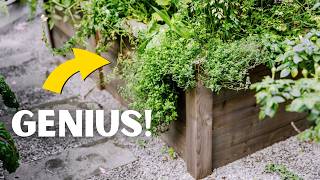
In this instructional video, experienced raised‑bed gardener and author Nicole Johnsey Burke walks viewers through a five‑point checklist for selecting a raised‑bed garden, drawn from her 2019 book Kitchen Garden Revival. She emphasizes that the right bed should be natural, durable, beautiful, sustainable, and affordable. For each criterion she explains why it matters, offers specific material recommendations (untreated cedar, hemlock, redwood, cypress for wood; corten steel for metal; stone with proper footers), provides durability expectations (5‑10 years for cedar, 10‑15 years for steel, lifetime for stone), suggests aligning the bed’s style with the home’s aesthetic, advises checking supplier practices for recycling and replanting, and compares cost hierarchy (cedar < steel < stone). She also mentions an eco‑friendly whey‑based stain and a ready‑to‑assemble Gardenary cedar kit, and includes calls to action for her book and product links. The overall message is that a thoughtfully chosen raised bed leads to a beautiful, low‑maintenance garden that supports health and the environment.
Chapters
Buying a raised bed can literally give you a green thumb. But if you don't know what you're looking for, you could end up making a big buying mistake that cost you a ton of money, a lot of frustration, and end up doing more harm than good. Over the last 10 years, I have created hundreds of raised bed gardens for my clients and students. And I've created a five point checklist that everyone should look through before they ever purchase a raised bed. So let's get to it. So the checklist I'm following is from my book, Kitchen Garden Revival. In chapter two, which is called Gather, I walk you through all the steps to gather all the materials for a beautiful kitchen garden. And of course, the first thing on the list is raised beds. So we're going to go through all five of the items on this checklist and then I'll show you the little table that I create anytime. I'm trying to pick what I'm going to use for my raised bed. So the first item on the checklist is natural. We're trying to grow the most natural, organic, healthy food possible. So the last thing we want to do do with our raised beds is introduce unwanted chemicals or synthetic materials. So our three favorite natural materials to use in our raised beds is wood, steel and stone. Now, all three of these materials naturally occur in the world, but they can be altered significantly in production. So you want to check that the wood that you're using for your raised beds has not been treated. If you're going to use steel for your raised beds, you want to be sure that it hasn't been chemically treated either. And then finally, if you're going to use stone for your raised beds, you want to be sure that that stone isn't co coated in any way with a synthetic material. Knowing that the material of your raised bed is a hundred percent natural is going to give you so much confidence as you grow your own food. You know that saying, the cheap pay twice? Well, this definitely can happen if you don't consider the second item in the checklist, which is durability. So you're going to be spending a pretty good chunk of change on your raised beds. And our goal is that the raised beds will last as long as possible. Now, a lot of that naturalness so sometimes is replaced by treatments that make beds last longer. So we want to be sure we're not compromising on the naturalness of the material, but we do want a bed that's going to last as long as possible. When it comes to wooden beds, you Want to get materials that are going to last the longest. You want to stay away from materials like pine. And you want to work with woods that are harder things like cedar, hemlock, redwood, cypress. You want to buy woods that are meant to last for many, many years. Even in the outdoors, we use untreated cedar beds in our gardenary wood. Those are going to last five to 10 years, depending on your climate and what your weather is like. When it comes to steel beds, those beds are going to last probably 10 to 15 years, especially if they have any kind of outward coating. This particular bed I'm sitting on is a corten steel bed. And this corten steel is set to rest to a certain point and then stop rusting. So generally a steel bed is going to last about five more years than your wooden bed. And then finally you have stone beds. Now, some people just kind of stack stone stone out in their garden and the stone itself might last for a long time. But if you don't set it up with a cement footer, if you don't use the right mortar between your stones, then it could start to crumble or fall apart. But that stone itself, if you place it on a cement footer, that stone bed should last you for the rest of your life. There are some things you can do with all your beds to make them last longer, like putting that footer under the stone bed and adding this to your cedar bed. So this is an eco friendly stain. It's made of whey w h e y and it patinas the wood and keeps it from decaying over time. So you can see my raised beds are a little bit different color than they would be if they were just plain untreated cedar. And that's because we treated these with this eco stain. And this is in the gardenary shop if you want to grab it to make your cedar beds last longer too. If you're loving these points, you need this book, Kitchen Garden Revival, this book I wrote in 2019 we were just talking about it is still so relevant. After I go through this checklist, I actually walk through all the steps to buy a wood, a steel, a stone bed. So if you don't have this book yet, you need it. I'll put a link to it right below this video. So there's this theory called the beautiful garden theory. And the idea is that no matter what, you should make your garden beautiful to you. Even if you're not a good gardener, even if you're not sure it's gonna work, you should make your garden Beautiful. Cause if your garden's beautiful, you're gonna wanna go out there, and then when you go out there, you're gonna wanna take care of it. And so the more you take care of it, the more beautiful it will be. And on and on it goes. So number three on the checklist is the garden. Your raised beau. Beautiful to you. One of the ways I've learned to make a raised bed look beautiful, no matter what, is to align it with the style of the home. So if you want to take a little bit of time and think about your style, the way you design your home or apartment, how you do your rooms, how you do the exterior of your home, and then try to match that with the raised beds that you choose. In general, these are a couple little rules that I use. If I'm doing a cottage or farmhouse style home, then I will likely use cedar raised beds. If I'm doing a home that's a little bit more modern, I will lean to steel. If I'm working with a home that is more European or French, I will lean more toward stone beds. So you can do your own interpretation of style. But the key goal here is get beds that feel and look beautiful to you. Because when you have a beautiful garden, you're going to go out and take care of it more, which is going to make it even more beautiful. Number four on the checklist is sustainability. Now, this one can be a little hard to trace, but if you can figure out how the particular company source their raised beds, that is going to give you a little bit more peace of mind. As the whole point of having a raised bed garden is, you know, to do good for the environment as well as for your own body. So I saw a statistic recently that was very disturbing. And it was like, people who garden at home, like, actually spend more resources than those who don't. And I was like, we should do our work to change that. So this is just a simple way we could do that, and that's figuring out if the way your beds are created is sustainable. So we source our raised beds for. From growers in Montana, from Montana cedar. We try to work with suppliers that recycle materials. We try to work with suppliers that replant trees after they have harvested trees for the raised beds. You want to just look into your supplier, figure out where they're getting their materials and see if they recycle, see if they replant and replace the resources that they've used. Just do a little bit of research to figure out how sustainable those materials Are in general, I think most steel materials can almost all be recycled. I think that most wood materials will eventually degrade and decompose after, you know, they're done after 10 or so years in the garden. And then stone materials for the most part are just gonna kind of sit there after they're done in the garden. Maybe they'll never be done in the garden because they'll last forever. I forgot to mention raised beds that check literally all five of the points on this checklist. There are gardenary cedar beds. I love these things. They come in kits. I don't own a miter saw. I don't know how to do carpentry work. And I buil these beds myself. You can do it too. They come in a kit right to your doorstep. You just unbox them, put them together and ta da. Perfect raised bed gardens that are beautiful, natural, affordable, durable, sustainable, all the good stuff. So if you want to grab raised beds just like mine, I'll put a link right below this video. Now, the last thing on the checklist is affordability. I know, I know. We got to talk about budget and money. So if you're looking for the most affordable raised bed, then you want to go with cedar. That's going to be the least expensive, expensive bed that you can buy. Next up is going to be steel. That's going to be a little bit more per square foot. And then finally stone is going to be the most expensive. And this kind of lines up with their durability. If you think about it, steel lasts longer and then stone lasts forever. So match your material to all the things in this checklist. You're going to end up with raised beds that you absolutely love. And as you think that through, you want to watch this video next.