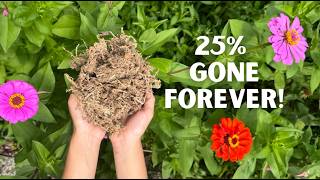
A short instructional video by Nicole Johnsey Burke arguing against using peat moss in home vegetable gardening. The creator explains three reasons to avoid peat—habitat destruction and carbon storage loss, unnecessary/undesirable soil pH effects, and peat’s tendency to become hydrophobic—and proposes alternatives (compost, coarse sand, coco coir, and leaf mold). The video also points viewers to a downloadable soil recipe and related content.
Chapters
If you've ever filled your raised beds with peat moss, because that's what everyone says to do, this video is going to give you a different perspective. After years of gardening and helping thousands of others start to garden too, I've decided to stop using peat moss. And today I'm going to explain to you why you should too. Peat moss is everywhere when it comes to gardening advice, and it's known as that miracle ingredient that will fluff up your soil and and make it the perfect environment for growing vegetables. But here are three reasons why we should all stop. The first and most important is the source of peat moss. So peat is harvested from peat bogs. And these peat bogs didn't just form yesterday. In fact, scientists tell us that it's taken thousands of years for these peat bogs to form that we're now harvesting from at such a rapid rate that they're unable to replenish themselves. And it's not just sad that we're destroying these naturally formed bogs. These bogs actually serve a purpose when it comes to helping the environment. These peat bogs are known to store tons of carbon, to be an incredible carbon offset for the environment. It's kind of ironic, don't you think, that most of us start a garden because we want to help the environment and improve the climate and then we go and buy products that are actually proven to be doing the opposite of that. The second reason not to use peat moss is its just not necessary to effectively grow a vegetable garden. I have my soil recipe if you want to check it out for free. It's right below this video. You can download it and make your own soil blend with no peat moss included. But peat moss has been touted as a thing we have to have in a vegetable garden, when in fact it actually has an acidic nature. And most of the things that we want to grow in a vegetable garden actually prefer the soil to either be neutral or to lean toward alkaline. So. So peat can actually be throwing off the pH for our soil instead of improving it. And finally, peat moss can actually repel water instead of absorb it. So peat is suggested to be the way to improve the porosity of your soil and the lightness of your soil. If you neglect the garden or miss a couple of days of watering, then peat has shown to dry out pretty quickly and actually become what we call hydrophobic. In essence, peat becomes very hard to rehydrate once it has completely dehydrated, making it very hard to get your soil back to the right moisture level. To grow your vegetables. So if we're not using peat, what do we use to make our soil perfect for growing vegetables? Here's at least four options. The first is the easiest, and that's simply compost. So compost that you make from your own kitchen, scraps from your own yard clippings, or. Or that you just buy from the store. Compost is a better option. It's renewable, it's sustainable. We could all make way more compost than we're making right now. And we'll have compost till the end of time. So using compost to mix in with your soil is a great alternative. The next alternative that I love to use at the start of building my own soil mix is sand. So I'll use a little bit of coarse sand mix in with topsoil and compost that's included in my soil recipe. And I use that to lighten up the soil so to make it more fluffy, to give more porosity and permeability to it without having to pull from the peat bogs. Another option is to use Coco Coir. This, in recent years, has been suggested as a substitute for peat moss. I personally love using Coco Coir in my seed starting mix. Instead of using a peat ingredient seed starting mix, which is pretty much all you can find at the store these days, I start with a Coco Coir block and then mix in some earthworm castings. And I've had the most success with my seedlings using that cocoa as the base instead of peat moss. Finally, you can use leaf mold compost. This is simply taking leaves, turning them into compost through the winter and spring of the next year. We've all got leaves in our neighborhoods on the streets somewhere where we can get leaves from trees that can literally turn into compost in less than a year. And speaking of a magic ingredient, leaf mold compost is definitely it. I haven't used peat in any of my vegetable gardens for years, and as you can see, they are all doing pretty awesome. So you don't have to use peat either. Now, using peat is just one of many mistakes that I see people make when it comes to creating their own soil for their vegetable garden. If you want to make sure you're not making any more of those mistakes, check out that video right here.