Nicole Johnsey Burke (host, gardener, and author) argues that traditional planting zone maps—based on annual minimum temperatures—are not useful for planning annual vegetable gardens. Instead she presents a simple two-question system: for each month, record the average high temperature and whether frost is possible; then classify months into cold/cool/warm/hot (with numeric high-temp ranges) to decide which annual crops to plant.
Chapters
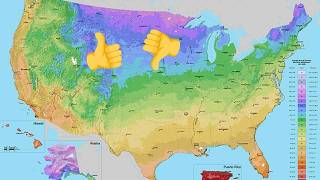
This is going to upset some people, but planting zones, they don't really matter. Over the last 15 years, I have gardened in three very different climates. And I've developed a system where all I have to do is answer two questions, then I know every single thing I can plant for the entire year without ever having to look at a zone map. And today, I'm going to teach you that exact system. If we haven't met yet, my name is Nicole Johncey Burke. I've written three books on gardening. And over the last 10 years, I've helped thousands of people learn how to garden all across the country, even across the world. And I've garden in these three different climates. And you know, all the time people online ask me, like, what zone are you in, Nicole? They'll see my garden online or in Instagram stories. I get all these DMs, like, what zone are you in? What zone are you in? And you know, it's like, really funny is I have no idea. And if you've seen my garden, my garden's doing pretty good. And your garden can do even better, even if you have no idea what your zone is yet. So let me explain what a zone is, okay? If you've ever gotten a seed packet or you've seen a map, there's like these rainbow colored stripes across the U.S. all right? All these different rainbow stripes and they're essentially on like parallel lines with one another, longitudinal lines. And this whole thing started in like the 20s, 1920s, this guy first set up these gardening zones. And if you look back, it was actually based on, it literally says for bushes and trees. All right? So he developed the zones and then the usda, they adopted this like a few decades later, I think around the 1960s, and they created the official USDA planting zone map. Now here's the thing I had no idea about when I started because everyone was just like, oh, you need to know your gardening zone. I didn't realize that the garden zone is based on, get this, the minimum temperature, the lowest temperature of that area for the whole year. All right? So the whole thing is just based on the lowest number for the whole year. That's where the zone comes from. And essentially it's telling you what bushes, trees, what perennials, plants that stay in the landscape year after year. It's telling you which of those trees and bushes would make it would survive the coldest temperature. That's what a zone is. And that's why a zone doesn't matter for an annual vegetable garden like this one. So when it comes to growing an annual vegetable garden, the minimum temperature really isn't that big of a deal. Instead, you need to answer two key questions. This is what I teach all of my students. It's in my books. The first question that you want to answer is your high temperature for every month of the year. So any given month of the year, January through December, what is your average high temperature? You can find this out just by going to Google, Googling, average high temperature, high and low temperature, and then name your city. So you're going to just write this down, the high temperature for every single month of the year in your town or city. Now, I'm going to tell you the second thing you need to know, but first, let me just explain why you need to know your high temperature. All of the plants that are growing in your annual vegetable garden, they are affected by the second factor we'll talk about, but they're most affected by the high temperature of each month. That high temperature. All of our annual vegetables, from things like cucumbers and eggplant and basil and arugula, carrots, beets, they all have this internal DNA that determines what temperature range they thrive in. And it's really more about the high temperature. Almost all of these annual vegetables, they have a high temperature that they need in order to get to their full maturity. And then they have a high temperature that is actually too high, too hot, where it suddenly stalls their growth and makes them bolt and go to seed. All right, so when you know that high temperature, that is the first thing you need to understand to figure out what's possible in your garden no matter where you're gardening. Now we know the high temperature of every single month. Now, we just need to answer one other question, and that is, is there a chance of frost or. Or not for each and every month? So you go from January all the way till December, list out your high temperatures, and then you're asking the question at night, the coldest part of those days, in that month, is there ever going to be a chance of frost? And it's just simply yes or no. So once you understand these two things, what are my high temperatures? And is there a chance of frost? Now you can figure out what season you're in. We have a system at Gardenary. I teach this in my book, Kitchen Garden Revival. I'll put a link to it if you don't have it. And what we teach is that when you're between, when your highs are under 30 degrees, you're in the cold season. So if it's never going above 30, you're in the cold season of the year. If the highs are ranging between 45 and 65 degrees Fahrenheit and there's a chance of frost, 45 to 65 and you've got a chance of frost, you're in the cool season if you're going from 65 to 85, you're in the warm season if there's no chance of frost. All right? And if you're 85 and above, you're in the hot. And there's probably not a chance of frost if you're above 85 degrees with your high. So we label every month of the year one of those seasons, cool, cold, warm or hot, and boom, you now have your plan for the entire year for your garden. And it's not based on one minimum coldest degree of the whole year. It's based on how the temperatures change month after month after month. Because if you haven't noticed, all these plants in the garden, they're growing rapidly, right? They're changing day after day, and they have these really short life cycles, 90 day life cycles. So those planting zones, they're made for trees, they're made for bushes. They're made to let us know, should I plant an orange tree here? Probably not, because it's going to get too cold for the orange tree. But if you're growing an annual vegetable garden, which is what we're doing here at Gardenary, those planting zones are not going to help you. Those numbers aren't going to inform you. What will is knowing your high temperature and knowing whether or not there's a chance of frost. Every plant in the garden can be divided by those seasons. There are plants that love the hot season, plants that love the warm, plants that love the cool, and plants that love the cold. And so once you know the high and your chance of frost, once you label those seasons, then you're just going to fill your garden up every single season with the plants that thrive within that temperature range. And that, my friend, that's how I keep my garden so packed. That's how I always know what to fill in the blanks with in my garden. And it's how I never, ever have to address or look at a planting zone map. I now just recently, I think in like 2023, they adjusted the planting zone maps and moved everybody up, I think, by a few degrees or something like that. And honestly, the news just kind of came and went for me because it didn't matter in my garden at all. All I needed to do is know the high temperatures and whether or not there was a chance of frost. And I always knew what I should plant. If you want some help to know how to plan out the months in your garden, I have a whole video on planning your garden for the year right here.