Raised Beds Versus In-Ground Gardens
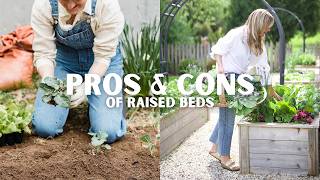
Nicole Johnsey Burke compares raised beds and in-ground gardens on cost, setup time, and ease of use. Raised beds cost more upfront but let you garden year-round and need less bending. In-ground gardens scale bigger and cheaper but follow the seasons and demand more physical work.
Chapters
Are you trying to decide between putting in raised beds or going with an in ground garden? Today, I'm going to walk you through a real deal comparison. We're going to look at cost, time, productivity, and how much you'll actually enjoy it. This is more than just a pros and cons list because I want to help you make the best decision when it comes to setting up your garden. Stick around till the end because the best option is not the same for everybody. The points I'm going to line out in this video will help you make a decision based on your space, your schedule, and your style. To get started, let's talk about what it takes to set up both an in ground garden and a raised bed garden. We're going to consider cost, time and quality. So for an in ground garden, cost is pretty minimal. Probably to set up 100 square feet of growing space, we're looking at under $1,000. Now, you might need to rent some equipment to remove the sod and if you need to do an initial tilling. I don't recommend tilling, but if you might have to rent equipment to do that. So a sod cutter, maybe a couple hundred dollars, some kind of tiller you need to get the soil ready. You might need a couple hundred for that. And then if you've got access to compost or leaf matter, then you might be able to start building and amending your soil for pretty cheap. If you don't have access to those things, then you're going to be buying a good number of amendments to get your soil to a place where it's workable. Most of our native topsoil is just not ready for kitchen garden plants. Those kitchen garden plants have really fragile, soft roots and they're going to have a hard time breaking into a clay soil. Or generally our native soil is not that favorable. So you're going to need to do some work to build up your soil, which is not going to cost a lot. But when it comes to time, it is going to take more time. Next, you want to think about the accessibility when it comes to the setup of your in ground garden and in ground gardens in general. Because they are connected to the earth, they're going to warm up later in the spring and then they're going to freeze sooner in the fall. So your accessibility to an in ground garden is less because you can't get into the soil until it's really started to warm up later in the spring. And then you're going to end up closing down that garden sooner. When the Fall hits. Now let's talk about a raised bed garden when it comes to setup. First off, we want to think about cost. So raised beds are going to cost several times the amount that an in ground garden would. You're still going to be buying soil just as you would for an in ground garden to amend it, but you'll be buying probably more soil because you're going to have more volume. Plus you've got to pay for the raised beds. Raised beds range in price depending on how nice or how durable of a raised bed you purchase. I love buying cedar raised beds or steel steel raised beds or buildings raised beds out of stone. I talk about all these varieties in my book Kitchen Garden Revival. Raised beds are my thing because I love to help people get set up really quickly. And that is the thing about raised beds. They are super fast. So you can come in, put a raised bed right on top of sod. You can put a raised bed even on gravel. Anything that you've got, any surface that you've got, you can literally just plop a raised bed right on top of it, put some good soil in it, and you're ready to grow. So, so that speed makes a big difference to me. And then you have the accessibility. Raised beds are going to warm up sooner in the spring and they'll cool down later in the fall. So you're going to get more growing time in those raised beds. And that's one of the things that I think matters when it comes to setup. We've talked about setup. Now let's consider effectiveness. So when it comes to an in ground garden, you're going to be growing with your native soil and your local water system system. Now, this is great if you have good drainage and you have good soil, but if you have any challenges with either one of those, you're going to have to do some extra work. This soil in your in ground garden is going to be slower to warm up in the spring and faster to cool off in the winter. So this means that you've got to make the most of the time when the soil is warm. You're going to need more space if you're growing in an in ground garden because. Because the plants growing in that soil, they're going to need more airflow and more room to sprawl out. I like to compare an in ground garden to a suburb. The way that suburbs grow is they sprawl, they go wider. Usually suburban houses are like one story high because they can take up lots of land because there's so much to Grow in versus growing in the middle of a city that's more like a raised bed where those buildings are stacked on top of each other to get the most of the space growing vertically instead of horizontally. So if you've got more space to go with, then an in ground garden just might be for you. But keep in mind, when you're working in an in ground garden, you're gonna need some bigger tools. So the tools you use will be bigger and also your physical inputs will be bigger. You are gonna feel in ground gardening more in your body. You're gonna be crouching, kneeling, squatting, digging. You're gonna be working hard with your physical body in order to get outputs from an in ground garden. But you know what they say gardening definitely counts as when you're thinking about the entirety of the growing season, you want to understand that an in ground garden, you're going to be able to grow about 65 to 70% of the growing season. When it's wet, when it's stormy, when the weather isn't great, it's going to be hard to get out to your in ground garden. But when it's sunny and nice, you're going to be able to make the most of it. Now, let's compare that to a raised bed garden. So these beds are going to be growing up instead of out. You'll be able to get to each of your beds very easily. You'll have pathways between your beds. So, so even if it's rained, even if it's a rough weather day, you're still going to have access to get out and plant, tend and harvest from your beds. Your beds are going to have vertical growth, just like a skyscraper in the middle of a city. So you will be growing probably less plants than you would in an in ground garden, but you'll be growing them in a much more compact way. The tools you'll be using for a raised bed are going to be much smaller. You're going to have little pruners and a little dibber, a little hori hori. The tools are smaller and your physical inputs are as well. You can generally work just by sitting on the edge of a bed or sitting in a chair next to your raised beds. There's not going to be as much kneeling and squatting. You'll still get a good workout, but nothing like compared to the in ground garden. When it comes to the full growing season in a raised bed, you're going to get about 90% of the year where you can be growing and working in your garden. If It's a rainy day. If it's a cold day, you're still going to have access to get out there and pull some things or plant some things in your raised bed. Now let's talk about ease of use for in ground gardens versus raised beds. So when it comes to an in ground garden, you're going to be able to put more of your money toward plants, seeds, compost. Because you didn't put money into raised beds, you're going to be able to get more for your dollars when it comes to plants and seeds. But an in ground garden can mean that you have less control when it comes to taking care and getting production out of your garden. In ground gardens can be more likely to be eaten or attacked by pests. Bigger rodents, things like rabbits, gophers, woodchucks, deer have easier access to in ground gardens. And it can be easier for pests and disease to spread in an in ground garden because they're so closely attached to your native soil and you've just got less control of it in the in ground space. That being said, you could potentially get way more harvest and production out of the same space because you haven't given much of it to structures like raised beds and trellises and pathways and it's just all dirt and plants. So yes, there's more risk when it comes to in ground garden, but you've also spent less. So if everything goes great and there's no pests, no disease, no bad weather and no problems, then you're going to get way more for your money with an in ground garden. I would though rate ease of use when it comes to in ground gardening about a 2.5 out of 5. It's going to take a lot more work, both with time and with your body and to get the same kind of production that you could get from a raised bed. On the other hand, raised beds bring a tidy beauty to the garden. So if you're looking for a garden space that feels walkable and enjoyable, where you've got little special spots to sit and enjoy watching the bees and the butterflies and your plants grow, then a raised bed garden could definitely be worth the investment. It's going to cost a lot more to get started, and you may have less production out of the exact same same space, but you will have more control. You will have set up your soil just the way you want it, and you'll have much easier access to tend your plants so that you can control pests and disease. You'll also have some barriers set up to keep pests from getting to your plants in the first place. And perhaps the most important part to remember is not just the setup but the everyday usage. You can walk through the pathway into your raised bed garden space pretty much any day of the year. And right at hip level you can sit at the garden, you can plant some seeds, you can tend some leaves, you can harvest from plants. And you can do this even if you've just got three to five minutes at a time. You don't need to pull on your garden boots and grab your shovel to get out there. Just grab a little pruner, a little harvest bowl and you're gardening in just a few minutes. So to summarize the pros and cons of in ground gardens versus raised beds for the setup. When it comes to in ground, we've got low cost but high effort. When it comes to raised bed gardens, we've got higher cost but a quicker setup. When we're thinking about effectiveness, you're going to have seasonal limitations when it comes to an in ground garden and you might need a bigger space. When it comes to raised bed gardening, you can do year round tending and you're going to have much better drainage. When it comes to enjoyment, your in ground garden is super budget friendly, but it's a lot more physical work. And when it comes to the raised bed garden, it's accessible, it's tidy and it's great for any weather. So if you're more like me and you love the idea of five minute gardening, then I would say raised beds are the way to go and you can find a raised bed that fits your budget. But if you're more of that hands in the dirt kind of person, if you do want to produce a ton of food, if you are that homesteading mama that's ready to like put away food for the winter, or you just like the idea of using your native soil and growing right in the ground and you want to save some money, then I would say in ground gardens are the way for you to go. It's easy to see there are pros and cons to both ways of gardening. And no matter which way you lean, we've got supplies to help you get started in the gardenary shop. I'll put a link to that right below this video. So I am dying to know, are you team raised bed? Are you team in ground garden? Whatever team you're on, we want to support you and keep you growing all year long. So I will see you right back here next time.
More from Nicole

Propagation is the secret to turn 1 oregano plant into 100 that’ll last forever! #garden #herbs

Plant some garlic this fall and you’ll never run out. Just follow these steps #garlic #gardening

Head to Gardenary.com to try out my FREE custom planting plan creator #garden #gardendesign #plants

Frost is coming so harvest all your tomatoes and make this soup🍅#garden #recipe #tomatosoup #tomato

Say bye to grocery store herbs this winter if you harvest and dry some of your own👀#garden #herbs

Can you grow your own Ube?! Let’s see if I grew anything besides purple vines🍠#garden #ube #plants

If your garden didn’t turn out how you wanted, it’s time for a fresh start😌#garden #fallgarden

Turns out you don’t have to sit at a desk all day…you can stay in the garden☀️#garden #meme #9to5

Do NOT buy soil with artificial fertilizers if you want a natural, organic garden😬#garden #soil


I wasn’t meant to send emails or work 9 to 5, I’m meant to stay in the garden all day🌿#garden #meme