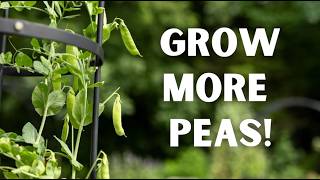
A practical how-to video teaching five core tips for growing sugar snap peas (mange-tout) across climates. Covers timing for planting in hot, mild, and cool regions; soil preparation and a recommended loose mix; watering and seed-soaking for faster germination; trellising/support and tying; and frequent picking to encourage continuous production.
Chapters
If you're looking for an easy, fast growing plant that gives you tons of production in early spring and early fall and even through a mild winter, you have got to start growing sugar snap peas. In this video, I'm going to give you five tips to get your peas from seed to harvest the easy way you're going to be growing peas like a pro in no time. First off, I've grown these sugar snap peas in three different climates. I started off growing them in Mike Houston, Texas, garden garden, where it was super hot most of the year, but I grew them all winter long. Then in my Chicago garden, where I got them in the ground as early as March 13th and grew them all spring long and then again in the fall. And now I grow them here in my mild climate garden here in Nashville, Tennessee. I grow them starting in February, all the way through spring and again into late fall. So no matter where you live, this system is going to work for you. Not all peas are created equal. So there is your typical shelling peas, probably the ones that your grandmother grew up growing. Then there's snow peas that have that flat pod, not as tender or crunchy. And then there are sugar snap peas. These are my favorite. I learned that the French have a term for it, it's mange tout, which means you can eat the whole thing. Like, the peas taste delicious, the shells taste delicious. Even the leaves and tendrils taste delicious, like Manchu all day long. That's my kind of plant. So sugar snaps is what I want to teach you how to grow. And I have to say, if you're going to grow just one pea, it has to be this one. Let's talk about timing when it comes to putting peas in the ground. As soon as your soil can be worked, it's time to plant peas. So if you're in a hot climate, like in Houston, I put peas in the ground not based on when the soil warmed up, but when the soil started to cool down. So you're thinking late October, early November. That's the time to plant peas. And here's the cool thing about being in a warm climate. You can plant them every few weeks and have peas all winter long. If you're in a hot place, peas grow almost entirely through the whole winter. So you could plant them starting in October and plant them every two weeks all the way up until February. And you're going to get peas literally growing out your ears. Now, if you're in a mild climate, you're going to wait until the soil starts to warm up at the End of winter, we're talking as early as January. If you're in a mild place, as soon as that soil feels workable, it's time to put your peas in the ground. Here in Nashville, I plant my peas in January. Then I get a nice flush of peas all through spring, and then I'll put peas back into the ground as soon as the soil starts to cool off around August or September, and I'll get peas again in late fall. Now, if you're in a cool climate, you're going to put these in a little bit later when spring finally starts to show its head, around March. I remember in Chicago, it was St. Patrick's Day. That was known as peace pea planting day. So as soon as the soil starts to warm up, as soon as the snow hopefully starts to melt, you're going to put peas into the ground around St. Patrick's Day, grow them all the way through April and May, and then you'll plant again around August so that you can get a good harvest before the first frost hits or the first snow comes. To sum it up, peas love cool weather, so timing is everything. Now, when you plant your peas, you want to be sure you're planting them along a support. Peas are climbers. Even bush varieties are going to need some kind of support behind them. Here I'm growing my sugar snap peas on an arch trellis, but I also have them planted around the garden on obelisk trellises and panels. You can build a simple little bamboo teepee. Or my very first season, we just took some stakes, put them in the ground, and used some netting to have the peas climb up. They don't need something super strong because these plants, they're very lightweight, but they do love something that has a very thin line for their tendrils to grab onto. They'll send out these really cute little baby tendrils as they're growing, and they want to feel that there's a structure to climb onto every time that tendril appears. So you want to have a trellis, a support right behind those peas so that that tendril, that very first tendril, finds something to climb onto, to grab onto each. And every time, it adds another 2 to 3 inches to the plant. Now, it's not just above ground support that these peas need. They also need great soil and water underneath. When you plant these seeds, you want to be sure you're planting them in a nice, loose soil. I teach about my 103 soil mix, and it is the best to use for peas. It's got topsoil compost and sand in it. I'll put the full recipe below this video for you to check that out. So when you put your seeds in, you want to be sure that the soil already has all the nutrients it needs. Peas don't need to be fertilized, but they do want to be growing in nice, nutrient rich, loose soil. Once you plant your seeds, do not let them dry out. These seeds need to stay watered for the first two weeks until you see a sprout appear from your seed. It is not time to slow down on the watering. In fact, to get a jump start on the whole process, you can soak your pea seeds overnight. These peas have an outward coating that is a little tough to break. So what I like to do is take these seeds, soak them in water the night before I plant, and then that first outer kind of tough seed coat starts to wear off and it speeds up the germination when these seeds go into the soil. When you plant your seeds, do not bury them too deeply. Remember, when you plant a seed, you only bury it two times the width of the seed. So that's going to barely be about one inch that you're going to put this seed down into the soil. So grow a great soil, no fertilizer needed. Keep them watered until they sprout, and then you're going to keep them watered about an inch per week. But the most important time to water is that first few weeks until you see a sprout. Beyond watering, you've only got two jobs to do to keep your peas producing and have a ton to harvest. The first is trellising. So we did our good job of getting these peas planted along a trellis, but now we've got to keep up with it, and that's what we do by just literally tying these plants to the trellis. Now, you don't want to rope them in too securely. You want to be sure they've got plenty of room to grow and have space space. You do want these little tendrils to feel the trellis as they grow. And for my particular trellis, this is the Nicole Arch trellis. The, the rungs on this are a little too thick for the tendrils to grab onto, so I use this twine for it to grab onto. That way it's a little bit thinner and easier for the tendrils to grab and keep climbing. Beyond trellising the peas, the last thing you got to do is keep these pea vines pink picked. So you want to remember the way nature works, right? Why are these peas producing fruit in the first place. Well, inside these peas are tons of seeds, the seeds for next year's plant. And every plant has really one main purpose. They want to reproduce. So when this plant produces these peas, it tells itself. Hey, I've done my job. I've created the seeds for next year's plants. I'm. I'm kind of done now, right, because I've made all these seeds for next year's plants, so I can just retire. I can just hang out here on the vine and, you know, kind of do my own thing. Well, when we pick these fruit, as soon as we see them, what we're doing is triggering in the plant, a signal up. You're not done yet. You've got to keep making more fruit, because the fruit you worked so hard to produce, it's gone. Nicole took it. So your main job, easy as it may sound, is actually to keep these vines picked. The more you pick, the more they produce. I know it sounds too good to be true, but it actually is. So keep your peas trellis, keep them picked, and they'll keep producing. So good soil, consistent watering, a sturdy trellis, tying your peas up, and regularly picking it really is that easy. Speaking of easy, you can get these seeds for free right below this video. I'll see you next time.