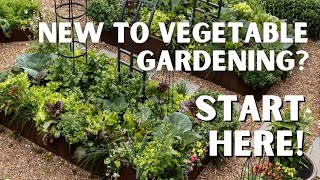
Nicole Johnsey Burke breaks vegetable gardening into five essentials: space, sunlight, water, nutrients, and tending. Plants fall into three groups with different needs: leafy greens need as little as 1/9 square foot and 4 hours of sun, while fruiting crops need up to 3 square feet and 10 hours. Most vegetables need about half an inch of water per week.
Questions this video answers
March 21, 2025.
1/9 of a square foot (nine plants per square foot).
About 1/4 of a square foot (up to four plants per square foot).
1/2 square foot.
1 to 3 square feet per plant.
Chapters
You do not need a green thumb to have success in the garden. You only need to know what a plant needs. In this video, I'm bringing it back to the basics, the bare bones of gardening, so that no matter what plants you dream of growing, you know the five things that any plant needs. By the time you finish this video, you're going to feel like you have a green thumb. Because anytime you have a plant that you're ready to grow, you'll know exactly what to do. Give it. The first thing your plant is going to need is some space. But the space needs for plants varies. There are a lot of plants that can grow in tiny little spaces. So if you've got a tiny space, you can still be a gardener. Now, when it comes to growing plants, when they're first starting and growing leaves, they don't need a lot of space to even grow to full maturity if they're ending at the leaf stage. Plants that are growing to the leafy stage need only 1/9 of a square foot to grow to full size. Things like spinach, lettuce, arugula, all those plants, you can fit nine of them in every single square foot of your garden space. Then you have plants that are going to need a little bit more room. Those plants might need about one fourth of a square foot. Those would be things like seeds, celery or Swiss chard or kale. Those can also be some of your herbs, things like oregano, rosemary, or sage. You can plant up to four of those plants for every square foot in the garden. Then there are plants that only need a half square foot to grow to full maturity. These could be things like beans or peppers, plants that are giving you flowers and fruit, but they can do so in a very small space. Then you have plants that might need 1 to 2 to 3 square feet in the garden. These, these would be things like tomatoes, squash, zucchini and eggplant. And that's the most amount of space that any plant is going to need in a vegetable garden. So from 1/9 of a square foot to 1 to 3 square feet, that's the range of space that your plants will need. And this is the first thing any beginner gardener needs to understand when they're putting a plant into the garden. A gardenary rule of thumb is to give each plant the space, space it needs, and not an inch more. Now, if you want to grow a garden that fits all these plants into one space, your leaves, your roots, and your fruit, you've got to learn the gardenary way of setting up planting and tending a garden. I made an entire workshop for you to watch so you can learn exactly the way I plant so you can do it too. I'll put a link to that workshop right below this video. Once you've figured out the space, it's time to consider the second sun. The sun gives plants energy, and the plants use that energy to grow and produce. When most people start gardening, they assume they need a space in their yard that is flooded with sunlight all day long. But all the plants you grow in your garden, they have different sunlight needs. Leafy greens in your garden, they only need about 4 hours of sun per day. Root crops in your garden, they only need about 6 hours of sun a day. If you're growing small fruiting plants, things like beans and pepper plants, those need about eight hours of sunlight a day. And then your big fruiting plants, things like tomatoes and melons, they're going to want 10 hours of sunlight a day. Once you figure out your sunlight needs for your plant, that can help you figure out where they go in the garden and the things that are going to work best for your space. Just because you've got a shaded yard or only a few hours of sunlight and doesn't mean you can't have a green thumb. You're just going to plant the right plants for the sunlight you've got available. The third basic need that all plants have is water. Water helps move all the nutrients and energy from the sun and from the soil through the plant so it continue to grow and produce. But different plants have different water needs. Leafy greens have one of the lowest water needs because they have such a small root system. All you need is a little bit of surface water for your leafy greens and they can stay productive and healthy. Root crops are going to need more water because their roots grow deeper into the soil. You're going to need at least a half to one inch of water every single week. For your root crops. Your fruit crops, they're going to need the most water of all. They have really deep roots that sink deep into the soil. So you'll need a nice watering every single week. Plus, those plants that flower in fruit, they need more water every time they reach a new stage of development. So if you live in a place that doesn't have a lot of rainfall, or you want to save on money watering your garden, or you're just afraid you're going to be standing over the garden with a water hose every single day, you can plant your garden according to water needs to be sure that you're only growing the things that need the amount of water you can provide. Your plants don't just need space, space, sun, and water. They also need food. It's crazy to think about, but your food needs food to feed you. Your plants get their food from the soil, the air, and the sun. And plants need a different type of food depending on what they're producing. For plants to grow leaves, they need nitrogen. Nitrogen is the nutrient that gives them all they need to produce lots and lots of beautiful leafy greens. If your plants are growing deep roots, they're going to need more potassium. That's the nutrient that really helps plants dig in and go deep. Finally, if you're growing plants that need to flower in fruit, those plants will need phosphorus. That's going to be the nutrient they need to go to that final stage of growth. So depending on what you're growing in the garden or what stage of growing it's at, you know that the nutrients will change throughout the growing season. Nitrogen first, then potassium, and finally phosphorus. If you use the soil blend that I teach you to use, a mix of compost, topsoil, and sand, we have a video all about soil. If you haven't watched it yet, you can do so right after this video. But if you create a soil blend the way I teach in general, your plants are going to have all the nutrients that you need. But anytime you see your plants slowing down in terms of leaf production, root production, or flower and fruit production, you know how to organically amend your soil to give your plants the nutrients they need at every single stage. If you haven't noticed by now, I separate my plants into three categories when I grow in the garden. Leaves, roots, and fruit. As I went through and learned how to garden myself and then taught all my clients, I realized that by dividing plants into these categories, and it totally simplified the garden for me. So if you love this idea of understanding plant needs and then matching what you've got in the garden to those plants, you're going to love this book, Leaves, Roots, and Fruit. I'll put a link to it right below this video so you can check it out after you're done watching. So when it comes to growing plants, they need space, they need sun, they need water, and they need nutrients, and they need a little bit of attention from you. But just as the space, sun, nutrient, and water needs grow with the types of plants that you're growing in the garden, so do the tending needs. In fact, when you're growing leafy greens, those plants that don't need a lot of space or sun. They also don't need a lot of tending. In fact, simply giving the plants the water that they need is pretty much all the tending you have to do for leafy greens. In fact, the main thing you do for leafy greens and herbs plants, plants that you're growing just for the leaves is harvest them. By harvesting from your leafy greens, you're protecting your plants from pests and you're making them more productive. In this case, harvesting is actually like pruning. You cut away from the outer leaves in these plants and then they grow back from the center. When it comes to root crops, the tending tasks get just a little bit more difficult. You need to thin the root crops to be be sure they all have the amount of space that they need. You need to make sure they stay nice and watered, and then you simply harvest them. The same kind of tending necessary for your leafy greens. The plants that need the most amount of tending are your flowering and fruiting plants. Things like tomatoes, peppers, beans, squash, zucchini. These plants will need pruning and they'll also need feeding. As these plants move to that final stage, they're going to need a little bit of organic feeding of potassium or phosphorus to be sure they produce as much as possible. They'll also need pruning to be sure that the plant's energy is going toward the fruit and not to lots of leaf or root production. Finally, they might need some extra defending. Fruiting plants are the most likely to be attacked by pests. So these are plants you're going to have to watch more carefully and be sure you defend them organically from any kind of pests that get to the fruit before you do. And there you have it. You don't need a green thumb after all. You just need to know what your plant needs. It needs space, it needs sun, it needs water, it needs nutrients, and it needs a little bit of attention from you. So if you love learning the science behind plants, if you love simplifying gardening so it's not so confusing and overwhelming, you better stick around the gardenary channel because we've got way more of this kind of stuff coming your way. You should subscribe, you should like this video and then tell me below what lesson you'd like me to teach you next. And I'll see you next time.