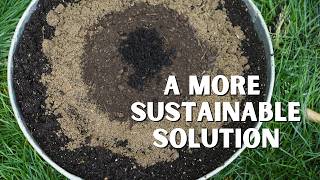
Nicole Johnsey Burke explains why she adds coarse sand to garden soil instead of peat moss. Sand improves drainage and mimics natural riverbank soils. Her recipe: one-third topsoil, one-third compost, one-third coarse sand, topped with earthworm castings.
Chapters
Does your garden soil feel heavy, soggy, or just plain lifeless? Well, in this video, I'm going to show you why I use this sand in all my garden soil mixes and why it might be the missing ingredient that your garden is begging for. We're going to talk about how sand helps with drainage, how it stacks up against peat moss, and why it's actually more in line with how soil works in nature. You're going to want to stick around to the end of this video, because I'm going to teach you how to blend your own organic soil mix so that it's fluffy and gives you a garden that grows like mine without harming the environment. So let's start with what your vegetables in the garden actually want from soil. Almost everything that grows in the garden, from leaves to roots to fruiting plants, they all have special needs that the rest of your garden doesn't share. First, they need room for their roots to spread out and grow. All these plants have pretty tender roots that just won't be able to break through dense soil soil. Next, they need soil that holds onto moisture long enough for the plant to send that moisture all the way through these very tender leaves and stems. Remember, the plants growing in your vegetable garden, they're dynamic. They're growing inches and feet literally by the days and weeks. So they need access to water immediately. But finally, they need soil that doesn't hold onto the moisture too much. Otherwise, these tender, fragile roots, they literally rot in the soil. And when your soil holds too much moisture, it makes your plants feel like they're wearing soggy wet socks. And we all don't want any of that. So if your soil is too compacted, the water is going to end up either pooling on top or sitting on your plant's roots. This is going to either cause your plants to be stressed or, even worse, to have root rot. And that's where the need for a lightener comes in. This is why Pete has entered the garden scene. Tradition. Additionally, peat has been used nationwide to lighten up all of our garden soils. It's absorbent, it's lightweight, and it's inexpensive. But here's the thing. Peat is not a renewable resource, at least not in a way that matches our rate of use. Here's why. Peat takes hundreds to thousands of years to form in the first place. Next, harvesting peat destroys wetlands, which are incredible carbon sinks. These natural environments that literally pull carbon from the atmosphere and store it. But once harvested, that carbon that was so perfectly stored in nature is now released back into the atmosphere in Other words, it's like using an ancient forest to light a little campfire. There's better ways. So what's the alternative? For me, it's sand, coarse sand. And here's why it works. First off, sand adds drainage to your soil. So sand has the biggest particle. When you're thinking about the three components of most soil, which is silt, clay, and sand. Clay has the smallest particles. That's why it's so dense and hard to get water through. Silt is going to have kind of a medium sized grain where there is more porosity, more space, but they're not quite that big. But sand, each of these particles is as big as they get. And you can even look, you'll literally be able to see each and every one of the particles when you look through. Well, each of those big particles, what do they do? They add some space in your soil, they add air pockets. And that air space is exactly what all these plants in the vegetable garden need to retain their moisture, but not sit in water. The second reason why I love sand is because it's a more sustainable resource. It's sustainable and abundant. Sand can be found pretty much anywhere, and it doesn't require this intensive extraction like Pete does. In fact, the sand that we use in our gardens, it's just a byproduct of lots of other natural processes. So I can build a garden without feeling guilty that I'm depleting other natural ecosystems. Finally, using sand in my garden is really just imitating nature. I talk about this in my book, Kitchen Garden Revival, where I go back to the way tomatoes originally grew, how they were literally thriving on the banks of the river. If you think about the soil around a river system, it is full of coarse sand just like this. As water comes down from the mountain and rushes through the river way, it drops all this coarse sand along its route. So many of the foods that we grow in our garden, they originated growing alongside a river. This soil was full of silt and decomposed products, but also tons of sand. This is how I first came up with my magical soil blend. I'm about to tell you the full recipe, but I've also included a handy download that you can grab in like two seconds. I'll put it right below this video so you don't have to memorize it or grab your pen or pencil. Right now, here is the magical blend. We're starting off with a thinner third of topsoil. What is topsoil? Topsoil is the top layer of your soil. So any place where you're living. No matter if you're in a warm climate, a cold climate, a rocky climate, a clay climate, you're going to start with a third of topsoil. So you can either buy this from the store or you can literally just dig up the topsoil and get about a third of the total soil you're mixing. The next third is compost. So this can be your own homemade compost, it can be a mushroom compost, it can be leaf mold compost. Really, any kind of compost works. What we're going for here is that decomposed matter. Think back to those plants naturally growing on the riverbank, right? You're going to have the plants will grow up each season and then they're going to die right there in place. And so they'll be decomposing in place before the next plant grows. So that's what we're imitating when we add in that compost. Finally, you're going to add in a third of coarse sand. So you're going to bring in this sand. This is not play sand. It's not beach sand. It's a coarse sand. It can also be called carpenter sand. And you can get this from any soil yard. And a third of your entire garden soil mix needs to be coarse sand. Now, the one exception for this would be if you live in a very sandy place, if your topsoil is super sandy, then obviously you're going to cut down on the amount of sand you add to the blend. And then finally, we top this off with some magical earthworm castings. Think back to that riverbank, all that food growing. There's not just topsoil, there's not just compost from decomposed matter. There's not just sand coming in from the river, but there's also going to be some castings, some poop from the animals moving around that plant, the earthworms coming up, eating that decomposed matter. And that's why we add a little bit of earthworm castings right at the end. Now, don't forget, you can download this whole recipe right below this video. And that way you don't have to go back and watch that section again. Although I'll tell it to you as many times as you like to hear, because obviously it works. So anytime I see plants in the garden that look stressed out, are rotting at the roots, or just simply aren't thriving, I always ask the question, could sand be the answer? So now you know what to do. Keep it simple, keep it sustainable, and keep on growing. I'll see you next time.