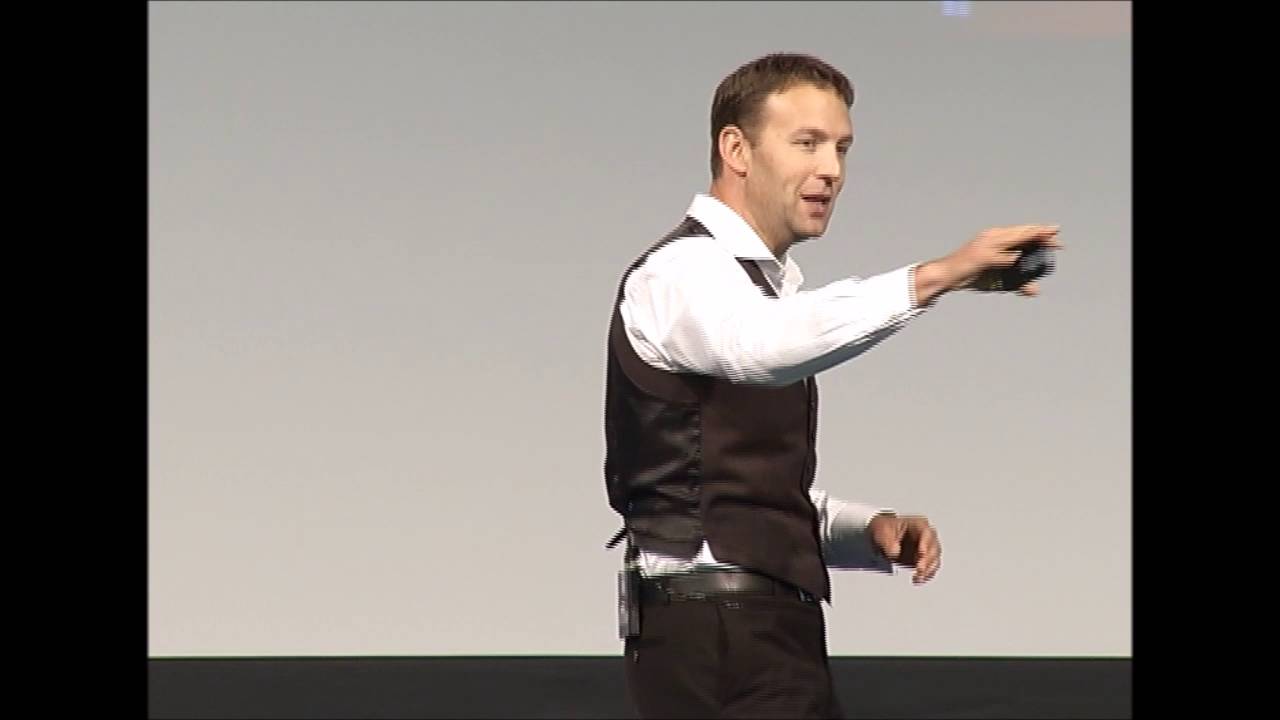
Gavin Freeman, director of Business Olympian Group, argues that executive teams must train like elite athletes to handle crises. He points to Commonwealth Bank, United Airlines, and Dreamworld as examples where reputational damage instantly eroded market value, and outlines a process starting with worst-case scenarios, rehearsed response plans, and rapid coordinated communication.
Chapters
Welcome back to the Switzer program. Well, the scandals plaguing the Commonwealth Bank, the political pressure that is really pinching Australia's gas companies, they show that no company really is immune to a crisis. For more on this, Gavin Freeman, who's the director of Business Olympian Group, joins me now live from Melbourne. Gavin Freeman, thanks for joining us. Thanks, Lynne.
Always a pleasure.
Now, before we talk about those specific examples, your business helps other businesses reach their potential. That's what you promise. You say like elite athletes. How do you do that? And, and are you surprised that companies need your help?
Well, no, not at all. Look, my background comes from working with our elite athletes. I spent many years with our Olympians looking at how do we enable them to, to perform effectively under pressure. And in our minds, the difference between good and great is the ability to perform consistently under pressure. And so if you think of most organizations, they're no different from that, from that team, whether they're going out there, they've designed a plan, they've got a strategy in place, and then they have to go and perform. And when the pressure hits, unfortunately, some people trip over. And sometimes in our world where we focus a lot on working with companies under crisis, that crisis causes a major hurdle and can have a significant impact on the business.
Alright, but what do you actually do with those companies? How does it work?
So there's a couple of things we've got to do. One thing we've got to do is understand what is the worst-case scenario for an organization. What are those things that keep them up at night and what are the things that are going to cause major issues for that business? Then what we need to do is understand how the executive team comes together. And in my mind, you know, from our perspective, they've got to be able to become superheroes. They've got to become Batman and Superman. They've got to be able to put their undies on the outside and move from day jobs, which is doing their day job and ensuring their business is developing, and, you know, creating the shareholder wealth and everything else they do during their day jobs. But when the crisis hits, everything changes. Everything around them is unknown. They've got to make decisions under pressure. There's a lot of unknown factors. They're not getting the information. And so that can become quite challenging. So what we try to do is help them understand that, help them build their strategies, but then more important, practice them. Because unfortunately, you don't want to rock up at your Olympics the very first time you do that first race. You want to make sure you've practiced it a few times so that when it does happen, you're able to respond and not look like a deer in the headlights.
Yeah, alright, well, say let's look at, say, the gas crisis that we know is facing us, and then the pressure that, at least for part of that, that the government is putting on our gas companies. I mean, how do you see that they can help— be helped?
Well, it's an interesting factor when you start to think about where's the pressures coming from. So depending on which angle you're looking at it, you know, from the government's perspective, they're feeling the pressure from the community. They're feeling the pressure from their constituents and the like, whereas the gas companies have got a very different mindset that they're trying to do. They're thinking 3, 5, 10, 15, maybe even 50 years ahead, trying to work out how they're going to ensure that their strategy stays on task. Now, if the government—
But also, how do they deploy capital and please their shareholders?
Absolutely. And if suddenly their strategy is taking them down one way and the government comes in and changes the landscape, well, that in and of itself creates a very small but an important crisis for them to be able to overcome. So how do they ensure that their strategy is future-proof? How do they ensure that when these hurdles get put in front of them, that they're able to maintain, I guess, the overall agenda, their overall value system, and overall strategic path that they're trying to follow on, but deal with these crises in a way that's not going to necessarily damage their reputation? Because you can imagine now how this plays out in the media. Mums and dads are watching, seeing what the gas companies are doing. that can impact their reputation. And it was interesting hearing you guys talk about before whether a reputational attack can actually impact on a business. And we absolutely categorically do have information that suggests that it will, and it does. And we've got a lot of positive—
When you say impact on a business, you mean that we had that discussion about Seven West Media. Are you saying it impacts just on their reputation or on their culture or on the way their employees see them or on their share price?
All of the above. You know, we only need to look at 2 major incidents that have happened recently, both United Airlines after their incident when a passenger was dragged off the plane. They lost nearly $1 billion in the value of their shares on that day.
Yeah, that's right.
In Australia, we've got a much better, much more recent and awful example of what happened with Dreamworld and Ardent. You know, off the back of that Dreamworld tragedy, Ardent lost 23% of their value within the first week or so. And, you know, Often this happens and companies do then bounce back. If you follow their share price, they then lost a further 21% after their CEO was stepped down or whatever happened in that scenario. So they've lost nearly 50% off the back of an incident which was an absolute tragedy, but it wasn't the tragedy, it was the reputational impact that that had. United Airlines, for those of you who might remember, a couple of years ago they destroyed a famous guitarist's guitar, they lost nearly $180 million, came off their share value off the back of what was a $1,200 guitar.
All right. But I mean, you're giving all examples, but how can you fix those? I mean, those things in one way— well, certainly the tragedy at Dreamworld, that was a crisis that was, you know, unexpected completely.
Totally.
But are you saying it's how a company deals with it after the fact that often really determines the outcome in the end for them?
Absolutely. The quickness you can get out and the way you communicate and the way you engage with your customers, your staff, and the very— all of— and taking into account all those factors really does play a huge role. But it's also about having the plans in place. So what should we do? Because often what happens is people are running around going, what do I do? What do I do? What do I do? What we try to do is help companies build the plan so that they know what to do if something were to happen. And obviously you can't stop an incident from happening. But you've got to be able to say, if something does happen, how do we respond? How do we get our communication on the front foot? How do we realize that unfortunately in our current day and age, you know, we've got your traditional media, that's, you know, the guys, you guys we're talking to today, but there's the non-traditional media, and in our world there's also the satirical media that started to play a role. You know, when you're made fun of on late night or on various other shows that have that more satirical media, that becomes challenging for companies to deal with.
Alright, if you look at sort of building an effective and a successful culture at a place, at a company? I mean, that is often— it's sort of just organic and it seems to come up by itself. Or can it actually come down from the top, from the leaders of that company? And of course, we've seen with the various issues at the Commonwealth Bank and how they're dealing with it, we now have APRA looking at specifically the culture and accountability inside CommBank.
And in fact, they're going one step further. They've actually just recently announced that they've actually got a team of organisational psychologists who are going to look into the culture of some of these businesses. So we're adding that extra element, not just the financial controls that are around it, but actually what's the mindset that's behind these decisions that are happening. The challenge with culture, it's kind of like a foreigner asking us what's the climate like in Australia. You have to sort of then say, well, which part of Australia? And in fact, even if you went to a part, it would be subsections within that. So the problem with large organizations is, in my mind, there's no such thing as an actual culture, because what's happening in one part of the business might be very different to another. So that becomes challenging for an executive group to be able to say, how do we set the culture? But it is still important for them to set the tone and ensure that if the tone is set up at the top, that it then filters all the way down the business. But unfortunately, you're not going to be able to control all the various elements. The challenge for big organizations is how do they then capture information coming back up which demonstrates how an organization is behaviorally demonstrating their culture? And that's where it's challenging. Look, we can, we can measure metrics, we can measure how people say they're engaged. Where it becomes more challenging for organizations, and they need to spend more time doing this, is actually looking at the behaviors that are occurring, because that's often where things go wrong. If we look at what happened with CBA, All right. I can, you know, there's controls in place, but it's definitely the behaviors.
All right. Gavin Freeman, Director of Business, Olympian Group. Thanks for joining us.
My pleasure. Thanks.
Well, we're going to have another break, but after that, we're going to go back and have a look at the markets all around the world. Lance Lai from Accountancy Invest will join me.