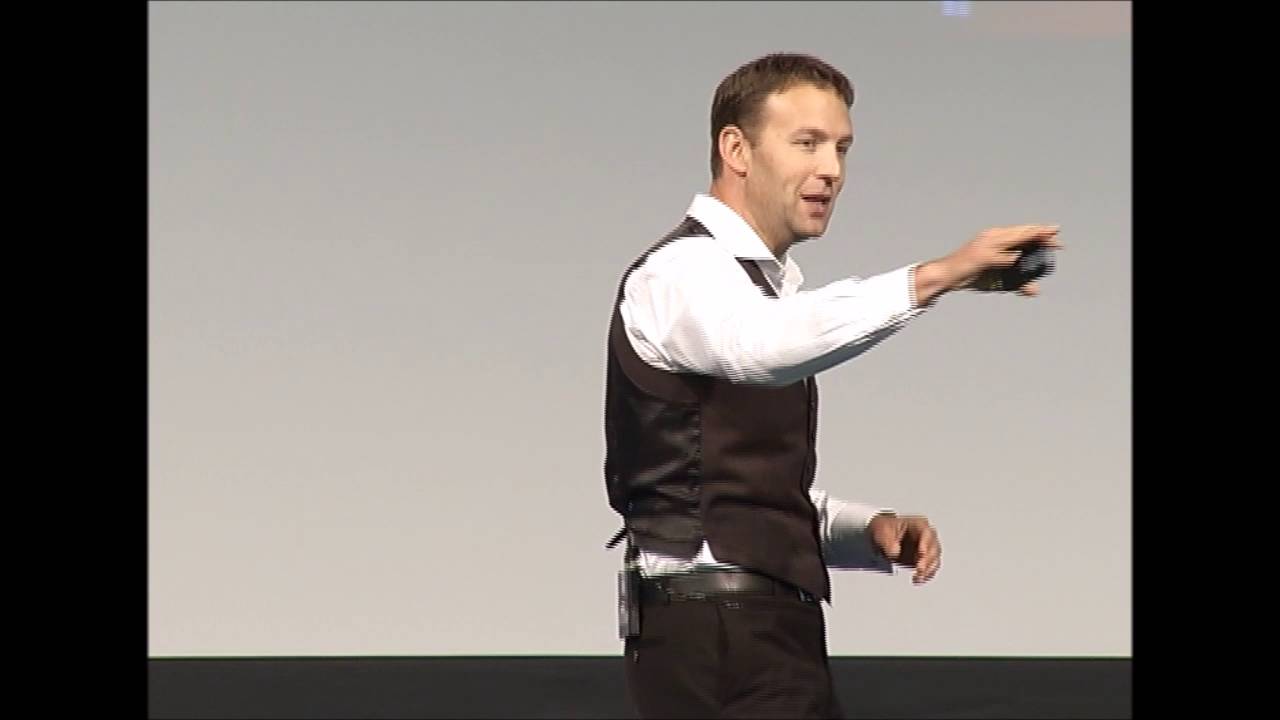
An audience participates in a four-year commitment exercise: no chocolate, alcohol, or muffins; 5 am runs; constant drug testing and media scrutiny; low pay. Most drop out. The presenter explores what separates good from great and how Olympic athletes' resilience applies to work.
I'd like to invite back to the stage Gavin Freeman to be conducting this unique interview. So please help me put that together, a big hand of applause for Gavin Freeman.
All right, fantastic. What I'm gonna get you guys to do now, you've all been listening, I'll need you to stand up for me. We're gonna play a little, we're gonna have a little bit of fun. So everybody up. Everybody up. Now, a little bit about me. I spent the first part of my working career with the Australian Olympic team. And I was able to spend some incredible moments with some amazing individuals who went out and achieved their goals far beyond things that they ever thought they were ever going to achieve. They had this Olympic mindset, they had this desire to achieve, and they went out and they won. And what I wanna do is take you guys on a bit of a journey of what it feels like to be an Olympian. What are the things that we have to do to achieve those goals, those ultimate goals that we're trying to achieve? But here's the kicker. Everything that I'm gonna show you is something you have to commit to for the next 4 years. If you can't commit to it, All I want you to do is sit down, okay? Anyone want to sit down now, that's cool. We've got someone in the front down. Alright, let's get the screen up. Excellent. First one, no more chocolates, no more alcohol, no more muffins for the next 4 years.
4 years?
Okay, this is gonna be a hell of a lot easier than I thought. I lost 3 quarters of the audience in the first one, I've got like 8 to go. Alright, that's okay, we got a few, we got a few standing, we got a few standing. So the next one is you gotta wake up 5 o'clock in the morning. It's Singapore, it's cool, it's the best time to go for and do your 5K run. Alright?
5K run?
We've still got a few standing. No, no, no, keep, you wanna stand up, trust me. Keep standing up. Alright, we've got a, alright, few more, here we go. Right, so next thing we're gonna do is somebody's gonna come along and they're gonna take those skinfold measures and they're gonna prod and prod and all the scientists are gonna check that your body's in the ultimate condition. No, we lost her, she's gone. Alright, I've got a whole second section to go. Oh, we've got a few still standing? Alright, last couple. Next thing we're gonna do is we're gonna drug test you. And you know what that means? That means you gotta stand in front of somebody and pee in a bottle. Right?
I am.
Yeah? Who's still standing? Where's the hands up? We got one in the back there, we got a couple over here. Alright, we've still got a few Olympians in the group. I've got a few more to go. Right, the next thing you gotta consider is that you're gonna be performing on a world stage. Your entire country's gonna be watching you and they're gonna be evaluating you. You happy with that one? Yeah, she's— yeah, she's still standing. We still got 3 or 4 standing, okay. I'm still standing. Following that, the media is gonna just be at your place every second day. They're gonna be taking photos of you, they're gonna be taking photos of your family, they're gonna be taking photos of you in your undies, you know, if you, you know, with your bikini on, your bathers, drinking alcohol and putting it in the paper, we're all good to go? So we've got 3 left standing. Alright, you don't get any days off just 'cause you're tired. Right, and no more injuries, right? We still good to go? Alright, last one and let's see if I can get the last 2, the last 3 of them to sit down before we go. The average Olympian, right, the average Olympian makes less than $25,000 a year. So I thought I'd take just another 15 minutes to share with you some insights around some of the learnings that I've picked up working with Olympians and some things that you can take away practically to put into place to understand the elite mindset and how that mindset translates back into the work that you guys do on a regular basis. So we've always— we're always curious about this question, the difference between good and great. What is that fundamental difference? And for the most part, people tend to think of the difference as being a technical difference. I'm good at something and therefore if I'm great, I'm better at it and I've got a better set of skills. From my perspective— So was there a fundamental difference between—
Thank you, thank you, gentlemen. Big hand of applause, big hand of applause. Thank you.