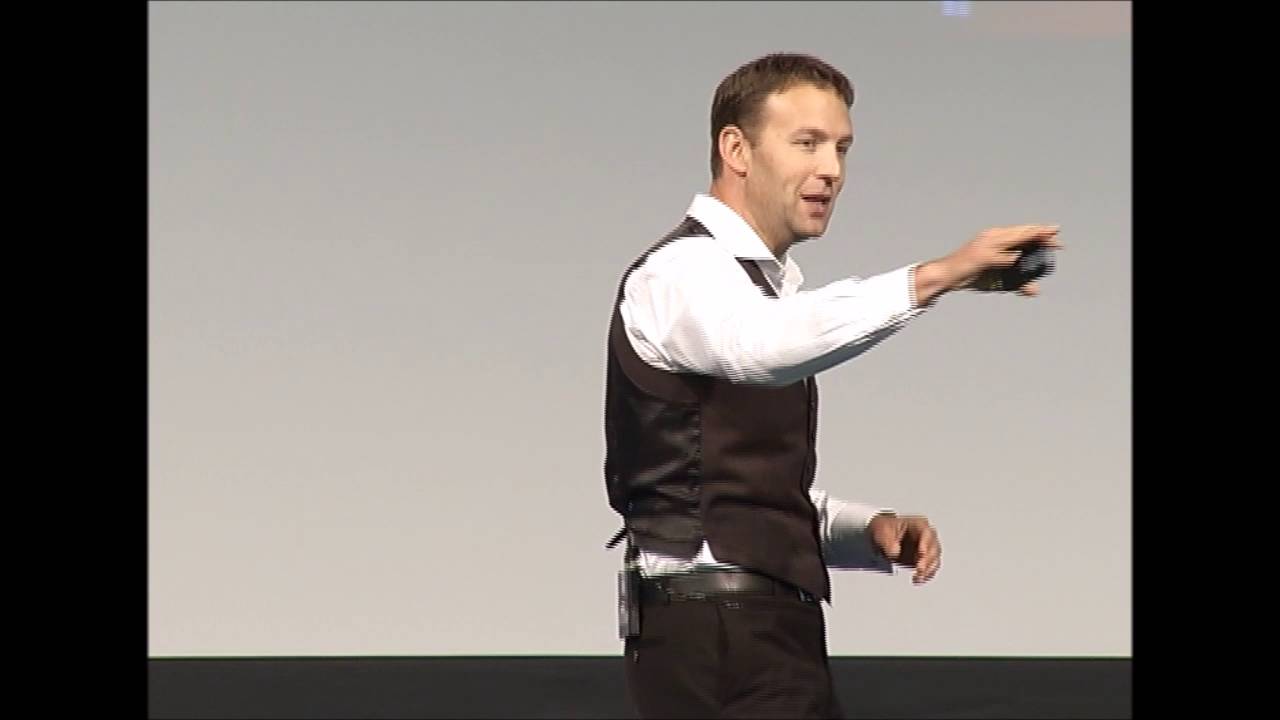
Psychologist Gavin Freeman leads leaders and employees through mental health during lockdown. They discuss psychological safety, why "Are you OK?" falls short, and practical tools: separate work and social channels, pulse surveys, exercise, routines, and humor to reduce stress.
Chapters
All right, guys, I might get started and welcome everyone. We've got some new faces and some old faces joining us. So for the new ones, thanks for joining along. This is a— this is— I'm stealing an idea from another company of ours that we worked with. This is an airplane that we're building as we're flying it. So jump in. You know, have a chat, share with your thoughts, share your insights, because we want to learn from each other. I'm going to guide today because it is in that mental health space. And that's, you know, I am digging back into my background as a psychologist and sort of where I come from. So I'm going to share some insights. The things that I'm going to share with you today, some of them are driven by anecdotal evidence, some of it's driven by sound theory. But at the end of the day, the biggest challenge we've got with anything to do with mental health is that every single one of us treats and explores and understands mental health in a very different way. So what works for me is not going to work for Kevin. It's not going to work for Peter, but it might work for Dean. But it might only work for Dean today. But then tomorrow something happens and it changes the environment. And all of a sudden Dean says, well, actually, you know what, that little strategy that I was using is now no longer useful. The other factor that is an overarching caveat is that we don't know yet why and how, and I don't think we ever will, understand the difference between our mental state and our mood state. So there is this fundamental difference between sort of when we talk about mental toughness and we talk about our mental health, and then we throw mood into the top of it, and then all of a sudden, it's this kind of weird cousin on the side that somehow interacts and impacts on us. It's kind of like dinner and the one uncle you don't want to have turning up. And usually, I'm the uncle in my family, so I'll own that one is the one person who turns up changes the dynamic of an environment where everybody else was fine until that one person came into the environment. So we do find that this concept of mood changes the way we interpret something. So sometimes a shift in our mood can change our mental state like that, but then all of a sudden we kind of go back the other day— the other way, um, almost instantaneously. So I throw that out as a bit of a caveat because the things that we talk about today, again, some of you are going to go, yeah, that sounds okay. And for some, you're going to go, no, not a chance. And that's okay. So I'd love it if you share. It's not about right or wrong. It's just about kind of giving us some insights. So let's jump into it. So just so you know, we've got a really nice community. It's growing. We've had about 4 or 5 more jump on. this week. And, you know, I think it's great that we've got this many sort of different companies wanting to come and just have a chat and share their thoughts and insights and feelings. So I'm going to throw it out to you guys and just, I'd love to get a sense from this concept of mental health and mental wellbeing. What are some of the things that are front of mind for you that you're thinking about? And hopefully I'll jot some of them down and hopefully I can answer some of those questions as we go along. But is there anything that you're seeing, that you're hearing, or that you're feeling That you'd be comfortable kind of sharing with us all as a starting point. Are your team struggling? It doesn't have to be you; it can be a friend. Come on, there's the opening. Someone has to take that opening. Who's got a friend who's experiencing something?
Look, I'm happy to kick off if that's cool.
Yeah, go for it.
It's Adam here, guys. I I actually did the little sabotage last week. And thanks for inviting me back. So for me, having challenges in that space for quite a long time, and this is a personal reflection on it, it's actually an ironic scenario because whilst the rest of the world, you know, appears, if you're reading social media, etc., to be freaking out over this COVID situation, I've been operating at such a high level for such a long time that it actually feels like a really good respite for me. So I've actually really enjoyed just being able to hit the pause button for a bit and being able to do a little bit more self-analysis and without the pressure of having, you know, 28 jobs in one day and, you know, trying to juggle 4 different businesses. It's actually been a really nice thing. And although it's fairly early on in, in the, the finishing line. That's sort of where I'm feeling right now. So it's, yeah, in this, in terms of strategies, is that what you're looking for?
No, no, no, that's great. It's a different lens, you know. I had another individual I was chatting to yesterday who, they reflected on it saying, I'm always an 11 out of 10 in positivity and, you know, optimism, and optimism. And at the moment, I'm an 8 out of 10. And he's feeling really bad about that. Because he's now gone, like, I'm always here. And now I'm feeling like I'm just a little under. But yet, if any of you met him, you would still get the impression that he was hugely optimistic and hugely positive and hugely motivational. But for himself, he's saying, hang on, but on my scale, I'm lower than, than else. I wonder if there's people that are, you know, we've got lots of leaders on the group. Is there something that people are hearing from their teams around how people are dealing with it or some of them, some of the language we're hearing coming from, from our troops? Kevin, your microphone's switched off.
Is that better? Yep. That's it.
Sorry.
Yeah, so what I'm starting to hear is just starting to hear the murmurings of people feeling a little bit isolated or starting to— especially, I think especially people who are a little bit more, you know, live on their own or what have you. And I think that that's very much something that's starting to— just starting to hear that a little more consistently.
Yeah, it's funny— not funny, but it's one of the core things that have come out of conversations I've been having of late, which is we talk about isolation, we talk about that being, you know, to protect the overall health. And we often then in the very next breath, we talk about, well, you're isolated with your family and you're at home with your friends. And some people kind of go, oh yeah, I've got my kids and they drive me nuts. But you've got your kids there. And some people have got a partner and there's lots of jokes going around, around, you know, I saw one just the other day of, it's a meme of somebody saying, yeah, my partner's out in the garden. And the person says, where in the garden? The comment back was, well, you just need to dig a little deeper. And obviously, you know, there's jokes and there's fun things around it, but there's a There's a portion of our population who we've probably missed in that thinking, which is the individuals who are isolating and they've got nobody with them. They don't have family necessarily, or there's family on the other side of the world. I have a— we have a friend of our family's whose son is here studying and his parents are in another time zone, so they live in the complete 12-hour shift often. With no friends because he's just arrived from another country, doesn't know anybody, can't go out, can't talk to his folks because of the different time zone, and he's sitting in his room all by himself. So it's one of these things that I think companies are going to have to start to think about, which is how are we looking after our vulnerable staff members who don't have the social support networks around them? And look, sending out a— sending out a how to look after your mental health is okay, but it's probably not going to cut it enough for those individuals. So I'll get into that a bit more detail. Guys, jump in if there's any other insights. But I thought I'd start the session off with just a little, little bit of lightheartedness and things I've picked up along the way. So for those of you going for eggs, milk, bread, toilet paper, and sanitizer, make sure you've got your mask on and an AK-47 in one hand. And I think that's an axe in the other hand. Can you imagine if this was a lockdown 18 years ago and we were all stuck with a Nokia phone? I think life would be mildly amusing. And look, the one on the right, if you have seen that, that is true. I have it on good authority that that is not fake news. that we will be doing some scanning from tonight. So if everybody could have a bit of a chuckle, read that through. It's clearly not real. But look, I think— and the reason why I start with this is that one of the things we know that works particularly well as a global strategy is humor. Now, humor is one of those elements that cuts across everything. And humor is everything from the funny stuff that we see on the screen at the moment, just memes that people have a bit of a chuckle at, through to some people use very dark humor to deal with some of their issues. And often humor is steeped in information that is outside of the norm. So when we go and see a comedian, we laugh because they generally are making fun of themselves, or we laugh at them making fun of something in our community that we don't like or often talk about. And that's kind of the nature of humor. So as a starting point, I'd say to you, you know, We've got to have a little bit of fun. We really need to bring that humor back into the way we're doing things. And that talks to the way we have our meetings. If you're running very clinical meetings and it's just getting down to the point, throw a cat video in there somewhere. They're really helpful. Just a little bit of lightheartedness can really sometimes just take the edge off. So I'll start with that, and then I'll go through the rest and sort of talk about some other thoughts and ideas we've picked up along the way when it comes to building our mental health. We've got to start off, though, by understanding this concept of psychological safety. And we hear it, we hear the word thrown around a lot, but, but in essence, psychological safety is about having the safe space for me to express myself, to talk about how I'm feeling, to tell a business what's going on, to tell my partner what's going on, whatever it might be. It's about feeling safe in the environment that, that we're in. And there's a number of ways organizations can do that. But here's some— here's a few things I think in this current environment that we need to start considering. We need to stop asking, are you OK? And now that seems counterintuitive. The reason why— and don't get me wrong, I think that the are you OK mantra is a fantastic mantra. But right here and now, if I were to say to someone on the screen, and it doesn't matter who, I could pick anybody who's out there listening today, are you OK? In this environment right now, I would imagine that the most likely answer is going to be, yep, yep, I'm fine. Right? And especially— and it's even harder when we don't have that face-to-face contact. So we're on the phone and I say, are you okay? I'm more likely to just get one type of answer, which is, yes, I'm fine. And that's because, partly because people have an expectation to answer in the positive. And they're not sure that they're in a safe enough space to answer potentially in the negative. So one of the ways we really go about building that psychological safety is how you share your thoughts and feelings with no expectation of return. So it's not about saying, I'll show you mine and then you show me yours type mindset. It's more about, if I can demonstrate that this is a safe space by sharing how I am going, then, you know, that old analogy, if you build it, they will come, will definitely start to come into play. But it's going to take time, and it'll take time. And the time, I can't tell you how long it's going to take because You know, Katie's team is going to take a little bit longer than Mark's team and slightly longer than Christina's team. So, you know, we've all got different environments and different organizations. And so the time factor is, is going to play out. I do want— I wanted to reflect on how quickly soldiers build psychological safety, because it's a good insight around how we can align ourselves to an overarching core and potentially build this safety a little quicker. So, you know, war is a, is an awful thing. And while war doesn't necessarily create a level of physical safety, what we do know that it does help create is a sense of psychological safety between members of the same team.
Right.
And there is something that sits behind that whereby if I'm in a trench and I know that you're there to look after me, I'm more likely to share with you my thoughts and feelings around what it is we should or shouldn't be doing. And so we build when we're under fire, and I use that in inverted commas. We are able to build this safety environment quicker because there's a shared experience. There's a shared enemy. There's a shared threat. And if I can recognize that you're in this bunker with me and we're both facing the same— and I know I am using this as an analogy— the same energy in front of me, then I can create that safe space a hell of a lot quicker than me just saying to you, hey, you can talk to me about whatever it is you want. Right. So, you know, in families, obviously, that's another way we see that build up fairly quickly because, you know, you've built it up over periods of time. With close friends, you've built it up over periods of time. What we're seeing now is we're seeing people all facing a similar enemy, and it's a much quicker and, and it's a much more robust environment. So we can build it quicker. You, you as leaders and you as potential, you know, champions in your business can go a long way in helping that, that creating that space and then kind of let others fill it in. You can't make it happen. It's not one of those things that you can sort of run your session, run a workshop, or you can jump onto your next crisis meeting and say, right, everybody, we're creating psychological safety. And it always— and then it happens. It's understanding and understanding the underpinning behind it and recognizing that when we all see that we're facing the same enemy, and I can share my thoughts and feelings and, and do it in a way that there's no expectations coming to to me that we definitely start to build it in that space. Please jump in at any point, guys. If anyone wants to add anything or any experiences that they've had in how they've gone around generating things for— don't worry about etiquette, just press the button and jump in and I'll stop my talking. If not, I will just keep going.
Hi, Gav. Adele here. Gav, we actually got some interesting feedback from business. It's more, yes, we're providing a lot of support like other organizations, but what we found out of the most recent survey, and keeping it to 5 questions, is that staff can see how their managers are under pressure currently, and they actually don't want to put that extra pressure onto them of the personal side of things.
Hmm.
And that's going to be, I think, a Quite a big difficulty to understand and find an approach in order to let staff open up. They're actually more conscious of others around them and trying to be supportive than looking after themselves or, you know, putting their feelings out there.
Thank you. Thanks, Adele. That's a really interesting insight. You know, the webinar I ran just before this one was leadership during a crisis. And I had a leader jump on, and, and what she shared with the group was it had taken exactly what you've just described. It had actually taken a long time for her to get across the message to her team that it's— that she's— that she has de-emphasized some of her strategic work to create more space for her to have those kind of conversations. So there was a permission piece aside to that. So that's one angle I think leaders need to think about. The whole concept of leaders being under additional pressure is, is absolutely true, and they are. The, the other argument behind that is to say, well, you know, as a leader, then if that is the case, and if your people are feeling that, then there is something to be said about actually verbalizing it and generating different modes of how you might communicate, not doing it all in the same space. I'll share an idea that has come from somebody who's on today's session. And I've seen it played out in other areas where we have multiple channels that we use to communicate with our teams. And we might separate out the channels for different forms of conversation. So we might use WhatsApp for our social conversations, but we keep all of our work conversations to email, whatever it might be, or however. So we separate out, so we create a bit of space between, okay, when I'm communicating through email, And we're talking about jobs or work or activities or things that need to be done, then that's the avenue. However, when we go into WhatsApp, that's where we become far more social and we make sure we keep a separation between the two. So that's another nice idea that somebody else— I know somebody on the groups using that kind of— now I think his words to me was it happened sort of just, it morphed into that. So it wasn't initially started like that and then it kind of just became like that and now we're keeping it like that. So that's another angle. The challenge a lot of organizations might face, and particularly yours in this case, Adele, is that the tendency will then be to say, right, we're going to up our EAP or external resourcing to fill that gap. And there's a— there is a— there is a place for that. And I think the EAPs and psychologists and social workers and the like do play a role. The challenge for them is the environment they create is quite different. They, they create a, a one-to-one environment, as opposed to one-to-many. And I think the concept of trying to build a little bit of psychological safety within your team is you're creating a one-to-many and a many-to-one, which you don't get from the EAPs and the psychologists. They can help individuals on a one-on-one basis. So, look, I don't have the absolute answer, but I think between, you know, leaders emphasizing that they do, there is a time and place for them to have those conversations, maybe creating absolute channels for those conversations can be quite useful. Well, and then combining and then using the EAPs and external sources effectively, because you don't want to create a divide in your teams. And I know that's easier said than done. Hopefully that's given some other insights. Any other, any other experiences people out there are having? But that's a really interesting one. Thanks for sharing that, Adele. On that line, you're obviously doing some surveying. Just had a quick insight, says, is anyone else doing surveying around this concept of mental health with their staff?
We're about to, Gavin. So we're just preparing surveys at the moment. Really just a pulse check on how people are travelling. How people are travelling. Yep.
Has anyone else got any experience or has done some surveying and checking in with people?
Miranda from Unisuper here. We haven't done it yet, but our intent potentially is to head towards probably another 2 to 3 weeks out. And we're leaning into CultureAmp, who've created a set a suite of surveys looking at wellbeing during COVID which we found really useful in terms of providing some context there.
Cool. What was the name? Sorry, just say that name again for anyone.
The company's called CultureAmp. It's an online survey tool we use as part of our engagement suite, but they've done some development of COVID-specific wellbeing questions.
Great.
OK, that's really nice. Any others?
We are, Gavin.
We're doing one a week, a pulse survey. One a week, okay. Are you just— and how are you managing the questions and their sort of responses? We're doing a summary report to the exec and then sending out specific regional or office-specific summaries to the managers and with guidance about what to do with the themes that come out of them. Right, okay, cool. So we've got a couple of different Different things happening out there with different organisations. Anyone else got anything else they want to add?
I just want to add something, if it's okay, Gav, just around those surveys. Do you find that you're getting the authentic and vulnerable responses, or, you know, to quote politics, are some people still toeing the party line out of fear?
Look, I'll throw it out to others that might be experiencing that. You will always get an element of that. It's called the Hawthorne effect, where people put down what they think they want you to put into place. And that's always a limitation with any form of surveying. It's why even, you know, even commentary over, over this sort of technology, the video being on is so much more powerful than the video off. So just seeing an individual and being able to sort of have that communication, you read so much between the lines. Because I could say to you, Yeah, yeah, I'm fine. I'm doing okay. And you might pick up more from that, that, that body demeanor than if I, you know, didn't have it on, and you wouldn't know necessarily the difference. So the tone and the pitch in our voice—
and that's the—
that is one of the downsides with surveying, is it doesn't pick up tone, it doesn't pick up pitch, it doesn't pick up cadence, it doesn't pick up the elements that you, you get from, from the one-on-one. But it's better than nothing, and at least you can get something, uh, in Rather than nothing.
And if I can just add a quick footnote to that question, it is obviously people in isolation, we talked about, you know, only having, you know, family or partners, but I think the other thing to be aware of is that this is probably the most a lot of people have spent with themselves. And on that mental health angle, if you have done little work on self-care, analysis or self-determination, this is such a long period of time to spend with self. And for a lot of people, that's going to bring up stuff that they're not even aware of.
We're going to have an existential crisis happening.
Yeah, but I think it's very relevant.
Oh, look, it is. I remember having my first existential crisis. I was 26 years old. At the age of 22, I'd set a goal that by the time I was 40, I was going to have made it in as an Olympic sports psychologist, and I was going to go to an Olympic Games. So I kind of had given myself a 15-year runway. By 26, I had been to 2 Olympic Games. And I remember walking out of the Sydney village, and they legitimately had a little hill. And it used to— it was like a roundy little hill. And I walked up to the top of the hill, and I sat on the top of the hill, and I kind of went, Wow. What the hell am I going to do with my life now, seeing that I've achieved— and it was just a unique moment. I still vividly remember sitting there going, yeah, this wasn't supposed to happen so quickly. And I had my little moment and had to do a bit of resetting of goals and a bit of self-reflection. And that was a great positive environment. So I can only imagine your point now being put onto a negative one. So it's a good— it is a really interesting point to think about yourself, to think about the impact it's having on you. Give you time, give yourself time and space to do that. I think there's something, and I've got a— there is a— one of the points in this is around giving yourself a little bit of space to reflect on. So let's jump into it. We've only got half an hour left. I just want to get through a few things, and then again, I'm happy to pause. So the way we've broken it down is to thinking about mental health from a few different aspects, from our routines, the way we exercise, the way we set our goals, overall welfare, and the safe space to what Adam was just referring to there. I don't want to spend a lot of time on this, but I just want to give you a quick insight into our brains. Our brains are made up of, you know, the logic and the emotional components. And the two never agree and they never get along. And they often are in conflict with one another. So logically, what we think and want to do is not always what emotionally we interpret that environment about. So our emotions are our gut feeling, our instincts, and our reactivity, whereas our logic is all that rational, intuitive, cognitive stuff. And you know, you know people when you're trying to have a discussion with them and they're being emotional and you're trying to give them a logical, rational reason on how to deal with something, it never really works particularly well. And the reason why it doesn't work is because our little brains explode. And the thing that causes our brain to explode the most— and that's a great little picture there, I did some editing the other day, clearly you can see my skills are not in editing— but the reason why our brains explode is a thing called amygdala hijack. So for those of you who haven't heard about it, the amygdala is part of our limbic system. It's part of our brain that controls emotional decision-making. It's part of our brain that when the life are off, you come into your house, it's dark, and you hear a noise that your brain immediately assumes 14 ninjas are going to jump through the window and take you out, right? For a nanosecond, you'd think that. And all of us have thought that. We hear a noise, we freak out, we have that immediate reaction. It is the thing that drives that fight and flight response you've all heard about, talked about in the media. It's this amygdala. And unfortunately, when we get this hijacking happening, Our amygdala and our limbic system goes on overdrive. So we become far more emotive than we are logical. And so therefore, using logical strategies don't always work as well. And so one of the things we need to start thinking about is how we can do 2 things. One is identify what triggers us. So there are certain things that trigger certain people, but also make sure that what we start to put in place is routines. So the more routines we can have, the more we will stick to certain things. Now, there's an issue with routines that don't always work. And I think when need to give ourselves some, we need to let ourselves off the hook when we break a routine. But we do need to have some. We need to not only give ourselves permission to break old routines, but then we need to give ourselves new ones. So it's all well and good saying, I'm going to stay in my PJs. OK, that's fine. Create a new routine. So look at some of your old ones and maybe create some new ones. The reason why routines are useful is that it helps the brain tap into this construct of certainty. Every morning, you would go into work. You would see Joe or Mary. You would go and grab a coffee. You would talk nonsense about whatever you saw on TV last night. You'd have a bit of a chitchat, and then you'd hit work. That is a routine. That is your body getting ready to— that is no different from the elite athlete who stands at the free throw line, bounces the ball 3 times, wraps it around their head, and then shoots the free throw.
Right?
That is a routine. It's a way of centering ourselves. It's a way of controlling our emotions. It's a way of giving some structure. So regardless of what you're doing, I would highly encourage you as a starting point to think about what routines have potentially been altered. And so therefore, you've removed a sense of certainty that will have an emotional response with you because you're not getting used to your same way of doing things. Think about the routines that have gone, and then think about, right, what routines can I potentially now start to put back into play? They are They're pretty useful. And they're very powerful, far more powerful than people actually realize until the routine has stopped. So I'm just wondering, has anybody developed any good routines that they're using for themselves now working from home, things that they've used to kind of get themselves going? Because I'm sure people would love to share. Because if you're like me, I have had a PJ day in the office. Not today. But I have, you know, in fact, there was one day I just didn't get out of bed. So I did everything from bed, which— Was mildly amusing, but I'm wondering, does anyone else have any routines that they've now adapted, changed, put into play for themselves? Come on, someone's got a routine they're going to share with me.
Gavin, it's Christina.
Hi.
I've pretty much stuck to my routine, albeit I get up half an hour later than I normally would. So it's breakfast, walk the dog, grab my coffee, come back, shower, and I do get dressed every day for work. I don't hang around in my PJs. Yeah, absolutely. And, you know, and this is— I'm probably sharing too much information, but, you know, one of the things that's on my to-do list, which I'm going to take the opportunity to do, is, you know, do the wardrobe clean-out. So it's a great opportunity to actually cycle through the clothes and see which ones you like and which ones you don't.
I think it's a great idea.
Yeah, so—
One of the things—
yeah, sorry, keep going.
No, you go, you go.
One of the things we've implemented with our children, and I stole this idea from a mate who did it as well, is that when they start getting back into their schooling, we're going to make them get dressed into their PE uniforms. So they put their school PE uniforms on. I won't make them wear their ties and their uncomfortable blazers and stuff. But just that simple act of putting on their PE uniform and say, right, that's— you're now in work mode or school mode for them can be really, really powerful for people. And the whole concept of getting dressed is really interesting because— I'm not sure how many people have got their cameras on. but most I think have got their cameras off. But it'll be interesting for you all to quickly switch your cameras on, I dare you.
Oh no, no way.
Right, in regards to kind of what, you know, what people are wearing, and we've changed our what we normally wear. So as I said, you know, we've gone from— for those who are wearing suits and ties, I'm pretty sure none of you are wearing suits and ties now. For those like me, you know, polo shirts is pretty much my my thing. So I'm comfortable in the polo shirt. If I'm brave, I'll stand up in a second and just, you know, show you the shorts that I'm wearing, because I'm happy to admit I'm wearing shorts at the moment. Um, but I think it's important. So set your, set your routines, keep them, you know, keep them going. Eating's one of those big routines. Don't have— and I'm now, I'm just telling you what to do, guys. Do not sit at your desk and eat lunch.
Gav, Brad here. Yep.
I'll just give you an example.
Look what I'm wearing today. Yeah.
Can you see that?
Yeah. Comply or die.
Love it.
Quick, quick story, and then I'll keep going. Many, many years ago, I went on a tour with a bunch of baseball boys to the US, and I was the team psychologist. And, and so they kind of got used to coming along and having a bit of a whinge. And on the second last day, I said to them all, you know, as of tomorrow, I'm off the clock. I don't want to talk to any of you. They're lovely kids, but I was like, I'm done with you all. We're in LA and they all went down to a store and they found me a t-shirt that says, I'm sorry, but you're mistaking me for your psychologist. And to this day, I've got it. And every now and then, I pull it out and my family knows that's the moment when not to come and talk to me. So, thanks for sharing, Brad. Okay. Exercise. Look, I know I'm speaking to the converted here because everyone in this room is athletic and they're out there running and exercising and walking the dogs and all the rest of it.
Yeah.
Although I'm thinking not all of us are doing that as much as we used to. And I think the whole concept of getting a little bit of exercise really does help us with our mood state. So that bit that I was talking about before, we know there's a direct correlation between mood and exercise. We throw fancy words like serotonin and all that other dopamine and all the rest of it. No one knows what they really do other than they make us feel good. We know getting up and exercising first thing in the morning, and what we learned last week from Durham is that by getting up and actually exercising on an empty stomach, is actually more beneficial to us and potentially help our mood state even more. Even though we might feel grumpy while our tummies are rumbling, we know that it has a better impact on our body metabolically, but also can help with our overall mood. We tend to be finding people drinking more coffee, so the whole concept of recognising, OK, maybe I should have a bit more water along the way, it's not going to go astray. If we're feeling like we're healthy, if we're feeling like we're energetic, then the impact on our mood and our mental state is going be tenfold. The more we're feeling in control, the better we are. The other thing that we also know is there's a big difference between the concept of— we talk about in the media, we hear about always in the media, this concept of depression. So people talk about depression and they say things like, I'm depressed. And if anyone's ever experienced depression, they will tell you that the The vernacular or the sort of the community expectation of what depression is, is not what depression is. Feeling— saying to yourself, I'm depressed, and then you go and talk to someone who has depression is a very, very different beast. And someone who's had depression will know what that feels like, as opposed to me just saying I'm feeling depressed because it's the word that we use. There's another word we use called dysthymia, which is basically a low mood state. And that's often more a reflection of what we're feeling. So I'm just feeling down. So I think it's really important around language when it comes to how am I feeling. And when we start to use words like, I am depressed, unfortunately, the ramification of that is, is that we start believing that I am depressed. And therefore, the belief system kicks in and we get this thing called emotional reasoning. I feel it, so it must be true. So be really careful of the words and the language that we use. And that's where exercise, I think, is really helpful, particularly for this low mood state that some people might experience. The other thing that can be quite useful is the concept of distractions and having other little projects that's going on. You know, I've always loved puzzles, so that's why it's up there. But, and the 3 that I've put up there are actually the 3 things that have happened in my house. So there are puzzles going on. There is new Lego, which I promised blindly my son would never get any more Lego. But unfortunately, he just, he got some. I have a new puzzle, a, you know, a 1,000-piece puzzle on the go all the time. And my wife decided to tile the laundry, so she's tiled our entire laundry. So, you know, having distractions that, that we get a little bit of joy out of, I think, can really help with that low mood state. And let's move us away from— and I'm not saying people are doing that, but it's a really big sign to look for if you're using words like, or you're hearing your people use words like, I'm depressed, because it's, it's a It's a slippery slope that we don't want to go down. Relaxation is another one. So the opposite of exercise, but the ability to relax and take time out to relax. And we talk about mindfulness, but I think it can be, again, really powerful in this space. You know, how's people going with their exercise programs? Have you organized your home gyms and got that all up and running?
No home gym, but it's actually— I found this this time to be really good from an exercise perspective because taking our commute each way out of the day and use half of that for exercise, it's been great.
Thank you for sharing that, Gavin, because I was about to say no one's got any excuses that they don't have enough time because just simply the 45-minute bus ride into the city is— you've got that all back. So really think about that. When it comes to another aspect of looking after our mental health is around how we set our goals and how we chunk our time. So there's a few little things in here, and I'm not going to sit there and read them all out to you because you guys can read them all. But I'll just highlight some of the elements around this. For me, that point 4 there, find the next postbox, is probably the one that I need to expand on a little bit more. You know, when I used to work with runners, one of the things they would tell you is they would get tired. And so, particularly marathon runners, and they would say, geez, but the end of the marathon is 42 kilometers away or 24 kilometers away or 12 kilometers away. And if you focus on an end goal, which is where we're stuck now, which When will we come out of this? That postbox, that end goal is moving so quickly. What we find quite useful, though, is take away the end goal and find a postbox. And what I mean by the postbox is the metaphorical postbox. So a postbox for a runner is an actual postbox because they are quite nicely located within sort of 2 to 4 kilometer spaces of each other around our area. So we would often say to people, find, you know, just run to the next postbox. Get there, then run to the next postbox. So it's a little way of chunking our goals down to be able to say, let me work towards something, get there, then work towards something else, as opposed to getting caught up in this existential, this world is never going to end, it's never going to get any better, we're always going to struggle in this space. When that's the mindset, it can become very debilitating, particularly when we see that in others. So I think, you know, that's the ability to help others.
Yeah.
As well can be quite helpful for ourselves. There's definitely something said about, you know, when, you know, you can, you can take on something for yourself and try and apply it. But even in my experience, I found the more I share with others, the more I learn for myself, because I'm having to find different ways to articulate it. I'm having fun. You know, I might say something and I can just see Kevin on my screen. So I might say something to Kevin and he might look at me with a strange look on his face, like, I don't know what you mean by that. And then in my head, I'm going to think, okay, I've got to come up with a new Another way or another lens or another angle that Kevin would understand it. And in that process, I've now learned something. So even though in my head, I knew that all I needed to say to Kevin was lower your expectations and you'll be okay, he might look at me and go, well, hang on a second. I don't know what you mean by expectations. How is that playing out? So then I'd have to come up with different ways of doing things. So there's different ways. By helping others, I think we actually end up helping ourselves as much. Simply because we're looking at different lenses, we're looking at different approaches to do things. At the end of the day, though, we've got to make sure we've got a good anchor. We've got to make sure we're understanding why we're doing the things we're doing. And one of the big challenges, I think, for many parts of our businesses at the moment is that in a traditional continuity event where we might be out of business for a week or two, What we traditionally do is we say— and I'm just looking at who's on my screen at the moment. So I've got 4 people I can see. I can see Adam, Christina, Bradley, and Kevin, right? So I might look at my team there and might say to myself, right, Christina and Adam, you 2 are doing roles that are not hugely critical at the moment. I want you guys to step down. Brad and Kevin, you guys have got some critical roles. I'd like you to step up and do something, right? So that's the traditional way of thinking. I compartmentalize. I do my critical roles first. I let my non-critical roles kind of stay at home. And then The problem at the moment now is I can't say to Adam and Christina, guys, could you just sort of go on the pause button for the next 6 months because your roles aren't like 100% critical now? Because they are, and at a point in time they will become more critical, and they can't just stop. And so where we've seen particularly support services, some of those teams might be struggling a little more, is when they aren't seeing a direct link And I was chatting to a head of an internal audit team just the other day, and that's what she's struggling with at the moment, is that her team's saying, but we sort of put all internal audits on hold, so we're not doing any for the next month. Not the end of the world in any day or term, you know. Okay, that's fine. But now they're thinking, well, hang on, are they going to take them off for maybe 3 months or 4 months? So what is the internal audit team doing at this point in time? And now there's lots of things for them to do. them to do. But because they had linked themselves to doing a whole series of audits that they were supposed to do, they're finding a disconnect. So making sure we anchor people, particularly those that are not front-facing, particularly those that are not in a space where they're getting immediate feedback from their— from the client or from the market or from somewhere else, they might experience this a little more challenging. So I encourage you to think about how we're linking those together. A few other things to start talking about when it's kind of the whole welfare, checking in. So while I've said that the, are you okay, we need to be doing more than that, we still need to be checking in. And I bring this up as an interesting anecdote that we've been exploring. I was chatting to a number of other psychologists and I was just sort of grilling them around what are they seeing at the moment. And interesting, and it still is anecdotal, but I think if we allow that lens to flow over it, we kind of get a sense of what that means. What we're seeing at the moment is that, historically speaking, and from a societal perspective— and I'm being very stereotypical here, guys, so take this on the surface and then I'm happy to unpack it— but what we've found is that female population are more likely to chat to each other because that is a space that they're more comfortable using. Whereas the male population prefer an event to have the conversation. So for a female population, we— and it's just generic, guys, so please don't jump down my throat. I'm just sort of laying it out. So women are more comfortable in calling each other up, having the chat. How are you going? How are you feeling? Let's have a little bit of a chinwag. Whereas males are less likely to make the phone call to just go, hey, Kev, how are you going? We're more likely to do that over an event. So I'll meet you at the pub, or let's have a poker night, and then we might have the chat. But we sort of need the event that generated it. We, you know, and again, I'm just being very generalizable. Some, some do and some don't. I got a phone call the other day from a mate who I haven't spoken to in 6 months. We're still good friends. We just haven't had the opportunity to catch up. And he just called to say, how you going? But it was, we actually had the chat at the time saying, we've never had this phone call. We've never called each other up in this space to sort of go, how you doing? So it's different, but it's incredibly beneficial. So for those of you out there who haven't called a friend in a while, Call a friend. Keeping a record of our feelings can be really powerful. And the reason for doing that is that our emotive brain is not very good at measuring how we feel today as opposed to tomorrow. It's the same as pain. We're not very good at remembering how painful something was. It's kind of why we have second and third children, I imagine, if I've been told. Pain is not a good— we can't remember pain and we can't remember emotion. We just can't. Fundamentally, we can't. If I said to you, how happy are you today? None of you would be able to tell me how happy you are. If I said to you, how happy are you on a scale of 1 to 10? You'd all randomly give me numbers, but I don't know what those numbers are. If I then said, compare today to tomorrow, give me a score. Are you 7 out of 10 happy today? And were you 7.5 out of 10 happy tomorrow? I think you get my point here. We actually struggle to really capture how we're feeling. So the more we can write stuff down, the better yardstick we can develop for ourselves to be able to reflect on, well, when I was having a good day versus a bad day, what that actually meant. So, you know, I really think that's important. If you can, keep yourself a bit of a diary. I think it'll be a great insight anyway after all this is finished to be able to reflect for yourself, reflect for your kids, reflect for others around kind of how things do. And the last little point in there is, you know, we need to build this level of acceptance. that we are not going to be perfect and others aren't going to be perfect. And so it's almost like a layer of tolerance that we need to apply over the top, which is interesting. And my kids aren't listening because I haven't applied any level of tolerance to them not doing the dishwashers because that's a task they had to do in the past. They're still not doing it. So there's no tolerance about accepting others won't be perfect in that space. But I think in other spaces, we need to recognize that we need to do it. Thoughts, comments? Otherwise, I'll just kind of keep on going. I know we've got 10 minutes left or so. I'm happy if I don't finish all the slides because I'll pick them up next week, but curious to get any thoughts or ideas that people are using, or if this is generating any insights for them.
Yeah, I'd like to jump in again if I can.
I think that—
and I heard this said the other day— that what a gift the lockdown and isolation has given us because it's the first time the pause button's been hit. And people have often talked about, geez, I wish I had time. And Kevin mentioned it before about how the exercise is a lot easier. But think about all those things that you've put on hold, and so many business people have, creatively. Like whether it's learning a new language, whether it's, you know, all these free online learn how to sing, blah, blah, blah.
They're free.
Free.
Like, there's so many free things, right? So that's part 1. But part B, we always talk about in that travel period not having enough time to connect with our kids. And I don't have them, but I could imagine how this is a moment in time that will never be repeated in our lifetimes where you actually have the opportunity to co-create or co-learn with your kids an instrument, a language, some skill set that will balance out the screen time of, you know, every other thing that they're doing like TikTok, etc. That's, you know, it's just light, but something that's a little bit meaningful that will actually give them a skill set. And you, and you thought that you were too old or too past your use-by date to do it. Well, the world's given you that chance.
Yeah, really good point.
You know, I think it is very valuable. I am teaching my son how to lose gracefully in ping pong, just for those who are interested. Yes, he's beaten me once, and the look on his face was just beautiful watching that, you know, as he's getting better and better and better, and I'm getting worse and worse and worse. He's catching me up way too quickly that I'm improving. But yeah, I couldn't agree more with everything that you said there. A few other little points that I've just brought up on on the screen at the moment. The point that's probably— I want to highlight the most is the one down the bottom, particularly for leaders out there. And Adele, probably a little bit back to your point as well, where people don't necessarily want to share with their leaders. There is also that potential space that when information is shared with their leaders, that they are then expected to be able to solve the problem. And it's one thing that we're always very conscious of, is making sure, particularly for those who are leaders and leaders of leaders, so in more executive roles who are overseeing multiple teams and have multiple people, that recognize your limits, recognize what you can and can't do. I'm a psychologist. I'm trained as a psychologist. But I'm not a clinical psychologist. When I went through my training, I did generic generic psych training. I got basic counseling skills. So where do I set my limits? Well, I will very comfortably work within a counseling psychology space, and I'll happily work within a coaching space. But if somebody came to me and presented with schizophrenia, there is no way I would embark in that engagement, even though technically I think I did a semester on it probably 20 years ago, right? And I have the permission from not only the licensing agreement, so from APRA, but I also have it from Medicare. So I have a Medicare number that I can bulk bill people in a counselling space. I know my limitations, so I would never take on board somebody who has a complex mental issue because I just don't have the skills for that. And so So that is— and I share that as that's my experience. I know where my limits lie, and I know when I get to that limit, and I know what, what it feels like when somebody starts posing questions to me or posing an experience to me that I can feel that this is outside of my scope of, of control, and then I need to refer outwards. So I share that as an insight to all of you, is to say that you will be called on to do things that at a point in time you're going to go, I don't know if I can really handle this. And that's where you do need to make sure that— and businesses need to make sure that they've got those avenues, and all do, whether it's just a referral through to Beyond Blue, to Mindspace, to other paraphernalia, or to your EAP or your psychologist— to be very conscious that you are— you're only as good as understanding your own limitations in this space.
Right?
It's different from somebody coming to you and saying, hey, I've got this innovative idea. Do you want to have a crack at something? thing. Let's fail and learn. My guidance to everybody now is please don't use that analogy when it comes to people's mental health. Don't have a go, and then if it fails, kind of go, oh, well, we tried. This is not the time for that. Use your innovation skills for something that's innovative at work. But if you find you're out of your depth, please make sure you do refer on. And the last slide is really about just that safe space, to have some space where you can go and, you know, a dedicated kind of getaway. Some people, you know, some people enjoy doing activities around that space. So they might be, you know, they might enjoy yoga or they might enjoy, you know, that kind of an activity-based safe space. Some people might just do their own, close their eyes and go into their own little world, you know, that kind of safe space. My safe space, you can't see it. It's behind that wall over there. That's my little media room over there. It's my safe space. It's where I need to go when the doors are shut and the movie's playing. The kids will occasionally stick their head in, but they generally know that if— that's where I go to hang out by myself. So I encourage you to have that. And because we're now cooped up in our environments, we've potentially lost that safe space. Some of us, our safe space was just walking out the office and going to grab a coffee when we just needed to kind of clear our heads. and just get out. We can still do that now. We still can go outside and go for a walk. It's just different. So just think about your safe space and what that currently means for you and how you might go about setting it up. So as always, all the information will be up online and we'll share this. There is some other information up on our website just around overall mental health and wellbeing. We've got 5 minutes left. If there's anyone else who's got any thoughts or comments or just a question, fire away. If I can't answer it, somebody else, I'm sure, in the group will jump in. But hopefully that gave you a little bit of insight and some food for thought. And again, on our behalf, thanks everybody. We really appreciate you jumping on. Your comments are great. So thanks a lot. Have a Have a fantastic Easter and a Passover for those celebrating Pesach, and we'll back online next Friday. But any other thoughts, comments, statements?
Go!
Don't make me talk for the last five minutes, please. Otherwise, we'll make Adam sing.
Gavin, it's Mark Canadine, Electronet. I thought. I'd just share another example. You talked about routine, and it was just a good example, I thought. One of our engineers— for everybody's benefit, we own and run the electricity transmission network in South Australia, so the big poles and wires. Our Chief Technical Authority, our Chief Engineer, is certainly a man of routine. But it was his wife in particular at the beginning of our working from home period that really said to me— he actually started to change his routines and she said, don't do that, I know you well enough, stick to your routine. So he's certainly taken her at his word and he wears the same black slacks and short-sleeve blue shirt that he does every day at work.
Yeah.
He lives He lives about half an hour's walk from the office, so every morning he dresses in his same clothes, he walks halfway to the office and walks home, and he starts work. I did a webcam with him the other day, he was wearing his lanyard with his iDEAL. He finishes his working day, he walks halfway to the office, and he walks halfway home again, and then he knocks off.
That's great.
But it was his wife that said to him, stick with the routine. You know, I know you well enough, stick with it. So yeah, it's working for him.
Wise words. Often it's others outside of us that kind of, you know, give us that reflection point. So that's fantastic. Thank you so much for sharing that, Mark. I think it is a great insight. I've noticed, and I'm a little bit of a slave to my Garmin watch, watch. And I got very grumpy at myself yesterday, although I had a very good excuse. But I literally did 2,500 steps yesterday. So one of my routines is also about checking my steps up. Now, I hurt my knee, so that's my excuse. As soon as this is finished now, I'm hopping on the treadmill upstairs, and I'm going to go do a run. But cues are quite useful. So I think what you're talking about there, if I were to just generalize that info, it's the cues we can receive from whether it's a partner saying You've done something, you're doing something different, or whether it's something like technology that's giving us a cue back to say you're not doing the thing you're used to doing. And some of our smartwatches are very, very smart, intrusive though, and they get a little bossy, but smart as well. So look for those cues. I think they can be quite powerful in letting you know that you're still on track. One of the cues that I can guarantee you that Guy's picking up on is he will pick up the cue on others and how they respond to him when he's having those meetings. It'll be subtle, and he won't even realize that his brain's picking up on it. But just the fact that his lanyard and his clothing and everything is creating an environment— I can, I can, I don't know the guy, and I haven't been in on those meetings, but I can guarantee you people will see that and they will respond in kind. They will change their demeanor, even if subtly, to reflect back the same kind of, I'm at work as well, even though in the background I've got, you know, cupboards and TVs and pictures and things that are a little different. So those cues, I think, are hugely important. So, Mark, thank you so much. That's a really great point and probably a nice one to end on. So again, thanks all. We'll have all the information up online. Feel free to share it with your friends. Invite anybody you like to come and join us if they want to. Just send them my email address and I will add them to the list. Don't feel bad if you can't make one, we'll still put the information out. But otherwise, guys, enjoy the rest of your day. I'm going for a run, that's my routine. Hope you're all going to go do something interesting and constructive and enjoy the rest of your afternoon and a couple of days off. Don't go home, don't go out anywhere.
Thanks, Gavin.
Thanks, Gavin.
Thank you.
Take care. Cheers. Bye.
Bye.
Thanks, guys.
Bye.