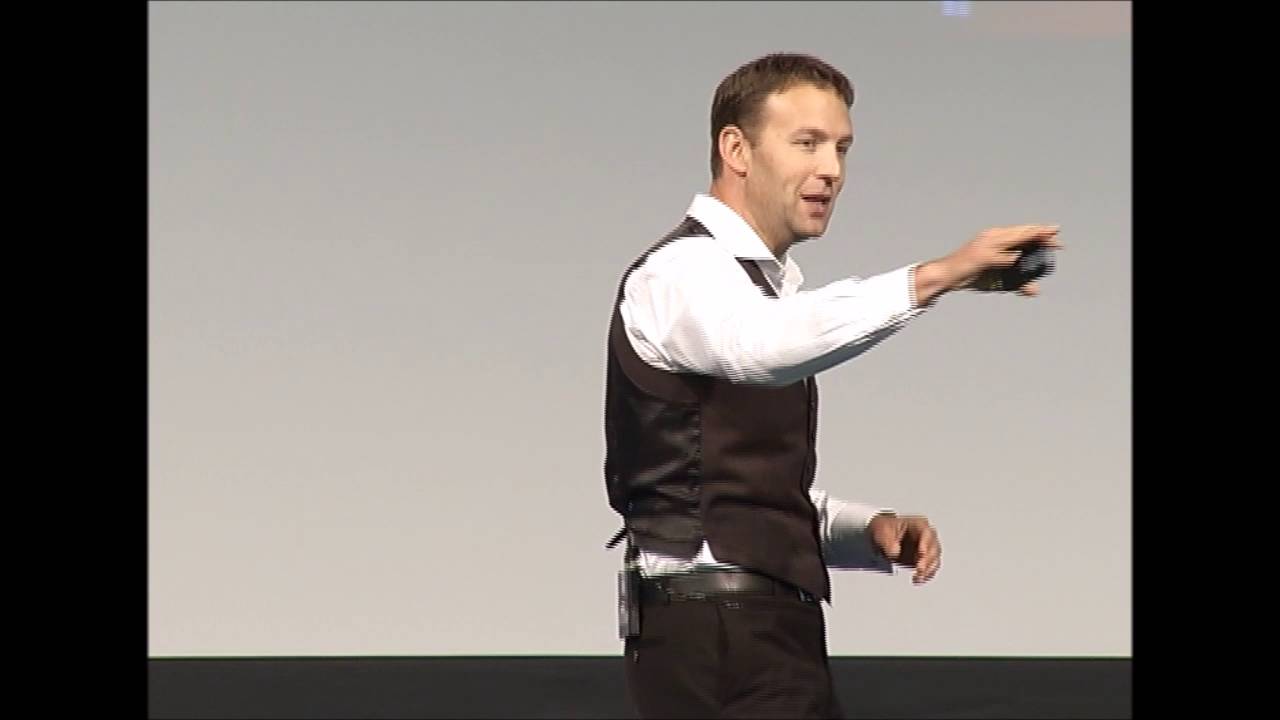
Performance coach Gavin Freeman argues that elite athletes and top business performers share four core traits: discipline, sustained focus, success-oriented motivation, and resilience. The real differentiator isn't technical skill but the ability to perform under pressure. Freeman warns that leaders underestimate their "shadow" effect and often misplace high-performers, and he advocates replacing rigid business plans with ongoing debate.
Chapters
Welcome back to Switzer. With less than 2 months to go to the Rio Olympics, our next guest is here to share some of the parallels between success and failure on the field and in the boardroom. He's worked with Olympic teams and professional sporting organisations as well as CEOs and business leaders to help them perform at their optimum level. Gavin Freeman from Business Olympian, welcome to the show.
Thank you.
So, Business Olympian, tell us what you guys do.
So really our focus is looking at high-performing individuals, but not just the way they perform. We're looking at how they perform under pressure. And for us, the fundamental difference between good and great is not a technical skill. It's your ability to perform consistently under that pressure. And so we see some organizations fail because they're not able to work within the context of that kind of an economic environment.
And so what was the motivation for starting the business? And tell us a bit about your background working in sport, relevant with obviously the Olympics not far away.
Yeah, Rio.
How did this sort of whole business sort of develop?
Look, it was one of those things. My dad was in business and he was the CEO of a diamond mining company and I was the black sheep of the family that went off to become a psychologist. But I was always fascinated behind performance. And in my mind, performance on a sporting field is no different from performance in a, you know, as a musician or as an artist. But it's also no different from the performance of a trader or a journalist. Somebody who's got to be able to work on their skill, work on their talent, and And deliver it when it counts.
And so what sort of parallels do you find between people that achieve peak performance, whether that be in trading or whether it be in sort of media or sport or investing? Is there a commonality that exists between these people?
Absolutely, and it's clearly not fitness levels.
Okay, the physicality side of it doesn't always transfer.
It does, obviously. There are some things Exactly. We do see some, some real correlations between being fit and being able to make effective decisions and healthy decisions. But realistically, there's a couple of characteristics we see in elite athletes and that we see in high-performing individuals.
Yeah.
And it comes down to their level of discipline, being able to do what they need to do, but also making sure that they've got authority over the accountabilities and the decisions that they make. They've got what we call a sustained appropriate focus. So it's not just a focus, it's actually sustaining it, particularly through the tough times, and it's appropriate. They're on task and on song, as we say. They also They also have this wonderful ability to be motivated to succeed as opposed to being motivated to avoid failure. So for them, failure is simply a stepping stone to future success. They're continually learning and they're continually going. And the final piece of the puzzle is you've got to be resilient. You've got to be able to take the knocks and get back down. If you take a knock and fall over and give up, well, you end up in a certain, you know, certain characteristics. But we tend to see high-performing individuals highly resilient.
Now you've written a book where you— and you conducted a number of interviews in that book where you looked at some of the mistakes that leaders make and the impact of those errors on their performance. Talk us through some of the findings from your study.
So the book was called Just Stop Motivating Me because I was really focusing— I see it there. Yeah, I've got it there. I was really focusing on trying to understand how the human factor plays a role in performance, and particularly in high-performing organizations. And we found some really interesting characteristics, particularly at an individual level for leaders, one of the biggest factors for leaders was their ability to be authentic and consistent, but more than just what we hear, the rhetoric as we hear out in the media all the time. It's that there is no such thing as off the record or behind closed doors. And there was this great story of a senior leader who during a particular tough time was saying certain things out into the market, saying certain things to his organization, but in his boardroom and in his executive room was saying something different. And unfortunately, the impact of that on his executive team was he lost the respect and he lost the credibility with his team internally, and that entire team fell apart. So it was a really interesting insight that he was putting forward one thing, but behind the scenes something else was happening. So that's probably one thing. It's recognizing as well that—
True to label.
Yeah, but you've also got a shadow, and it's recognizing your leadership shadow, how far it goes, and the magnification of that shadow. So your impact has a far greater reach than you often realize. The other piece The other area which was really fascinating was how we deal then with talent. So how those individuals deal with talent that's in their workplace. One of the guys shared a story with me which just rings true so often. He had a high-performing individual and he thought, I'm going to stretch this person. So what did he do? He took this individual out of their environment, put them somewhere new, and said, off you go and perform. Now that person didn't perform as well as when they were a high performer, as you would expect.
Mm-hmm.
Unfortunately, they were evaluated on their previous performances. So here was this poor person being performance managed because they weren't up to task, because they weren't replicating what they did. Unfortunately, that person then ended up leaving the organization. So here's an organization who's lost a high performer simply because the leader didn't realize that you need to find ways to drive and push your high performers.
And then what are some of the ways in which leaders can— because obviously everyone makes mistakes— what are the ways in which They can come back and respond to those mistakes? Any sort of mechanisms that they can apply there when they stuff up?
Well, and politicians would never do this, but, you know, one of the fascinating things we do see play out in politics a lot is that— well, in fact, they don't do it— is the concept of ownership of error. Putting your hand up and saying, I've actually made a mistake, but more importantly, not just saying I've made a mistake, Forgive me. It's I've made a mistake, and here's what I'm going to do to remedy it. I'm actually going to come forward and demonstrate to you the authenticity and the consistency in my in my behavior. Being able to take that ownership takes a big person at times, but it also shows your great leadership. And look, it's got to be the number one thing on my list. Second thing is have that plan in place. Make sure that you're able to articulate how you're going to make amends for whatever it is you did. And realistically. It's ask for the forgiveness. If you don't ask for it, you're never going to get it.
Before we go, what would you say are the defining criteria of a high-performing organisation? We spoke about the leader, but what about as a group?
As a group, there was a really fascinating insight I got from a particular leader who threw out a blanket comment and he said, don't write business plans. Because the problem with a business plan is it's your plan. And if it doesn't work, well, then I'm going to blame you. But if it does work, then yeah, maybe we'll all take credibility. His perspective was have a business argument and then challenge your leaders to continue that argument and continue driving it and engaging with people so that you do get buy-in. Don't have a business plan, have a business argument.
Without conflict, there's no progress. Well, there's the argument line.
True.
To be continued.
To be continued.
That's the show. If you want to read my thoughts each morning at the close of Wall Street, check out our website, switzer.com.au. If you've got any questions for me or ones you'd like me to put to an expert, go to switzer@switzer.com.au. That's all we've got time for. I'm Marty Switzer, and you can get me on Twitter. The handle is @martyswitzer. Thanks for watching.