Gerald Bassleer covers five diseases that hit Malawi cichlids: bloat, wounds from fighting, tuberculosis, internal worms, and hole-in-the-head disease. Each one stems from poor food, parasites, bacteria, or stress. He walks through how to spot them, when to quarantine, and which antibiotics or antiparasitics work.
Chapters
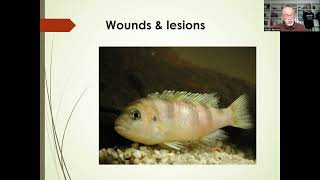
Hello, dear aquarist, for you the Shiklit, the Malawi fish keeper. Yes, Malawi fish are very popular in our aquarium hobby. And for those that keep them, well, they know they might have once in a while some problems. And here I want to discuss the five most important diseases. Of course there are several more diseases we can discuss. But let's specify the five most important diseases of the Malawi cichlids that you can encounter when dealing with keeping fish. Of course fish can have problems, that's unavoidable. But I hope that I teach you some lessons. What you can do about it, how you can prevent and what you can learn from it. And then I tried to give the subtitles in the languages you want. You will see them here listed, you know, maybe Spanish, Portuguese or any other language you like to learn. What I'm trying to teach you. The five common diseases that I would say that are. We can detect in the Malawi shikids is Malawi bloat. Well, it has a name Malawi bloat wounds and lesions in the cichlids, fish tuberculosis, internal worm infections and hole in the head syndrome or head and letter line disease. What you can call different names for this particular syndrome. I have a lot of information in my books also on cichlids. I have different chapters on Malawi cichlids, Tanganyika cichlids or discus. With a lot of photographs and explaining you also the most important diseases and of course the treatments, what medications you should use. Here is a picture I received from a friend of mine, Wilfrid V. Who used to be the fish keeper at the zoo in Antwerp at the public aquarium. And he sent me this picture of this lanistic cola. You can see the big belly and the protruded anus or I would say the intestine which is sticking out like it's obstructed, something like that. And it has a big belly and the fish eventually will die. And here also in a pseudotropheus, you can see the big belly. The Malawi bloat, we call it. Sometimes some raised scales and also here some intestine that is sticking out. The gut is sticking out, the anus is protruded, we call it. So that's Malawi bloat in a few pictures. And the origin in my experience is usually a mix of causes, usually a mix of origins. Sometimes it can be one single cause, but usually I found a mix. First of all, food that is contaminated with bacteria or poor quality food that is not well meant for Malawi cichlids. Some people I see feeding mosquito larvae in Large quantities to the Malawi cichlids. Well, that's not the best food to have a problem in digesting it. Then of course, another origin is bacterial infection. Also a parasitic infection like spironucleus used to be called hexameter. And stress and poor water quality. Those are all factors usually combined playing a role that the fish develops. Malawi bloat solutions. This means, what can you do about it? Well, do a proper examination. That will give you the best advice for the correct treatment. Yes, sometimes a microscope can be helpful. Maybe already checking the excrements can teach you lessons that you have the parasites. You can check your fish food. Maybe it's contaminated. Stop feeding the life of frozen food you have available. It might be in poor condition. And you can try to treat with an antibacterial treatment. Some people have good luck or good success with the antibiotic oxytetracycline combined with metronidazole that kills parasites in the gut. Or ask your fish doctor. He might be more specialized to help you in the fish. In your case, we recommend also feeding the Malawi cichlids with Malawi bloat with our functional fish food. Dr. Basler, buy fish food. Lapacho the next common disease is Malawi cichlids with wounds and lesions. Yes, we see this quite often. Look at the tail that is completely damaged. Look at the side of the body with some open wounds. And here some scales that are lost. Here another Chiclet, A Lombardoi. You can see that the fins pieces which are missing. You see some reddish. The fish can get secondary infections after he's been bullied or can I say been aggressive, attacked, causing damage, causing the fish to weaken and getting infections. So wounds of lesions are usually caused by aggression? Yes, people who keep Malawi cichlids should have been aware that can be aggressive. Sometimes it's a lack or a shortage of fish food. Then the fish start to fight, become more aggressive. Stress. Yes, there can be stress factors playing a role in the aquarium because of the kind of fish mixed together. Or the poorly installed aquarium decoration, lacking hiding places. So the solutions I can give you to solve this problem is avoiding a wrong mix of Malawi fish species, particularly the aggressive ones. Be careful. Distribute well the food while you are feeding. Because the fish will go for the food and meanwhile sometimes be aggressive to each other. If you're not well distributed food in the aquarium, install hiding places where the fish can hide. For the aggressive deodorant, apply an antibacterial or antibiotic treatment for healing the wounds. Like things you can be Suggested by your fish doctor. And we can recommend a functional food for repair, which is. Dr. Basler Biofish food alloy. Another problem that we found in Malawi cichlids is fish tuberculosis. Sometimes fish tuberculosis shows with wounds here on the side of a fish. Like a big ulcer. Or the fish just becomes skinny and waste away, not eating well. And internally we find well, our microscopic observations. I will put some links below of all those common diseases where you can get some more details from other videos I made about these subjects, about these diseases. So, fish tuberculosis the origin. Well, in most cases the origin is the breeder who has the mother fish with an infection with Mycobacterium and it's passed on through the eggs. On. On the eggs the baby is getting automatically an infection made mycobacterium before they are born. You can give contaminated food. If you're not careful with frozen or live food, it can bring in the disease to the fish. Or you can have a transmission from other diseased fish in the aquarium. So what are the solutions? I give you my suggestions. First of all, select a good breeder. Avoid contaminated frozen or live food. Separate sick fish from the healthy fish. Separate them in a different carotene tank and try to treat or take care of it. Do a proper examination. Maybe you need a laboratory to identify for you the mycobacterium. A laboratory can do that very rarely. Antibiotics helps particularly in advanced stages. Antibiotics have no able no chance to cure. Use for the healthy fish. A functional food. Dr. Basler Biofish food Fuko the ones which are still eating during the infection might have a chance to recuperate. Internal worm infection Another problem that occurs. You can see here the skinny fish not looking well. Well, we found worms in my investigation. And usually we found these worms in wild Malawi cichlids. Because they live in an environment where there is no hygienic. They have a risk to eat worm larvae through the food chain. Sometimes the breeder uses infected or infested food. Yes. Or he has a bad water supply that is contaminated with worm larvae. What can you do about it? Well, do an examination of the fish with the microscope. Maybe checking the excrements. You can find eggs of the worms or worm larvae. Check for the source of the problem. Maybe check the breeder. Good drugs exist to control internal worm infection. But ask your fish doctor. It depends also on the species of worms. And help with a functional fish food like Dr. Basler. A bi fish food pumpkin seed extract that helps in the control of a worm infection. The last but not least, the Hole in the head syndrome or head and lateral line disease also called. You can see the holes here in the head of the cichlid. Also here, here on the next one. Well, it's a. Not a real exact Malawi fish, but I. Anyway, I want to show you this kind of tilapia, an African fish. Look at the holes here and look at the lateral line. I had some pictures from a video but was not so clear that I got from the public aquarium in St. Petersburg. Look, this can happen with your Malawi cichlids. The heterolateral line syndrome. And what is the origin? Usually it's a mix of causes. In most cases or in many cases it's a parasitic infection, spironucleus. It used to be called hexameter. It can be a bacterial infection, sometimes it's secondary. It can be damaged microbiota or the gut flora which is not well stabilized or destroyed by previous treatments with antibiotics. Poor nutrition or food contaminated with bacteria can be a risk and a lack of essential minerals or nutrients. Particularly when there is a bad gut flora. The fish lacks the opportunity or ability to absorb and use essential minerals and nutrients from the food. What are the solutions? Well, a good examination again. Yes, A microscope should help in finding the causes. The pathogenic pathological observations, particularly in the excrements can be interesting. To find the parasites I would recommend to treat with metronidazole combined with oxytracycline or with feraltadone. Ask your fish doctor and adjust the feeding. Yes, adjust the feeding. What you are feeding? Check your food and try me while a functional food. Dr. Basler by Fish Food La Pacho so I hope this helped you to understand fish diseases of your Malawi cichlids. More info you can get from my big book, the new Illustrated Guide to Fish Diseases. The link is below where you can buy it. Thank you for watching and subscribe to learn more about diseases of other poplar fish like Tanganyika cichlids or Oscars or Bettas or guppies. So I thank you for watching this special case of common diseases of Malawi cichlids. All the best. Any questions? Well, ask them. Any recommendations or any critical comments always welcome. Write them down and I try to answer. Thank you.