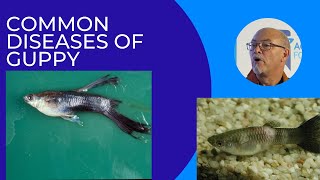
This content was created by Gerald Bassleer. This content was uploaded by Gerald Bassleer. This is a YouTube video titled "5 important diseases of Guppy Poecilia reticulata and P. wingei Endler Guppy" created on July 8, 2024. It features Gerald Bassleer, a fish doctor, discussing common diseases affecting guppies, such as bacterial infections, skin flukes, and internal worm infections. The video provides insights into the causes, symptoms, and treatments of these diseases, along with recommendations for fish care and prevention.
Chapters
Hello, dear Aquarist, Dear Guppy specialist. Yes. You selected this video because you want to learn something about the important diseases of your guppies. And I will share you my videos on a PowerPoint where I explain my findings. In my years as a fish doctor, I encountered some diseases and some I regard as more important than others. So I list five of them in this presentation that might interest you. Maybe you found yourself some other problems and maybe for you they are more common. Yes, this is possible. But I will show you what I collected during my years as work as a fish doctor in the ornamental aquarium fish industry. About the Guppy the Poecilia reticulata or the Poecilia Wingate. The Endler Guppy. Five common diseases well, bacterial infection. In most cases we found Columnaris. In rare cases, Mycobacterium. But specifically here we'll discuss Columnaris as the most common one. Skin flukes. Internal worm infections like Gamelanus or Capillaria, the parasites Tetrahymena and the parasites Ichthyoboda that used to be called Costia. If you want to learn more about diseases on guppies or other life bearers, I recommend you to buy my book, the New Illustrated Guide to Fish Diseases, which have a lot of photographs and suggestions for treatment of diseases of the guppies and other fish. Here, the bacterial infection Columnaris. You can see on the left, the beginning stage with the tail rot and the fin rot at the dorsal fin. You see the this colors that are disappearing and necrosis. And that same guppy 12 hours later, which is completely devastated or demolished by the bacteria. And here we see another guppy. You see the whitish progressment, the whitish necrotic tissue from the tail to the middle of the body, which is a typical sign or picture of a Columnaris bacterial infection. Some other bacterial infections can occur that are lesions, thin rot, red wounds. Yes, that can occur. Some tail rot can occur, can be other bacteria and. Well, this can be caused by different reasons. And I try to explain. You hear in the origins that poor quality of the water, stress, overcrowding and aggression are important factors that cause bacterial infection too. High water temperature. Yes, bacteria love high water temperature. They increase more rapidly and of course become a more serious infection. Frozen food or live food that is contaminated with bad bacteria can be a cause or transmission from a diseased fish that had no carnitine or keratin before it was introduced in the aquarium. Or parasites. Parasites can cause wounds and leases for bacterial can evade in. So what are the solutions? What can you do about it? Well, first of all, improve the conditions of the fish and the water and lower the temperature. I recommend below 24 degrees Celsius. Particularly columnaris does not like 23 degrees or lower. Avoid contaminated frozen or live food. Do a proper examination. It might be that there are parasites involved. Add sea salt up to 5 grams to a liter. That helps in the control. Apply an antibacterial medication, but treat also the parasites when you find them. And use a functional fish food like Dr. Besler biofish food Fuko or grapefruit seed extract. Moringa. The next disease is skin flukes. You can see this skinny guppy here laying on the bottom. Also this one with frayed things laying on the bottom. Those are typical fish which are becoming weakened with a skin fluke infection. Sometimes the skin flukes can cause some damage to the finch and the fish behave abnormally. They are scratching to the bottom like you can see here on this video. See that typical scratching behavior of guppies that have been affected or infected with skin flukes. It's time to treat here in the beginning state. The best you can do is treat as soon as possible. The skin flukes is a terrible little animal that is sitting on the fin of the fins or the body of the fish. And inside those flukes there are baby flukes. So they very quickly can reproduce and cause wounds and lesions or reproduce much faster and become a serious infection. So you have to treat in the beginning stage to be more effective. So what is the origin of skin flukes? Usually it's overcrowding and poor conditions. And newly introduced fish that are carrying skin flukes and that didn't have any quarantine or carnitine solutions will avoid overcrowding and use quarantine for new fish. I recommend to siphoning the bottom and wash the filter to eliminate the larvae. The larvae of the young skin flukes that are ready to reinfect the other fish in the aquarium. Apply a correct treatment against suggest flibendazole or maybendazole or other that you can get from your aquarium shop. But important that you follow the directions of the medication. You might have to retreat also to kill the larvae or the young skin flukes that appear in the aquarium. We might need an antibacterial or antibiotic treatment to control the wounds. Ask your fish doctor. And we also recommend a functional fish food like Dr. Basleer biofish food garlic. The next disease is about an eternal worm infection. Capillaria. You see sometimes healthy fish in the aquarium and then a few which are getting dark and are getting weakened. Eating not so well, be separated from the group. And that's one you have to check on that. And in the microscope you can see those worms in the intestine. Easy to detect when you use a microscope. You can also find other worms like Carmelanus. And here this was a heavy case of many worms sticking out of the anus. That's a way to find Camelanus as a little red worm sticking out of the anus. What is the origin of? Well, it's usually caused by the breeder or the supplier because he used infested food or he used bad contaminated water supply. The reason of infection can also come from live or wild fish food. That is a risk. Or it can come from new fish that have been introduced without quarantine. The solutions Do a proper examination. Maybe take a sample of the excrements and do a microscopic examination, check for the source of the problem. That means maybe talk to the breeder or the supplier. There are good drugs available like piperazine to control certain nematodes. But ask your fish doctor because certain worm products or medications depending on the kind of worm that is infecting the fish. And be aware that certain worms produce eggs like the capillaria and that you have to retreat after one week. Help with the functional fish food like Dr. Basler Baifish food, pumpkin seed extract or garlic. The parasites Tetrahymena can cause serious wounds in the fish. Look at this lesion. This is not a bacterial infection, this is a parasitic wound or the head of this guppy. Looks like a bacterial infection or a fungal infection. No, it's caused by the parasites Tetrahymena and those are little bugs, parasites which can evade inside the skin, the tissues and really make big destruction or damage. The treatment of Tetrahymena. Well, the origin, check on the origin. First of all, it can be a mix of causes. Usually it's the parasites Tetrahymena that we are aware of. But you have to think about a bacterial infection. That can be a reason that there is a wound and the parasites invade of the wound or the fish have been damaged by aggression or fighting. And on that wound there can be a parasite invading on it. So that tetrahymera can be secondary. But it can also be due to bad water conditions and overcrowding that the parasite has a big chance to infiltrate in the tissue of the fish. What can you do about it? Do a good examination, use a microscope. Sometimes excrements, well, sometimes it's inside, but not always. Certain improved conditions of the fish. The badly Affected fish you better put to sleep. Sometimes it's too late to cure and there can be a cause of reinfection in the other fish. Treat with FMC and salt and combine it with oxytocin antibiotic. Or ask your fish doctor for advice. And at the same time I recommend to use a functional fish food. Dr. Basler Biofish food, Aloe vera. That helps repairing the fish. And then the next parasite is Ichthyobodo, used to be called Kostia. That can affect externally the body of the fish, of the guppies. You can see here the frayed fins. The fish become skinny. And you can see here one in the back here, which is typical. One could be here, the red one. The other ones in front have little infection. But that one here in the back had a serious infection. You can see this is the first sign that he's fraying the fins and not eating well. Well, take an examination of that fish. You can see those little parasites, Ichthyoboda or Costea, that are moving around here on the tail of that guppy. And they can cause serious damage if you wait too long for treatment. These parasites can easily be treated because you can put in drugs or medications into the water that kills that parasite. The treatment, well check for the origin. It usually it's a mix of causes, a mix. It's the parasites, Ichthyobodo that are there. Sometimes a bacterial infection that is part of the cause. The overcrowding of the fish, the dirty water. Yes. A lot of people try to keep too many fish together in an aquarium and have a poor filtration. This is all a big risk. To get infections like ichthyobotto. Do a good examination. Use the microscope. Treat with formalin, malachite green and methylene blue. That's the FMC mix and maybe an antibacterial medication. Ask your fish doctor or aquarium shop and adjust the feeding. Use a functional fish food like Dr. Basler bias's food, Aloe vera. That helps to repair the fish. You want to learn more about diseases of fish and about guppies? Well, go to my book. Purchase my book. The link is below. The new Illustrated Guide to Fish Diseases. I thank you for watching and maybe you want to subscribe to this channel to learn more about diseases with videos on guppies. I have 13 videos on this moment about guppies, but also about discus, tetra, cichlids, PETA and other life bearers. So I thank you for watching and I hope this learned your lesson. What kind of diseases your cookies can have all the best.