Gerald Bassleer introduces a short training on causes and prevention of fish diseases (video). He urges viewers to become "fish detectives" who investigate causes before medicating, and outlines major causes (poor water quality, stress, contaminated introductions, bad filtration, contaminated food) and prevention steps (biosecurity, quarantine, water testing, proper filtration, feeding practices, immune support). Detailed training is available on his Patreon.
Chapters
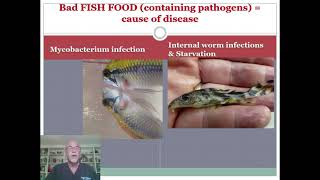
Hello, nice to see you again. That you want to listen to my explanations to become a better fish care professional. And here I introduce the next part of my training tools. It's about the cause and prevention of fish diseases. Something where I can help you with by getting a training. How you can avoid using medications, how you can avoid your fish getting sick. That's all. What you want to have the best healthy fish. So a training in this can be followed by following certain steps which I present in this short video afterwards here and the details you can get later on on my Patreon channel. So I hope you enjoy and I hope you become a more professional fish care. Thank you. In this presentation I will give a summary of the causes and preventions of fish diseases which will be given as a training on Patreon. What I want you to become is a fish detective. That means I want you to learn to investigate for the causes of the problems of your fish. Before you start medicating. You should know what's happening before you take any action. And the summary of the fish disease cause and prevention. We will talk about the different causes could be possible. About the water quality and its importance to test. Yes, testing, like with the multistick. Something easy, simple, fast, but very adequate to solve any problems and prevent problems. Also talking about acclimation and quarantine, about fish food and the immune system. About biosecurity and the impact on fish health. About fish health management and also the importance that fish diseases need a good identification so you know what's going on. Our goal is to keep fish furry healthy. Here we see a bunch of guppies in the four tanks at an importer. Those were guppies supplied from Sri Lanka. And the origin of pheze diseases is the combination of the impact of stress on a fish and the availability of microbes in the water or in the food or other source. A problem is that there is an introduction of pathogen possible when you introduce new fish or mix of fish from different breeders or origin or through the food that can be contaminated with pathogens or from dead fish or introduction of wild water from rivers. So biosecurity is a part of the solution. A good biosecurity. Another problem is filtration. Not good filtration, dirty filtration or too small filtration. And this can all have an impact on the gilts, gills can be damaged and obtain secondary bacterial infections. And that's why the fish eventually died. So like this fish, this fish was dying because of ammonia poisoning and the gills were destroyed. So fish Diseases or wild fish and tank raised fish. We recommend not to mix when you reduce them. That you do first a quarantine procedure. Why? Because. Because the wild fish that come from a controlled environment with specific diseases, maybe, or there is a specific resistance. And the wild fish there is less control and are many different kind of diseases. But the pathogens are less resistant, so more easy to treat. Except for this one. This is a nematode infection on this rummy nose, which is no medicine can help anymore. We will talk about conditioning and disinfecting of marine fish after collection here. Here a case in Kenya. A procedure they use to have the best stock available for the market. But it's all about the control and about preventing that problems occur. Food is an important factor and the fight of food should be prevented. Here we see the cruelty of food. A fight for food. I would love to see it A fish fight for a tablet. But are you aware that this fight is a cruelty? And that the weaker fish and smaller fish do not have any chance to obtain a piece of food? And that the big one goes away with the food? So bad fish food also has a cause of disease. Introducing pathogens like Mycobacterium or worm infections. This can all be caused by feeding fish. We will talk about the immune system of the fish, how we can strengthen it. Because with a good immune system, the fish can fight off infections. Infections from viruses, bacteria, fungi and parasites can be fight off by the fish when they have a good defense system. So it must work efficiently so you have less problems, less diseases and no medications necessary. Risk for spreading diseases. Well, there is a risk when you mix different kinds of species in one big pond and breeding many different varieties of fish. But there is an intermix of diseases possible also here. By selecting fish and putting them all together. The nets are an important risk of distributing diseases. Well, I will give you more on that in my Patreon training. So try to subscribe to become a good fish detective. Or train yourself by getting my books on fish disease. Thank you for attention.