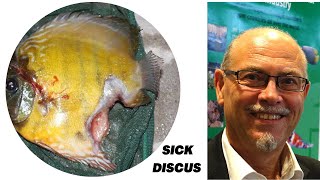
Gerald Bassleer (speaker) presents a PowerPoint-style YouTube video showing severe diseases and tissue damage in discus fish to teach aquarists how to recognize early signs and act before damage becomes advanced. He reviews multiple case examples—bacterial infections (notably Columnaris), parasites (Tetrahymena, spironucleus), and Mycobacterium (fish tuberculosis)—explains basic diagnostic steps (microscope scrapes, feces examination), suggests treatments (antibiotics like neomycin, metronidazole, feraltadone, salt) and stresses hygiene, prevention, and early observation. The video also promotes the speaker’s books and a playlist for further learning.
Chapters
Hello, dear aquarist, dear discus fish keeper, or discus lover, or discus breeder, Discus trailer. Well, if you like discus, you don't want to see the terrible diseases or terrible damages that happened on these discus fish. I will show you in this PowerPoint. It's not nice to see badly affected fish. And why are they badly affected? Because the diseases or the symptoms have been noticed too late. And when it's too late, the damage is too big and sometimes too late or too difficult to cure. So it's important to understand that you see the first symptoms or signs of a disease, that you watch the fish suffering, not behaving normally, not eating well, having a few spots or a few holes or some lateral line damage. All those things are important to check for. And that's why you have to observe closely your discus. So I want to show you a few of the problems that have been well encountered in my work as a fish doctor. And, well, discus fish can be very sick and sometimes unbelievable damage. If you have a different language instead of my English, I try to adjust the language so you can also select for you the subtitles in your language. France or German, Deutsch or Espanol? Petatre le Francais, Italian, Nederlands, maybe. So check it. Popeye. Look at this terrible Popeye, which was caused by a bacterial infection. It started slowly, but this was already advanced. Notice too late. And you have to treat with an antibacterial medication in the water and maybe in the food. Popeye, a badly wounded discus. Look at the decay of the body. Look at the white necrosis from the back of the fish, the tail. Look, it's completely nearly gone due to bacterial infection. And in most cases this is columnaris disease. You can treat with salt and a good antibiotic like neomycin sulfate. This is also the bacterial infection Columnaris on a discus at a show in Akarama, Singapore, many years ago. Look at the damage. The necrosis around the head region here, the pectoral fin, and also the respiration is affected because the gills are also infected with the columnaris bacterial infection. A wounded discus, it starts with a small lesion, then it becomes big, then you have a big wound because you notice that too late. So it might be able to be cured. Yes, but it might also leave scar tissue. And this fish, well, this was so badly wounded and eaten away by bacteria. Completely gone. Disease starting maybe with a little hole in the anal fin, like I showed you in the previous slide. And we killed that fish. That's why we see the incision in the head, the red Reddish part there. That is of course too late to treat. We can find fish with wounds caused by bacteria, but also badly affected by parasites like Tetrahymena here. Why do I know it's Tetrahymena? Because I used a microscope and I checked on a scraping of the skin of this tissue. You see the little holes, the damage in the body of that discus fish. And then it started maybe with some damage by fighting or damage by scraping against an object. And bacteria get on that damaged tissue. And then parasites can also come on that fish when the fish is weakened and when there is dirty water conditions. Tetrahymena. So you have not only to treat the bacteria, but also the parasite. And then we have those cases of very skinny discus that are wasting away. Look at that body of that wild discus. In many cases I find fish tuberculosis. In this case could be fish tuberculosis. But although I examined it and I found the tubercles in the organs, also internal diseases can have an effect on the fish. That it starts to become head standing. It's usually an internal disease. Bacteria, parasites. So taking an example of the excrements, an examination in the microscope of those excrements can help you to find maybe spiral nucleus or hexameter could be the reason. Could be also other reasons. Organs that are affected. Organs that are like here, the swim bladder that has been affected by tubercles from Mycobacterium. Fish tuberculosis could also be or other bacteria. So check the excrements. Maybe treat with antibiotics or maybe treat with metronidazole. Here we see the discus on the left with a big wound in the head. We diagnosed it as Mycobacterium or fish tuberculosis. And that man was the person who was breeding the fish. He was the Zoe technician. And he also had a hole in the head because he had a lesion caused by a mosquito bite. And by scratching with the finger, putting the bacteria inside the wound and causing this zoonosis called tank cranuloma. So something that I have different videos on zoonosis. Important for you to know. When you deal with fish and diseases, you have to take care and take care of hygienic measures. Split fins. You can see the split fins on that discus. And we see a few holes on the head region. Another discus with split fins and a few holes. Look at a head region here, at the operculum, the gill cover. You see the damaged fins. Here we see a damaged lateral line. We see a few holes in the gill cover. And also again, split fins. A combination that happens quite often. Hole in the head disease. Head and lateral lines syndrome. I say a syndrome, not a disease because it is disease. It's typical. Parasite or bacteria are a virus in this case. In many cases, like I explained in my videos about a hole in the head or head and lateral line syndrome. I explain about a mix of parasites, bacteria, food, etc. See the few holes, that's where it starts. That's what you have to notice. That's what you have to see. Also in this one, the beginning stage. Look at a few little holes in the head region. Also here, one, two holes only, but later on many more. And this is what I can show you in this nice video. In a beautiful group of discus, but all with hole in the head syndrome. Look how many holes here. Look at the lateral line that is eroded. There are many disks in the tank which have all those tiny holes. And some show it different than the others. Some have very few, some have many more. Look at here. Yes, several. One on the head region. And some had badly lateral lines. And some had many holes. And some had very few holes. So check. It starts with one hole like this one here. And other ones had 10 holes. So these fish look still pretty healthy. It can be cured if you add medication into the water. You can check for the source. Look at the holes here. Look. So check for the food source. Check for medication like metronidazole and feraltadone. Usually it's spinionucleus part of it. It's bacteria. It's part of it. And bad nutrition. Look at the holes here. Well, interesting for you to learn to observe it as soon as possible. And the fish starting to show the first one or two little holes. This is the nice tank. Fish are still in pretty good shape and be able to be treated. Then it can become so advanced, those holes that it makes big lesions that bacteria get out with here on the left. And on the right even more very big wounds. Originally there was spironucleus involved in this discus, weakening the fish bacterial infection secondary. So you still have to use an antibiotic to kill the bacteria. But certainly do not forget, the first step to take is also to treat the spironucleus internal parasites and check why it happens. So it teaches you lessons to prevent next time and help with a microscope. That's what I do as a fish doctor, because that gives me the chance to make a correct diagnosis and to recommend the good treatment. My books help you to understand why fish are getting sick. Prevention that you can implement a good diagnosis. You can do with a lot of photographs and at the same time what medications and I have a lot of details in that big book on discus fish and on the different diseases of discus fish like hole in the head disease, the angelfish disease, deformities, abnormalities. All details in my books available. The link is below where you can order them. Try if you want to learn more about your discus and subscribe to see more videos on diseases of discus, I have a special playlist of discus diseases and treatments. I will share the link below then so you can enjoy to be a better aquarist. And that's my goal. By showing you my background of a nice discus fish in the show in Akorama some years ago. That's how your fish would look like. Perfect color, perfect shape. And you can learn how to take care and how to prevent and to check for the first signs and check for the first symptoms so you can take action. Subscribe to my videos. They are giving you the lessons you need to be a good aqueous, especially when you keep discus. It's important for you to preserve the quality of your fish. Thank you for watching. Enjoy my next videos. Subscribe.