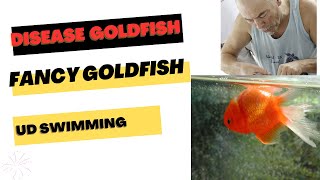
Gerald Bassleer explains why fancy goldfish swim upside-down: deformed swim bladders from breeding, air gulped while eating floating food, and contaminated live feeds carrying Mycobacterium. He shows X-rays of normal and deformed bladders and documents how symptoms worsen in days. Prevention means feeding sinking pellets, quarantining new fish, and maintaining clean water.
Chapters
Thank you for watching my cases on fish diseases. I will show you now a case I started the first one about upside down swimming of goldfish and more will come and I will not always need to introduce the cases. The cases will be self explanatory and I hope it helps you to understand more about fish diseases. Correct. Good luck. Fish disease case number two I presented case one as a free available for all the people visiting my Patreon today. The case number two about the upside down swimming of the fancy goldfish or oranda a common problem in our industry. The fish like on this picture, they hang at the surface, they are swimming upside down, they have a very poor balance. This is the typical symptom we see most likely the causes of the upside down swimming of the fancy goldfish is a deformation of the body and including a deformation of the swim bladder. I will explain later on the food can be a problem and the food can be a problem because of the feeding method the quality of food you're giving Also another case could be a cause of the upside down swimming is a bacterial infection. Poor water quality and stress is of course a very common problem for many diseases but also more likely a cause of upside down swimming for the fancy goldfish. A swim bladder is a way for a fish to control its balance in the water. The normal format of a swim bladder you can see here there are two swim bladders nice aligned at the dorsal part of the body of a goldfish and here you see on an X ray this is the normal controlled swim bladder and makes it possible for the fish to have a good balance. This is how it looks like the normal format like I explained, this is the way to control but the rancho here, like I showed in the previous picture in the beginning, the upside down swimming you see here the poor control because that swim bladder is not the form it should have. It is lacking the ability to have enough gas inside the body to keep its body in a normal way. Also the body of the whole goldfish you can see it's deformed and that is causing the deformation of the organs also seems to be an impact of the possibility of letting gas inside the gas bladder. It also seems to be obstructed but due to the deformation. The red comet with its normal format like we see here in the X ray and here a telescope fantail we see the same problem. A gas bladder pushed downwards not extended to the whole dorsal part which is making a deformation so the fish is deformed. The swim bladder or gas bladder is also deformed that is causing poor control. Here we see a goldfish that has been feeding, eating on flake food, floating food. Floating food, like we see on this fish is a risk that it also takes up extra gas, extra eggs together with the food, which is not convenient for this kind of fish because he has a difficulty to to work out that gas, to get rid of the gas or to control it. After one hour feeding flake food, you can see this kind of behavior. This happens quite often with hobbyists feeding floating food like floating sticks or floating flake food. So the feeding way of feeding can have an impact on your fish. A particular goldfish. Two days after feeding floating flake food, see what happens. This is what's happening with the fancy goldfish, those with a deformed gas bladder. And many of them have those deformed gas bladders. Unfortunately, this is the part of the breeding problem we have with this fish. Some don't have it as much. Some have it very seriously. Like this fish showed it here. After two days been feeding on floating flake food. After three days, there is the fish hanging. You touch it, he moves away. He tries to stay in balance. He will do it for a while. Of course he tries. But the too much air in his body is making this uncontrolled sweat bladder. Because of the deformation you can prevent by feeding, sinking granulate food or put your hands down with the water, in the water with the flake food or other food that it goes to the bottom or below the surface. Avoid that the fish are eating it. Here the fancy goldfish have been eating a few days now on the granulates. And this behavior is getting back to normal in most cases. Another cause of of this kind of deformed swim bladder could be the food quality. And there are some studies done on that that food quality originating in live and frozen food, that they can contain too many microbes. Microbes could be pathogenic. They might contain also Mycobacterium causing fish tuberculosis. Here an example of a study done in Thailand on the mosquito larvae which have been fed to the fish. What kind of risk it had. And it showed that feeding of contaminated live fish feeds should be avoided. So the practice of producing live feeds free from mycobacteria is recommended. And it's particularly a common problem in mosquito larvae. It is a problem, but we can prevent it if we work on it. The risk of having Mycobacterium on the fish is the cause of tuberculosis. Like we see here on the spleen of a fancy goldfish. And here we see in the organs, the tubercles. And that has an impact also on the way the fish can control his swimwall gas bladder. Depending on where the tubercles are or where the organs are deformed and the fish is weak in it, it can have a lot of impact. So fancy goldfish oranda at the risk of suffering secondary bacterial infections, other kind of infections. And that also has an impact on the swim bladder. Here a study on this black lion head. Where the fish look here is the swim bladder. But here you see a very enlarged fish thick kidney. And the kidney was badly infected with tubercles and bacteria could have been mycobacterium. We didn't do a lab study or a lab diagnosis to find out what exactly bacteria were causing it, but the fish were suffering. It's a common problem that bacterial infection is part of it. So what can you do? Well, first of all, look for a good supplier fish that had good carentine, a good care, good feeding, no stress, just well kept fish. Try to give the best care and good water conditions for your fish. This is of course the prevention of many problems. Give good quality sinking fish food, particularly granulates, is the best in our opinion or experience. We recommend for our Fancy Goldfish Our Dr. Besley Baijersfruit Herbal, which had a very good impact on the health of the fish. Also the green, the garlic, the 40 and the regular. So for fish health, what can you do? Well, you can help. You can make the choice of the good food for your fish. So you have it in your hands to make your fish to do well. So to conclude, I thank you for your interest in keeping fish healthy and stay informed as a patreon. Thank you.