Fish Disease Case 3 Hole in the Head Syndrome, Head & Lateral Line Syndrome: Cichlids,, marine fish
Gerald Bassleer explains hole-in-the-head disease in cichlids and marine fish. It's not caused by one pathogen but by multiple factors including intestinal parasites like Spironucleus, poor water quality, and stress. Treatment involves anti-protozoal medication and 14-20 days of probiotic-rich food to restore gut health.
Chapters
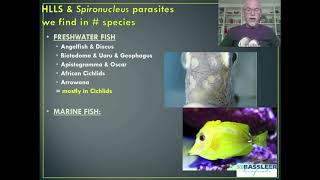
Hello. In this case you will see in the next short video I will show the head and lateral line syndrome, hole in the head disease and spinal nucleus and some other problems occurring in freshwater and marine fish. I hope this case will explain you in some details that can help you to prevent and solve some problems. But if you have questions, please send me you reply. And as a patron for my Patreon channel, I will try to help you out. Thank you for watching. Enjoy your hobby. Here is our fish disease case number three. It will be about hole in the head disease or head and letter line syndrome, or head and letter line syndrome, H LLS or E cold in some short abbreviations on the Internet. Well, let's see what we can tell you about it. But first of all I would recall what I present in many of my presentations is why the fish become sick. I will go in details on these kind of reasons why the fish become sick for my VIP patrons. Dara will explain in detail later on in about eight presentations how the fish can become sick, what are the reasons, what are the causes. But they give you here, in short, that the fish have an immune system and there is a pathogen or other different pathogens available in the environment, in the water, in the food and the quality of the water and the quality of the food and the handling and the stress. These are all having an impact on the quality of the fish. Depending also particularly how strong is the immune system of the fish. So this is an important thing to know before we start thinking how that header lateral line disease can occur. Because the hole in the head disease is a syndrome. It's the damage of the lateral line, as you can see here on the Oscar. And it's a syndrome because we cannot specify a specific disease. There's not one disease which can say, well, this is causing the holes bacteria or a parasite or anything else. So far we don't know yet. Science has not shown anything. But what we know from science. There are many different origins of this syndrome that the fish start to show holes in the head. The holes in the head is about damage of the lateral line. And if you can see here on this drawing, the lateral line is on the side of the body. It's a canal system. It's for the behavior and the balance in the water. It's different functions. And also this lateral line goes around the eyes and the upper region of the head and here on the jaw. And it's open canal with some sensory hairs and some fluids that can flow into pores. And it's the pores and those canals which are getting damaged, getting holes inside. So as you can see here on the Oscar, I will not go into technical detail how this all occur, but I will try to explain you with the samples I got in my, in my work as a fish doctor, what is really causing it. I got fish presented or in my fish house in the past, like this discus here, which start to show these holes here, as you can see here, 1, 2, 3, 4, 5, 6, 7, 8, 9, 10, 11, 12, 12 holes which are clearly visible. Also the lateral line started to show some erosion. Also you can see here, the pectoral film is getting some damage. Could be bacteria. Possible because the fish is having a problem, a fish health problem. In the first stages we only see very few holes. Like on this discus here. You can see here on the forehead of this discus. That's where it starts in the head area. When you're keeping fish or cichlids or other fish. I explain later on the species which are susceptible to have this syndrome. It's important to watch for those first symptoms, those first signs. The holes in the head. See the same here, the first stages here and here. The here the lateral line is getting eroded and here is a hole and there is a hole. That's the first things you have to watch that something goes wrong. Hlls or the head and lateral line syndrome also occurs in our marine fish. Here on the Zebrasoma, here in this Paracanturus, here in the video where I was visiting the public aquarium in St. Petersburg. In St. Petersburg they had beautiful fish tanks, but some fish tanks the fish were suffering. Like here, this blue doctor of head and lateral line syndrome. Erosion, discoloration, holes in the head. This occurred particularly in the angel Dr. Fish. Here we can see again of the Zebrasoma in the first stages in the marine fish. Sometimes we see in the younger fish no holes yet, but they start to show pale patches around the area. Here on the Zebrasoma, pale patches. The fish are getting skinny. They do not show holes. The fish suffer and some fish die. The erosion of the lateral line usually occurs by mature fish, adult fish, and the damage is caused by several factors. I will explain you here on the head of this Achilles tank and here see the lateral line. The erosion lateral line of this Achilles tang, typical for adult major fish. The younger fish don't show that much holes yet. They usually die before they show the holes. And in most cases, like in these two examples here of these fish, this discus fish and this Schetodontopolis, these two species we found a Massive infection. Spironucleus parasites used to be called Hexametha. We found them in the intestine here. You see also the holes appearing on the head area and on the lateral line of this Schittaton torpison marine fish. And here on the discus. And if we took an examination and we look at the 300 magnification of the gut, the intestine of a discus, we see a massive amount of tiny, swirling, swarming parasites in the gut, causing damage, causing lesions, causing disease, infection. So the parasite is very often found in these cases. They cause damage to parasites, but they do not cause holes. It weakens the fish and it kills young fish. Here, these discus fish, the blue cobalt discus, hardly had any holes, very few holes, but they were dying, some getting dark, getting weak, and then a massive infection of spiral nucleus. So the parasites are in the intestine and causing a bad intestinal wall or damage. They're causing diarrhea. You can see the excrement getting watery, fluid strings hanging out. The less food uptake, less essential nutrients are taken up by the fish. They cause damage to the intestine, the wall of the intestine. And later on they can move into the body cavity. And parasites can also move around in the organs and spread around into the body. They also spread around in the water. They do not cause holes. If we find some of those parasites in the holes is because the fish might be shipped in a small bag with thousands of parasites floating into the water. And of course they will cure on the skin and in the holes, but they're not causing holes from inside to the outside. I was in the impression when I wrote an article on that in 1982 in an American magazine. I thought it was so, because I found these cases, but later on I didn't found it anymore because I was taking clear exams. Scrapings from the fish, scrapings from the holes, and I couldn't find the parasites in the holes. When the fish was taken from the fish tank in the shipping bag was different because the parasites were massive around in the shipping water. The fish will eventually become weak with the parasite. The young fish will die. The older fish can live a long time with the parasites. And in most of the cases, the start to show lateral line damage in organ. And that's usually we see the combination, the parasites combined with lateral line disease. We find this Spironucleus parasite in many different species. We found it in geophagus in marine fish, freshwater fish, in the angelfish, the Discus, the Biotodoma species, Uaru Geophagus apistogramma Oscars, cichlids, African cichlids, Arowana. Mostly in cichlids, freshwater marine fish. We found it in the Zebrasoma acanturus, paracanturus, Xanclus Pomacanthus, Centhropygae, schittentopus. Mostly we found it in doctor, surgeon and emperfish. But that does not mean we cannot find it in other species. I had cases where I found it in Neon tetra. Very rare, but it can happen. But I can say here we mostly found it in cichlids, certain darker, particularly the head and lateral line syndrome. We do not find it in the Neon tetra, the head and lateral line syndrome, because the Neon tetras die before they can show any holes with the parasites. So we found that particularly in these pieces where the lateral line is eroded and has a syndrome of holes. The origin of Hedera line syndrome. Well, like I said, it's not a disease, it's called a syndrome. Because we have different factors. Like here at this Discus breeder had these kind of big holes in the head. What we found? Well, we found that the bad microbiome, usually caused by antibiotic medication possible, which makes the gut flora very poor, could be damaged. It could be damaged the microbiome, the healthy gut flora could be damaged by frozen or live food, which is polluted with bad bacteria. Stress can be a cause poor water quality, overcrowding, aggression. Stress has a factor on the health of the fish and immunity of the fish. Introduction of new fish with spiral nucleus. This could be a risk that the fish get infected with a diseased fish brought into the fish tank. The parasite spiral nucleus infecting the intestine, also the abdomen and also the organs. But they cannot be found in the holes. Those factors together can be a problem. They can at the same time appear secondary bacterial infections, like here. Bacteria are secondary, infecting the damaged tissue. A permanent filtration with active carbon or ozone. We found as a cause, particularly in marine fish, because the active carbon and the ozone eliminates essential nutritional elements in marine water. Because the fish take it up mostly from the marine water. And it was missing in this kind of cases. Where we found that in public accordion, particularly where they use a lot of active carbon to keep the water sparkling clean. But the sparkling clean water had a disadvantage that the fish were missing nutritional elements. And those fish, many doctor fish, surgeon fish were suffering from hole in the head syndrome. What can we do to prevent the parasites and the heterolyne Syndrome. Well, first of all, provide good water conditions. Prevent stress. Make sure you have good filtration. You do regular water changes. Look at this Severum with the holes. This is advanced stage in it. Pick adult fish. Avoid permanent carbon filtration ozone, especially for marine aquarium, but also for fresh water. Because carbon takes out essential elements out of the water. So it's good to have clean water. But as a permanent filtration not necessary. Do it when needed. When your water is getting color. Some do it once in a while or after medication. Prevent overcrowding. We see quite often that in overcrowded conditions with combination of poor filtration is a cause of this syndrome. Make sure when you have new fish, you use a keratin so you don't introduce the fish with diseases. Provide food without any pathogenic bacteria. Make sure you check the frozen or live food you give. Or try to give less live or frozen food. Like mosquito larva tube with eggs daphnia. They very often contain a lot of pathogenic bacteria which I explained are bad source for the gut flora which can have an impact on your healthy gut bacteria. Try to give food with garlic and lepanthol. This helps in prevention and defense of the fish. So you can do some actions. So therefore, when we come to the treatment of spironucleus and hetero lateral line syndrome like here on the gyophagus. Control the stress and improve the conditions. I cannot endure. Penis Stop carbon filtration. Stop ozone. Particularly when you want to treat a medication is metronidazole or dimethronidazole. Those are two medications. Similar medicines like the ones like Hexamore for instance available on the market from myparamunsor. They kill parasites like Spirionucleus and Hexametha cult. We recommend to feed a special food. We have with 14 to 20 days feeding program with biofish food Lapacho that contains garlic, Lapachol and probiotics to help repair the fish and fight off the parasites. So this helps to control the condition of the fish and repair the gut flora and repair the damage. Be aware that a big fish who has a lot of damage will have some scars remaining. Eventually. The longer you wait, the worse the case will be. So I hope this helped you that I give you some opportunities to keep your fish healthy. And I can tell you that a food should be your medicine and our medicine should be your food. But you select your food. So I thank you for your interest to become a better aquarist and follow my next movies on fish cases. Thank you.
More from Gerald

Sick Dwarf Cichlid Apistogramma. See link complete video. #fishdisease #apistogramma #Cichlid


Fish disease case nr. 365 Tankraised Apistogramma borelli with bacterial infection and few tubercles

Corydoras catfish worm infection. See link complete video. #fishdisease #corydoras #catfish catf

Fish disese case nr. 364 Wild Corydoras concolor with Camallanus and other worm infections


Fish disease case nr. 363 Wild Cardinal tetra, Paracheirodon, with worm and bacterial infection

Fish disease case nr. 362 Sawbwa with gill flukes, Nematodes Capillaria and bacterial infection

Sick Golden Orf with Dropsy. See link complete video #fishdisease #GeraldBassleer

Fish disease case nr. 361 Golden Orfe with dropsy or ascites due to bacterial infection

Fish disease case nr. 360 Apistogramma with 3 different parasites and tubercles in the organs