This content was created by Gerald Bassleer. This content was uploaded by Gerald Bassleer. This is a YouTube video titled "Fish disease Case 4 Malawi bloat, a serious problem with Malawi Cichlids and others" created on June 8, 2021. It features Gerald Bassleer presenting a detailed analysis of Malawi bloat, a disease affecting cichlids, discussing symptoms, causes, and treatment options.
Chapters
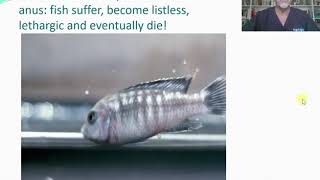
Hello. Today I will present you fish disease case number four. We will talk about Malawi bloat. Those who have cichlids, particularly African Malawi Tanganyika cichlids, know this kind of problem. Malawi bloat. Here an example of a Malawi cichlid. We can see the swollen belly, which is the typical syndrome. A protruded anus is often another sign or symptom. We see and we see a massive amount of internal fluid inside the fish. If you would squeeze the fish, you will feel it soft. It's like a lot of fluid is inside. The fish will eventually die. The Malawi bloat is typically. The first we can see is a protruding anus. Here we see another type of protruding, protruding aedes. On this psylotropheus the fish suffered to become listless. You can see them suffering, they're becoming weak, lethargic, and then they die. And it can happen in a few hours, a few days in some cases. So watch the first symptoms when it starts. Also Malawi bloat. We can see a Tanganyika cichlid. Here we see a Tanganyika cichlid with the swollen belly of the Stropheus duboisi. And it's getting pale, listless, fast respiration. If we do a dissection on such a fish, we will see that there is a white, fatty degenerated organs with a lot of fluid which is coming outside the fish. It's making it all wet here. And you see that the white is organs. This is a typical feature. And if we squeeze this on two glass plates, which is then ideal to do a microscopic examination, we can see a lot of fatty tissue all around in between the organs. What you also can see here is a larger spleen because the fish has hardly been eating in the last hours before he dies. Here we see the microscopic observation of the intestine here, the gut and the fatty tissue surrounding it so that there's fatty organs. And we see usually a lot of fluid in the intestine. What could be the cause of Malawi bloat? Well, it's usually not one cause. It could be, but usually we see a mix of different causes of different origins. And the first cause, which I often encounter in my observation when I have this kind of problem presented to me is the bad choice of fish food. First of all, a not balanced diet, overfeeding, giving too much food is a common error which can make the fish really sick. And it's one of the risks, number one, keeping fish, it's because we keep on feeding the fish, because they seem to be hungry and asking for food. But that's the Pavlov effect because the fish, seeing you, seeing the food can. Well, they go for food because they think, well, tomorrow I might have nothing. This is my survival. Let's get all I can get today. So overfeeding, be aware of that is a common risk. Most common mistake is that you're feeding like mosquito larvae or other wrong diets for African cichlids. You have to watch that you have given a good source of proteins and fats. So a poor source is a risk. The feeding of frozen or live food can be contaminated with bacteria which can have an impact on the gut flora and the health of the fish and have a risk of the Malawi bloat. This is cause number one is the kind of food and the choice of food. And second could be a secondary or a primary bacterial infection which is infecting the fish internally in the organs, in the intestine. Number three, parasites in the intestine or the gut, like Spironucleus, that used to be called Hexametha or Cryptobia ubilands, another parasite. I will show it in videos later on. And the fourth cause? Well, dirty water, bad filtration, lack of water changes and overcrowding. So all these could be causes of Malawi bloat. So think about it, what could be in your case, the problem here we see microscopic observation of the Cryptobia flagellated parasites. Look them here swirling around. This is at 400 magnification and they are having an impact on the gut flora and the gut lumen making the fish having a kind of diarrhea, a kind of risk that the fish is suffering of a bad microbiome. And this is have a risk of the immune system of the fish because the gut flora is imported immune system. So if that weakens, the fish can get easy other diseases here, parasites. The parasites spiral nucleus used to be called hexameter in the gut here a massive amount which we see swirling around here in the gut at 200 magnification. And this of course you can see this has an impact on the gut wall damage and risk of bad bacteria infection and bad immune system. So the treatment of bloat it is not so easy as it should be because we have to deal with different causes. First of all, improve the conditions in the pond or in the aquarium. Avoid the feeling of bad food. So check what have you been doing which explained you in the causes. Check your food, check your feeding program. Try to give food with lots of algae or marine algae and vegetables and with probiotics to repair the gut flora. We can recommend Dr. Besler Baija's Food Foucault or grapefruit seed extract, moringa. This is great for repair and for helping the fish to survive. When necessary, treat with antibiotics. And I can recommend oxytetracycline or nitrofurazone or furazolidone or ferreltadone, something similar. And when necessary, treat with metronidazole to treat the intestinal parasites. And that medication against the parasites can be combined with the antibiotics as I presented here above. Also, demitronidazole can be an interesting medication to treat. Fish who have an advanced bloat case are unfortunately in most cases too late to treat. So try to treat as soon as you can. So this was the case of fish disease. I presented and there will be more to come. Cardinal Tetra with bacterial infection, the discus pest, diseased goldfish beta with oodinium or velvet disease. So I hope you stay tuned. Thank you for watching.