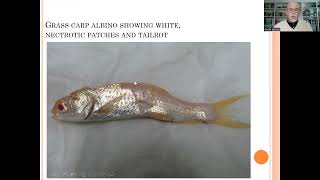
Gerald Bassleer diagnoses an albino grass carp with bacterial infection, fungus, and Chilodonella parasites causing white lesions and scale loss. Poor water quality and overcrowding weakened the fish. Treatment includes salt baths, formalin with malachite green, and antibiotics.
Questions this video answers
Case 131
Taenopharyngodum idella (as spoken in the video)
Chilodonella (also spelled Chylodonella in the narration)
5 grams per liter (5 g/L)
Formalin combined with malachite green (or a shop-recommended antiparasitic product)
Chapters
Hello dear aquarist, welcome again to my videos on fish diseases, diagnosis, prevention and control with treatments which I suggest in all my cases. And today it's for the cold water specialist, the people who have a pond or keeping grass carps. It's not usable. I have these kind of cases, but it was a case of albino grass sharp. Well, you know the scientific name is Taenopharyngodum idella. That's a beautiful name. But this one was suffering badly from a bacterial and parasitic Hylodernella infection. And I show you my findings in the following screens with videos and observations of the fish. It's a case 131. Here we see the grass carpet, we see the white necrotic lesions here. Some loss of scale, some damaged tissue, even some readiness here on the head. And we see here the tail rod, you see the skinny. The fish is. Well, this was a bad case and problems in the pond. We found a lot of bacteria here on the skin, on the scales. See loads of colonies of bacteria. Show you later on in other observations here, more detailed. Probably some columnaries mixed into it. This whole colony of bacteria sitting on the scales on making a necrotic tissue. And at the same time there is some fungal threats, fungus to see, maybe Saprolechnia. But then we did closer observation and what we did find were also Chylodonella parasites. Look how are moving around here. And they can really have an explosion of parasites when they start to multiply because these parasites just can multiply in two. They divide themselves so they can become a very heavy infection, particularly when the situation is favorable. Dirty water, overcrowding, poor filtration, weakening of the fish pet immune system. Here we see it in a closer magnification and we also see the fungal threats. Here we see the bacteria here, maybe see the massive amount of parasites which are just permanently eating on the fish its skin and the mucus destroying the fish. So what treatment do we suggest? Well, the first action you should take is improve the conditions and avoid overcrowding. And improving the conditions means check the water quality, do a good water change and check your filtration, if that is working well. And of course overcrowding is a big issue, particularly when it's warmer and tropical conditions. It's more dangerous to get these kind of infections after the water change and improving the conditions. The second action you can take is adding sea salt, 5 grams per liter, which is a quick help in controlling the bacterial outbreak, controlling the parasites so that doesn't kill it, but really slows down the explosion of infection. Then you should start a treatment with anti parasitic treatment like formalin malachite green. Or ask your shop for a good treatment, maybe also an antibiotic or antibacterial treatment. Ask your fish doctor or see also my in my books. At the same time you can help with a functional food. For a good repair and recovery. We would recommend Dr. Basler by fish food forte or our professional treat. Well find my books, I have them in different language available, particularly the practical guide is in six languages available gnu illustrated now in two languages, English and French. Or also get your training on my Patreon where you can get more tools to learn about fish diseases. Well thank you for watching my videos and learning more about fish diseases.