This content was created by Gerald Bassleer. This content was uploaded by Gerald Bassleer. This is a YouTube video titled "Fish disease case nr. 164 Cichlid Satanoperca jurupari with Spironucleus or Hexamita infection" created on October 31, 2023. It features Gerald Bassleer discussing a case of fish disease in cichlids, specifically focusing on a parasitic infection in the Satanoperca jurupari species. The video provides insights into the symptoms, examination, and treatment of the disease, with references to Bassleer's books and training resources.
Chapters
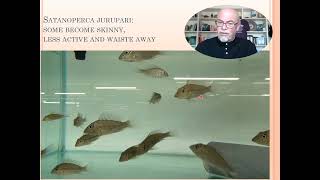
Hello, dear aquarist, dear fish keeper, welcome again to one of my cases of fish diseases. And today it will be again about a cichlid, about the Satanoperco europari, the Satanoperca, it used to be called geophagus. And the fish were just imported at a facility that came from Peru from the wild. And it was interesting to see that some of the fish or not looking so happy, and that's the time when you see that some of the fish don't look so happy and suffering. Well, that's the time you have to do an examination. I will share you my findings and how I work to find out what kind of action I have to take at the end and how to save the fish. I share you my findings here in this case164, about the Satanoperico europari, the cichlid with a parasitic infection, spiral nucleus, used to be called Hexametha, which seems to be a rather common problem in wild fish. Wild cichlids, yes. I have a lot of information in my books on that, particularly the big book, the New Illustrated has specific chapters on cichlid diseases for doso, like cichlids here, the Satan Operka. And you see, most of them look okay, but here there's a few. This is what, this one here particularly, that's the one we examine. He's skinny, he's not eating well, he's getting away from the group, he's separating, less active, and he's wasting away. And I think within the next one or two days he might be dead. So what we do, we examine the internal. And right away we could see from the internal all those little animals moving around in the tissue we collected after the microscopic examination of the organs. Look at all the tiny little bugs in the water. Well, those are parasites. Here we see it again next to the pancreas, many of those parasites which are moving and swirling around. So, yes, you can easily recognize it when you have a microscope. And because that's a typical behavior of the spiral nucleus, be careful not to confuse it with sperm of the fish, which is small, round, and is not moving so fast like the spiral nucleus. So this is a typical thing I have to show you because something teaches you lessons when you have cichlids and I have a microscope here, we see the intestinal wall. And next to the intestinal wall that came out because of my squeezing of tissues. And then we see those thousands of parasites. You can imagine that the fish is suffering from that, that it's affecting the lateral, the lining of the gut of the intestine and affecting the absorption of the nutrients. So the intestine will be in bad shape and having other diseases coming up like bacteria. Here we see again inside the intestine, it's sometimes difficult to see, but you can see the elongated parasites moving inside the intestinal wall and causing damage. Here we can see it. Here you see them moving. Here it's easier to see when it's in the abdominal fluid, which we saw in the previous observations. But look at the tiny bugs. And that's a lot of bugs. That's a lot of them. So you have to start treating on time because the fish also get secondary infections. Why the parasites are weakening the fish. And you can see the spleen with many melanomacrophage centers. That is a kind of reaction on an infection. And here the liver, which is losing color, is getting large spaces and is not a healthy color anymore, which would be orange brown. So the uropari as a treatment. Well, the fish suffers from the parasites and show already secondary bacterial infection. So treat as soon as possible because you will get better results if you soon already start treating today, not tomorrow. Look at my books for the details of the treatment. You know, everybody who knows of working cichlids knows that metronidazole is a good help. But I give you the advice how to apply this kind of treatment and that you do it effectively if you apply it in a good way. So I have a lot of explanation of that in my books. And help the fish with a functional food because the food helps in the repair and helps in the defense and helps to restore the immunity of the fish. And that's why we developed Dr. Bezler Biffus food Lapacho for this reason. More information I can tell you again in my books. Maybe you want to become a fish doctor. Well, get my training at my Patreon. So I hope this video helped you. Particularly those who have cichlids have quite often this pyronucleus problem. So be careful when you treat. Treat accurately. Just don't treat every week or every month with metronidazole. That's no use. Just only treat when the disease is there or when you suspect there is a disease. I see too many people treating too often. So watch out for that. Be careful when you apply medications and get good advice. Thank you for watching.