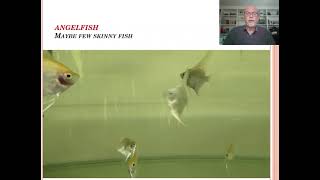
Gerald Bassleer examines angelfish dying from internal roundworms and possible fish tuberculosis. Post-mortem showed nematodes in the intestines and organ damage. Treatment requires two doses of praziquantel or fenbendazole spaced 10-14 days apart, plus antibiotics and pumpkin-seed feed for three weeks.
Chapters
Now we will talk about fish disease. Case number 17 about an Angelfish, Pterophyllum scalari. Some fish are skinny and we had a few losses in the fish tank. So some of the very skinny fish died. But obvious signs were not there. A few fish, very skinny in the tank. But some other ones were looking fine, like the video shows here. A few very skinny ones. This was a skinny one here, a skinny one, but look, this one is well filled. This one is well filled. But some of the fish were suffering and skinny and getting weak. Here is another video. See the activity. The fish are active. Yes, a little bit aggressive, like a typical cichlid. But some were very skinny and wasting away. Here the back is one, Here was another one. What we found in the intestine in those fish were worms, roundworms, nematodes, small ones and big ones. And this is how it looks in a video. That's how you recognize very easy worms in the intestine. All those little moving things here. And there are about five or big, big ones here. And some of them have already eggs here by which they reproduce in the fish tank. And they can reinfect other fish within a week or two. And here's some baby nematodes. So there are plenty of nematodes, about 10 nematodes on this part of the intestine and probably more in other parts of the intestine. It's called capillaria, but luckily we can treat this. On the other hand, we also found in the organs, some tubercles. Here you see some tubercles in the organs, which was another problem. At the same time, combined with the nematodes or worms, we also had some organs which were infected. So what can you do as a treatment for this kind of problem? Well, the fish dies slowly from the fish tuberculosis, we suspect of cause. It's Mycobacterium fish tuberculosis. But the fish can live a long time with it with tubercles, unless the organs are very badly infected. But when there is only a few tubercles, they can live very long. It's a slow death, maybe can take years. But with the nematodes and capillaria, it can cause quick losses. When there are too many worms, the fish will get weak and will be vulnerable to other diseases or will die because it's just too weak to survive. Check the origin, the parent fish, they can pass on the disease. They can pass on the worm eggs to the other fish. They can pass on the bacteria like Mycobacterium and the food, particularly live food. Be careful when you give live food, particularly live food which you collect yourself from river or from a lake or from a pond. It can contain worms, larvae or eggs. So that's a risk. The very sick fish you better euthanize, put it gently asleep. And if you want to treat against the nematode or worms, I Recommend to use two treatments. Within 10, 14 days you do a second treatment with prazicantel or fenbendazole or levamizole. At the same time you can try to use also an antibiotic erythromycin or tetracycline minocycline when you suspect you have a lot of problems with the Mycobacterium infection. And with food you can help with the phytobiotics in our Dr. Basler divers food pumpkin. Because pumpkin seeds help to control internal worm infections. So the worms are very easily expelled. It's not a medication, but it's something that helps the fish to expel the worms. So at least make sure your feet the pumpkin feed extract for 20 days. And we will no other food. The next case will be about cardinal tetra tank raised. Look how big they are swollen. See you next time.